Philology: Unlocking the Mind Through Ancient Text
Scientifically Reviewed · Dr. Marwa Abd-Alazim · September 5, 2026
Review Criteria & Clinical Standards
This content undergoes rigorous scientific peer-review and medical editorial standards at Arab Psychology Network to ensure clinical accuracy, validity, and compliance with evidence-based guidelines from leading psychological and healthcare authorities (APA / WHO).
Introduction and Definition of Philology
Philology is fundamentally defined as the study of language in historical sources, focusing intensely on the history of linguistic development, textual criticism, and the cultural context embedded within written documents. It is an expansive and deeply interdisciplinary field that acts as a cornerstone for the humanities, systematically analyzing the trajectory of languages and their interrelationships over time. Unlike modern structural linguistics, which often prioritizes synchronic analysis of language systems at a single point in time, philology is inherently diachronic, dedicated to tracing the evolution, divergence, and influence of language through the meticulous examination of primary textual records.
The core mission of the philologist is to recover, authenticate, interpret, and explain textual material, thereby illuminating the cultural and intellectual history of the civilizations that produced them. This process involves not merely translating ancient or foreign languages but understanding the specific historical semantics—how words and concepts changed meaning across centuries. For instance, the philologist studying classical literature must understand the grammatical structure of the text, the social and political nuances implied by the vocabulary choices, and the transmission history of the manuscript itself. This comprehensive approach ensures that interpretation is grounded in historical reality, providing reliable access to the thoughts and expressions of past societies.
The discipline maintains a crucial focus on the unions and divergences between various linguistic forms, often seeking to reconstruct ancestral languages or map the spread of language families. This analytical pursuit necessitates specialized knowledge in areas such as etymology, comparative grammar, and dialectology, all applied rigorously to textual evidence. Philology, therefore, serves as the bridge connecting the linguistic structure of a text with its profound historical and literary significance, requiring practitioners to master both the science of language analysis and the art of historical interpretation.
Historical Evolution and Classical Roots
The origins of philology can be traced back to antiquity, particularly to the Hellenistic period in Alexandria during the third century BCE. Scholars in the Library of Alexandria faced the daunting task of standardizing and preserving the foundational texts of Greek literature, most notably the works of Homer. These early intellectual endeavors required the development of rudimentary textual criticism—identifying interpolations, correcting scribal errors, and establishing reliable versions of canonical works. This early commitment to the rigorous preservation and establishment of authoritative texts laid the groundwork for all subsequent philological methodology, setting a precedent for meticulous attention to linguistic detail and historical accuracy.
Following a period of decline during the early Middle Ages, philology experienced a powerful resurgence during the Renaissance. Driven by the intellectual movement of Humanism, scholars across Europe dedicated themselves to recovering, cleaning, and disseminating the classical literature of Greece and Rome, often discovered in monastic libraries or brought West from Byzantium. Figures like Lorenzo Valla famously employed philological scrutiny to expose historical forgeries, demonstrating the discipline’s immense power as a tool for historical truth. This era cemented philology not just as an academic pursuit but as a critical mechanism for cultural renewal and liberation from unquestioned medieval traditions.
The nineteenth century marked the systematic professionalization of philology, particularly within German universities. This period saw the formal development of comparative philology, largely catalyzed by the discovery of Sanskrit and the subsequent realization of the Indo-European language family structure. Scholars like Franz Bopp and August Schleicher codified sound laws and established systematic methods for linguistic reconstruction, transforming the field into a rigorous historical science. This systematization broadened the scope of inquiry beyond just classical texts to encompass the entire history of language families, significantly influencing the subsequent development of modern linguistics and anthropology.
Core Methodologies and Textual Criticism
The central pillar of philological practice is textual criticism, sometimes referred to as lower criticism. This methodology is employed to reconstruct the original or most accurate version of a text (the Urtext) when only divergent copies or fragments exist. Since manuscripts were copied by hand for centuries, they inevitably accumulated errors, deliberate alterations, and accidental omissions (known collectively as corruptions). The philologist’s task is to analyze these variants, identify patterns of error, and determine the readings that are most likely to reflect the author’s original intention, a process demanding immense concentration and deep linguistic knowledge.
The rigorous process of textual criticism follows several distinct steps. First, collation involves systematically comparing all extant manuscripts (or significant witnesses) of a text, noting every single variant reading. Second, the philologist attempts to group these manuscripts into families based on shared errors—a common error indicates derivation from a shared ancestor. This grouping leads to the creation of a stemma codicum, a genealogical diagram illustrating the transmission history of the text. By following the logical principles of elimination, the scholar can then select the most plausible reading where discrepancies exist, rejecting readings that are demonstrably later insertions or unique scribal blunders.
Beyond establishing the text itself, philology employs higher criticism, which addresses questions concerning the text’s historical context, authorship, dating, and authenticity. Higher criticism is essential for interpretation, as the meaning of a text is inextricably linked to who wrote it, when they wrote it, and for what audience. This level of analysis requires the integration of historical data, archaeological evidence, literary parallels, and deep linguistic analysis of the author’s vocabulary and style. The combination of lower and higher criticism ensures that the resulting interpretation is both textually sound and historically verifiable, elevating philology to a sophisticated methodology for historical inquiry.
Branches of Philology
The discipline of philology is highly compartmentalized based on the language family or period of study, leading to several specialized branches. Perhaps the most influential in the 19th century was Comparative Philology, which uses systematic comparison to reconstruct the features of protolanguages, such as Proto-Indo-European. This branch relies heavily on identifying regular sound changes (sound laws) across related languages, allowing scholars to map linguistic descent and understand the deep historical relationships between modern languages like English, Spanish, Russian, and Hindi.
Classical Philology remains a cornerstone of the field, dedicated to the study of the Greek and Latin languages and their literatures. Practitioners of classical philology not only manage the massive corpus of classical texts but also provide the cultural, mythological, and philosophical context necessary for their interpretation. This specialization is crucial for understanding the foundational intellectual traditions of Western civilization, encompassing everything from Homeric epic poetry to late Roman legal documents, ensuring the continuous vitality and accessibility of these ancient sources.
Other significant branches include the specialized areas of vernacular or national philologies, such as Romance Philology (studying the descendants of Vulgar Latin, including French, Spanish, and Italian), Germanic Philology (focusing on languages like Old English, German, and Norse), and Semitic Philology (examining languages like Hebrew, Arabic, and Aramaic). Each vernacular branch applies the core methodologies of textual criticism and historical linguistics to the specific cultural and manuscript traditions of its subject area, often serving as the primary academic apparatus for the study of that nation’s foundational literature and historical development.
Relationship with Linguistics and History
Historically, philology and linguistics were virtually synonymous, especially prior to the early 20th century. However, the linguistic revolution inaugurated by figures like Ferdinand de Saussure shifted the focus in language study away from historical development (diachrony) and textual sources toward the abstract structure of language systems at a single moment (synchrony). This divergence led to the establishment of modern, autonomous linguistics, which often uses mathematical or psychological models, whereas philology retained its deep commitment to the historical record and the cultural embeddedness of language as revealed in texts.
Despite the conceptual separation, philology remains indispensable to historical linguistics, providing the empirical textual data necessary to confirm hypotheses about language change. Every assertion made about the linguistic state of a language in the past—from the phonology of Old English to the syntax of Classical Chinese—must ultimately be verifiable through the analysis of surviving texts. Therefore, philology functions as the archival and critical engine for historical linguistics, ensuring that theoretical models are grounded in the complex reality of documented language use.
Furthermore, philology shares an unbreakable bond with the discipline of history itself. Textual documents are the primary evidence upon which historical narratives are built, and the historian relies utterly on the philologist to authenticate, date, and accurately interpret these records. If the philologist cannot reliably establish the words of a treaty, a chronicle, or an administrative record, the historian’s ability to reconstruct the past is severely compromised. In essence, philology is the critical filter through which historical source material must pass, thereby serving as a foundational methodology for all historical inquiry, including social, political, and intellectual history.
The Role of Textual Documents and Manuscript Studies
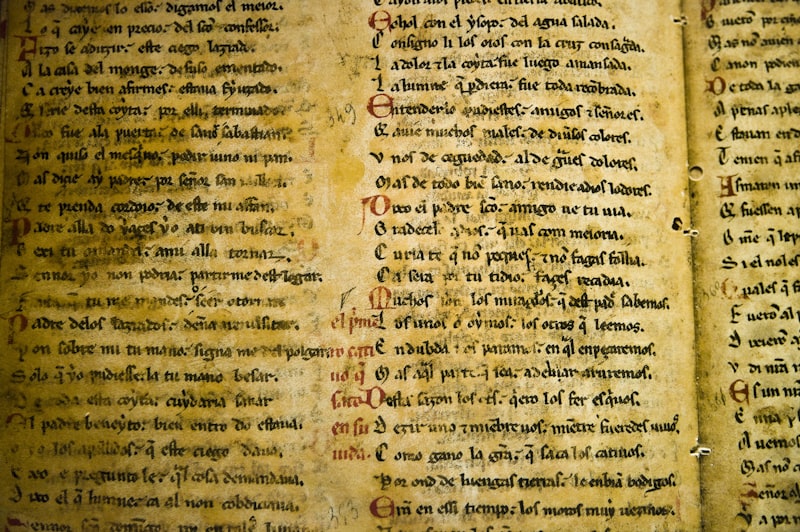
For the philologist, the textual document is not merely a container for words but a physical artifact with its own complex history. Specialized sub-disciplines, such as Paleography (the study of ancient handwriting) and Codicology (the study of the physical structure and history of books, especially manuscripts), are essential tools. These studies allow the scholar to date a manuscript, identify the probable location of its production, and even recognize the habits or educational background of the individual scribe who copied it. Understanding the physical transmission of the text is often crucial for solving textual problems that purely linguistic analysis cannot resolve.
The history of textual transmission highlights the challenges inherent in recovering ancient knowledge. Every stage of copying introduced potential errors: scribes might misread their exemplar (lapses), unintentionally omit lines (homoeoteleuton), or deliberately insert marginal glosses into the main text (interpolations). The philologist must develop a sensitive awareness of these potential biases and errors, understanding that the surviving manuscript tradition is often a distorted mirror of the original work. This awareness demands a combination of intuition, extensive knowledge of the period, and stringent critical discipline to separate genuine authorial text from accumulated corruption.
The study of textual documents also involves grappling with texts that are damaged, incomplete, or highly fragmented, resulting in lacunae (gaps). In such cases, the philologist may engage in sophisticated reconstructive efforts, using knowledge of grammar, meter, context, and parallel texts to propose plausible restorations of the missing material. While highly speculative by nature, such work is necessary to make sense of invaluable fragments of ancient literature or historical records, demonstrating the creative, scholarly rigor required to piece together the shattered remnants of the past.
Modern Applications and Digital Philology
In the contemporary academic landscape, philology has adapted robustly to technological advancements, giving rise to the field of Digital Philology. The application of computing power has revolutionized the laborious processes of collation and textual analysis. Digital tools now allow scholars to compare hundreds of manuscript witnesses simultaneously, generating detailed reports on variants far more rapidly and comprehensively than manual methods ever permitted. This efficiency has accelerated the preparation of critical editions and expanded the accessibility of previously obscure textual traditions.
A key component of this modernization is the use of standards such as the Text Encoding Initiative (TEI). TEI provides a standardized method for digitally marking up texts, allowing philologists to encode not only the reading of the text but also complex information about the manuscript’s physical characteristics, editorial interventions, and variant readings. This structured approach ensures that digital critical editions are robust, searchable, and interoperable, facilitating collaboration among international scholars and dramatically enhancing the precision of textual research.
Furthermore, the methodologies inherent to philological critique—the rigorous assessment of authenticity, the analysis of linguistic change, and the understanding of transmission bias—are increasingly relevant in analyzing modern digital communication and archives. While the artifacts have shifted from parchment to servers, the need to critically evaluate the provenance, integrity, and interpretation of textual data remains paramount. Philology, therefore, continues to offer essential epistemological rigor necessary for navigating and understanding the vast, complex, and often unstable textual environments of the digital age.
Conclusion and Significance
Philology is much more than a collection of specialized techniques; it is a humanistic discipline dedicated to the recovery and interpretation of the human record through the medium of language. By meticulously analyzing the history of linguistic systems and their representation in written documents, philology grants access to the foundational thoughts, beliefs, and cultural practices of civilizations separated from us by millennia. Its rigorous methodologies ensure that our understanding of history and literature is based on the most accurate and contextually rich reading of the available evidence.
The enduring significance of philology lies in its role as the guardian of cultural memory. Without the dedicated work of philologists, the vast corpus of texts that define human civilization—from the Vedas and the Bible to the works of Shakespeare and Dante—would be inaccessible, misinterpreted, or lost to corruption. It is through the philologist’s critical lens that we can understand not just what was said, but how it was said, and what the words truly meant within their original historical and linguistic framework.
In summary, philology stands as a foundational intellectual enterprise, demanding a synthesis of linguistic expertise, historical sensitivity, and critical judgment. Its commitment to the detailed analysis of language and text ensures the continuous vibrancy of historical and literary scholarship, allowing successive generations to engage directly and meaningfully with the documented heritage of humanity. The study of philology is, therefore, the study of how humans communicate across the span of time, providing essential insight into the enduring nature of human expression.