Phonological Processing: Unlocking the Language of the Mind
Scientifically Reviewed · Dr. Marwa Abd-Alazim · August 29, 2026
Review Criteria & Clinical Standards
This content undergoes rigorous scientific peer-review and medical editorial standards at Arab Psychology Network to ensure clinical accuracy, validity, and compliance with evidence-based guidelines from leading psychological and healthcare authorities (APA / WHO).

Defining Phonics: The Relationship Between Sound and Symbol
Phonics, at its core, represents a foundational pedagogical approach to teaching reading and spelling by establishing a direct, systematic relationship between the sounds of spoken language and the letters or groups of letters that represent those sounds in written form. This process is often colloquially referred to as “sounding out” words. The technical foundation of phonics rests upon the critical linkage between phonemes, which are the smallest units of sound that differentiate meaning in a language (e.g., the /k/ sound in “cat”), and graphemes, which are the written symbols or letter combinations that represent those phonemes (e.g., the letter ‘c’, ‘k’, or ‘ck’). Effective phonics instruction systematically trains students to decode unfamiliar words by analyzing the graphemes they encounter and translating them into their corresponding phonemes, subsequently blending these sounds together to pronounce the entire word successfully. This systematic approach contrasts sharply with methods that encourage students to memorize whole words visually or rely heavily on contextual clues, emphasizing instead the alphabetic principle as the primary mechanism for literacy acquisition.
The application of phonics instruction is crucial because English, while not perfectly regular, operates under a predictable set of rules that govern sound-symbol correspondence. While a single grapheme can represent multiple phonemes (e.g., the ‘a’ in “cat” versus “father”) and a single phoneme can be represented by multiple graphemes (e.g., the /f/ sound represented by ‘f’, ‘ph’, or ‘gh’), phonics instruction aims to reduce this complexity into manageable and teachable patterns. This instruction typically begins with the most regular correspondences—such as single consonants and short vowels—before progressing to more complex and irregular patterns, including consonant blends (e.g., ‘st’, ‘pl’), vowel digraphs (e.g., ‘ai’, ‘oo’), and complex rime units. Mastering these predictable relationships allows the novice reader to move beyond simple rote memorization, equipping them with a powerful decoding tool that can be applied to thousands of words they have never encountered before, thereby promoting reading fluency and comprehension.
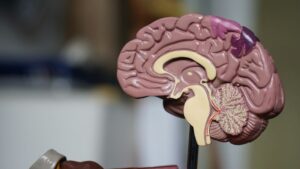
Psychologically, the utility of phonics lies in its ability to leverage the already established auditory processing system of the child and link it directly to the visual processing of text. Learning to read is not an innate biological process, unlike learning to speak; it requires the brain to reorganize existing neural pathways, specifically linking the visual word form area to the auditory processing centers. Phonics acts as the intentional bridge for this neural reorganization. By meticulously teaching the component sounds, instruction facilitates the necessary cognitive process of segmentation (breaking a word down into its sounds) and blending (putting the sounds back together to form the word). This methodology ensures that students develop strong phonological awareness—the ability to recognize and manipulate the sound structure of language—which is a near-universal prerequisite for successful reading acquisition and overall literacy development.
The Historical Context and Evolution of Phonics Instruction
The debate surrounding the optimal method for teaching reading has been central to educational psychology and pedagogy for over a century, often polarizing academics and practitioners in what has been termed the “Reading Wars.” Early reading instruction often relied heavily on the alphabetic method, where students learned the names of letters, a process that did not always translate efficiently to decoding sounds. By the mid-20th century, a dominant paradigm emerged that favored the “Whole Word” or “Look-Say” approach, which advocated for teaching students to recognize entire words as singular visual units, minimizing or neglecting the explicit teaching of sound-symbol relationships. Proponents of this method believed that focusing on context and meaning fostered comprehension more naturally, suggesting that analytic decoding slowed down the reading process.
However, the efficacy of the Whole Word approach came under intense scrutiny, particularly following landmark studies in the 1960s and 1970s that highlighted the failure of many students, especially those from lower socioeconomic backgrounds, to achieve reading proficiency without systematic instruction in decoding. These critiques led to a significant resurgence of phonics instruction, often championed by educational reformers who argued that neglecting the alphabetic principle fundamentally disadvantaged struggling readers. This renewed focus emphasized that while comprehension is the ultimate goal, it cannot be achieved without accurate and fluent decoding, necessitating the explicit teaching of phoneme-grapheme correspondences. This pushback solidified the understanding that phonics is not merely a supplementary tool but a core, non-negotiable component of initial reading instruction for most learners.
The history of phonics demonstrates its cyclical prominence, rising whenever broad educational data indicates shortcomings in holistic or non-systematic methods. The late 20th century saw the creation of comprehensive, commercially successful programs—such as the widely recognized “Hooked on Phonics” popularized in the 1990s—that brought systematic phonic instruction directly into homes, reflecting a growing public and academic consensus regarding its necessity. While modern consensus acknowledges that phonics alone is insufficient for creating a skilled reader (other factors like vocabulary, fluency, and comprehension strategies are vital), its role as the initial gateway skill for unlocking the written code remains universally validated by scientific research. This historical trajectory underscores the shift from viewing reading as a purely visual act to understanding it as a complex, code-based linguistic process.
Key Methodologies: Synthetic vs. Analytic Phonics
While the term “phonics” is often used generically, modern instruction distinguishes between several key methodologies, the two most prominent being synthetic and analytic phonics. Synthetic phonics is characterized by a “parts-to-whole” approach. Students are taught the sounds (phonemes) associated with individual letters and letter groups in isolation first. Once a sufficient number of sounds have been learned, the student is taught to systematically blend these separate sounds together, or synthesize them, to form a complete word. For example, a student learning the word “mat” would first be taught the sounds /m/, /a/, and /t/ separately, and then practice blending them together rapidly to pronounce /m-a-t/ as “mat.” This method is highly systematic, fast-paced, and explicit, making it particularly effective for beginners as it minimizes reliance on contextual guesswork and focuses purely on decoding mechanics.
In contrast, analytic phonics follows a “whole-to-parts” approach. Students initially learn whole words (often within the context of a story or vocabulary lesson). They are then guided to analyze those known words to identify common phoneme-grapheme correspondences. For instance, after learning the word “cat,” the teacher might point out that the sound at the beginning of “cat” is also the sound at the beginning of “car” and “cup.” This method is less immediate in its application of blending and relies more heavily on inductive reasoning, requiring students to extract the phonics rules from the context of words they already recognize. While analytic phonics can be integrated smoothly into broader literature instruction, researchers often point out that it may be less effective for struggling readers, as it requires a pre-existing sight vocabulary base from which to draw comparisons, and the instruction of correspondences may be less frequent and less systematic than in the synthetic approach.
Other variations exist, including embedded phonics, which teaches sound-symbol relationships only when they arise naturally during the reading of text, and analogy phonics, where students learn new words by comparing them to known word families (e.g., knowing “back” helps them read “track” and “sack”). However, research, particularly that summarized by the National Reading Panel (NRP) in the United States and similar bodies globally, strongly suggests that systematic and explicit phonics instruction—meaning that instruction is carefully planned, sequenced, and directly taught, often aligning closely with the synthetic model—is superior to non-systematic or embedded instruction. The specificity and directness of systematic methods ensure that no crucial sound-symbol relationship is accidentally missed, guaranteeing that students build a robust and complete decoding foundation.
The Cognitive Mechanism: Orthographic Mapping and Reading Acquisition
The true psychological utility of phonics instruction is realized in its facilitation of orthographic mapping, a critical cognitive process necessary for achieving fluent reading. Orthographic mapping is the mental process skilled readers use to form immediate, permanent connections between the spoken pronunciation of a word and its visual written form (orthography). When a reader successfully maps a word, they no longer need to sound it out laboriously every time they encounter it; the word is instantly recognized “by sight.” This ability is what transforms slow, effortful decoding into rapid, automatic word recognition, which is the hallmark of reading fluency.
Crucially, mapping is not achieved through visual memorization; it is achieved through phonological processing. For a word to be mapped, the reader must be able to segment the word into its individual phonemes, match those phonemes to the graphemes in the written word, and store that sequence in long-term memory. Phonics instruction provides the exact tools needed for this process: it teaches the student to segment sounds and match them precisely to the letters they see. Without strong phonics skills and corresponding phonological awareness, the student cannot accurately anchor the visual information to the sound information, leading to unreliable word recognition that strains working memory and inhibits comprehension. A reader who lacks orthographic mapping must rely on visual features or context, resulting in frequent errors and slow reading speed.
The efficiency of orthographic mapping directly influences reading comprehension. When a reader must expend significant cognitive resources on decoding individual words—a process termed “word poverty”—their working memory is too taxed to simultaneously process the meaning of the sentences and paragraphs. By automating word recognition through successful orthographic mapping, phonics instruction frees up cognitive capacity, allowing the reader to allocate maximum resources to higher-level skills such as inference, interpretation, and critical analysis. Therefore, phonics is not just a tool for sounding out; it is the essential catalyst for transforming temporary word exposure into permanent, accessible sight words, thereby establishing the foundation for all subsequent academic learning that relies on reading.
Phonics Instruction within the Science of Reading Framework
The modern understanding of literacy acquisition is heavily informed by the “Science of Reading,” an interdisciplinary body of research encompassing cognitive psychology, linguistics, and neuroscience. This framework unequivocally asserts that systematic, explicit phonics instruction is a necessary component for effective reading instruction, particularly in the initial stages. The consensus model often utilized within this framework is Scarborough’s Reading Rope, which visualizes reading ability as the weaving together of two essential strands: Language Comprehension and Word Recognition. Phonics firmly anchors the Word Recognition strand, working alongside phonological awareness, decoding skills, and sight recognition.
The Science of Reading emphasizes that reading is a skill that must be taught directly and systematically, rejecting the notion that children will simply absorb the necessary decoding skills through exposure to rich literature alone. This perspective mandates that instruction must be differentiated and diagnostic, ensuring that students who struggle with specific sound-symbol correspondences receive targeted intervention. Effective instruction within this framework often follows a specific sequence: introducing a small set of highly regular letter sounds, practicing blending these sounds into words, and then immediately applying these new decoding skills to decodable texts—texts specifically written to contain only the sound patterns the student has already been taught. This practice reinforces the learned correspondences and builds confidence in the application of the alphabetic principle.
Furthermore, the research supports the notion that the earlier systematic phonics instruction begins, the better the outcomes, particularly for children at risk for reading difficulties, such as those diagnosed with dyslexia. Deficits in phonological awareness are a primary indicator of reading struggle, and phonics instruction is the most effective intervention for strengthening this awareness. By operationalizing the connection between sounds and print, phonics serves as a powerful protective factor against literacy failure. The comprehensive integration of phonics into instruction across multiple grade levels ensures fidelity to the scientific evidence, moving education away from historically anecdotal or theory-driven methods toward empirically validated practices.
Challenges, Implementation, and Instructional Fidelity
While the efficacy of systematic phonics is scientifically established, its successful implementation in the classroom presents several challenges, primarily related to instructional fidelity and the complexity of the English language. One major challenge involves the mastery of irregular words. English contains numerous words (e.g., ‘said,’ ‘of,’ ‘who’) that do not conform perfectly to standard phonic rules. While some educators argue these must be taught purely as sight words, effective instruction integrates phonics by teaching students to decode the regular parts of the word while noting the one irregular sound-symbol correspondence, thereby minimizing the cognitive load associated with purely visual memorization. A second challenge is ensuring that teachers possess deep pedagogical content knowledge, not just of the rules, but of the specific instructional techniques required for systematic teaching, which often requires significant professional development.
Instructional fidelity—teaching phonics exactly as intended by the structured program—is vital. Systematic programs are designed to build skills sequentially, where each new concept relies on the mastery of the previous one. If a teacher skips lessons, teaches out of sequence, or fails to provide adequate practice in blending and segmenting, the cumulative benefit of the systematic approach is severely diminished. Key components of high-fidelity instruction include:
- Explicitly stating the phoneme and grapheme being taught.
- Providing clear modeling of blending and segmenting.
- Offering abundant opportunities for guided practice.
- Utilizing decodable texts that align precisely with skills learned.
- Providing immediate corrective feedback.
Any deviation from this structured approach risks undermining the decoding skill development, illustrating that the success of phonics is inextricably linked to the quality and consistency of its delivery.
The ultimate challenge lies in integrating phonics instruction seamlessly with the broader goals of literacy: fluency and comprehension. Phonics is a means to an end, not the end itself. Instruction must transition the student rapidly from decoding practice to meaningful reading. This requires educators to ensure that as decoding skills improve, corresponding attention is paid to enhancing vocabulary, background knowledge, and comprehension strategies. If phonics is taught in isolation, divorced from rich linguistic input and engaging literature, students may become technically proficient decoders who struggle to understand what they are reading. Therefore, the most effective pedagogical model ensures that strong, systematic phonics serves as the engine that drives access to complex and meaningful text.
Phonics in Popular Culture and Commercial Programs
The widespread adoption and commercialization of phonics instruction highlight its pervasive influence on public education and consumer culture. The most globally recognized example of a commercial phonics program is perhaps “Hooked on Phonics,” which gained immense popularity, particularly in the United States during the 1990s. This program capitalized on parental concern regarding reading failure and provided a structured, multi-sensory curriculum delivered through kits containing workbooks, audio recordings, and visual aids. The success of such programs demonstrated a significant public demand for explicit decoding instruction, often filling a gap perceived to be left by schools that favored less systematic reading methodologies at the time.
Commercial programs, while varying widely in quality and fidelity to scientific principles, often leverage specific delivery mechanisms, such as mnemonic devices, repetitive practice, and interactive software, to engage young learners. The appeal of these kits lies in their systematic structure and accessibility, providing parents with concrete tools to supplement classroom learning. Although programs like “Hooked on Phonics” popularized the necessity of sound-symbol instruction, their presence also fueled the public side of the Reading Wars, positioning explicit phonics as the necessary antidote to perceived educational failures in reading instruction. This popularization helped solidify the term “sounding out” in common parlance as the definition of how reading is achieved.
The legacy of these commercial ventures is the normalization of the term “phonics” outside of academic circles. While they sometimes faced criticism for being overly reductive or mechanistic, their greatest contribution was reinforcing the idea that reading is a skill requiring deliberate, structured teaching, rather than a skill acquired incidentally. Modern educational technology continues this trend, offering numerous apps and digital platforms that deliver highly interactive, adaptive phonics instruction, reflecting the sustained, high-level demand for tools that facilitate the mapping of phonemes to graphemes for beginning readers.
The Obsolete Usage: Phonics and Acoustics
It is important to note that the term “phonics” possesses an older, largely obsolete definition rooted in the study of sound itself, distinct from its modern pedagogical application. Historically, “phonics” was occasionally used as a synonym for acoustics, referring to the branch of physics concerned with the production, control, transmission, reception, and effects of sound. This usage derived directly from the Greek root phonē, meaning sound or voice.
In the context of classical studies and early scientific nomenclature, the term might have been employed when discussing the physical properties of sound waves or the mechanics of vocal production. However, as scientific terminology standardized throughout the 19th and 20th centuries, the term “acoustics” became the universally accepted identifier for this field of physical science.
Consequently, in contemporary discourse, particularly within psychology, education, and linguistics, the term “phonics” exclusively refers to the method of teaching reading by correlating sounds and letters. Any reference to “phonics” meaning acoustics is now considered archaically specialized or entirely inaccurate, confirming that the term has undergone a definitive semantic shift to a purely instructional context.