Photophobia: When Light Triggers Emotional Distress
Scientifically Reviewed · Dr. Marwa Abd-Alazim · August 28, 2026
Review Criteria & Clinical Standards
This content undergoes rigorous scientific peer-review and medical editorial standards at Arab Psychology Network to ensure clinical accuracy, validity, and compliance with evidence-based guidelines from leading psychological and healthcare authorities (APA / WHO).
Introduction and Definition
Photophobia, derived from the Greek words phos (light) and phobos (fear), is medically defined not as a psychological fear but rather as a severe and frequently painful intolerance or hypersensitivity to light, often manifesting as a profound vulnerability that forces immediate avoidance. It is fundamentally a symptom, not a primary disease state, signaling underlying neurological, ophthalmic, or systemic pathology. The intensity of photophobia can range dramatically, from mild discomfort in bright environments to excruciating pain triggered even by low levels of ambient illumination, making daily activities challenging and often debilitating for the affected individual. This condition is distinct from simple light sensitivity or discomfort experienced by healthy individuals upon sudden exposure to intense light; true photophobia involves a pathological response where ordinary light levels elicit significant suffering and pain.
The core characteristic of pathological photophobia is the mediation of pain through non-visual pathways, specifically involving the trigeminal nerve system, which processes facial and cranial sensory information. This distinction is crucial in a clinical setting, as it explains why patients may experience intense pain even when the visual perception of light is not the primary issue. Historically, the phenomenon has been recognized for centuries, often documented in conjunction with severe headache syndromes and infectious diseases like meningitis. Understanding photophobia requires a multidisciplinary approach, integrating knowledge from neurology, ophthalmology, and pain management, given its complex etiologies and varied presentations across different patient populations, including those who have suffered trauma or chronic inflammatory conditions.
While the term implies a “fear,” the experience is overwhelmingly physical and sensory. A classic example illustrating its severity can be seen in clinical histories: “Both children were diagnosed with photophobia in childhood,” indicating a shared, profound sensitivity that necessitated therapeutic intervention and lifestyle adjustments from a very young age. This symptom often serves as a critical diagnostic clue, pushing clinicians toward identifying the primary neurological or ocular disorder responsible for the heightened sensitivity. It is a highly prevalent symptom, particularly within headache disorders, serving as a key diagnostic criterion for several primary headache syndromes, further cementing its importance in clinical neuroscience.
Clinical Manifestations and Subjective Experience
The subjective experience of photophobia is highly variable but typically involves an immediate, involuntary response to minimize light exposure, characterized by behaviors such as intense squinting, the rapid donning of sunglasses indoors, or seeking refuge in darkened environments. Patients often describe the light sensation not merely as bright, but as sharp, burning, or piercing, radiating deep into the orbit or across the forehead. This experience is frequently accompanied by other autonomic symptoms, including profuse tearing (lacrimation), involuntary eyelid spasms (blepharospasm), and increased forehead or periocular muscle tension, all compounding the overall distress caused by the stimulus. The quality of light triggering the reaction can also be specific; some individuals are acutely sensitive to blue light wavelengths, often emitted by electronic screens and fluorescent bulbs, while others react most severely to natural sunlight.
The severity of the pain is often proportional to the intensity of the light stimulus, although in severe cases, even minimal, indirect light exposure can provoke a debilitating reaction. For instance, a patient experiencing a severe migraine attack may find normal indoor lighting levels intolerable, forcing them into complete darkness for relief. This acute symptomatic presentation contrasts with chronic photophobia, where persistent, moderate discomfort limits daily functioning and leads to long-term behavioral adaptations. These adaptations frequently involve maintaining artificially dimmed environments at home and work, which, ironically, can exacerbate the sensitivity over time by promoting dark adaptation and subsequently lowering the threshold at which light becomes painful.
Furthermore, photophobia rarely exists in isolation; it is commonly associated with phonophobia (sensitivity to sound) and osmophobia (sensitivity to odors), particularly in the context of migraine and post-concussive syndrome. The co-occurrence of these sensory sensitivities suggests a shared central processing mechanism involving generalized hyperexcitability within the central nervous system, particularly in areas responsible for integrating polymodal sensory input. The management of these concurrent symptoms must therefore be holistic, addressing the underlying central sensitization rather than merely treating the ocular surface or attempting to block the light stimulus entirely, which may only provide temporary relief but fail to address the root neurological dysregulation.
Pathophysiological Mechanisms
The mechanism driving true, painful photophobia is complex and involves unique non-visual photoreceptors and specific cranial nerve pathways. Unlike typical vision, which is mediated by rods and cones, the pain component of photophobia is primarily attributed to the activation of the intrinsically photosensitive Retinal Ganglion Cells (ipRGCs). These specialized cells contain the photopigment **melanopsin** and are optimally sensitive to blue light wavelengths (approximately 480 nm). The ipRGCs do not contribute significantly to image formation but are crucial for non-visual functions, such as regulating circadian rhythms and the pupillary light reflex. Crucially, they serve as the afferent limb of the photophobia pathway.
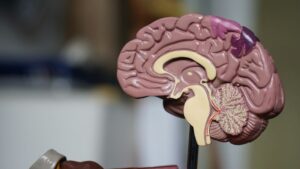
Upon stimulation by light, the ipRGCs project to the central nervous system. The key neuroanatomical structure mediating the pain is the **trigeminovascular system**. The ipRGCs project to the **thalamus**, specifically the posterior thalamus, which then communicates directly with the **trigeminal nerve** (Cranial Nerve V). This pathway bypasses the visual cortex entirely and directly activates the pain-processing centers of the brain. The activation of the trigeminal nerve, particularly its ophthalmic division, results in the nociceptive (painful) sensation perceived in the eye, orbital area, and forehead when exposed to light. This direct anatomical connection explains why conditions that involve sensitization of the trigeminal pathway, such as migraines and certain types of brain injury, invariably produce severe photophobia.
The phenomenon of central sensitization plays a significant role in chronic photophobia. Repeated or prolonged activation of the trigeminal system, often due to chronic headache disorders, can lead to a lowering of the pain threshold. This means that stimuli that were once non-painful (i.e., normal room light) begin to elicit a painful response, perpetuating the cycle of chronic pain and light intolerance. Research also suggests a role for the hypothalamus and the brainstem in modulating this response, indicating that photophobia is not a simple reflex but a centrally processed symptom involving multiple interconnected neural structures responsible for integrating sensory input, pain perception, and autonomic responses.
Primary Causes: Neurological Disorders
Photophobia is perhaps most strongly correlated with primary neurological disorders, fulfilling the initial observation that it “might be correlated with migraines or with particular kinds of brain injury.” **Migraine** is the single most common cause of significant photophobia, which is listed as a core diagnostic criterion by the International Headache Society (IHS). Photophobia can occur in the premonitory phase, during the headache phase, and sometimes persist into the postdrome phase, reflecting the underlying neurological hyperexcitability characteristic of the migraine brain. During an active migraine attack, the brainstem and trigeminovascular system are highly sensitized, making the melanopsin-mediated pathway particularly reactive, turning ordinary light into a powerful pain trigger. The severity of the photophobia often correlates directly with the overall intensity of the migraine episode.
**Traumatic Brain Injury (TBI)**, including concussion and post-concussive syndrome, represents the other major neurological etiology for chronic photophobia. Following a TBI, patients frequently report persistent light sensitivity that can last for months or even years. The mechanism here is hypothesized to involve diffuse axonal injury and neuroinflammation that disrupts the normal inhibitory control over sensory pathways, leading to generalized sensory hyper-responsiveness, including enhanced photophobia and phonophobia. This post-traumatic sensitivity often significantly hinders rehabilitation and return to work or school, making it a critical focus of post-concussion management protocols.
Other central nervous system disorders that frequently feature photophobia include **meningitis** (both bacterial and viral), where meningeal irritation contributes to generalized pain sensitivity; **subarachnoid hemorrhage**; and certain forms of **encephalitis**. In these acute inflammatory conditions, photophobia serves as an urgent diagnostic red flag, signaling inflammation or irritation of the protective layers surrounding the brain and spinal cord. Additionally, conditions involving increased intracranial pressure, such as **idiopathic intracranial hypertension (IIH)**, can also present with marked light sensitivity, further emphasizing the close relationship between intracranial pressure dynamics and sensory processing thresholds.
Secondary Causes: Ocular and Systemic Conditions
While neurological disorders account for the most painful and persistent forms of photophobia, many ocular and systemic conditions can cause light sensitivity through direct irritation or inflammation of the eye structures. These causes typically result in discomfort or burning rather than the deep, trigeminal pain associated with migraine, though the patient experience is still distressing. Ocular surface diseases, which compromise the integrity of the cornea and conjunctiva, are common culprits.
Common ophthalmic causes of light sensitivity include:
- Corneal Abrasions or Foreign Bodies: Direct physical irritation of the highly innervated cornea.
- Uveitis or Iritis: Inflammation of the iris or ciliary body, where pupillary movement in response to light causes intense spasm and pain.
- Severe Dry Eye Syndrome: Chronic irritation and inflammation of the ocular surface tissues.
- Albinism and Aniridia: Congenital conditions where the iris lacks sufficient pigment (or is absent entirely), leading to excessive light entering the eye and overwhelming the retina.
Systemic conditions, unrelated to the central nervous system or the eye, can also induce or exacerbate photophobia. Certain autoimmune diseases and infectious processes, such as influenza, can produce a transient period of light sensitivity due to generalized systemic inflammation. Furthermore, certain medications can induce photophobia as a side effect, often by causing pronounced pupillary dilation (mydriasis), which allows excessive light into the eye. Examples include anticholinergics and certain antihistamines. Recognizing these secondary causes is vital because treating the underlying ocular or systemic condition often leads to complete resolution of the light sensitivity, differentiating them from the chronic, centrally-driven photophobia seen in neurological syndromes.
Diagnosis and Differential Diagnosis
The diagnosis of photophobia is primarily clinical, relying heavily on a detailed patient history regarding the severity, quality, and triggers of the light sensitivity. While there are no standardized objective tests for photophobia comparable to blood tests, specialized questionnaires, such as the Photosensitivity Assessment Questionnaire (PAQ), help quantify the patient’s experience and track responsiveness to treatment. Clinicians must meticulously rule out confounding factors and establish whether the light sensitivity is true trigeminally-mediated photophobia or merely visual discomfort arising from refractive errors or ocular surface irritation.
The differential diagnosis is critical. When a patient reports light sensitivity, the clinician must distinguish between:
- Neurological Photophobia: Painful, deep orbital sensation, often accompanied by migraine features (phonophobia, nausea).
- Ocular Discomfort: Superficial burning or foreign body sensation, generally relieved by lubricating drops or treating the ocular surface.
- Aesthetic Light Intolerance: A psychological preference for dim environments without true physical pain.
The presence of other neurological signs, such as papilledema (swelling of the optic nerve), or acute systemic illness, mandates immediate investigation, including neuroimaging (MRI or CT) and potentially a lumbar puncture, particularly when conditions like meningitis or subarachnoid hemorrhage are suspected. The examination must include a thorough slit-lamp evaluation to inspect the cornea and anterior chamber for signs of inflammation or damage.
Specialized testing can sometimes assist in quantifying the response. For instance, measuring the pupillary light reflex and observing the patient’s behavioral response to different wavelengths of light can provide indirect evidence of ipRGC pathway involvement, supporting a diagnosis of neurological photophobia. The key to accurate diagnosis remains the correlation of the patient’s reported symptoms with the presence of a known underlying condition, such as chronic migraine or post-concussive syndrome, ensuring that treatment is targeted at the primary pathology rather than simply masking the symptom of light intolerance.
Management and Therapeutic Approaches
Management strategies for photophobia are multifaceted, targeting both the immediate symptom relief and the underlying neurological hypersensitivity. Treatment protocols depend entirely on the identified etiology; for ocular causes, addressing the underlying inflammation (e.g., steroids for uveitis, lubrication for dry eye) is curative. For centrally-mediated photophobia, management is more complex, requiring a combination of pharmacological, optical, and behavioral interventions aimed at modulating the trigeminovascular system.
Pharmacological management often involves preventative therapies for the primary neurological condition. For migraine-associated photophobia, this includes standard migraine prophylaxis (e.g., beta-blockers, topiramate, CGRP monoclonal antibodies) aimed at reducing the frequency and severity of attacks, thereby lowering the baseline level of central sensitization. Acute symptomatic treatment, such as triptans or CGRP antagonists, can also alleviate photophobia during an active attack. However, chronic reliance on acute medications must be avoided to prevent medication overuse headache, which can itself exacerbate sensory symptoms.
Non-pharmacological and optical interventions are essential for managing daily chronic photophobia. The use of specially tinted lenses, such as those filtered to block specific wavelengths of light, has shown promising efficacy. Lenses that selectively block the 480 nm wavelength (blue-green light), which maximally stimulates the melanopsin-containing ipRGCs, have been clinically proven to reduce light sensitivity in migraine sufferers without causing the negative effects associated with overly dark lenses. Behavioral modification is also crucial; patients must be educated about the dangers of excessive light avoidance. While dark environments offer temporary relief, prolonged use of very dark sunglasses indoors leads to **dark adaptation**, which increases retinal sensitivity and lowers the patient’s light tolerance threshold, ultimately worsening the chronic condition. Therefore, light exposure management must be carefully balanced to prevent this vicious cycle.
Impact on Quality of Life and Psychological Correlates
The chronic presence of severe photophobia profoundly impacts a patient’s quality of life, often leading to significant psychological and social correlates. The constant need to control environmental light forces individuals to withdraw from social activities, struggle in professional or academic settings, and often leads to a cycle of isolation. Workplaces and classrooms designed with bright fluorescent lighting become physical barriers, preventing full participation and contributing to lost productivity and academic stagnation.
Psychologically, chronic pain and sensory hypersensitivity are strongly linked to **anxiety disorders** and **clinical depression**. The unpredictability of photophobia, particularly when tied to recurrent migraine attacks, fosters anticipatory anxiety about potential light exposure. Patients may develop phobic behaviors related to leaving the house or entering well-lit spaces, reinforcing the need for psychological intervention alongside standard medical treatment. Cognitive Behavioral Therapy (CBT) and other pain-management focused psychological techniques are often utilized to help patients manage the fear response and develop coping mechanisms that allow for controlled, gradual re-exposure to light.
Furthermore, the persistent effort required to manage light exposure leads to chronic fatigue and sleep disturbances, often complicating the underlying neurological disorder. The ipRGC pathway, central to photophobia, is also crucial for regulating the circadian rhythm. Chronic disruption of light intake can therefore dysregulate sleep-wake cycles, leading to a detrimental feedback loop where poor sleep exacerbates central nervous system hyperexcitability, thereby worsening the photophobia. Comprehensive rehabilitation for chronic photophobia must therefore address the sleep hygiene, psychological burden, and social impact alongside targeted optical and pharmacological therapies.