Phrenology: The Pseudoscience That Tried to Map the Mind
Scientifically Reviewed · Dr. Marwa Abd-Alazim · September 5, 2026
Review Criteria & Clinical Standards
This content undergoes rigorous scientific peer-review and medical editorial standards at Arab Psychology Network to ensure clinical accuracy, validity, and compliance with evidence-based guidelines from leading psychological and healthcare authorities (APA / WHO).
Historical Origins and Key Founders
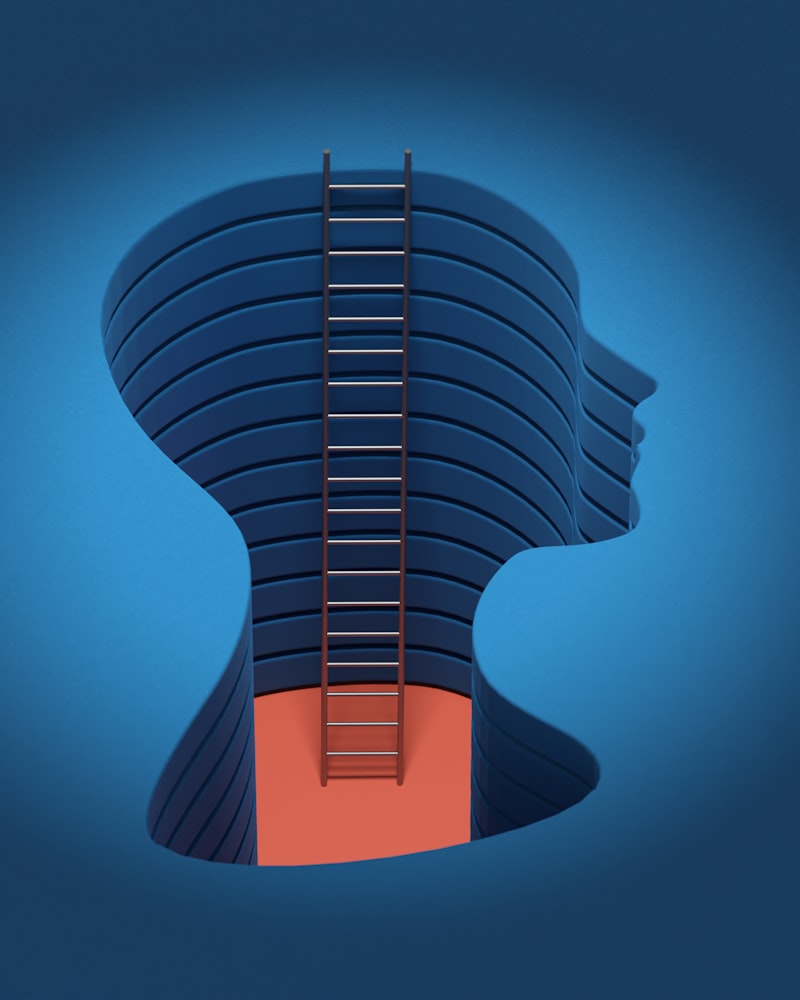
Phrenology, a theory of personality and mental organization, dramatically captured the imagination of the Western world during the late 18th and early 19th centuries. Its genesis is attributed primarily to the work of the Austrian physician and anatomist, Franz Josef Gall (1758–1828), who first articulated the controversial premise that mental capabilities and character traits were linked to specific, localized regions within the brain. Gall’s initial investigations were driven by observation, noting correlations between unusual or pronounced behavioral traits in individuals and the corresponding external contours of their skulls. He hypothesized that the size of these underlying brain regions was directly proportional to the intensity of the associated skill or characteristic. This foundational idea directly contravened the prevailing philosophical and medical consensus of the time, which largely viewed the brain as a homogenous organ where all functions were distributed equally, a concept known as equipotentiality. Gall provided the initial challenge to this holistic view, proposing instead a highly modularized, specialized cerebral structure.
The systematization and popularization of Gall’s concepts owe much to his collaborator, the German doctor and anatomist, Johann Kaspar Spurzheim (1776–1832). While Gall focused heavily on the anatomical basis, Spurzheim refined the nomenclature, expanded the list of mental organs, and coined the term “phrenology” itself, derived from the Greek for ‘mind’ and ‘knowledge.’ Spurzheim was an exceptionally effective communicator and publicist, traveling extensively across Europe and North America to deliver lectures and demonstrations, effectively transforming Gall’s esoteric anatomical hypothesis into a globally recognized system for understanding human nature. It was Spurzheim who categorized the various traits into moral, intellectual, and animalistic groups, making the complex system more accessible to the lay public. Their combined efforts established the doctrine that the external shape of the cranium, specifically the presence of bumps and hollows on the cranial surface, could serve as a diagnostic map of an individual’s innate psychological profile, promising a seemingly objective measure of character.
The initial framework developed by Gall was rooted in a materialist philosophy, aiming to bridge the divide between psychological phenomena and physical anatomy. He sought to prove that all mental activity, including complex moral sentiments, had a tangible, measurable physiological substrate. This revolutionary approach, proposing that the contours of the brain align with the cranial contours because the skull hardens around the developing brain mass, provided the critical link between internal structure and external observation. Even though incorrect in most respects concerning the specific localization and the reliability of cranial observation, the theory proposed the essential concept of localization of function, thereby setting the stage for future legitimate neurological inquiry. Phrenology’s emergence marked a decisive moment when the study of the mind transitioned from purely philosophical speculation to an attempt at empirical, quantifiable science.
The Core Tenets of Phrenological Theory
Phrenology is structured around a set of unwavering principles that underpinned its diagnostic and predictive capabilities. Firstly, it asserted the doctrine of cerebral determinism, meaning that all psychological traits, skills, and emotional characteristics are predetermined by the size and development of specific brain regions. This quantitative approach provided a deterministic explanation for behavior, suggesting that an individual’s character was fundamentally fixed by their anatomy. Secondly, the cornerstone of the theory was the principle of size determining power: the larger the size of a specific brain organ, the more potent and influential the corresponding faculty would be in shaping the individual’s personality and behavior. This premise allowed phrenologists to assign numerical or qualitative values to traits, moving character assessment into a realm of seeming objectivity and measurement, which greatly appealed to the scientific ethos of the 19th century.
The third, and most critical, tenet was the belief in cranial morphology as a perfect reflection of brain structure. Phrenologists maintained that because the skull bone calcifies around the brain, any localized enlargement of a cerebral organ would necessarily push the overlying bone outward, creating a palpable bump. Conversely, an underdeveloped organ would result in a depression or hollow. This crucial assumption made the internal architecture of the mind externally legible, enabling the practice of cranioscopy—the reading of the head. Without this correspondence, the entire diagnostic system collapses, as the practitioner requires the ability to infer soft tissue anatomy from hard skeletal structure. This tenet allowed phrenology to be practiced widely by lay examiners without requiring invasive dissection or advanced medical knowledge, contributing significantly to its popular spread.
These tenets combined to offer a comprehensive system of personality analysis, far exceeding the scope of contemporary psychological frameworks. Phrenology provided answers regarding vocational aptitude, moral character, and even potential criminality, all based on observable, quantifiable physical features. For instance, a person with a large area dedicated to ‘Acquisitiveness’ might be inherently greedy or financially ambitious, while a large ‘Benevolence’ organ suggested a naturally altruistic disposition. The elegance and apparent completeness of this system gave phrenology immense cultural weight, even though later anatomical studies, relying on precise dissections and imaging, conclusively proved that the thickness of the skull is variable and does not reliably mimic the contours of the brain surface, thereby invalidating the entire diagnostic methodology.
Localization of Function: The Revolutionary Concept
While the methodologies and specific mappings of phrenology were definitively refuted, the theory’s most enduring and scientifically valuable contribution was its forceful introduction and advocacy of the concept of localization of function in the brain. Prior to Gall, many esteemed thinkers maintained a holistic view, where the brain operated as a unified entity, with mental processes being distributed across the entire mass. Gall’s insistence that the brain was composed of distinct, specialized organs, each responsible for specific mental faculties, was a paradigm shift. This revolutionary hypothesis provided the necessary intellectual foundation for future legitimate neurological research, suggesting that complex behaviors could be traced back to specific anatomical substrates. This paved the way for modern cognitive neuroscience, where modular processing and functional specialization are core assumptions.
Gall meticulously sought to correlate specific behaviors with physical cranial features, focusing heavily on comparative anatomy. He attempted to show that the development of certain brain regions correlated with species-specific behaviors or highly developed skills in humans. For example, he identified the region associated with language, arguing its position based on observations of individuals with strong verbal memory who also possessed prominent eyes (due to the perceived enlargement of the brain area pushing the eye sockets forward). Although his exact anatomical correlations were incorrect, the very act of seeking a specific, fixed location for a complex function provided a powerful research agenda. This pioneering spirit of mapping the brain, though executed poorly, was transformative, steering neurological research away from vague, generalized theories toward focused anatomical investigation.
The impact of this localized approach is undeniable in subsequent neurological history. Later researchers, such as Paul Broca and Carl Wernicke, working decades after Gall, provided definitive clinical evidence for functional localization, specifically concerning language production and comprehension. They demonstrated, through post-mortem examination of patients with specific aphasias, that damage to small, discrete areas of the cortex resulted in predictable and localized deficits. These findings validated the core phrenological principle that the brain is compartmentalized, even while simultaneously invalidating Gall’s specific map and his cranioscopic methods. Therefore, phrenology served as a vital, if flawed, precursor, providing the conceptual framework that allowed later scientists to correctly prove that specialized processing occurs in distinct cortical areas.
Methodology: Cranioscopy and the Reading of Bumps
The practical execution of phrenological analysis was known as cranioscopy, a procedure that transformed the theoretical map of the mind into a practical diagnostic tool. The phrenologist engaged in a systematic, detailed examination of the subject’s head, primarily relying on tactile inspection. The practitioner would carefully palpate the entire cranium, noting variations in surface contour, which included measuring the size, prominence, and location of any perceptible bumps or depressions. This tactile assessment was critical because it was believed that the most minor variations reflected significant differences in the underlying cerebral structure, thus defining the strength or weakness of specific character traits.
The process demanded a high degree of subjective skill and interpretation. As the original definition implies, to be considered an expert in phrenology, extensive practice and study were required, often exceeding “ten thousand hours.” This was necessary not only to memorize the intricate map of the 27 (or more) faculties but also to distinguish between genuine cranial variations reflecting brain size and mere variations in bone or scalp thickness. Phrenologists frequently utilized specialized tools, such as hinged calipers and measuring tapes, to quantitatively record the dimensions of the head across different axes, attempting to lend an air of scientific rigor to what was essentially a subjective art. These measurements were then cross-referenced with the established phrenological charts.
The outcome of a cranioscopic examination was a detailed character reading, often presented in a formal, written report. This report categorized the individual’s strengths and weaknesses, offering recommendations regarding career choices, educational strategies, and moral development. For example, a reading might suggest that a child with a highly developed ‘Constructiveness’ organ should pursue engineering, while an adult with an overly large ‘Amativeness’ might need guidance to control their passions. The reliance on subjective judgment and the tendency for practitioners to tailor readings to match the known background or apparent social standing of the client contributed heavily to accusations of charlatanism, yet the demand for these seemingly scientific character assessments remained incredibly high throughout the Victorian era.
The Map of the Mind: Phrenology’s Faculties
Gall and Spurzheim developed an elaborate taxonomy of mental functions, dividing the mind into distinct, measurable faculties and mapping them across the skull. Spurzheim refined Gall’s initial list of 27 organs, categorizing them into three major groups: the Propensities, the Sentiments, and the Intellectual Faculties. The Propensities, located primarily at the back and base of the head, represented the lower, instinctual drives shared with animals. These included traits like ‘Combativeness’ (the drive to fight or argue), ‘Destructiveness’ (the tendency toward violence or demolition), ‘Alimentiveness’ (appetite for food), and ‘Amativeness’ (sexual love). An enlargement in these regions suggested a powerful, often uncontrollable, manifestation of these basic drives, which phrenologists sometimes associated with criminality or impulsivity.
The Sentiments occupied the parietal and superior areas of the skull and were divided into lower and higher categories. The lower sentiments included self-regarding emotions such as ‘Self-Esteem,’ ‘Love of Approbation’ (vanity), and ‘Cautiousness.’ The higher sentiments, located toward the crown, represented the moral and ethical components of character, including ‘Benevolence’ (kindness), ‘Veneration’ (reverence for religion or authority), ‘Conscientiousness’ (sense of duty), and ‘Hope.’ These moral organs were considered essential for sophisticated social interaction and civilized behavior; a dominance of the Sentiments over the Propensities was indicative of a well-adjusted, moral individual capable of self-control and societal contribution.
Finally, the Intellectual Faculties were situated primarily in the frontal lobes, associated with cognitive processing and reasoning. These were further subdivided into the Perceptive Faculties, which dealt with immediate external knowledge (e.g., ‘Individuality,’ ‘Form,’ ‘Size,’ ‘Locality,’ ‘Time,’ and ‘Language’), and the Reflective Faculties, which handled abstract thought and analysis (e.g., ‘Comparison’ and ‘Causality’). The development of these frontal organs was deemed crucial for academic success and intellectual pursuits. The intricate mapping, often displayed graphically on ceramic phrenological busts, provided a seemingly objective template for understanding the internal machinery of human personality. Despite the inherent arbitrariness of the divisions, this detailed classification system profoundly influenced early psychological attempts to categorize and measure discrete mental abilities.
Societal Impact and Popularization
The appeal of phrenology transcended academic curiosity, embedding itself deeply within 19th-century culture and society. Its widespread acceptance stemmed from its promise of providing a scientific, accessible method for understanding human variation and predicting behavior in an era of rapid social change. Phrenology offered a seemingly rational means of character assessment that was applicable to everyone, leading to the proliferation of phrenological societies, journals, and traveling practitioners who conducted public lectures and private readings for large fees. In Britain and the United States, figures like George Combe tirelessly promoted the doctrine, arguing its utility for self-improvement, parental guidance, and societal management. This popularization transformed phrenology into a mass movement, influencing everything from hiring practices to educational theory.
In the realm of social reform, phrenology was applied extensively. Educators used cranial readings to determine a child’s natural talents, believing they could better tailor curricula to innate strengths, such as identifying a propensity for mathematics or music based on the corresponding organ size. In the burgeoning field of criminology, phrenology provided a physical explanation for deviance, suggesting that criminals possessed an overabundance of ‘Destructiveness’ and a deficiency in moral organs like ‘Conscientiousness.’ This deterministic view reinforced contemporary social prejudices, justifying differential treatment based on physical traits, particularly impacting marginalized groups whose cranial measurements were often interpreted through a lens of inherent inferiority.
Furthermore, phrenology played a significant role in 19th-century self-help culture. Individuals sought readings to gain insight into their own personalities, hoping to mitigate weaknesses by consciously exercising their corresponding weaker mental faculties, or to exploit their natural strengths in career choices. The commercial success of phrenology led to the mass production of instructional materials, including elaborately marked ceramic heads illustrating the location of the faculties, which became iconic symbols of the age. This cultural saturation demonstrates that phrenology was more than a medical hypothesis; it was a powerful social tool that offered a tangible, physical language for discussing human individuality and fate.
Scientific Critique and Empirical Failures
While the public embraced phrenology, the scientific community, particularly anatomists and experimental physiologists, mounted sustained and ultimately successful campaigns to discredit the theory. The most compelling challenge came from rigorous anatomical investigation. Early critics quickly pointed out the lack of scientific evidence supporting the fundamental claim that the skull’s external topography accurately mapped the brain’s surface. Post-mortem dissections revealed significant variations in the thickness of the human skull, the meninges, and the fluid layers, demonstrating that external bumps were often localized bone features or muscle attachments, not reflections of underlying cerebral size. This anatomical refutation struck at the very heart of cranioscopy, rendering the diagnostic technique invalid.
Experimental physiology delivered the second major blow. The French physiologist Pierre Flourens performed systematic ablation experiments on animals, surgically removing specific sections of the cerebrum in creatures like pigeons. Flourens observed that the removal of certain areas did not always result in the localized, specific functional loss predicted by phrenology. Instead, he found that deficits were often general, and the remaining brain tissue frequently demonstrated an ability to assume the function of the damaged part. These findings strongly supported the alternative theory of equipotentiality, suggesting that the cortex operated more as a unified field rather than a collection of strictly independent organs, directly contradicting Gall’s modular model.
Beyond the empirical failures, critics highlighted the profound methodological flaws inherent in phrenological practice, particularly the issue of confirmation bias and circular reasoning. Phrenologists frequently determined the existence of a bump only after observing the subject’s known character traits, rather than predicting unknown traits based on the bump’s presence. For example, if a subject was known to be religious, the phrenologist would conveniently find a large ‘Veneration’ organ. When the theory failed to predict behavior, proponents often created ad hoc explanations, citing the influence of surrounding organs or the complex interactions between faculties. This lack of falsifiability and predictive power ultimately cemented phrenology’s fate as a pseudoscience, leading to its near-total rejection by mainstream medicine and psychology by the turn of the 20th century.
Legacy in Modern Neuroscience
Despite its comprehensive scientific rejection, phrenology holds a peculiar and important place in the history of psychology and neuroscience. Its most significant legacy is the normalization of the idea of brain modularity—the concept that specific cognitive processes are handled by dedicated neural architectures. Though the specific modules proposed by Gall (e.g., ‘Hope’ or ‘Inhabitiveness’) were incorrect, the overarching framework inspired later researchers to search for the true specialized regions of the cortex. Phrenology provided the conceptual bridge between the abstract qualities of the mind and the physical structures of the brain, a link essential for the development of physiological psychology.
The relentless drive to quantify personality and ability, a central feature of cranioscopy, also spurred developments in psychometrics. The desire to create a systematic, measurable assessment of individual differences, even if based on faulty premises, provided motivation for the development of standardized psychological testing. Later researchers, seeking valid methods to assess intelligence and aptitude, built upon the questions phrenology attempted to answer, ultimately developing statistically sound measurements far removed from skull palpation. In this sense, phrenology provided a flawed roadmap that, by its very failure, guided subsequent generations of scientists toward rigorous, evidence-based methodologies.
Ultimately, phrenology’s greatest contribution was forcing the scientific community to engage seriously with the physical basis of behavior. By making bold, testable (though incorrect) claims about the brain’s organization, it stimulated the experimental research of Flourens, Broca, and others, who, while refuting phrenology’s specifics, validated its core conceptual ambition: that structure determines function. The principles of modern functional neuroanatomy, where areas like the fusiform face area or the primary visual cortex are recognized as specialized processing centers, represent the legitimate scientific fulfillment of the localization hypothesis first championed, albeit imperfectly, by Gall and Spurzheim.