Culture-Bound Syndromes: The Arctic Hysteria Mystery
Scientifically Reviewed · Dr. Marwa Abd-Alazim · September 5, 2026
Review Criteria & Clinical Standards
This content undergoes rigorous scientific peer-review and medical editorial standards at Arab Psychology Network to ensure clinical accuracy, validity, and compliance with evidence-based guidelines from leading psychological and healthcare authorities (APA / WHO).
Introduction and Definition of Piblokto
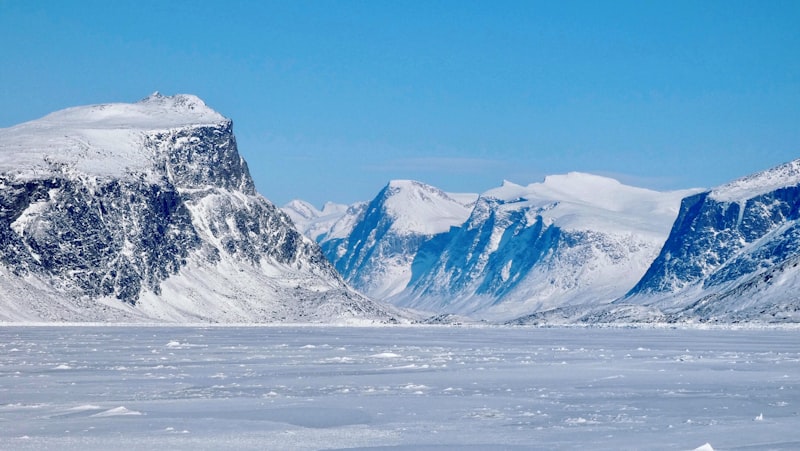
Piblokto, often recognized internationally by the descriptive but potentially biased moniker of Arctic Hysteria, represents a fascinating and historically significant example of a culture-bound syndrome. This condition is primarily endemic to the indigenous populations of the Arctic region, most notably the Inuit communities of Greenland, Canada, and Alaska. It is defined by an acute, abrupt dissociative episode characterized by highly dramatic and often socially disruptive behavior, followed invariably by a period of profound amnesia regarding the event. Understanding Piblokto necessitates moving beyond simple symptom listing and considering the intricate interplay between extreme environmental pressures, deep-seated cultural norms, and specific psychological coping mechanisms developed within these isolated societies. The syndrome is not recognized as a standalone psychiatric disorder in Western diagnostic manuals but is categorized under the broader umbrella of cultural concepts of distress, highlighting the critical role of cultural context in shaping the presentation and experience of psychopathology.
The core manifestation of Piblokto involves a sudden transition from a seemingly normal state into one of intense, uncontrolled excitement. This phase, which gives the syndrome its notoriety, involves actions such as shouting incoherently, rapidly shedding clothing despite extreme sub-zero temperatures, running nude through the snow or ice, hurling nearby objects with force, and engaging in other unpredictable and seemingly wild actions. These behaviors are not premeditated but appear to be driven by an overwhelming internal force, suggesting a transient but complete break from reality and typical self-control. Crucially, the episodes are typically short-lived, often concluding with a distinct physiological collapse, usually involving convulsive seizures or muscle rigidity, which transition almost immediately into a deep, acute coma-like sleep.
The demographic distribution observed historically points toward a syndrome predominantly affecting adult women, particularly those of middle age, although documented cases involving men and children, albeit rarer, do exist. This specific vulnerability among women has spurred various etiological theories, ranging from sociocultural stress related to traditional gender roles in harsh environments to specific nutritional deficiencies tied to Arctic diets. The importance of studying Piblokto lies not only in documenting a unique human psychological response but also in challenging ethnocentric biases in psychiatric diagnosis, compelling researchers to acknowledge that mental distress is often expressed in ways specific to the linguistic, environmental, and spiritual framework of the afflicted population.
Historical Documentation and Early Observations
The existence of Piblokto entered Western medical and anthropological awareness primarily through the journals and reports of European and American Arctic explorers, whalers, and traders during the late 19th and early 20th centuries. These observers, often navigating long periods of isolation and harsh conditions themselves, provided the initial, though often highly subjective and sensationalized, accounts of these dramatic behavioral outbursts among the indigenous Inuit populations they encountered. Early descriptions frequently employed the language of Victorian psychopathology, readily classifying the dramatic episodes as a form of “hysteria”—a catch-all term that reflected the observers’ inability to categorize the behavior within their existing clinical framework and often carried implicit judgments about the emotional stability of the affected individuals, particularly women.
Notable documentation stems from the accounts of polar expeditions, where individuals like Robert Peary or members of his crew described witnessing these attacks firsthand. These reports consistently highlighted the shocking nature of the symptoms, particularly the disregard for life-threatening environmental hazards, such as the voluntary stripping of clothes in fatal temperatures, which deeply contrasted with the otherwise pragmatic and highly resilient nature of the Inuit people. These historical records, while invaluable for establishing the syndrome’s timeline, must be approached critically, as the Western observers often lacked the linguistic capacity or cultural sensitivity to fully understand the local significance of the behavior. They frequently overlooked antecedent stressors or the potential social function the episodes might have served within the Inuit community, focusing instead on the bizarre and disruptive outward appearance.
The historical consensus formed from these early observations established several key patterns: the suddenness of onset, the highly agitated motor activity, the tendency toward self-exposure, and the absolute subsequent amnesia. The term Arctic Hysteria thus became cemented in the literature, serving as a shorthand for this unique and powerful phenomenon observed exclusively in high-latitude environments. The documentation also inadvertently played a role in the subsequent scientific investigation, prompting later researchers to explore whether the syndrome was primarily a psychological manifestation of extreme stress, a response to specific nutritional deficiencies inherent in the traditional diet, or perhaps a form of culturally sanctioned performance that allowed for temporary release from rigid social constraints imposed by survival in an unforgiving climate.
Clinical Manifestations and Symptomology
The typical course of a Piblokto episode follows a discernible, though highly rapid, progression, often described in four overlapping phases: the prodromal stage, the manic excitement phase, the convulsive stage, and the recovery phase. The prodromal stage is usually brief, lasting hours or sometimes just minutes, and involves subtle behavioral changes that might signal an impending attack. These changes include mild irritability, social withdrawal, feelings of unease, or a sense of detachment from the immediate surroundings. Family members or close associates, attuned to the pattern, might recognize these initial signs, though the transition to the next stage is frequently so abrupt that warning signs are missed entirely, emphasizing the acute nature of the onset.
The central and most dramatic component is the manic excitement phase, during which the individual enters a profound dissociative state, losing conscious control over their actions. This phase is defined by intense psychomotor agitation: the subject may begin shouting unintelligibly, sometimes mimicking animal sounds or speaking in foreign tongues (echolalia or glossolalia), throwing objects indiscriminately, or suddenly disrobing completely and running wildly across the ice or snow. The behavior during this period is characterized by extreme recklessness and a complete lack of regard for personal safety or the intense cold. Furthermore, subjects may engage in highly repetitive, ritualistic, or nonsensical actions, such as consuming inedible items or destroying valuable equipment, reflecting the transient breakdown of rational executive function. This powerful display is the defining feature of Piblokto and is the reason it gained such notoriety among foreign observers.
Following the peak of agitation, the episode moves into the convulsive stage. The intense physical exertion often leads to exhaustion, and the subject may experience tonic-clonic muscle spasms or convulsive seizures, although some accounts describe only a rapid transition into deep unconsciousness without overt seizure activity. This involuntary physiological response is immediately followed by the recovery phase, which manifests as an acute, coma-like sleep, typically lasting several hours. Upon awakening, the individual appears physically exhausted but returns to normal cognitive function. Critically, a hallmark of the syndrome is the complete and utter amnesia for the entire episode. The individual retains no memory of the prodrome, the manic outburst, or the immediate transition into sleep, making the event entirely foreign to the conscious self.
Cultural Context and Societal Role
To interpret Piblokto solely as a psychiatric illness divorced from its environment is to misunderstand its function within the Inuit cultural matrix. Unlike Western clinical traditions that pathologize such outbursts, traditional Inuit society often viewed these episodes not necessarily as a conventional sickness, but sometimes as an intense, involuntary spiritual experience, a form of temporary possession, or an extreme, culturally mediated response to overwhelming environmental and social pressures. This perspective allowed for a degree of tolerance and acceptance of the behavior, provided that the episode was contained and the individual returned to normal functioning shortly thereafter. The lack of cultural stigma often associated with mental illness in Western societies meant that individuals recovering from Piblokto were typically reintegrated without lasting social repercussions.
The specific environmental pressures faced by traditional Arctic communities provide a crucial backdrop for understanding Piblokto. Life in the high Arctic involves periods of extreme isolation, unrelenting darkness during the polar night, constant cold, and high reliance on collective effort for survival. These factors create intense psychological strain. Piblokto has been theorized as a form of culturally sanctioned dissociative release—a mechanism that allows individuals, particularly those under severe emotional or social duress where direct verbal expression of distress is discouraged or impossible, to temporarily externalize their stress through dramatic, non-accountable action. This theory posits that the amnesia component is essential, providing the psychological insulation needed for the individual to return immediately to their demanding societal roles upon waking.
Furthermore, the demographic skew towards women points toward potential societal constraints related to gender. In traditional Inuit society, while women held vital roles, they were also subject to significant pressures related to childbearing, resource management, and social control. The confinement, monotony, and extreme dependency inherent in the Arctic lifestyle may have contributed to a higher prevalence among women. The syndrome, in this light, can be viewed as an extreme, non-verbal protest or release valve against the rigid social structure necessary for survival, offering a temporary escape from reality. This highlights how cultural context shapes both the experience and the specific expression of psychological distress, turning internal conflict into a dramatic, public, yet ultimately transient, phenomenon.
Theories of Etiology: Nutritional and Environmental Factors
A significant body of research into the etiology of Piblokto focuses on biological and environmental factors, hypothesizing that the syndrome may be rooted in unique physiological stresses imposed by the traditional Arctic diet and climate. One of the most compelling biological theories centers on hypervitaminosis A, or vitamin A toxicity. The traditional Inuit diet is rich in fat and organs from marine mammals, particularly the liver of seals and polar bears. Polar bear liver contains extremely high concentrations of retinol (Vitamin A), far exceeding safe human consumption levels. Acute or chronic ingestion of toxic levels of Vitamin A can lead to a range of severe neurological symptoms, including irritability, headache, fatigue, and, in severe cases, delirium and psychosis, symptoms that bear some resemblance to the prodromal and manic phases of Piblokto.
Conversely, other nutritional theories suggest deficiencies rather than toxicities. The lack of sunlight for prolonged periods during the polar winter leads to widespread Vitamin D deficiency, which is crucial for neurological health and calcium absorption. Deficiencies in calcium or magnesium—minerals critical for nerve and muscle function—have also been proposed as contributing factors. Severe calcium deficit (hypocalcemia) can lead to tetany and convulsive seizures, aligning with the observed convulsive phase of Piblokto. While these nutritional hypotheses offer plausible explanations for the physiological components of the syndrome, they struggle to account for the highly specific, dramatic behavioral profile and the culturally patterned nature of the dissociative break, suggesting that while nutrient imbalance may lower the threshold for neurological instability, it does not fully explain the phenomenon.
Beyond diet, the sheer environmental extremity of the Arctic serves as a constant stressor. The impact of prolonged darkness (polar night), extreme cold, and the necessary social isolation of small, scattered communities cannot be overstated. These conditions contribute to chronic stress, potential seasonal affective disorder, and disruption of circadian rhythms, all of which compromise mental resilience. It is highly likely that Piblokto represents a complex interaction model: a physiological predisposition caused by nutritional or environmental stress, coupled with a deep-seated psychological need for emotional discharge, where the precise manifestation of the distress is shaped and permitted by cultural expectations. Therefore, Piblokto is perhaps best understood not through a singular cause, but as a crisis point where biological vulnerability meets extreme psychosocial demand.
Theories of Etiology: Psychological and Sociocultural Factors
Psychological interpretations of Piblokto place the emphasis on the syndrome as a complex dissociative reaction, highlighting the severe emotional repression inherent in survival-focused societies. In environments where emotional control is paramount for collective safety, the opportunity to express anxiety, frustration, or grief is severely limited. Piblokto, viewed through this lens, functions as an extreme coping mechanism. It is a powerful, albeit involuntary, psychological defense against overwhelming stress, allowing the individual to temporarily vacate their consciousness and release pent-up emotional energy through highly aggressive and uncontrolled physical acts. The subsequent amnesia ensures that the ego does not have to reconcile the dramatic and often embarrassing actions with the individual’s normal, responsible identity.
The syndrome is a classic example of a Culture-Bound Syndrome (CBS), defined as recurrent, locality-specific patterns of aberrant behavior and troubling experience that may or may not be linked to a specific diagnostic category. The manifestation of Piblokto is highly specific to the Arctic context; the behavior (e.g., running naked in the snow) only makes sense as an extreme defiance of survival instinct within that particular climate. This contrasts sharply with Western forms of hysteria or psychoses, suggesting that culture provides the specific script through which internal distress is publicly enacted. Furthermore, the documented decline in Piblokto cases correlating with the modernization and Westernization of Inuit communities strongly supports the sociocultural hypothesis, indicating that as traditional pressures lessened and new avenues for emotional expression or stress relief (including Western medicine) became available, the cultural necessity for Piblokto diminished.
Sociocultural theory also touches upon the possibility of social modeling and suggestion. Once the behavioral pattern of Piblokto became known within a community, it could potentially become a pathway for subsequent individuals experiencing severe stress. If the community implicitly accepts the episode as a temporary, non-punishable lapse, it provides a powerful, if desperate, method of achieving temporary relief. The historical accounts of Piblokto sometimes involving multiple people within a short timeframe in the same community might suggest a form of mass psychogenic illness or imitative behavior, where the manifestation spreads through suggestion among individuals already primed by intense environmental or nutritional stress. Regardless of the exact trigger, the psychological consensus recognizes Piblokto as a profoundly meaningful expression of distress shaped entirely by the geographical and social environment of the afflicted.
Modern Perspectives and Diagnostic Status
The prevalence of documented Piblokto cases has significantly declined since the mid-20th century, a trend largely attributed to the rapid cultural and societal changes experienced across the Arctic. The introduction of modern housing, improved transportation, access to non-traditional food sources, continuous sunlight simulation via electricity, and greater integration with global medical systems have drastically altered the environmental and social context that historically fostered the syndrome. As traditional life pressures have shifted, so too have the expressions of psychological distress among the Inuit people, with modern psychopathology tending toward more globally recognized forms of depression, anxiety, and substance abuse, rather than the unique dissociative profile of Piblokto.
In contemporary psychiatric classification, Piblokto is not listed as a formal, standalone diagnostic category in the American Psychiatric Association’s Diagnostic and Statistical Manual of Mental Disorders (DSM) or the World Health Organization’s International Classification of Diseases (ICD). Instead, it is typically cited as a historical example of a Culture-Bound Syndrome (CBS), or more recently, a Cultural Concept of Distress (CCD). This classification acknowledges that while the symptoms are real and distressing, the structure and interpretation of the illness are entirely dependent upon the local cultural framework. The inclusion of such concepts encourages clinicians to adopt a culturally sensitive approach, recognizing that symptoms may not align neatly with standardized Western criteria.
The legacy of Piblokto remains crucial for cross-cultural psychiatry. It serves as a powerful reminder of the elasticity of the human psyche and the profound influence of environment and culture on the manifestation of psychological suffering. Studying Piblokto compels researchers to move beyond ethnocentric evaluations and recognize that indigenous explanations for mental phenomena often hold significant ecological and social validity within their own contexts. While the syndrome may be vanishing as a clinical entity, its historical analysis continues to inform how global mental health systems must approach the diagnosis and treatment of distress in diverse and isolated populations, advocating for holistic models that integrate biological, psychological, and sociocultural determinants.