Play Therapy: Healing Young Minds Through Symbolic Play
Scientifically Reviewed · Dr. Marwa Abd-Alazim · September 5, 2026
Review Criteria & Clinical Standards
This content undergoes rigorous scientific peer-review and medical editorial standards at Arab Psychology Network to ensure clinical accuracy, validity, and compliance with evidence-based guidelines from leading psychological and healthcare authorities (APA / WHO).
Introduction and Definition
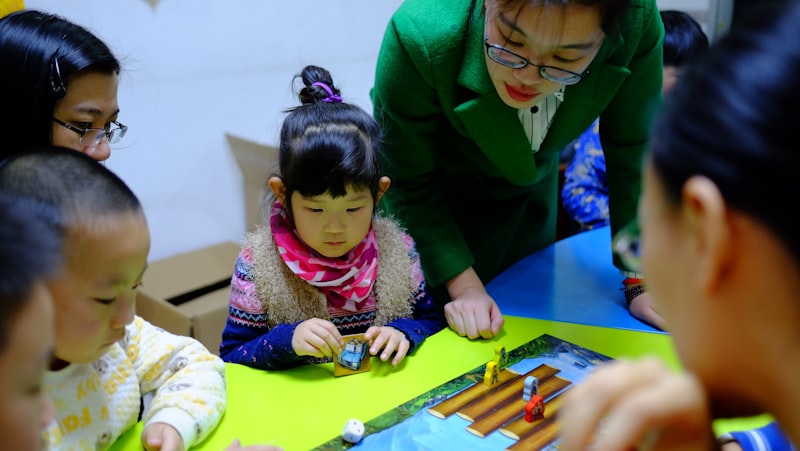
Play group psychotherapy represents a specialized and highly effective therapeutic approach tailored specifically for preschool and early elementary school children. Unlike traditional talk therapy modalities which rely heavily on verbal articulation and abstract reasoning, this method leverages the natural language of childhood—play—to facilitate emotional expression and psychological insight. It is utilized within a structured group setting, providing a dynamic social environment crucial for observing and modifying interpersonal behaviors. The fundamental premise is that children often lack the necessary cognitive and linguistic skills to verbalize complex internal conflicts, anxieties, or traumatic experiences directly; therefore, play materials serve as essential mediators for communication.
This therapeutic technique is defined by its strategic integration of play materials of multiple types, ranging from puppets and dolls to art supplies and building blocks. These materials are not merely recreational tools but are deliberately employed to encourage the spontaneous and symbolic expression of problems, fears, and unconscious fantasies. The group dynamic adds layers of complexity and opportunity, allowing children to enact real-life relational patterns, test social boundaries, and learn from peer interactions under the guidance of a trained professional. This framework transforms the typical play setting into a controlled environment where healing and developmental growth can occur simultaneously.
The core objective, as established in the original definition, is dual-faceted: first, to provide a safe outlet for emotional release and symbolic communication, and second, to enable the therapy professional to actively engage with the displayed content. The professional uses the observed play narrative as a basis to pose queries, offer interpretations, and help the participating children to fully comprehend their feelings, actions, and unions within the structured and predictable framework of the group. This process moves beyond simple catharsis, aiming for genuine cognitive and affective restructuring regarding their internal and external worlds.
Theoretical Foundations
Play group psychotherapy draws heavily upon several influential psychological paradigms, primarily integrating principles from psychodynamic theory, humanistic psychology, and developmental psychology. From a psychodynamic perspective, play is viewed as a mechanism for externalizing internal conflicts and working through repressed material. The spontaneous fantasies enacted during play are considered symbolic representations of unconscious desires, anxieties, or past traumatic events. The group setting provides a mirror for transference and countertransference phenomena, allowing the therapist to observe how early attachments and relational patterns manifest among peers.
The influence of developmental psychology is paramount, recognizing that play is the primary mode through which children learn cognitive skills, emotional regulation, and social competencies. The therapy environment is intentionally designed to be developmentally appropriate, acknowledging the limits of abstract thought in young children. By utilizing concrete play materials, the therapy meets the child where they are developmentally, allowing for mastery experiences and problem-solving attempts that are essential for ego strengthening. Furthermore, group dynamics naturally support the development of crucial social skills like sharing, cooperation, conflict resolution, and empathy, which are often underdeveloped in children experiencing emotional distress.
Humanistic approaches, particularly those emphasizing client-centered principles, also inform the practice. The therapist strives to create an environment characterized by unconditional positive regard, empathy, and genuineness. This atmosphere of psychological safety is crucial for fostering the child’s innate drive toward self-actualization and healing. The focus is placed on empowering the child to direct their own play narrative, thereby fostering a sense of autonomy and control over their environment—a feeling often lost following stressful or traumatic life events. The group reinforces the idea that feelings are valid and universally experienced, reducing feelings of isolation.
Core Components and Techniques
The effectiveness of play group psychotherapy hinges upon the thoughtful selection and utilization of specific materials, which are categorized to encourage diverse forms of expression. These typically include expressive media such as paint, clay, and markers, which facilitate the externalization of intense emotions; structured materials like blocks, puzzles, and miniature figures, which allow for the creation of organized worlds and mastery experiences; and dramatic play items, including dress-up clothes, puppets, and dollhouses, which are vital for acting out relational scenarios and role-playing difficult situations. The therapist meticulously curates this collection to ensure that the children have the necessary tools to symbolically communicate any internal state or relational dynamic.
A key technique utilized by the professional involves following the child’s lead while simultaneously structuring the group interaction. The therapist’s interventions are subtle yet intentional. These interventions often include tracking (verbally describing what the child is doing), reflecting feelings (verbalizing the implied emotion behind the child’s actions), and setting therapeutic limits. Limit-setting is particularly critical in the group format, teaching children appropriate boundaries for aggression, property, and interaction. This process is not punitive but rather instructional, helping children develop crucial internal controls and appropriate social conduct necessary for successful integration into peer groups and school settings.
Interpretation and clarification remain central to the therapeutic process, although they are delivered in a manner that is accessible to the young child’s cognitive capacity. When a child consistently acts out a specific theme—such as aggression toward a specific doll representing a sibling—the therapist may gently pose a query to encourage insight: “It seems like that doll is feeling very angry. What do you think might help that anger go away?” This non-confrontational approach helps the child achieve a level of comprehension regarding their feelings and actions without feeling scrutinized or judged. The group dynamic amplifies this effect, as peers often offer immediate, sometimes unfiltered, feedback on the enacted themes, which the therapist then mediates and frames productively.
Therapeutic Goals and Mechanisms
The overarching therapeutic goal of play group psychotherapy is to facilitate the child’s emotional growth and foster adaptive coping mechanisms. One primary mechanism involves the promotion of affective regulation. Many young children referred for therapy struggle with managing strong emotions, manifesting as frequent tantrums, excessive withdrawal, or aggressive outbursts. Through the safe expression afforded by play, children can symbolically discharge these intense emotions in a non-destructive manner. The therapist models appropriate emotional responses and provides validating language, slowly helping the children internalize self-soothing and regulatory strategies.
Another crucial mechanism is the enhancement of self-awareness and insight. As the therapist helps children link their play narratives to their real-life experiences—for instance, noting that the building blocks keep falling down just like their own frustration when they cannot complete a task—the child begins to bridge the gap between their actions and their internal state. This growing comprehension of their feelings and actions is foundational to psychological health. The group setting provides multiple perspectives on these internal struggles, normalizing the experience of distress and reducing the feeling of being uniquely troubled, thus fostering resilience.
Furthermore, play group psychotherapy aims to improve the quality of interpersonal unions and social skills. The group acts as a micro-society where children practice navigating complex social interactions. They learn to negotiate roles, share resources, manage disappointment when their ideas are rejected, and empathize with the feelings of others. These learned behaviors and improved relational skills generalize outside the therapy room, leading to better outcomes in school, family, and community settings. The consistent structure and reliable presence of the therapist ensure that these relational experiments occur within a highly secure and corrective environment.
Application and Target Population
Play group psychotherapy is specifically designed for preschool and early elementary school kids, typically ranging from ages three to nine, whose developmental stage dictates a reliance on concrete and symbolic communication. This methodology is particularly indicated for children who have experienced significant life stressors or trauma, such as parental divorce, bereavement, major illness, or involvement in a traumatic event. The approach highlights its utility following acute stress, suggesting that the symbolic distance afforded by play allows children to process overwhelming material at their own pace, often without the need for explicit verbal recall which can be retraumatizing.
Beyond acute trauma, the approach is highly effective for addressing a range of behavioral and emotional challenges. These frequently include children struggling with generalized anxiety, separation anxiety, mild to moderate depressive symptoms, oppositional behaviors, and difficulties adjusting to new environments (e.g., starting school or moving). Children exhibiting social deficits, such as shyness, excessive aggression, or difficulty forming peer relationships, also benefit significantly from the structured, yet flexible, social interactions inherent in the group format. The shared experience within the group often provides a powerful corrective experience for these deficits.
The success of the group model relies on careful screening to ensure cohort compatibility. While the therapy is broadly applicable, children with severe disruptive disorders or those requiring intensive individual stabilization might be better served by initial individual therapy before transitioning into a group setting. However, for the majority of young clients struggling with common developmental and emotional hurdles, the group provides unparalleled benefits by offering diverse models of behavior, immediate peer feedback, and the realization that their difficulties are not faced in isolation, fostering a sense of communal healing and belonging. As demonstrated by the practical application, “Play group psychotherapy would likely be very beneficial for both of your children following such a traumatic event in their young lives.”
The Role of the Therapist
The therapy professional in play group psychotherapy assumes a multifaceted role, acting simultaneously as an observer, interpreter, limit-setter, and facilitator of emotional expression. The therapist must possess specialized training in both group dynamics and child development, enabling them to decipher the subtle, symbolic communications embedded within the children’s play. They must maintain a stance of non-directive acceptance, allowing the children the freedom to explore, while remaining vigilant to opportunities to intervene productively and deepen the therapeutic process.
A critical responsibility is structuring the environment and managing the group climate. This involves ensuring physical safety, maintaining the confidentiality of the group experience (to the extent possible given the age group and parental involvement), and establishing consistent rules and routines. The therapist must skillfully navigate the inevitable conflicts that arise in a group of young children. Instead of resolving disputes directly, the professional guides the kids to practice resolving conflicts themselves, often by posing queries that prompt reflection: “How did that action make your friend feel?” or “What could we do differently next time to share that toy?”
Furthermore, the therapist is responsible for helping the children connect their play experiences to their actual lives, ensuring that the therapeutic learning generalizes outside the session. This requires careful, sensitive interpretation, translated into language the child can grasp. By providing verbal labels for feelings and actions observed during play—such as validating intense frustration or noting a successful moment of cooperation—the therapist helps the children fully comprehend their feelings, actions, and unions. This process requires exceptional patience, creativity, and the ability to maintain a playful, yet therapeutic, presence.
Benefits and Efficacy
The documented benefits of play group psychotherapy are extensive, extending far beyond immediate behavioral modification to encompass long-term psychological resilience. One of the primary advantages is the inherent cost-effectiveness and efficiency of treating multiple children simultaneously, which makes quality mental healthcare more accessible. More importantly, the therapeutic power of the peer group dynamic often surpasses that of individual therapy for certain issues, particularly those related to social anxiety, peer relationships, and the normalization of distress. Children learn that they are not alone in their struggles, which dramatically reduces shame and isolation.
Empirical evidence supports the efficacy of this approach in improving internalizing symptoms (like anxiety and withdrawal) and externalizing symptoms (like aggression and defiance). By providing a concrete, active modality for processing difficult emotions, play group psychotherapy facilitates quicker emotional resolution compared to passive methods. The consistent, predictable group environment also serves as a secure base, helping children who have experienced chaos or unpredictability to regain a sense of mastery and trust in their environment and relationships. This corrective emotional experience is vital for secure attachment formation and overall psychological adjustment.
In essence, play group psychotherapy provides a powerful mechanism for developmental repair. By addressing emotional wounds and relational deficits early in life, the therapy can significantly alter the trajectory of a child’s development, fostering stronger emotional intelligence, improved academic performance, and healthier social integration. The skills learned—such as empathy, conflict resolution, and emotional literacy—become foundational life skills, emphasizing the profound and lasting impact of intervening effectively during the critical formative years of preschool and early elementary school.
Practical Considerations and Setting
Successful implementation of play group psychotherapy requires careful attention to logistical and environmental factors. The physical setting should be a dedicated, child-friendly space that is safe, spacious enough for active play, and equipped with easily accessible, durable, and cleanable play materials. The room must be structured to minimize overstimulation while maximizing opportunities for diverse engagement. Storage solutions are necessary to maintain order, reinforcing the concept of boundaries and responsibility within the therapeutic space.
Group composition is paramount; typically, groups are formed based on narrow age ranges (e.g., 4-5 years or 6-7 years) and common presenting issues, though heterogeneity in specific symptoms can be beneficial for modeling. Ideal group size usually ranges from three to six children, ensuring that the therapist can effectively monitor and engage with each child while maintaining a manageable group dynamic. The frequency of sessions is usually weekly, lasting between 45 to 60 minutes, which aligns with the attention span and energy levels of young children.
Crucially, effective play group psychotherapy involves consistent communication and collaboration with parents or primary caregivers. While the children participate in the closed group setting, the therapist typically meets with parents periodically to discuss the themes emerging in the group, offer guidance on managing behaviors at home, and integrate therapeutic insights into the family environment. This coordination ensures that the therapeutic gains achieved within the framework of the group are supported and reinforced across all of the child’s relational unions, ensuring holistic and enduring treatment success.