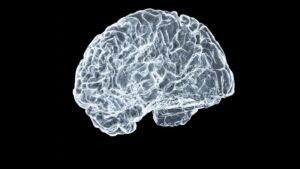
Human Connection: Unraveling the Web of Our Social Minds
Scientifically Reviewed · Dr. Marwa Abd-Alazim · August 22, 2026
Review Criteria & Clinical Standards
This content undergoes rigorous scientific peer-review and medical editorial standards at Arab Psychology Network to ensure clinical accuracy, validity, and compliance with evidence-based guidelines from leading psychological and healthcare authorities (APA / WHO).

Defining the Plexus: Etymology and Core Definition
The term plexus, originating from the Latin word meaning “braid” or “interwoven,” denotes a sophisticated network consisting of structures that are either anatomically continuous or operationally interlinked. In the context of biology and psychology, a plexus is not merely a collection of components but rather a system characterized by high redundancy, distributed functionality, and crucial points of convergence and divergence. This structure ensures integrated communication and often provides resilience against localized disruption. The fundamental definition emphasizes the interconnectedness of similar biological structures, such as nerves, blood vessels, or lymphatic vessels, forming a complex web where information or material exchange is highly regulated and highly efficient. The concept transcends simple linear pathways, highlighting the necessity of integrated networking for sophisticated biological and psychological functions.
While most frequently encountered in anatomy, where it describes macroscopic physical arrangements like the celiac or solar plexus, the operational definition extends its utility into the realm of cognitive science. An operational plexus refers to a functional network where the interlinkage is defined by information flow, synchronous activity, or shared computational goals, even if the underlying physical architecture is highly dispersed. This dual application—describing both concrete physical wiring and abstract functional architecture—makes the concept essential for understanding systems that rely on parallel processing and emergent properties. The strength of a plexus lies in its ability to integrate input from multiple sources and distribute output across various effector pathways, a principle critical for complex motor coordination and advanced cognitive processing.
The original definition provided a foundational biological example: “Plexus constructs exist in the respiratory system as the brachial plexus.” The brachial plexus, a dense network of nerves originating from the spinal cord, illustrates the anatomical necessity of this structure. It integrates motor and sensory fibers that innervate the entire upper limb, distributing signals in such a way that coordinated movement and sensation are possible. Damage to a single spinal root might cause weakness, but the interwoven nature of the plexus often allows for partial functional compensation by adjacent fibers, showcasing the network’s inherent robustness, which is a hallmark feature of all biological and psychological systems organized in a plexiform manner.
The Anatomical Foundation: Major Neural Plexi
The nervous system provides the most compelling and direct examples of anatomical plexus formation, where these networks are vital for regulating peripheral motor and sensory activity. Beyond the brachial plexus, which controls the shoulders, arms, and hands, other significant neural plexi include the cervical plexus, responsible for innervating the neck and providing motor control to the diaphragm via the phrenic nerve; the lumbar plexus; and the sacral plexus, which together manage the lower limbs and pelvic structures. These anatomical arrangements are crucial because they aggregate nerve fibers originating from several spinal levels into common bundles, ensuring that functionally related muscles or sensory areas receive integrated, synchronous innervation, thereby preventing jerky or uncoordinated movements.
Detailed examination of these structures reveals sophisticated organizational principles. For instance, within a peripheral plexus, fibers undergo repeated merging and division, allowing axons that share a common functional destiny (e.g., supplying a specific muscle group) to travel together, even if they originated from disparate points in the central nervous system (CNS). This rearrangement facilitates redundancy; if one branch of the network is severed, alternative paths within the plexus might still permit partial signal transmission, although often compromised. This structural characteristic highlights an evolutionary strategy prioritizing adaptability and survival over minimal wiring cost, a concept that finds direct parallels in the study of adaptive cognitive architectures.
Furthermore, the body houses extensive autonomic plexi, such as the enteric plexus, a vast network of neurons embedded within the walls of the gastrointestinal tract. Often termed the “second brain,” this system operates largely independently of the CNS, managing complex processes like peristalsis, secretion, and local blood flow regulation. The enteric plexus exemplifies an operationally autonomous network where local interlinkage permits rapid, localized decision-making, demonstrating that plexiform organization is essential for systems requiring immediate, distributed control, a concept highly relevant when modeling unconscious or automatic psychological processes.
Operational Interlinkage: From Anatomy to Function
The conceptual transition from an anatomical plexus to an operational one is fundamental for applying this term within psychology and neuroscience. While the physical arrangement of nerves provides the substrate, the operational plexus emphasizes the flow and integration of information. In the CNS, individual neurons are organized into functional circuits that behave as intricate, interconnected networks. These circuits, though spatially diffuse, are operationally linked by synchronized firing patterns, synaptic efficacy, and shared processing goals. For example, the visual processing system is an operational plexus where information is simultaneously routed through various pathways—one pathway for processing motion, another for color, and yet another for form—all of which must converge to construct a unified perception.
Operational interlinkage is defined by the principles of convergence and divergence. Convergence occurs when multiple inputs (sensory data, emotional signals, memories) feed into a single processing unit or node, allowing for integration and context-dependent interpretation. Divergence ensures that the processed information or behavioral command is broadcast to multiple related systems, enabling holistic response. In cognitive terms, consider the act of decision-making: it requires the convergence of motivational states, working memory, long-term knowledge, and perceived risk. The functional architecture governing this process is an operational plexus, where the strength and efficacy of the interlinkages determine the speed and accuracy of the final behavioral output.
The study of operational plexus structures is critical in understanding psychological homeostasis. Because these networks are highly interlinked, changes in one component system can rapidly propagate throughout the network. This explains phenomena such as somatization, where psychological stress (an operational state) can manifest as physical symptoms (anatomical and physiological dysfunction). The nervous system, operating as a continuous plexus from the brain down to the peripheral ganglia, ensures that emotional and cognitive states are intrinsically linked to physiological regulation, illustrating the inseparable nature of anatomical structure and psychological function.
The Plexus as a Metaphor for Neural Networks
In modern neuroscience, the architectural principles of the plexus serve as a powerful metaphor and structural model for understanding the brain’s intrinsic connectivity. The human connectome, the comprehensive map of neural connections, reveals a highly organized but non-hierarchical system that strongly resembles a complex plexus. Key regions, known as ‘hubs,’ exhibit exceptionally high degrees of interlinkage, analogous to the major trunks of an anatomical nerve plexus, and are critical for large-scale information integration across distant brain regions. Examples include the posterior cingulate cortex and parts of the prefrontal cortex, which act as central nodes facilitating communication between cognitive control, emotional regulation, and memory systems.
The concept of the functional plexus is central to understanding distributed processing. Rather than specific tasks being localized to a single brain area, complex cognitive functions—such as language comprehension or abstract reasoning—are achieved through the synchronized activity of widely distributed neural populations that form a temporary, task-specific operational plexus. This network flexibility allows the brain to rapidly reconfigure its processing architecture in response to changing demands. The efficiency and reliability of this system depend directly on the density and quality of the interlinkages, mirroring the resilience observed in anatomical plexi where multiple pathways serve common goals.
A prime example of a psychological plexus is the Default Mode Network (DMN), a set of brain regions that remain highly active when an individual is not engaged in an external task. The DMN represents a tightly interlinked operational plexus involved in internal processes such as self-referential thought, future planning, and consolidation of memory. Dysfunction within the DMN’s interlinkages, or aberrant connectivity between the DMN and other task-positive networks, has been implicated in numerous psychological disorders, including schizophrenia and major depressive disorder, illustrating how the breakdown of network integrity directly translates into pathological psychological states.
Clinical Significance of Plexus Dysfunction
Disruption to the interlinked nature of a plexus, whether anatomical or operational, leads to significant clinical consequences. Anatomically, plexopathies—disorders affecting peripheral nerve plexi—result in widespread motor weakness, sensory loss, and autonomic deficits across the corresponding limb or body region. For instance, traumatic injury to the brachial plexus often produces complex deficits because damage is not confined to a single nerve, but rather impacts the integrated source of innervation for the entire upper extremity, leading to a profound loss of coordinated function and sensation that is challenging to rehabilitate due to the complexity of the damage.
In the realm of psychological health, dysfunction manifests as disorders of connectivity and integration, reflecting a breakdown in the operational plexus. Conditions like autism spectrum disorder (ASD) are often characterized by altered patterns of neural connectivity, sometimes exhibiting hyper-connectivity within local networks but hypo-connectivity between distant brain regions. This imbalanced interlinkage suggests that the operational plexus supporting complex social cognition is compromised, leading to difficulties in integrating emotional cues, theory of mind, and contextual information—functions that require the robust synchronization of multiple distant hubs.
Traumatic experience provides a powerful example of how operational plexus integrity can be compromised. Post-Traumatic Stress Disorder (PTSD) involves persistent alterations in the connectivity between the fear-processing networks (amygdala), emotional regulation centers (ventromedial prefrontal cortex), and memory systems (hippocampus). The resulting dysregulation means the operational plexus designed for threat assessment and response fails to integrate contextual safety cues, leading to chronic hyperarousal and impaired emotional processing. Addressing such disorders often requires therapeutic approaches that aim to restore the functional interlinkage and synchronization within the compromised operational plexus.
Cognitive Plexi: Conceptual and Semantic Networks
Moving beyond the neural substrate, the concept of the plexus is highly applicable to the structure of mental representations themselves. Cognitive psychology posits that knowledge is stored not in isolated units, but within vast, interconnected semantic networks. These semantic plexi organize concepts based on meaningful relationships, associative links, and hierarchical structures. When an individual accesses a concept, the activity spreads rapidly through the interlinked nodes of the semantic network, facilitating quick retrieval of associated information, definitions, and contextual relevance. For example, accessing the concept ‘bird’ immediately activates related nodes such as ‘feathers,’ ‘flight,’ ‘nest,’ and ‘beak,’ due to the strong operational interlinkages formed through learning and experience.
Schema theory further relies on the principles of the cognitive plexus. Schemas are complex, interconnected cognitive structures that organize large amounts of information about the world, specific events, or social roles. These structures act as dense operational plexi, providing shortcuts for interpreting new information and guiding behavior. Because schemas are highly interlinked, they offer efficiency but also introduce potential biases; activating one component of a schema can lead to the rapid and often unconscious activation of the entire associated network, influencing perception and memory reconstruction. The resilience and rigidity of these cognitive plexi explain why deeply ingrained beliefs or prejudices are difficult to modify, as challenging one node requires restructuring the entire associated network of interlinkages.
Memory retrieval itself operates as a complex search process across a highly distributed operational plexus. Episodic memories are not stored in a single location but are reconstructed by integrating information stored across various cortical and subcortical regions. The efficiency of memory recall depends critically on the strength of the functional pathways linking these dispersed fragments—the quality of the memory plexus. Failures of retrieval, such as tip-of-the-tongue phenomenon, often reflect temporary failure in the synchronization or interlinkage strength necessary to bridge the final gap between the semantic concept and the phonological representation.
Developmental Psychology and the Formation of Network Structures
The development of psychological function can be viewed as the gradual maturation and specialization of anatomical and operational plexi. Early brain development is characterized by massive synaptogenesis, creating an initially diffuse, highly redundant plexus with numerous potential but often inefficient interlinkages. As the infant interacts with the environment, experience-dependent plasticity drives a process of selective pruning, where unused or inefficient connections are eliminated, while frequently used pathways are strengthened through myelination and increased synaptic efficacy. This sculpting process transforms the initial, highly general network into specialized, refined operational plexi optimized for specific cognitive and behavioral tasks.
The formation of specialized psychological skills, such as mathematical reasoning or musical ability, relies on the establishment of dedicated, highly efficient operational plexi. For example, learning to read involves creating new, specialized interlinkages between visual processing centers, auditory language areas, and motor output systems for articulation. If this developmental process is disrupted—for instance, in developmental dyslexia—the resulting difficulty often stems from compromised interlinkage efficiency within the phonological processing plexus, rather than isolated damage to a single processing module.
Crucially, development involves not just the strengthening of specialized networks but also the establishment of effective inter-network communication. The maturation of the prefrontal cortex, which continues well into early adulthood, is essential for connecting executive control functions with limbic emotional centers. This late-developing interlinkage creates the mature operational plexus necessary for complex emotional regulation, impulse control, and long-term planning, demonstrating that psychological maturity is fundamentally tied to the structural and functional completeness of these overarching network systems.
Computational Models and the Study of Interconnected Systems
The principles governing the structure and function of the plexus are rigorously investigated through computational modeling, particularly using Artificial Neural Networks (ANNs) and connectionist architectures. These models explicitly simulate the interconnected nature of biological systems, treating information processing as a collective property of a vast network of interconnected nodes, rather than the function of isolated components. Connectionist models, in essence, are artificial operational plexi designed to mimic the brain’s capacity for distributed representation and parallel processing.
The success of ANNs in tasks such as pattern recognition and machine learning validates the efficiency of plexiform organization. These models demonstrate that complex functions emerge spontaneously when simple processing units are interconnected in a dense, highly redundant manner, allowing the system to learn complex mappings through adjusting the weights (or strength of interlinkage) between the nodes. This mirrors the biological process of synaptic plasticity, where learning corresponds to the strengthening or weakening of the connections within the underlying neural plexus.
Furthermore, computational models allow researchers to test the specific effects of network damage or altered connectivity, providing insights into clinical conditions. By simulating the removal of key hub nodes or the reduction of interlinkage strength (analogous to demyelination or synaptic loss), researchers can observe the resulting degradation in performance, offering quantitative evidence for the necessity of robust plexiform organization for psychological function. These studies reinforce the view that the integrity of the plexus—its complex, interwoven, and robust connectivity—is the defining feature of high-level cognitive and behavioral capacity.