Popular Psychology: Decoding the Science of Everyday Life
Scientifically Reviewed · Dr. Marwa Abd-Alazim · September 10, 2026
Review Criteria & Clinical Standards
This content undergoes rigorous scientific peer-review and medical editorial standards at Arab Psychology Network to ensure clinical accuracy, validity, and compliance with evidence-based guidelines from leading psychological and healthcare authorities (APA / WHO).
Defining Popular Psychology: Dual Interpretation
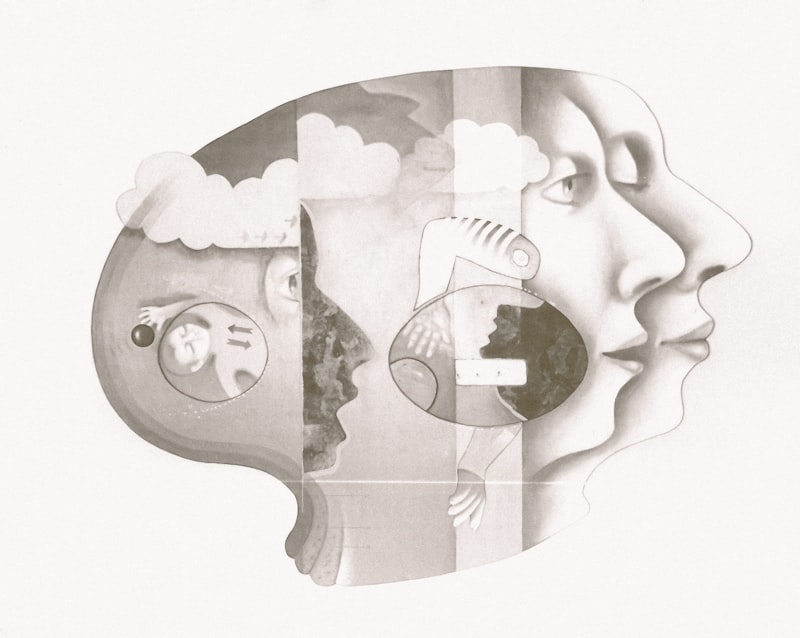
Popular psychology, often abbreviated as “pop psych,” is a complex and multifaceted concept within the broader psychological landscape, primarily characterized by two distinct, yet often overlapping, definitions. The first definition focuses on the consumption and comprehension of psychological knowledge by the general populace, frequently resulting in an understanding that may be oversimplified, misunderstood, or based upon outdated research. This aspect of popular psychology is less about intentional dissemination and more about the interpretation of complex scientific findings through cultural filters, media dissemination, and word-of-mouth, leading to the proliferation of psychological myths or highly generalized concepts that lack the necessary nuance required for rigorous scientific application. Consequently, this form of popular psychology often relies heavily on easily digestible narratives, anecdotal evidence, and memorable catchphrases, which, while accessible, can sometimes distort the original empirical basis of the psychological principles they attempt to represent.
The second, and perhaps more intentional, definition of popular psychology refers to the body of psychological insight and material explicitly developed and marketed for utilization by the general public, often outside traditional academic or clinical settings. This category encompasses a vast array of media, including self-help books, inspirational seminars, online quizzes, popularized scientific articles, and motivational speakers who distill complex behavioral theories into actionable steps for everyday life improvement. The primary goal of this output is utility—providing tools for personal growth, relationship management, emotional regulation, or career success—and it is characterized by its emphasis on practical application rather than theoretical exploration or empirical validation, which typically defines academic psychology.
It is crucial to recognize that the tension between these two definitions forms the core controversy surrounding popular psychology. While the materials aimed at public utilization (Definition 2) often strive to be helpful and grounded in legitimate psychological principles, their accessibility and commercial nature frequently contribute to the issues highlighted in the first definition—namely, oversimplification and misunderstanding. The market demands easily consumable solutions, forcing complex scientific models to be packaged into straightforward advice, which inevitably sacrifices accuracy for immediate applicability. Therefore, popular psychology operates in a dynamic space between legitimate scientific outreach and commercial enterprise, making careful differentiation necessary when evaluating its credibility and impact.
Historical Roots and Evolution
The roots of popular psychology predate the formal establishment of psychology as an empirical science in the late 19th century, drawing heavily on earlier traditions of moral philosophy, phrenology, mesmerism, and various forms of self-improvement literature that promised insight into human character and destiny. However, popular psychology truly began to flourish in the 20th century, catalyzed by the widespread cultural impact of key figures like Sigmund Freud. Although Freud’s work was initially highly academic, its revolutionary concepts—such as the unconscious mind, repression, and the Oedipus complex—were quickly absorbed and dramatically simplified by the burgeoning mass media of the early 1900s, providing a vocabulary for discussing internal emotional life previously unavailable to the layperson.
The post-World War II era witnessed a significant acceleration in the popularization of psychology, driven by increasing public interest in mental health, stress management, and personal fulfillment amidst rapid societal change. The rise of humanistic psychology in the mid-20th century, championed by figures such as Carl Rogers and Abraham Maslow, offered particularly fertile ground for popular translation. Concepts like self-actualization, peak experiences, and unconditional positive regard resonated deeply with the public desire for purpose and meaning, leading to a flood of literature focused on personal potential. This shift marked a move away from purely clinical or theoretical topics toward actionable, positive psychology, making mental health discourse relevant and accessible to middle-class audiences seeking self-improvement rather than therapy for pathology.
The late 20th and early 21st centuries saw popular psychology embrace the digital revolution. The advent of television talk shows, radio call-in programs, and later, the internet, transformed the dissemination model, making psychological advice instantaneous and ubiquitous. Today, social media platforms and specialized online publications serve as primary conduits for pop psych content, allowing ideas—both scientifically sound and entirely spurious—to spread globally with unprecedented speed. This evolution underscores a critical contemporary challenge: while democratization of knowledge is beneficial, the rapid pace of digital dissemination often bypasses traditional editorial or peer-review filters, amplifying the risk of circulating flawed or misleading psychological information to millions instantly.
Characteristics of Popular Psychology Content
Popular psychology material is generally characterized by several defining stylistic and substantive traits that distinguish it from academic or clinical literature. Stylistically, the language is deliberately non-technical, favoring plain language, accessible analogies, and an encouraging, often motivational, tone. Complex statistical data or methodological details, which are central to empirical psychology, are almost always omitted in favor of presenting conclusions as definitive truths or universal rules. The goal is clarity and persuasive impact, ensuring that the reader or consumer feels empowered and capable of applying the advice immediately without needing specialized training or extensive prior knowledge of psychological theory.
Substantively, popular psychology frequently employs techniques that simplify human behavior into easily categorized types, frameworks, or stages. Common examples include personality typologies (e.g., introvert/extrovert binary), simplified models of relationship dynamics (e.g., the five love languages), or linear processes for emotional recovery (e.g., the stages of grief, often applied rigidly). While these models can offer a helpful starting point for self-reflection, their rigid application often fails to account for the immense variability and complex interactions inherent in genuine human experience, leading to a reductionist view of multifaceted psychological phenomena. This tendency towards neat categorization is highly appealing to the public, as it provides a perceived sense of control and predictability over otherwise chaotic internal lives.
Another key characteristic is the heavy reliance on anecdotal evidence and personal testimonials. Academic psychology relies on controlled studies, statistical significance, and replicability, whereas popular psychology often foregrounds powerful, emotionally resonant stories of transformation or success. These narratives are highly effective rhetorical devices that build trust and demonstrate practical utility, but they inherently lack the generalizability and scientific rigor of empirically derived data. The emphasis is shifted from “what is proven true for a population” to “what worked for this individual,” creating a powerful but potentially misleading expectation of universal success for the consumer.
The Self-Help Industry and Commercialization
The self-help industry stands as the most visible and commercially dominant manifestation of popular psychology, representing a multi-billion dollar global market dedicated to offering solutions for personal, professional, and emotional fulfillment. This industry thrives on the promise of transformation, selling products—ranging from books and audio programs to coaching certifications and large-scale motivational seminars—that often leverage genuine psychological concepts but package them within highly marketable, frequently proprietary, frameworks. The commercial pressure inherent in this market dictates that content must not only be informative but also novel, compelling, and offer rapid results, which can sometimes incentivize exaggeration or the overstatement of scientific findings.
A significant challenge arising from the commercialization of popular psychology is the phenomenon of credential creep and the blurring of professional boundaries. Many popular psychology figures lack the formal, standardized training (such as a Ph.D. in clinical psychology or licensed counseling credentials) required for practicing licensed mental healthcare professionals. While many are skilled communicators and motivators, the line between offering general life advice and providing therapeutic intervention is often poorly defined in the commercial sphere. The public, eager for accessible expertise, may not always be equipped to distinguish between advice offered by a scientifically rigorous researcher and that offered by a motivational speaker whose primary expertise lies in marketing.
Furthermore, the business model often relies on perpetual consumption. While a traditional therapeutic relationship aims for eventual resolution or independence, the self-help industry often requires the continuous introduction of new techniques, new books, or new seminar levels to maintain revenue streams. This can sometimes create a cycle of dependency, where the consumer is led to believe that the solution to their problems lies just one more purchase away. The highly profitable nature of self-help demonstrates the deep cultural appetite for psychological guidance, yet simultaneously necessitates a critical examination of how market forces potentially compromise the integrity and long-term efficacy of the advice being distributed.
Critiques and Concerns Regarding Accuracy
Academic psychologists frequently voice strong critiques of popular psychology, primarily centering on issues of scientific accuracy, methodological rigor, and ethical dissemination. One major concern is the practice of “cherry-picking,” where popularizers selectively cite isolated findings from legitimate research studies while ignoring contradictory evidence or the caveats included in the original academic publication. This selective presentation often leads to the widespread dissemination of psychological concepts that are fundamentally flawed or only marginally supported by the weight of empirical evidence, such as the persistent myth that humans only use 10% of their brains, or overly simplistic interpretations of brain lateralization (“left brain/right brain”).
Another serious critique involves the issue of generalizability and the application of complex clinical concepts outside their intended context. For instance, diagnostic criteria developed for clinical settings (e.g., identifying traits associated with personality disorders) are frequently misapplied in popular discourse to label friends, family, or colleagues in casual conversation. This lay diagnosis not only diminishes the seriousness of genuine clinical conditions but also misrepresents the rigorous, multi-faceted assessment process required by trained professionals. The simplification of complex mental health issues into accessible labels can foster misunderstanding and reduce empathy for those genuinely struggling with psychological disorders.
The overemphasis on positive thinking, while motivating, also draws scrutiny. Critics argue that some popular psychology trends promote a form of “toxic positivity,” suggesting that all negative emotions are merely obstacles to be overcome through willpower, thereby neglecting the necessary function of emotions like sadness, anxiety, or grief. By positioning personal failure or unhappiness solely as a failure of mindset or effort, these approaches can inadvertently lead to self-blame and increased psychological distress, particularly when individuals face systemic barriers or unavoidable tragedies that cannot be solved by a simple change in perspective, highlighting the potential for popular psychology to offer psychological harm through misdirection.
The Relationship Between Academic and Popular Psychology
The relationship between academic psychology—the domain of research institutions, peer-reviewed journals, and clinical practice standards—and popular psychology is often characterized by mutual suspicion and a significant communication gap. Academic researchers often view popularization efforts with skepticism, fearing that necessary scientific nuance will be lost and that poorly supported claims will damage the credibility of the entire field. Conversely, popularizers sometimes criticize academic work for being too inaccessible, bogged down in jargon, and irrelevant to the practical, immediate needs of the average person seeking to improve their life quality.
However, a constructive intersection between the two fields is vital for public welfare. Responsible popularization, often termed psychological science communication, involves trained researchers or skilled writers translating robust, empirically validated findings into accessible formats without sacrificing accuracy. When executed successfully, this outreach serves a crucial educational function, informing the public about evidence-based mental health practices, debunking widespread psychological myths, and promoting critical thinking about human behavior. This bridges the gap, allowing the public to benefit from decades of rigorous research that might otherwise remain confined within university libraries.
The challenge for the future involves establishing clearer standards for the translation process. Academic institutions are increasingly recognizing the ethical imperative to communicate their findings to the public, leading to greater emphasis on public scholarship and media engagement training for researchers. Simultaneously, responsible popularizers are striving to incorporate more transparent reporting of sources and limitations. The goal is to maximize the utility of psychological knowledge for the public good while minimizing the risk associated with oversimplified or unfounded claims, thereby creating a feedback loop where public interest can genuinely inform research directions, and research findings can genuinely inform public action.
Utility and Potential Benefits for the Layperson
Despite the significant critiques regarding its accuracy and commercialization, popular psychology does offer several undeniable benefits and utility for the general public. Primarily, it plays a crucial role in the democratization of psychological knowledge, making complex ideas about human motivation, cognition, and emotion available to individuals who might otherwise lack the resources or inclination to pursue formal education or clinical therapy. This accessibility can serve as a vital first step toward self-awareness and personal development, prompting individuals to reflect on their behaviors and relationships in structured ways they had not considered before.
Furthermore, popular psychology often serves as an essential gateway to professional help. By introducing concepts related to mental health, emotional distress, and therapeutic techniques, self-help literature can normalize the experience of struggling and reduce the stigma associated with seeking formal psychological intervention. A person who first encounters concepts of anxiety management or cognitive restructuring through a popular book may be better prepared and more willing to engage with a licensed therapist when their challenges require expert, tailored care. In this sense, popular psychology acts as a crucial pre-clinical educational tool.
Finally, much of the popularized advice, even when simplified, touches upon fundamental, evidence-based principles of wellbeing. For example, the emphasis on goal setting, establishing healthy boundaries, practicing mindfulness, or improving communication skills aligns directly with decades of research in areas like cognitive behavioral therapy (CBT) and positive psychology. Even if the delivery mechanism is commercial and the details are streamlined, the core message often encourages behaviors known to enhance life satisfaction and resilience. When consumed critically and used as a source of general guidance rather than definitive medical treatment, popular psychology can successfully motivate positive behavioral changes.
- Increased Self-Awareness: Provides frameworks for understanding personal reactions and motivations.
- Reduced Stigma: Normalizes discussion of mental and emotional challenges in everyday life.
- Behavioral Motivation: Offers accessible, actionable steps for making positive lifestyle changes.
- Educational Resource: Serves as an introduction to basic psychological concepts and theories.