Somatosensory Cortex: Mapping Your Internal Reality
Scientifically Reviewed · Dr. Marwa Abd-Alazim · September 5, 2026
Review Criteria & Clinical Standards
This content undergoes rigorous scientific peer-review and medical editorial standards at Arab Psychology Network to ensure clinical accuracy, validity, and compliance with evidence-based guidelines from leading psychological and healthcare authorities (APA / WHO).
Anatomical Definition and Location
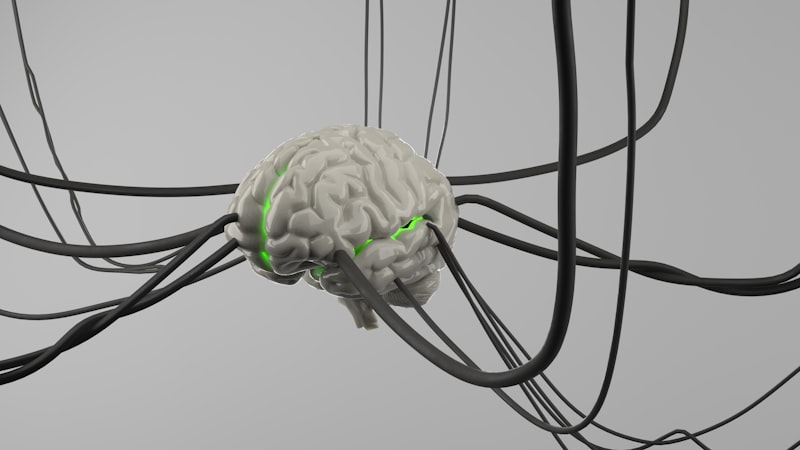
The postcentral gyrus represents a crucial anatomical landmark within the cerebral cortex, situated prominently in the parietal lobe of the brain. Its name accurately describes its position: it is the major cortical ridge, or convolution, located immediately posterior (behind) to the deep fissure known as the central sulcus (also known as the Fissure of Rolando), which serves as the fundamental boundary separating the frontal lobe from the parietal lobe. This precise location ensures that it forms a functional pair with the precentral gyrus, located anterior to the central sulcus in the frontal lobe, which houses the primary motor cortex. The postcentral gyrus itself is the seat of the primary somatosensory cortex, designated functionally as S1, making it indispensable for the initial processing and perception of physical sensations originating from the body.
Extending across the lateral surface of the hemisphere, the postcentral gyrus begins superiorly near the longitudinal fissure and courses inferiorly, terminating near the lateral sulcus (Sylvian fissure). Its structure is highly convoluted, typical of cortical gyri, maximizing the surface area available for neuronal processing. The boundaries of the gyrus are defined by the central sulcus anteriorly and the postcentral sulcus posteriorly, which separates it from the remainder of the posterior parietal cortex. Understanding this spatial arrangement is critical in neuroanatomy, as the proximity to the motor cortex facilitates rapid and integrated sensorimotor feedback loops, essential for coordinated movement and interaction with the environment. The integrity of this ridge is often assessed clinically, given its critical role in sensory awareness.
Histologically, the postcentral gyrus corresponds primarily to Brodmann areas 1, 2, and 3, which together constitute the primary somatosensory area (S1). Specifically, Area 3b is often considered the true primary recipient of thalamic input, responsible for basic touch and proprioceptive information, while Areas 1 and 2 perform higher-order processing and integration of these signals, contributing to stereognosis and texture discrimination. This specific arrangement of cytoarchitecture—the organization of neurons into distinct layers—reflects its dedicated role in receiving, interpreting, and localizing tactile, thermal, painful, and positional information. Damage or localized lesions specifically affecting this ridge, as exemplified by the clinical phrase, “The postcentral gyrus was damaged during surgery,” often result in distinct somatosensory deficits contralateral to the site of the injury, underscoring its functional singularity in sensory perception.
The Primary Somatosensory Cortex (S1)
The primary function of the postcentral gyrus is to serve as the Primary Somatosensory Cortex (S1), the initial cortical destination for sensory information relayed from the body periphery via the thalamus. This specialized region is responsible for the conscious awareness and initial analysis of somatosensory modalities. These modalities encompass a diverse range of physical sensations, including light touch (mechanoreception), pressure, vibration, temperature (thermoception), pain (nociception), and crucial internal senses such as proprioception (awareness of body position in space) and kinesthesia (awareness of body movement). The integrity of S1 is paramount for discriminating between different textures, recognizing object shapes through touch (stereognosis), and maintaining overall spatial awareness necessary for navigating the environment and performing complex motor tasks.
Sensory information transmission follows a highly structured pathway before reaching S1. Peripheral receptors detect stimuli and transmit signals through spinal and cranial nerves, which then ascend through the spinal cord and brainstem via pathways like the Dorsal Column-Medial Lemniscal system. The crucial relay station for all somatosensory input is the thalamus, specifically the ventral posterior nucleus (VPN). Neurons within the VPN project densely and topographically onto Area 3b of the postcentral gyrus, ensuring that the spatial organization of the peripheral body map is maintained upon reaching the cortex. This highly ordered projection system guarantees precise localization of the stimulus, allowing an individual to accurately identify where on the body a sensation originated, a process vital for immediate reaction to external threats or subtle environmental cues.
Within S1, the processing is not uniform across the Brodmann areas but is highly specialized. Area 3b, positioned deep within the central sulcus, receives the densest and most direct thalamic input, specializing in cutaneous reception (touch and pressure) and serving as the foundational processing unit. Area 1 primarily processes texture and fine discriminative touch, integrating input from Area 3b to refine the perception of surface properties. Area 2 is generally involved in processing deep pressure, proprioception, and spatial features related to joint and muscle movement, contributing to awareness of limb configuration. This functional segregation within the postcentral gyrus allows for parallel processing of different sensory qualities, which are then integrated to form a coherent, holistic perception of the body’s interaction with the external environment, crucial for complex behaviors like tool use and object manipulation.
Mapping the Body: The Somatosensory Homunculus
Perhaps the most fascinating and iconic feature of the postcentral gyrus is its organization according to the somatosensory homunculus, a term derived from the Latin meaning “little man.” This homuncular representation signifies that the entire surface of the body is systematically and physically mapped onto the cortical surface of S1 in an orderly, albeit distorted, fashion. This map is organized contralaterally, meaning the left postcentral gyrus receives sensory input exclusively from the right side of the body, and vice-versa. The map begins inferiorly, near the lateral sulcus, with the representation of the face, tongue, and pharynx, and progresses superiorly along the gyrus, mapping the hands, arms, trunk, and finally, the legs and feet, which wrap around into the medial surface of the hemisphere. This precise and systematic mapping allows for highly accurate sensory localization.
Crucially, the homunculus is not proportional to the actual physical size of the body parts but is instead proportional to the density of sensory receptors and the degree of sensory discrimination required for that specific region. Areas of the body that are highly sensitive and require fine tactile discrimination, such as the lips, tongue, and especially the fingers and hands, occupy disproportionately large areas of the postcentral gyrus, reflecting the immense amount of neural tissue dedicated to processing fine motor and sensory inputs from these critical interaction points. Conversely, less sensitive areas, such as the back and trunk, occupy relatively small cortical territories. This cortical magnification reflects the evolutionary importance of fine sensorimotor control in areas used for exploration, communication, and complex manipulation, highlighting the prioritization of sensory acuity over sheer size.
The existence of the homunculus demonstrates the strict topographic organization inherent in the somatosensory system. While the map is highly organized, it is not a rigid, fixed structure but is characterized by remarkable dynamism. Research into cortical plasticity has revealed that the somatosensory map can dynamically reorganize itself based on experience, learning, or injury. For instance, intensive training on a specific tactile task can lead to an expansion of the cortical representation for the digits used in that task, enhancing sensory performance. Conversely, amputation of a limb can lead to the cortical area previously dedicated to that limb being claimed by adjacent body representations, a phenomenon thought to underlie phantom limb sensations, demonstrating the brain’s continuous capacity for neural adaptation and functional reassignment.
Cytoarchitecture and Laminar Organization
The postcentral gyrus, being part of the neocortex, exhibits the characteristic six-layered structure (laminae I through VI) described by Brodmann, although the specific cellular composition and density in S1 are highly specialized for sensory input processing. This cytoarchitecture—the study of cellular organization—is pivotal in understanding how S1 performs its dedicated function. Layer IV, the internal granular layer, is the primary recipient layer of afferent sensory input arriving directly from the ventral posterior nucleus (VPN) of the thalamus. Neurons in Layer IV are densely packed and primarily stellate (star-shaped) interneurons, optimized for receiving and rapidly distributing incoming sensory data to the supragranular and infragranular layers for further analysis.
Layers II and III, the external granular and external pyramidal layers respectively, are heavily involved in processing and integration within the cortex, connecting S1 to other cortical areas, particularly the secondary somatosensory cortex (S2) and the posterior parietal association areas. These layers contain numerous pyramidal neurons, characteristic of cortical output cells, although their projections here are primarily intracortical, facilitating complex sensory analysis and cross-modal integration within the parietal lobe. Layer V, the internal pyramidal layer, typically houses the large pyramidal neurons responsible for output to subcortical structures. Unlike the massive motor output from the adjacent M1, S1 Layer V neurons project mainly to subcortical nuclei such as the basal ganglia, the red nucleus, and specific brainstem nuclei, thereby influencing movement control and sensory gating mechanisms rather than initiating movement directly.
Layer I, the molecular layer, is largely acellular, containing mainly axons and dendrites, serving as a horizontal integration layer. Layer VI, the multiform layer, situated closest to the white matter, projects back to the thalamus, primarily to the VPN, forming a crucial feedback loop known as the corticothalamic pathway. This pathway allows the cortex to actively modulate the sensory information it receives, effectively filtering or enhancing specific inputs based on attention, expectation, or behavioral relevance. This mechanism of sensory gating is essential for focusing on relevant stimuli while inhibiting distracting background input, ensuring that the limited computational resources of the cortex are directed toward the most pertinent sensory details.
Neural Pathways and Connectivity
The connectivity of the postcentral gyrus is organized around its role as the primary sensory hub, involving complex afferent (incoming) and efferent (outgoing) pathways that link it to nearly every major functional division of the central nervous system. The primary afferent pathways originate from the periphery and ascend through the Dorsal Column-Medial Lemniscal system for critical touch and proprioception, and the Spinothalamic Tract for pain and temperature. Both pathways converge at the thalamus before projecting heavily and specifically onto Area 3b of S1, ensuring that high-fidelity sensory information reaches the cortex rapidly and systematically. The integrity of these ascending tracts is essential for preserving the detailed somatosensory map and the patient’s capacity for fine discrimination.
Efferent connectivity from S1 is equally critical, serving two main functional categories: modulation and integration. S1 projects heavily to the secondary somatosensory cortex (S2), which is generally located on the upper bank of the lateral sulcus. S2 is crucial for bilateral integration of sensory information, recognizing complex object shapes, and higher-level processing, such as learning through touch and tactile memory. Furthermore, S1 sends extensive projections to the posterior parietal cortex (PPC), including the superior and inferior parietal lobules. These regions integrate somatosensory input with visual and auditory information, playing a vital role in spatial awareness, body schema formation, and dynamically guiding goal-directed movements in three-dimensional space.
The relationship between the postcentral gyrus and the adjacent precentral gyrus (primary motor cortex, M1) is particularly intimate and mutually reciprocal. Numerous connections exist across the central sulcus, facilitating the sensorimotor transformation necessary for coordinated action. Sensory feedback regarding the position of a limb or the texture of an object grasped is immediately relayed from S1 to M1, allowing for rapid, micro-adjustments in muscle force and trajectory based on environmental feedback. This continuous, real-time exchange is fundamental to skilled motor control, ensuring that movements are smooth, accurate, and responsive to changes in the environment. Disruptions in this reciprocal loop, often caused by lesions affecting the cortex near the central sulcus, result in deficits that combine sensory loss with impaired motor execution and dexterity.
Clinical Implications of Postcentral Gyrus Lesions
Damage to the postcentral gyrus, whether due to stroke (ischemia or hemorrhage), traumatic brain injury, tumor invasion, or specific neurodegenerative processes, results in profound and characteristic somatosensory deficits, typically manifesting contralaterally to the site of the lesion. The severity and type of deficit depend heavily on the extent and location of the damage within the homunculus. A stroke affecting the superior part of the gyrus might primarily impact sensation in the leg and trunk, potentially impairing walking stability, whereas damage near the lateral sulcus would severely impair sensation in the face and hand, leading to significant functional disability in areas requiring fine manipulation and sensory discrimination.
Key clinical syndromes associated with postcentral gyrus lesions include astereognosis and agraphesthesia. Astereognosis is defined as the inability to recognize objects by touch alone (e.g., failing to identify a key or a coin placed in the hand), despite the patient having intact primary sensation (i.e., they can feel that something is touching their hand). Agraphesthesia is the inability to recognize letters or numbers traced onto the skin, indicating a profound loss of fine spatial discrimination. While basic pain and temperature thresholds might be slightly elevated, the most disabling symptoms are often related to the loss of fine discriminative touch and proprioception, severely compromising the ability to perform complex daily living tasks that rely on tactile feedback, such as dressing, typing, or walking without relying exclusively on visual input.
Furthermore, lesions in S1 can sometimes lead to unusual and debilitating sensory phenomena, including the presence of central pain syndromes. In this condition, patients experience chronic, intractable pain in the affected body area even without peripheral injury, a phenomenon known as thalamic pain if associated with the VPN, or central post-stroke pain if originating from cortical damage. This is thought to result from the disruption of normal cortical processing and sensory gating mechanisms within the postcentral gyrus and its related thalamic circuits, leading to aberrant signaling. Understanding the precise mapping of the homunculus allows clinicians to predict the sensory loss profile based on neuroimaging findings, providing critical information for diagnosis, prognosis, and the design of targeted rehabilitation strategies aimed at minimizing functional sensory deficits.
Development, Experience, and Cortical Plasticity
The development of the postcentral gyrus and its associated somatosensory map is a complex process influenced by both genetic predetermination and extensive postnatal sensory experience. While the basic structure and topographic organization of S1 are established early in life through genetically guided axonal pathfinding, the fine-tuning of the somatosensory homunculus continues well into adolescence and remains remarkably malleable throughout the lifespan. This long-term malleability is the fundamental basis of cortical plasticity, the brain’s profound ability to reorganize its functional connections and representations in response to external demands, intensive learning, or significant injury.
Experimental and clinical evidence overwhelmingly supports the dynamic nature of the postcentral gyrus map. For example, behavioral studies on expert performers demonstrate clear structural changes; musicians who intensively practice instruments requiring fine, repetitive finger movements, such as professional violinists, often exhibit an expanded and reorganized cortical representation for the highly trained digits within S1 compared to control subjects. This experience-dependent reorganization demonstrates that increased functional use drives competitive cortical expansion. Conversely, if sensory input from a limb is permanently lost, such as through amputation, the cortical area previously dedicated to that limb does not remain silent; adjacent body representations invade the deprived territory, resulting in the reorganization of the map, sometimes manifesting as referred sensations or phantom limb sensations.
This remarkable capacity for reorganization holds significant implications for rehabilitation following neurological damage. Therapies such as constraint-induced movement therapy (CIMT) rely heavily on the principle of plasticity by forcing the use of a paretic (weakened) or sensory-impaired limb, thereby driving reorganization and reinforcement of functional pathways in the motor and somatosensory cortices. Promoting active sensory exploration and fine discrimination tasks can help to refine and restore functional sensory maps in the postcentral gyrus, mitigating the long-term effects of injury and maximizing functional recovery. The postcentral gyrus, therefore, is not merely a passive recipient of sensory data but an active, adaptive structure continually shaped and refined by environmental interaction and behavior.