Neurovascular Anatomy: How Blood Flow Shapes Your Vision
Scientifically Reviewed · Dr. Marwa Abd-Alazim · August 25, 2026
Review Criteria & Clinical Standards
This content undergoes rigorous scientific peer-review and medical editorial standards at Arab Psychology Network to ensure clinical accuracy, validity, and compliance with evidence-based guidelines from leading psychological and healthcare authorities (APA / WHO).
Introduction and General Anatomy
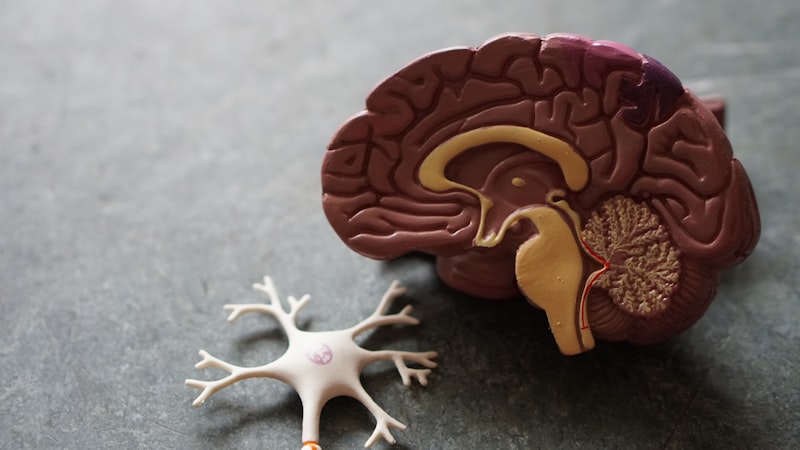
The Posterior Cerebral Artery (PCA) is one of the brain’s primary arteries, integral to the posterior circulation system, and is responsible for supplying oxygenated blood to critical structures including the visual cortex, the thalamus, and significant portions of the medial and inferior temporal lobes. Originating from the terminal bifurcation of the basilar artery, the PCA embarks on a complex trajectory that defines its anatomical segmentation and clinical significance. This arterial pathway is essential for sustaining the metabolic demands of the neural tissue responsible for higher-order visual processing, sensory relay, and memory consolidation. The PCA’s course begins in the interpeduncular cistern, where it immediately crosses superiorly to the oculomotor nerve (CN III), an important landmark used in neurosurgical and radiological evaluations. Its subsequent path involves traversing the ambient cistern, wrapping around the midbrain above the dural fold known as the tentorium cerebelli, before distributing its terminal branches across the cerebral hemispheres. The integrity of the PCA is absolutely paramount for maintaining crucial aspects of conscious experience, and compromise within its territory leads to profound and often characteristic neurological deficits.
The functional territory of the PCA is geographically diverse, supplying both deep, central structures and wide expanses of the cortical surface. Deep branches penetrate the brainstem and diencephalon, providing flow to the third ventricle area, inclusive of the thalamus and the choroid plexus, which are vital for sensory processing and cerebrospinal fluid production, respectively. Superficial, or cortical, branches fan out over the posterior cerebrum, ensuring the vascularization of the entire posterior surface of the occipital lobe, the primary center for vision. Additionally, the PCA supplies the inferior surface of the temporal lobe, including the fusiform gyrus, the lingual gyrus, and the inferior temporal gyri, areas specialized for complex visual recognition, reading, and object naming. This extensive and specialized supply territory necessitates a highly detailed understanding of the PCA’s four segments (P1 through P4) and the specific collateral pathways afforded by the Circle of Willis, which often determine the severity of ischemic injury.
Origin and Proximal Segments (P1 and P2)
The anatomical journey of the PCA begins precisely at the bifurcation point of the basilar artery, marking the terminus of the vertebrobasilar system within the posterior cranial fossa. The initial segment, designated P1 (the pre-communicating segment), extends laterally from this origin to the point where it connects with the posterior communicating artery (PCoA). This connection is critical, as the PCoA links the PCA to the anterior circulation system, primarily the internal carotid artery, forming the posterior portion of the Circle of Willis. The P1 segment is characterized by the origin of numerous small but functionally indispensable vessels known as the posterior thalamoperforating arteries. These vessels penetrate the posterior perforated substance to supply the medial thalami, the posterior limb of the internal capsule, and sections of the midbrain. Infarction in the P1 territory is therefore highly symptomatic, often resulting in profound motor and sensory deficits due to the dense packing of ascending and descending tracts in this region. The caliber of the P1 segment is subject to significant individual variation; in some cases, it may be hypoplastic, leading to a reliance on the anterior circulation for posterior blood supply—a variation termed a fetal PCA origin.
The transition from P1 to P2 occurs immediately distal to the PCoA connection. The P2 segment, often referred to as the ambient segment, follows a curved path within the ambient cistern, wrapping around the cerebral peduncle of the midbrain. This segment is anatomically defined by its location superior to the free edge of the tentorium cerebelli. P2 is rich in emerging branches that are crucial for deep structural supply. It gives rise to the thalamogeniculate arteries, which supply the lateral geniculate body (the major relay center for visual information from the optic tract) and the posterior thalamus. Furthermore, the P2 segment is the origin of the posterior choroidal arteries, comprising medial and lateral groups. The medial posterior choroidal arteries are responsible for supplying the roof of the third ventricle and the superior aspect of the choroid plexus, while the lateral posterior choroidal arteries supply the choroid plexus of the temporal horn of the lateral ventricle. Because of its close proximity to the midbrain and the oculomotor nerve, aneurysms or mass effect involving the P2 segment can present clinically with signs of cranial nerve compression, typically manifesting as an isolated third nerve palsy.
Major Branches and Territories of Supply
The distal segments of the PCA—P3 (quadrigeminal) and P4 (cortical)—are defined by their transition into the major feeding vessels for the cerebral cortex. The P3 segment is situated within the quadrigeminal cistern, and the P4 segment represents the termination of the PCA as it arborizes over the cortical surface. The overall territories supplied by the PCA can be systematically categorized into three groups: central, choroidal, and cortical. The central branches, as previously noted, ensure the viability of deep gray matter structures. The choroidal branches maintain the health of the ventricles and CSF production apparatus. The cortical branches, however, are responsible for the most recognizable clinical syndromes associated with PCA occlusion, as they feed the specialized visual and associative areas.
The primary and most significant cortical branch is the Calcarine Artery, which follows the path of the calcarine sulcus deep within the occipital lobe. This artery provides the exclusive blood supply to the primary visual cortex (V1 or Brodmann area 17), the essential region for processing raw visual input. Because the calcarine artery is typically an end artery with limited collateral redundancy from the MCA, its occlusion results in a characteristic visual field deficit known as contralateral homonymous hemianopia. The extent of visual loss can often be mapped precisely to the involved area of the calcarine fissure. Other major cortical branches include the parieto-occipital artery, supplying the superior occipital and posterior parietal cortex, and the temporal arteries, which spread across the inferior and medial surfaces of the temporal lobe.
The vascularization of the medial temporal lobe structures by the PCA is critically important for cognitive function. This includes the supply to the hippocampus and the parahippocampal gyrus, which are indispensable components of the limbic system responsible for memory encoding and retrieval. Ischemia affecting the temporal branches can thus result in profound memory impairment, particularly anterograde amnesia. Furthermore, the supply to the fusiform gyrus and the lingual gyrus links the PCA to complex visual association functions, including color perception, face recognition, and reading. Damage to the non-dominant fusiform gyrus may lead to prosopagnosia (inability to recognize faces), while damage to the dominant lingual gyrus can result in alexia (acquired inability to read), illustrating the PCA’s specialized role in higher cognitive processes.
Anatomical Variations and the Circle of Willis
The efficacy of the cerebral circulation system hinges upon the interconnectedness provided by the Circle of Willis, and the PCA’s relationship to this circle is subject to considerable anatomical variation that dictates stroke risk and outcome. The classic anatomical configuration assumes equal contribution from the vertebral and internal carotid systems. However, the most prevalent and clinically significant variation is the Fetal Posterior Cerebral Artery (fPCA) origin, where the P1 segment is congenitally narrow or absent. In this scenario, the PCoA is significantly enlarged and becomes the principal source of blood flow to the P2 segment and the posterior cortex, deriving its supply directly from the internal carotid artery. This variation fundamentally alters the hemodynamics of stroke, meaning that an occlusion or stenosis in the anterior circulation (e.g., the internal carotid artery) can precipitate an ischemic event in the posterior (PCA) territory, a result that would be unlikely in the standard configuration.
Conversely, variations in the size and dominance of the vertebral arteries and the P1 segment influence the potential for collateral flow. A robust P1 segment can provide a vital source of collateral blood flow to the anterior circulation via a patent PCoA in the event of severe internal carotid occlusion. This bidirectional flow capacity underscores the PCoA’s function as a critical pressure equalizer. Furthermore, structural variations, such as arterial loops or aneurysmal dilations, particularly near the origin of P1, can lead to compression syndromes affecting adjacent neural structures. The comprehensive assessment of these anatomical deviations, typically through magnetic resonance angiography (MRA) or computed tomography angiography (CTA), is essential for accurately diagnosing the source of vascular insufficiency and predicting the extent of potential ischemic damage following an occlusion. These variances highlight the delicate balance between redundancy and vulnerability inherent in the cerebral vasculature.
Functional Significance (Vision, Memory, Sensation)
The profound functional significance of the PCA territory is evident in the vital cognitive and sensory roles of the structures it supplies. The extensive supply to the thalamus, particularly the ventral posterolateral and ventral posteromedial nuclei, establishes the PCA as essential for sensory relay. These nuclei receive all ascending sensory information (touch, pain, temperature) and project it onward to the somatosensory cortex. Ischemia in the deep thalamoperforating territory often leads to the classic thalamic syndrome, or Dejerine-Roussy syndrome, characterized initially by severe contralateral sensory loss, which may paradoxically evolve into chronic, debilitating, central post-stroke pain, known as thalamic pain. This persistent pain is often highly resistant to conventional analgesics, underscoring the severity of damage to these deep nuclei.
In the realm of vision, the PCA’s supply to the occipital lobe dictates the ability to see and interpret the visual world. While the primary visual cortex (V1) handles raw input, the adjacent visual association areas, supplied by the PCA, manage interpretation. Damage to these association areas in the dominant hemisphere (usually the left) can result in complex language deficits such as alexia without agraphia, where the patient can write but cannot read what they or others have written, due to the lesion isolating the language centers from the visual input areas. Damage to the non-dominant hemisphere’s association areas often impairs spatial processing, leading to topographic disorientation or neglect. The preservation of the central visual field, or macular sparing, is a common feature in cortical PCA strokes, attributed to the often dual blood supply the macula receives from the terminal branches of the Middle Cerebral Artery (MCA).
Finally, the PCA’s critical role in memory is secured by its delivery of blood to the bilateral hippocampi and surrounding limbic structures. The hippocampus is the principal structure for converting short-term memory into long-term memory. While unilateral hippocampal damage may cause mild, often subtle memory issues, bilateral PCA occlusion—though uncommon—is disastrous, resulting in ischemia to both hippocampi. This leads to immediate and severe global amnesia, characterized by a dense inability to form any new memories (anterograde amnesia) and often a limited loss of memories prior to the event (retrograde amnesia). This specific outcome illustrates the PCA’s direct influence on the core mechanisms of human learning and memory retention.
Pathology: Posterior Cerebral Artery Occlusion (PCA Stroke)
Ischemic stroke involving the PCA territory accounts for a significant proportion of all cerebral infarctions. The etiologies of PCA strokes are varied, generally falling into categories based on the mechanism of vessel blockage. The primary causes include large artery atherosclerosis, typically affecting the basilar artery or the P1 segment itself; cardioembolism, where clots generated in the heart (e.g., secondary to atrial fibrillation or valvular disease) travel to and lodge in the PCA; and small vessel disease, which causes lacunar infarcts primarily in the deep perforating branches. The precise clinical presentation and prognosis are highly dependent on which segment is occluded and the effectiveness of the individual patient’s collateral circulation.
Occlusion of the proximal P1 segment is often the most critical event because it sacrifices all subsequent branches, including the vital thalamoperforating arteries, leading to extensive damage in the midbrain and deep thalamus. In contrast, distal P4 occlusion tends to result in isolated cortical deficits, predominantly affecting vision, with sparing of the deep sensory and motor pathways. Cardioembolism is the most frequent cause of distal PCA strokes, as emboli are carried passively into the cortical branches. Treatment protocols, including intravenous thrombolysis or endovascular thrombectomy, must be initiated rapidly, typically within the narrow therapeutic window following symptom onset, to maximize the chances of recanalization and minimize permanent neurological injury. Imaging modalities such as diffusion-weighted MRI are essential for confirming acute infarction in the PCA territory, which can sometimes be clinically subtle if the lesion is small or isolated to the deep structures.
Clinical Manifestations and Syndromes
The clinical manifestations of a PCA stroke are diverse, reflecting the complexity of its supply. The most common and recognizable feature of a large cortical PCA infarction is contralateral homonymous hemianopia, which is a loss of vision in the half of the visual field opposite the side of the lesion. This results from damage to the ipsilateral visual pathway, specifically the calcarine cortex. If the infarct involves the deep thalamic structures, patients often present with significant contralateral hemisensory loss, which can progress to the debilitating pain of thalamic syndrome.
Specific syndromes are associated with localized PCA ischemia:
- Weber’s Syndrome: Caused by midbrain infarction (often P1 perforator involvement), characterized by ipsilateral oculomotor nerve palsy (ptosis, dilated pupil, eye deviated down and out) coupled with contralateral hemiparesis (weakness) due to damage to the cerebral peduncle.
- Balint Syndrome: Resulting from bilateral superior parieto-occipital damage, often caused by bilateral watershed ischemia or successive PCA infarcts. It manifests as a triad of symptoms: optic ataxia (inability to accurately guide hand movements using vision), ocular apraxia (inability to voluntarily shift gaze), and simultanagnosia (inability to perceive more than one object at a time).
- Prosopagnosia: The inability to recognize familiar faces, often caused by unilateral or bilateral infarction of the fusiform gyrus in the inferior temporal lobe, particularly in the non-dominant hemisphere.
The heterogeneity of symptoms necessitates a detailed neurological examination to distinguish PCA strokes from those involving the anterior circulation. The presence of isolated visual or memory symptoms without severe motor deficits strongly suggests a distal PCA cortical territory infarct, whereas the combination of visual loss, sensory deficits, and oculomotor dysfunction points toward a proximal P1 or P2 occlusion affecting the deep perforators and midbrain structures. The ability to precisely localize the lesion based on these clinical signs remains a fundamental skill in neurodiagnosis.