Deliberate Practice: Master Skills Through Strategic Habits
Scientifically Reviewed · Dr. Marwa Abd-Alazim · August 20, 2026
Review Criteria & Clinical Standards
This content undergoes rigorous scientific peer-review and medical editorial standards at Arab Psychology Network to ensure clinical accuracy, validity, and compliance with evidence-based guidelines from leading psychological and healthcare authorities (APA / WHO).

The Core Definition of Practice in Psychology
Practice, within the context of psychological and behavioral sciences, is formally defined as the systematic and repeated engagement in a specific act, behavior, or sequence of activities, undertaken with the explicit goal of enhancing performance, mastering a particular skill, or consolidating knowledge. It is a fundamental mechanism underpinning nearly all forms of human learning, ranging from the acquisition of basic motor skills, such as walking or typing, to complex cognitive abilities, including mathematical problem-solving or language fluency. The essence of effective practice lies not merely in repetition, but in the focused effort required to identify and correct errors, thereby gradually optimizing the efficiency and accuracy of the behavior being learned. This process is inherently goal-directed and relies heavily on continuous feedback loops to guide the learner toward desired outcomes.
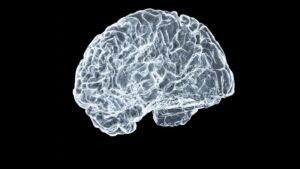
The fundamental principle underlying practice is the modification of the underlying neural architecture, a process known as neuroplasticity. When an individual engages in a skill repeatedly, the neural pathways associated with that skill are strengthened and refined. Initially, performing a new task requires substantial cognitive resources; every movement or decision is effortful and deliberate. Through sustained practice, the nervous system adapts, transitioning the control of the skill from slow, conscious processing in areas like the prefrontal cortex to faster, automated processing in subcortical structures like the basal ganglia. This shift reduces the overall cognitive load required to execute the task, freeing up attention for higher-level strategic thinking or simultaneous task execution.
Psychologists differentiate between various types of practice, recognizing that simply repeating an action is often inefficient. Key distinctions include massed practice, where repetitions are performed rapidly without breaks, and distributed or spaced repetition, which involves scheduling learning sessions with strategic intervals between them. Research consistently demonstrates that distributed practice, particularly for retaining cognitive information, yields superior long-term retention compared to massed practice. The systematic organization of practice sessions, incorporating variability and challenge, is therefore considered the critical determinant of successful skill acquisition, moving far beyond the simple aphorism that “practice makes perfect.”
Historical Foundations and Theoretical Context
The study of practice has deep roots in early experimental psychology, particularly within the framework of Behaviorism. One of the earliest formal articulations regarding the role of repetition in learning came from Edward Thorndike, whose work on animal learning led to the formulation of the Law of Exercise, a central tenet of his connectionism theory. Thorndike proposed that the more frequently a stimulus-response bond was used, the stronger that bond became, suggesting that repetition (practice) directly reinforced the connection. While later cognitive research refined and partially superseded this purely behaviorist view, Thorndike established the initial theoretical link between repetitive action and measurable learning outcomes, providing a foundational concept for subsequent generations of learning theorists.
As the field transitioned into the cognitive revolution of the mid-20th century, the focus shifted from simple stimulus-response bonds to the internal processing of information. Researchers began modeling practice not just as reinforcement, but as a process of reducing errors and organizing motor plans. A highly influential model in this area is the Fitts and Posner three-stage model of skill acquisition, developed in the 1960s. This model describes the progression of learning through three distinct phases: the cognitive phase, where the learner mentally understands the task; the associative phase, where errors are detected and corrected through internal feedback; and the autonomous phase, where the skill becomes rapid, fluid, and requires minimal conscious attention. This framework highlighted that practice is fundamentally about cognitive restructuring, rather than just physical repetition.
More recently, the concept of practice was rigorously refined by K. Anders Ericsson and colleagues, who introduced the concept of deliberate practice. Emerging from studies of expert performance across domains such as music, chess, and sports, Ericsson posited that mere repetition is insufficient for achieving elite status. Instead, high levels of performance are attained through highly structured, goal-oriented practice that is often effortful, designed specifically to overcome current limitations, and requires constant, immediate feedback and monitoring. This modern perspective emphasizes quality and intentionality over sheer quantity, profoundly influencing contemporary approaches to talent development and professional training.
The Mechanism of Learning: Neural Plasticity and Automatization
At the physiological level, practice drives profound structural changes in the central nervous system, embodying the principle of neural plasticity. When a new skill is initiated, the brain recruits a broad network of regions, often including areas responsible for attention and working memory. As practice continues, two primary changes occur: synaptic strengthening and neural specialization. Synaptic strengthening involves the long-term potentiation (LTP) of connections between neurons that fire together during the task execution, making communication along that specific pathway faster and more reliable. This biological change is the physical manifestation of memory consolidation and skill improvement.
Furthermore, repeated practice leads to increased efficiency through myelination, particularly in motor pathways. Myelin is a fatty sheath that wraps around the axons of neurons, acting as electrical insulation. Increased myelination, often observed in highly practiced areas, dramatically increases the speed and efficiency of signal transmission, allowing complex motor commands to be executed almost instantaneously. This mechanism is crucial for the development of highly refined motor skills, such as those required by professional athletes or surgeons, where milliseconds can determine success or failure. The structural reorganization allows the brain to transition from consciously controlling every component of a task to executing the task as an integrated, fluid sequence.
The psychological outcome of this neural restructuring is automatization, the process by which a behavior moves from controlled to automatic processing. In the initial, controlled phase, the task demands high cognitive load, interfering with other simultaneous activities. For example, a beginner driver cannot hold a complex conversation while learning to shift gears. As the skill becomes automated through practice, the execution requires minimal conscious effort, transferring control to dedicated subroutines in the cerebellum and basal ganglia. This release of cognitive resources is highly adaptive, enabling individuals to engage in multitasking and to focus their attention on novel or critical elements of the environment, confirming the immense value of consistent practice in developing expertise.
Deliberate Practice: A Specialized Approach
The concept of deliberate practice serves as a crucial refinement to the general understanding of repetition. Unlike “naive practice,” which might involve simply playing an instrument piece from beginning to end repeatedly, deliberate practice is characterized by several specific features designed for maximal improvement. It requires that the practice activities be carefully designed to improve specific components of performance, often focusing on the learner’s weakest areas. This means the activity must be highly effortful and fall just outside the learner’s current comfort zone, maximizing the necessity for cognitive adjustment and neural adaptation.
A key element distinguishing deliberate practice is the requirement for immediate and informative feedback. The learner must be able to accurately monitor their performance, identify discrepancies between their actions and the desired outcome, and adjust their strategy accordingly. In many professional settings, this necessitates the presence of a coach, mentor, or objective measurement tool (like video analysis) to provide external feedback that the learner cannot generate internally. Without this structured evaluation and adjustment cycle, practice tends to plateau, leading only to maintenance of the current skill level rather than continuous improvement toward expert performance.
Furthermore, deliberate practice requires intense focus and concentration, often limited to manageable durations to prevent mental fatigue. Ericsson’s research suggested that even world-class experts generally limit their highly focused deliberate practice sessions to around four hours per day, recognizing the immense mental energy expenditure required to maintain this level of effortful self-monitoring and error correction. This approach highlights that effective practice is a strategic, disciplined commitment to continuous marginal gains, emphasizing quality of effort and systematic self-correction over sheer hours clocked.
Practical Application: Mastering a Complex Skill
To illustrate the psychological principles of practice, consider the real-world scenario of an individual learning to play a complex piece of music on the piano. This endeavor moves distinctly through the stages of skill acquisition, demonstrating the transformation from controlled cognitive effort to autonomous motor execution. Initially, in the cognitive phase, the learner must mentally map the notes on the sheet music to the corresponding keys on the instrument. Practice at this stage is slow, error-prone, and involves constant verbal mediation—the learner might mentally narrate instructions such as “F sharp, C, now D minor chord.” Errors are frequent, requiring the learner to stop, cognitively reset, and restart segments of the music.
As practice continues, the learner enters the associative phase. Through repetition, the mental associations between the visual stimulus (the note) and the motor response (pressing the key) become stronger. Errors decrease significantly, and the learner can play longer passages without stopping, but the process remains highly attentive and effortful. The focus shifts from simply identifying the correct notes to refining timing, dynamics, and rhythm. If a mistake occurs, the correction is quicker, relying on internal kinesthetic feedback—the feeling of the hands on the keys—rather than needing to look back at the sheet music or rely on conscious mental deliberation.
Finally, after extensive, structured practice, the skill reaches the autonomous phase. The execution of the musical piece becomes largely automatic. The fingers move across the keys without conscious thought, relying on deeply engrained motor programs stored in the cerebellum. The cognitive resources initially dedicated to note reading and key placement are now liberated, allowing the performer to focus entirely on the artistic interpretation, emotional expression, and communicating with the audience. This automatization, a direct result of thousands of hours of systematic practice, exemplifies how repetition reconfigures the brain to handle complex tasks efficiently.
Significance in Psychological and Behavioral Research
The study of practice is central to multiple subfields of psychology because it offers a quantifiable means of observing and manipulating human learning and performance potential. In educational psychology, principles derived from practice research inform curriculum design, emphasizing methods like interleaving different subjects and utilizing retrieval practice to maximize long-term retention of academic material. Understanding the superior efficacy of distributed practice has led to significant reforms in how study schedules are recommended to students, shifting away from “cramming” and toward sustained, spaced review sessions.
In the realms of sports and organizational psychology, practice models are fundamental to elite training regimens and professional development programs. Research into deliberate practice provides the empirical foundation for coaching methodologies designed to push athletes and professionals beyond their current performance ceiling, focusing on structured challenges and performance analysis. Furthermore, in clinical and rehabilitation psychology, practice is the core mechanism for recovery. Patients recovering from strokes or neurological injuries must engage in highly repetitive, structured physical and cognitive exercises to promote functional recovery by inducing neuroplastic change in damaged brain regions, effectively re-learning fundamental motor and cognitive skills through persistent repetition.
The concept of practice has also fueled significant public debate, particularly concerning the nature vs. nurture argument regarding talent. While the “10,000-hour rule,” popularized by Malcolm Gladwell based on Ericsson’s work, has been widely debated and often oversimplified, the underlying message remains crucial: sustained, high-quality practice is the single most powerful predictor of expertise in any domain. Psychological research continues to refine how we define “quality” in practice, moving toward individualized, adaptive training models that maximize the impact of every practice session, thereby unlocking greater human potential across diverse fields.
Connections to Related Psychological Theories
Practice is intricately linked to several major theoretical constructs within psychology, primarily residing within the broader category of Cognitive Psychology and Experimental Psychology. Its relationship with Learning Theory is direct, forming the operational mechanism by which associative and non-associative learning occurs. Specifically, practice is the necessary condition for both classical and operant conditioning to solidify learned behaviors, requiring repeated pairings of stimuli or repeated consequences of behaviors to establish strong, persistent responses.
A critical related concept is the phenomenon of **Transfer of Learning**, which examines how practice in one skill or domain affects the performance or learning of a subsequent, different skill. Positive transfer occurs when prior practice aids new learning (e.g., learning guitar makes learning the ukulele easier), demonstrating the generalization of underlying principles or motor patterns. Conversely, negative transfer occurs when prior practice interferes with new learning. Understanding transfer is crucial for designing educational and training sequences that build logically upon previously practiced skills.
Finally, practice is inseparable from the concept of **Feedback Loops**. Effective practice requires the constant comparison of actual performance against a desired standard. Without this informational loop—whether intrinsic (e.g., proprioceptive awareness of one’s body position) or extrinsic (e.g., a coach’s critique)—practice devolves into mindless repetition, resulting in the entrenchment of errors rather than improvement. Thus, practice serves as the action component in a continuous cycle of execution, evaluation, and correction, demonstrating its foundational role across theories of human motor control, memory, and expert development.