Praxis: Turning Intentions Into Real Change
Scientifically Reviewed · Dr. Marwa Abd-Alazim · August 24, 2026
Review Criteria & Clinical Standards
This content undergoes rigorous scientific peer-review and medical editorial standards at Arab Psychology Network to ensure clinical accuracy, validity, and compliance with evidence-based guidelines from leading psychological and healthcare authorities (APA / WHO).

Introduction and Etymological Roots of Praxis
The term praxis is derived from the ancient Greek word meaning “action,” “activity,” or “doing.” In modern academic discourse, particularly within psychology, philosophy, and medicine, praxis operates as a dual concept, encompassing two fundamentally distinct yet interconnected meanings. Firstly, in a clinical and neuroscientific context, praxis refers specifically to the cognitive ability to plan, initiate, and execute skilled, purposeful movements, often termed motor planning. This definition is essential for understanding neurological disorders that affect coordination and learned tasks. Secondly, in philosophical and critical theory domains, praxis signifies the practical application of a theory or lesson; it is the process by which a theory is realized in action, and subsequently, how that action refines or transforms the original theory. This dynamic interplay between thought and action distinguishes praxis from mere rote performance or passive theoretical study.
Understanding the dual nature of praxis is crucial for appreciating its depth within the psychological lexicon. While the medical definition focuses on the intricate neural circuitry required for voluntary movement, the philosophical definition centers on human agency, transformative action, and the integration of knowledge into lived experience. Both definitions share a common thread: the necessity of informed action—movement or behavior that is not random, but rather goal-oriented and contingent upon underlying cognitive structures. Whether planning the complex sequence of steps required to tie a shoelace or applying abstract sociological concepts to real-world community organizing, praxis represents the active bridge between internal cognitive maps and external execution. The insight gained through this active engagement, as exemplified by the original notion of “The praxis insight she has gained during her internship will benefit her career forever,” underscores the enduring value of practical experience over purely theoretical understanding.
This entry will explore both dimensions of praxis, detailing its role in neuropsychology as a critical motor skill and its significance in philosophical and educational traditions as the essential link between theory and practice. We will examine how failures in praxis manifest clinically, and how the purposeful integration of theory and action drives learning, personal development, and social change. The formal definition of praxis thus moves beyond simple practice; it denotes reflective action—action that is conscious, deliberate, and capable of generating new knowledge or skill. This reflective component elevates praxis above simple routine or habit, establishing it as a hallmark of complex cognitive function.
Praxis in Neuropsychology: Motor Planning Defined
In neuropsychology and related fields such as occupational therapy and physical medicine, praxis is strictly defined as the neurological process of motor planning. This intricate process involves the ability to conceptualize, organize, sequence, and execute unfamiliar or complex movements. It is not merely the muscular performance itself, but the entire cognitive pathway that precedes and dictates that performance. For instance, successfully catching a ball requires not just the physical ability of the arm and hand, but the rapid planning of trajectory interception, adjustment of grip, and sequencing of joint movements—all processes governed by praxis. When this system functions optimally, movements appear smooth, efficient, and appropriate for the task at hand. When praxis is impaired, even simple, common movements can become clumsy, fragmented, or impossible to perform on command.
The concept of motor planning as praxis involves several distinct, sequential stages that must be integrated seamlessly. These stages ensure that the action is correctly conceived and executed. The initial stage, sometimes called ideation, involves conceptualizing the goal and the general plan of action. The individual must first know what they want to do (e.g., “I want to unlock the door”). The second stage, motor planning, involves mapping out the specific steps and muscle groups required, selecting the necessary tools, and determining the appropriate force and timing (e.g., reaching for the key, inserting it, turning it clockwise). The final stage is execution, where the motor command is sent from the cortex down the descending pathways to the muscles. While execution is the observable outcome, praxis focuses heavily on the ideation and planning stages, which are purely cognitive. A failure at any of these stages leads to varying forms of apraxia, demonstrating the critical role of praxis in everyday functioning.
Crucially, praxis distinguishes planned, skilled movement from reflexive or habitual movements. Simple reflexes, such as pulling one’s hand away from a hot stove, are mediated by spinal cord pathways and do not involve complex cortical planning. Similarly, highly practiced, automatic actions, such as walking or chewing, become automated and rely less on constant conscious planning once learned. Praxis is most evident when an individual encounters a novel motor task or needs to perform a familiar task in an unusual way, requiring the brain to generate a new motor program. This demand for novel sequencing highlights praxis as an executive function, tightly linked to problem-solving and adaptable behavior. The robust capacity for praxis allows humans to manipulate tools, communicate through complex gestures, and master sophisticated skills like playing a musical instrument or performing surgery.
The Neurological Basis of Motor Praxis
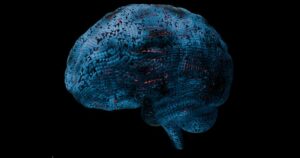
The neural substrates supporting praxis are distributed across a network involving both posterior and anterior cortical areas, emphasizing its complexity as a cognitive function. The planning of movement primarily involves the parietal lobe, particularly the posterior parietal cortex, which is crucial for integrating sensory information (visual, tactile, proprioceptive) with spatial awareness to form a cohesive motor plan. The parietal lobe essentially creates the internal body schema and the spatial relationship between the body and external objects, determining how an object should be manipulated or how the body should move through space to achieve the goal.
Once the plan is formulated in the parietal regions, the signal must be translated into the specific sequence of movements. This translation involves the frontal lobe, specifically the premotor cortex and the supplementary motor area (SMA). The SMA is vital for sequencing movements and initiating self-generated actions, acting as the bridge that converts the abstract goal into a concrete series of muscle commands. Lesions in these areas often result in different types of apraxia, demonstrating a breakdown in the system: damage to the left parietal lobe, for instance, often affects the ability to plan skilled movements for both sides of the body, indicating that the left hemisphere holds dominant control over the generalized sequencing and conceptualization aspects of praxis.
The basal ganglia and cerebellum also play supporting, modulatory roles in the execution of praxis. The cerebellum is instrumental in correcting errors in movement execution, ensuring coordination, balance, and timing, allowing movements to be refined based on feedback. The basal ganglia contribute to the initiation and regulation of movement amplitude and selection, suppressing unwanted movements while facilitating desired ones. Therefore, praxis is not localized to a single brain region but relies on the efficient and rapid communication within a vast neural circuit, integrating perception, cognition, spatial awareness, and motor control. A highly developed sense of praxis requires the integrity of all these interconnected structures.
Clinical Manifestations: Apraxia and Dyspraxia
When the neurological system responsible for praxis is disrupted due to injury, disease, or developmental delay, the resultant condition is termed apraxia or dyspraxia. Apraxia is generally acquired, resulting from focal brain damage (e.g., stroke or trauma) and represents a complete loss of previously learned motor planning ability. Dyspraxia, often referred to as Developmental Coordination Disorder (DCD), is a developmental condition where the acquisition of motor planning skills is significantly delayed or impaired from childhood, affecting coordination, balance, and the ability to learn new skills.
Apraxia is categorized based on the specific function impaired. Ideomotor Apraxia is perhaps the most common form, characterized by the inability to perform familiar gestures or tasks on command, despite the individual understanding the task and having the physical ability to move their limbs. For example, a patient may be unable to show how to wave goodbye when asked, but might spontaneously wave goodbye when leaving. This indicates a disruption in the link between the linguistic command (the theory) and the motor plan (the action). Ideational Apraxia is more severe, reflecting a loss of the conceptual knowledge of the task itself—the individual cannot sequence the steps of a complex action, such as preparing a meal or dressing, even though they can perform the individual component movements. The inability to conceive of the entire action sequence illustrates a fundamental failure in the ideation phase of praxis.
In the case of dyspraxia, individuals struggle throughout their lives with organizational and planning tasks. Children with dyspraxia may appear clumsy, struggle with handwriting (dysgraphia), and find activities requiring fine motor skills or spatial organization challenging. The impact of impaired praxis extends beyond physical movement; it can affect the planning required for speech (verbal apraxia) or the organization required for cognitive tasks. Understanding these clinical manifestations reinforces the idea that praxis is not just muscle function but a high-level cognitive skill essential for navigating and interacting effectively with the environment. Therapeutic interventions, such as occupational therapy, are often focused on improving the underlying processes of praxis through repetitive, structured, and reflective practice.
Philosophical Foundations: Theory, Theoria, and Action
Moving beyond the medical definition, praxis holds a profound significance in classical and contemporary philosophy, where it is often juxtaposed with the concept of theoria (contemplation or abstract knowledge) and poiesis (making or production). Aristotle was instrumental in establishing praxis as a distinct mode of human activity, differentiating it from both theoretical knowledge and productive activity. For Aristotle, theoria sought truth for its own sake (e.g., mathematics or metaphysics), while poiesis aimed at creating an external, durable product (e.g., building a house or writing a poem). Praxis, however, was action whose end lay within itself, specifically concerning ethical and political life. It was intelligent action directed toward the goal of living well, requiring phronesis, or practical wisdom—the ability to deliberate well about what is good and advantageous for human life.
Aristotelian praxis is characterized by the need for moral deliberation and choice. It recognizes that in the realm of human affairs, rules are rarely absolute, and the correct course of action must be determined reflectively in context. A doctor practicing medicine, or a politician leading a community, is engaged in praxis because their actions require judgment, ethical consideration, and adaptability based on immediate circumstances, rather than simply following a fixed algorithm or creating a tangible product. This ancient definition underscores the idea that praxis must be informed by theoretical knowledge (theoria) but is ultimately judged by its effectiveness and moral quality in the real world.
This philosophical lineage highlights the critical difference between mere practice and praxis. Simple practice might be repetitive, unreflective activity, like mindlessly drilling multiplication tables. Praxis, conversely, requires conscious reflection on the outcome of the action and subsequent adjustment of the underlying theory or approach. The theoretical dimension informs the action, and the action, in turn, critically tests and refines the theory, creating a continuous, self-correcting loop. This feedback mechanism is central to psychological development, learning, and ethical maturity, positioning praxis as the engine of moral and intellectual growth.
Praxis in Critical Theory and Social Transformation
The concept of praxis gained immense prominence in the nineteenth and twentieth centuries, particularly within critical theory, Marxism, and existentialism. Karl Marx famously redefined praxis, shifting its focus from individual ethical action (Aristotle) to collective, revolutionary, and transformative human activity. For Marx, praxis was the central mode through which individuals change the world and, in the process, change themselves. This view emphasizes productive labor and social action as the means by which humanity overcomes alienation and realizes its potential. Marx argued that the value of theory is not in its abstract truth, but in its capacity to become a material force when adopted by the masses and enacted in reality.
In this critical tradition, praxis is inherently political and revolutionary. It mandates that intellectuals and theorists must engage actively with the world they study; theory must serve as a guide for action designed to dismantle oppressive structures. Theorists like Antonio Gramsci further developed this idea, emphasizing the role of organic intellectuals who combine theoretical insight with practical experience within a social movement. This critical praxis demands a rigorous self-reflection on the part of the actor: why is this action being taken, what social changes are intended, and how does the current social reality influence the effectiveness of the action?
The pedagogical application of critical praxis, most notably articulated by Paulo Freire, centers on the concept of conscientization—critical consciousness. Freire argued that education should not be the passive reception of knowledge (the “banking” model), but a dialogical process where students and teachers collaboratively reflect on their reality (theory) and act to transform it (practice). This approach ensures that action is never blind and theory is never purely abstract, forging a powerful tool for liberation and social justice. Thus, the critical understanding of praxis highlights that human experience is not merely observed, but actively constructed through informed, reflective engagement.
Educational and Therapeutic Applications of Praxis
In educational psychology, the concept of praxis provides the theoretical foundation for experiential learning models. Effective pedagogy moves beyond didactic instruction to incorporate opportunities for students to apply theoretical knowledge, reflect on the results, and refine their understanding. John Dewey, a key figure in American pragmatism, championed this approach, arguing that genuine education occurs when action and reflection are integrated. If a student learns about physics principles (theory) but never conducts an experiment or builds a device (action), their knowledge remains incomplete and inert. Praxis demands that the learner actively engage in the process of discovery and validation.
Therapeutically, the development of praxis is the core goal of rehabilitation for individuals suffering from apraxia or dyspraxia. Intervention strategies are meticulously structured to rebuild the neural pathways required for motor planning. This often involves breaking down complex skills into smaller, manageable steps, providing extensive verbal cues, and encouraging multisensory feedback. For example, an occupational therapist working with a patient who has ideomotor apraxia might use visual aids and tactile feedback to help the patient re-establish the conceptual map for a task like grasping a cup. The success of the therapy relies on the patient’s ability to move from conscious, effortful planning to automated, fluid movement—a transition that requires consistent, reflective practice.
Furthermore, within psychological counseling and personal development, the principle of praxis is applied when individuals move from merely understanding their psychological issues (insight or theory) to actively implementing behavioral changes (action). A client might conceptually understand the roots of their anxiety, but true change only occurs when they engage in exposure therapy or cognitive restructuring techniques in their daily life. The therapeutic process is iterative: the client acts based on theoretical understanding, reflects on the emotional and situational outcomes, and then adjusts their strategy. This continuous loop of theory-action-reflection is the mechanism through which lasting psychological transformation is achieved, demonstrating that psychological health, like motor skill, depends on robust and reflective praxis.
Distinguishing Praxis from Related Concepts
To fully grasp the specialized meaning of praxis, it is helpful to distinguish it from related concepts that define other types of human activity or knowledge. As previously noted, the classical distinction separates praxis from theoria (contemplation) and poiesis (making). While theoria seeks knowledge for its own sake, praxis seeks knowledge for the sake of ethical action and self-improvement. While poiesis results in a tangible product external to the actor (e.g., a sculpture), the outcome of praxis is primarily the refinement of the actor’s character, judgment, or skill—the action is the end in itself.
In the medical context, praxis must be distinguished from simple motor control and motor skill. Motor control refers to the mechanisms governing posture and movement, largely mediated by lower brain centers and spinal reflexes. Motor skill refers to the learned ability to execute a task effectively. While praxis is necessary to acquire a motor skill, the skill itself, once automated, requires less conscious motor planning. For example, a person with highly developed athletic skill may execute a complex maneuver with little conscious planning, but the initial learning phase was entirely dependent on their capacity for praxis.
Finally, within epistemology (the study of knowledge), praxis is contrasted with gnosis. Gnosis typically refers to esoteric or mystical knowledge—a deep, intuitive understanding often achieved without rational discourse or empirical validation. Praxis, conversely, is grounded in verifiable action and empirical experience. The knowledge gained through praxis is practical, actionable, and subject to continuous validation against the reality of the external world. Therefore, praxis represents the functional, embodied knowledge gained through active engagement, setting it apart from purely theoretical or purely intuitive forms of understanding.
The Role of Insight and Experience in Developing Praxis
The development of sophisticated praxis, whether in motor planning or social action, is fundamentally dependent upon the accumulation of insight and experience. Insight represents the cognitive leap where the theoretical understanding is suddenly clarified or integrated, often resulting in a superior plan of action. In the context of skill acquisition, insight allows the learner to move beyond trial-and-error to understand the underlying mechanics or principles governing success. This moment of insight transforms merely trying into strategically planning, accelerating the rate at which true praxis is developed.
Experience acts as the necessary laboratory for praxis. It provides the diverse, real-world scenarios required to test and refine the theoretical models held by the individual. A student who has only read about negotiation techniques (theory) lacks the robust praxis of a seasoned diplomat who has navigated countless high-stakes discussions (experience). Each action taken by the diplomat provides feedback, allowing them to subtly adjust their strategy, timing, and communication style. This iterative feedback loop is the essence of experiential learning and the core mechanism for developing practical wisdom.
Ultimately, the value of praxis lies in its ability to generate wisdom that is both theoretical and functional. The clinical example provided—”The praxis insight she has gained during her internship will benefit her career forever”—encapsulates this synthesis. The internship provided the practical experience (action) which led to a deeper understanding (insight/theory), resulting in a permanent enhancement of professional skill (developed praxis). Thus, praxis stands as a testament to the fact that the most valuable and enduring forms of human knowledge are forged in the crucible of reflective action.