Motor Cortex: The Brain’s Master Controller of Movement
Scientifically Reviewed · Dr. Marwa Abd-Alazim · September 5, 2026
Review Criteria & Clinical Standards
This content undergoes rigorous scientific peer-review and medical editorial standards at Arab Psychology Network to ensure clinical accuracy, validity, and compliance with evidence-based guidelines from leading psychological and healthcare authorities (APA / WHO).
Introduction to the Precentral Gyrus
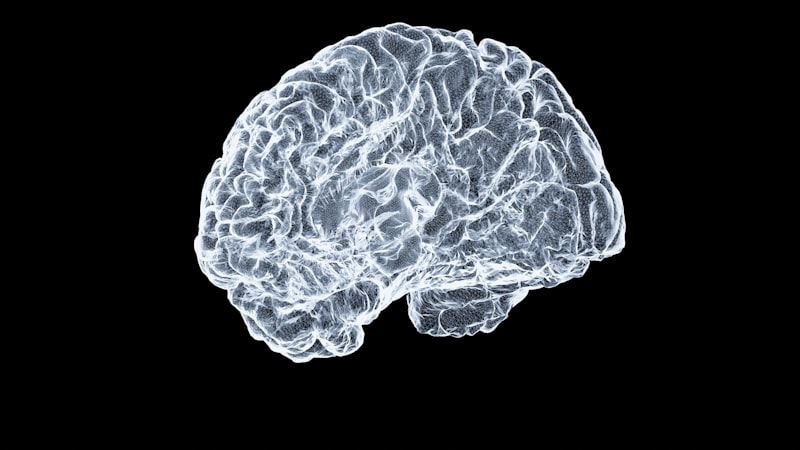
The Precentral Gyrus stands as one of the most functionally critical anatomical structures within the human brain, serving as the physical location of the primary motor cortex (M1). This prominent ridge, or convolution, is situated within the expansive frontal lobe, positioning itself immediately anterior to the deeply defined central sulcus—a major landmark that separates the frontal lobe from the parietal lobe. Its fundamental and irreplaceable role lies in the initiation and precise execution of voluntary motor control across the contralateral side of the body. Understanding the architecture and connectivity of the Precentral Gyrus is paramount to comprehending how complex, goal-directed movements, ranging from the intricate manipulation required for writing to the gross movements involved in locomotion, are orchestrated by the nervous system. Dysfunction or compromise of this region invariably leads to significant, often debilitating, motor deficits, underscoring its essential contribution to neurological health and function.
Historically, the functional significance of the Precentral Gyrus was illuminated through early neurological studies and lesion analyses, particularly the work demonstrating that electrical stimulation of this specific area consistently elicited predictable movements in corresponding body parts. This discovery firmly established the concept of a dedicated ‘motor area’ and paved the way for detailed mapping studies that defined the precise topographical organization of the cortex. The integrity of the neural pathways originating here, particularly the massive projection fibers that descend to the brainstem and spinal cord, dictates the quality and strength of motor output. Consequently, the study of the Precentral Gyrus provides a direct window into the principles governing motor neurophysiology, linking abstract neural commands to tangible physical action.
This encyclopedia entry will delve deeply into the anatomy, cytoarchitecture, somatotopic organization, and clinical implications associated with the Precentral Gyrus. We will explore how its unique cellular composition facilitates rapid signal transmission necessary for immediate movement, examine the concept of the motor homunculus, and discuss the profound impact that damage to this structure, such as that resulting from a stroke or trauma, has on an individual’s motor capabilities and quality of life. The formal understanding of this structure is foundational not only to neuroscience but also to clinical fields like neurology, neurosurgery, and rehabilitation medicine, all of which rely heavily on precise localization of motor function within the cerebral cortex.
Anatomical Location and Cytoarchitecture
Anatomically, the Precentral Gyrus forms the posterior boundary of the frontal lobe, demarcated by the central sulcus posteriorly and the precentral sulcus anteriorly. Laterally, its inferior border is often defined by the lateral sulcus (Sylvian fissure). This prominent cortical ridge runs roughly parallel to the central sulcus, extending superiorly toward the midline longitudinal fissure and inferiorly toward the lateral fissure. Its location is strategically important, placing it in close physical and functional communication with adjacent regions dedicated to motor planning (such as the Premotor Cortex and Supplementary Motor Area) located immediately anterior to it, ensuring a seamless transition from intention to action.
On a microscopic level, the Precentral Gyrus corresponds predominantly to Brodmann Area 4 (BA4), a classification based on the distinctive cellular architecture, or cytoarchitecture, observed in this region. BA4 is characterized by a relatively thin granular layer (Layer IV) and a massive, highly developed inner pyramidal layer (Layer V). The most defining histological feature of the primary motor cortex is the presence of large, distinctive neurons known as Betz cells. These giant pyramidal neurons are among the largest cells in the human nervous system and are clustered primarily within Layer V. The expansive size of these cells and their lengthy axons are essential for their function, as they form the primary output pathways responsible for transmitting motor commands rapidly over long distances down the brainstem and spinal cord. The robust presence of these output neurons highlights the cortex’s role as the final cortical dispatcher of movement commands.
The structural integrity of the six cortical layers in the Precentral Gyrus reflects its primary function as an effector cortex rather than a sensory processing center. Unlike sensory cortices which have thick granular layers dedicated to receiving sensory input, the motor cortex prioritizes efferent output. This unique organizational structure allows the cortex to integrate highly processed motor plans received from associational areas and then translate those plans into precise, timed signals sent directly to the lower motor neurons. The high density of myelinated fibers originating from this gyrus contributes to the white matter tracts below, collectively forming the crucial Corticospinal Tract, which is the principal conduit for skilled voluntary movement.
The Primary Motor Cortex (M1) and Functional Significance
The terms Precentral Gyrus and Primary Motor Cortex (M1) are functionally synonymous, referring to the cortical area where the lowest threshold for electrically elicited movement exists. M1’s primary function is the direct control of the speed, force, and direction of individual muscle contractions. While other cortical areas (like the Supplementary Motor Area and Premotor Cortex) are integral to the planning and organization of complex movements, M1 serves as the final common pathway at the cortical level, initiating the precise neural impulse sequences that drive the musculature. This initiation is critical for all skilled voluntary movements, particularly those involving the distal musculature, such as the hands and fingers, which require high levels of dexterity and coordination.
The functional output of M1 is mediated primarily through the massive projection system known as the pyramidal tract, which includes the Corticospinal Tract (targeting the spinal cord for limb and trunk control) and the Corticobulbar Tract (targeting motor nuclei in the brainstem for facial and oral control). These pathways are contralateral; that is, neural signals originating from the Precentral Gyrus in the left hemisphere control movement on the right side of the body, and vice versa. The vast number of axons descending from the Betz cells ensures rapid and synchronous signaling, which is a prerequisite for ballistic and finely tuned movements. Furthermore, M1 neurons fire not simply based on the presence of movement, but are tuned to encode specific parameters of movement, including the intended direction, the magnitude of force required, and the velocity of the movement.
Beyond simple initiation, the Primary Motor Cortex plays a profound role in motor learning and adaptation. As an individual practices a new skill, the neural representation within the Precentral Gyrus undergoes significant modifications, a phenomenon known as neuroplasticity. These changes involve the strengthening of existing synaptic connections and potentially the recruitment of previously silent neural populations, allowing for improved efficiency and accuracy of the motor command. This plasticity is not limited to development; it remains active throughout life, enabling recovery following injury or adaptation to new physical demands, thereby underscoring M1’s dynamic rather than static role in the motor system.
Somatotopic Organization: The Motor Homunculus
Perhaps the most iconic representation of the functional organization of the Precentral Gyrus is the concept of the Motor Homunculus (Latin for “little man”). This schematic map illustrates the fact that the body is represented topographically across the surface of the gyrus, with adjacent body parts being controlled by adjacent cortical regions. This organization was famously established through pioneering electrical stimulation studies performed on conscious patients undergoing neurosurgery. The mapping reveals a distinct inverted orientation: the areas controlling the feet and lower limbs are situated high on the medial aspect of the gyrus, often dipping into the longitudinal fissure, while the areas controlling the face, mouth, and tongue are located on the lateral, inferior portions.
Crucially, the representation of body parts within the Motor Homunculus is not proportional to their physical size but rather to the complexity and precision of the motor control they require. Body regions involved in fine motor skills, such as the hands, fingers, lips, and tongue, occupy disproportionately large areas of the cortex compared to regions involved in gross movements, such as the trunk and shoulders. This expanded cortical territory provides the necessary density of motor neurons and synaptic connections required to execute highly detailed and independent movements, explaining why humans possess such remarkable dexterity. For instance, the area dedicated to controlling the thumb alone often exceeds the total area dedicated to the entire back.
While the Homunculus provides a powerful conceptual framework, modern research has shown that the map is not a rigid, fixed entity but rather a dynamic and overlapping representation. Individual neurons within the Precentral Gyrus often influence multiple muscles, and complex movements typically involve the activation of broad, overlapping cortical zones rather than just a single, isolated point. This distributed coding allows for flexibility and redundancy in motor control. Furthermore, the map is highly subject to experience-dependent plasticity; for example, intensive practice of a musical instrument or recovery following a peripheral nerve injury can lead to significant reorganization and expansion of the cortical representation corresponding to the trained or recovering body parts.
Connectivity and Regulatory Pathways
The Precentral Gyrus does not operate in isolation; it functions as the final executive layer in a complex hierarchy of motor control, receiving extensive regulatory input from numerous subcortical and cortical structures. The vast network of connections ensures that M1 receives highly refined information regarding movement goals, postural adjustments, and sensory feedback before issuing the final motor command. These afferent pathways are essential for modulating the speed and accuracy of movement execution.
Key cortical inputs arrive primarily from the Supplementary Motor Area (SMA) and the Premotor Cortex (PMC), both located anterior to M1. The SMA is crucial for internally generated movements, sequential movements, and complex planning, while the PMC is heavily involved in externally cued movements and preparation for action based on sensory information. These areas essentially formulate the “plan” and transmit it to M1, which then executes the “action.” Subcortical structures, particularly the thalamus, serve as crucial relays, transmitting processed information from the cerebellum and the basal ganglia—structures vital for timing, coordination, and suppression of unwanted movements—before it reaches M1.
The primary efferent pathways are the aforementioned Corticospinal and Corticobulbar tracts. The majority of the fibers in the Corticospinal Tract cross over (decussate) in the lower medulla to form the lateral corticospinal tract, controlling the contralateral limbs. A small percentage remains uncrossed, forming the anterior corticospinal tract, which controls axial and proximal musculature bilaterally. This comprehensive network of input and output ensures that the commands issued by the Precentral Gyrus are contextually appropriate, precisely timed, and capable of generating smooth, coordinated, and goal-directed movements that interact dynamically with the environment.
Clinical Relevance: Lesions and Motor Deficits
Damage to the Precentral Gyrus, most commonly resulting from ischemic or hemorrhagic stroke, trauma, or space-occupying lesions such as tumors, leads to immediate and profound motor deficits collectively categorized as Upper Motor Neuron (UMN) Syndrome. Because M1 is the primary source of descending control signals, its destruction results in the loss of voluntary movement control in the corresponding contralateral body region, a condition known as hemiparesis (weakness) or hemiplegia (paralysis). The specific area of the body affected directly correlates with the location of the lesion within the motor homunculus. For example, damage to the lateral aspect of the gyrus often affects the face and arm more severely than the leg.
The acute phase following a UMN lesion often presents as ‘spinal shock,’ characterized by flaccid paralysis and loss of deep tendon reflexes. However, as the nervous system recovers and adapts, the chronic phase of UMN syndrome emerges, characterized by distinct signs that include hypertonia (increased muscle tone), hyperreflexia (exaggerated reflexes), and, most notably, spasticity. Spasticity is a velocity-dependent increase in resistance to passive stretch, which results from the loss of descending inhibitory control exerted by the motor cortex over spinal reflexes. This chronic condition significantly impairs functional recovery and is a major focus of rehabilitation efforts following motor cortex injury.
Furthermore, the Precentral Gyrus is a frequent site for the initiation of focal (partial) epileptic seizures. Since this area directly controls muscle groups, abnormal, synchronized electrical discharge originating in M1 can manifest as focal motor seizures, characterized by involuntary, repetitive, and often rhythmic twitching or jerking of a specific body part. This phenomenon, historically referred to as Jacksonian march, involves the seizure activity spreading along the motor homunculus, causing the convulsive movements to progress systematically from one body part to an adjacent one, offering a vivid demonstration of the gyrus’s somatotopic organization in a pathological context.
Research Methodologies and Neuroplasticity
The inherent importance of the Precentral Gyrus has made it a primary target for advanced neuroscience research, utilizing methodologies that allow for non-invasive functional mapping and the study of neuroplasticity. One highly effective technique is Transcranial Magnetic Stimulation (TMS), which uses rapidly changing magnetic fields to induce electrical currents in targeted cortical regions. When TMS is applied over the Precentral Gyrus, it can elicit a Motor Evoked Potential (MEP) in the corresponding peripheral muscle, allowing researchers to precisely map the motor representation area and assess the excitability of the corticospinal pathway in real time.
Functional neuroimaging techniques, such as functional Magnetic Resonance Imaging (fMRI) and Positron Emission Tomography (PET), are crucial for understanding M1 activity during complex motor tasks. These methods reveal which specific parts of the Precentral Gyrus are metabolically active when subjects execute or imagine various movements, providing insights into the dynamic recruitment patterns of the motor cortex. For example, fMRI studies have demonstrated that as a motor skill is learned, the initial widespread activation of M1 may become more focused and efficient, reflecting neural refinement and optimization of the motor command.
The study of neuroplasticity within the Precentral Gyrus holds immense therapeutic potential. Research has shown that following injury, the motor map can reorganize, with adjacent, undamaged cortical regions potentially taking over the functions of the damaged area. Rehabilitation strategies, such as Constraint-Induced Movement Therapy (CIMT), are specifically designed to leverage this intrinsic plasticity, forcing the use of a paretic limb and driving the reorganization of the motor cortex to improve functional outcomes. Ongoing research continues to explore the molecular and cellular mechanisms underpinning this plasticity, aiming to develop pharmacological and neuromodulatory interventions that can enhance motor recovery.
Summary and Conclusion
The Precentral Gyrus, housing Brodmann Area 4 and the Primary Motor Cortex (M1), is an indispensable component of the central nervous system dedicated to the voluntary control of movement. Its location, immediately anterior to the central sulcus within the frontal lobe, is strategic for integrating motor plans and executing precise actions via the Corticospinal Tract. The anatomical organization, characterized by the presence of large Betz cells and a highly developed Layer V, underscores its role as the principal efferent pathway from the cortex.
The functional map of the gyrus, the Motor Homunculus, dictates that lesions here cause contralateral, somatotopically organized weakness and spasticity, hallmarks of Upper Motor Neuron Syndrome. However, the Precentral Gyrus is not merely a static switchboard; it is a highly dynamic structure capable of substantial neuroplasticity, adapting its organization in response to learning, injury, and rehabilitation.
In conclusion, the Precentral Gyrus represents a critical nexus where complex motor intentions are translated into concrete physical commands. Its continued study, utilizing advanced techniques like TMS and fMRI, remains central to understanding not only normal motor behavior and dexterity but also the pathogenesis and potential treatments for debilitating motor disorders. The proper functioning of this singular ridge of cortex is fundamentally linked to an individual’s capacity to interact purposefully and effectively with their environment.