Prepotent Response: Why Your Brain Chooses the Easy Path
Scientifically Reviewed · Dr. Marwa Abd-Alazim · August 23, 2026
Review Criteria & Clinical Standards
This content undergoes rigorous scientific peer-review and medical editorial standards at Arab Psychology Network to ensure clinical accuracy, validity, and compliance with evidence-based guidelines from leading psychological and healthcare authorities (APA / WHO).
Introduction to the Prepotent Response
The concept of the prepotent response stands as a foundational element within behavioral psychology and cognitive science, denoting a specific reaction or action tendency that possesses a significantly superior probability of execution compared to all other potential responses available to an organism in a given environment. This dominance is not merely a statistical likelihood but reflects a deeply ingrained hierarchy of behavioral potential, often rooted in biological necessity, extensive learning, or immediate perceptual salience. A prepotent response is essentially the default setting—the immediate, powerful reaction that requires conscious effort or inhibitory control to suppress or override. Understanding this mechanism is crucial for analyzing behavior ranging from simple reflexes to complex decision-making processes where automaticity clashes with deliberate choice.
In most scenarios, the efficiency of the prepotent response is advantageous, allowing for rapid, life-saving actions. For instance, the immediate withdrawal of a hand from a hot surface exemplifies a prepotent reflex response, minimizing damage without requiring the slow, deliberative processing of the cerebral cortex. However, the influence of prepotency extends far beyond basic reflexes, shaping emotional and cognitive reactions. When faced with acute danger, the fight-or-flight response becomes the prepotent behavioral schema, dominating the central nervous system and subordinating less urgent cognitive tasks, such as complex problem-solving or detailed memory retrieval, to the immediate demands of survival. This mechanism ensures that resources are allocated instantaneously toward the most critical action required for self-preservation.
Perhaps the most compelling and universally relatable example of a prepotent response is the reaction to pain, echoing the essential observation that this biological mechanism is hardwired for immediate and unavoidable attention. The proponent response of pain exists in nearly every human being, with all pain, from dull discomfort to severe agony, being hard, if not impossible, to ignore. Regardless of the environmental context or the cognitive task being performed, the onset of pain instantly commands attention, interrupts ongoing activity, and necessitates an immediate behavioral modification aimed at alleviation or removal of the noxious stimulus. This powerful interruption illustrates the intrinsic superiority of certain physiological drives over competing cognitive tasks, demonstrating the critical role of prepotent responses in prioritizing internal survival signals above external demands or abstract goals.
Historical Context and Theoretical Foundations
The foundation of the prepotent response concept can be traced back to early behavioral psychology and the study of conditioned reflexes, particularly the work of Ivan Pavlov and subsequent investigations into behavioral hierarchies. While Pavlov focused primarily on the involuntary nature of conditioned responses, later theorists began to examine why certain learned or innate responses were more robust and less susceptible to extinction or interference than others. Edward Thorndike’s Law of Effect, which posited that responses followed by satisfying consequences are more likely to be repeated, implicitly addresses prepotency by establishing a mechanism through which successful behaviors become dominant over unsuccessful alternatives, thereby creating a hierarchy of favored reactions. The strength of the association, reinforced through repeated positive outcomes, contributes directly to the prepotent nature of the resulting behavior.
Further formalization came through Hullian behaviorism and related drive theories, which attempted to mathematically model the probability of different responses. In this framework, prepotency is often equated with high reaction potential (E), which is a function of drive (D), habit strength (H), and incentive motivation (K). A high reaction potential signifies a response that is highly likely to occur. This theoretical approach provided a quantitative means of describing the superiority of one reaction over others, suggesting that responses linked to fundamental biological drives (like hunger or thirst) often possess inherently higher prepotency due to the intense motivational state they generate. Thus, when an organism is highly motivated by a primary drive, the set of behaviors designed to satisfy that drive becomes overwhelmingly dominant.
The transition from purely reflexive and conditioned models to more complex behavioral control systems highlighted the necessity of inhibitory processes. Inhibition, in this context, is the mechanism required to override or suppress a prepotent response. The existence of a dominant response implies the necessity of a counteracting force—executive control—which allows for flexible behavior rather than mere automatic reaction. This duality—the automatic prepotency versus the controlled inhibition—became central to understanding adaptive behavior, where the ability to choose a less intuitive, more strategic response often differentiates sophisticated cognitive function from simple reactivity.
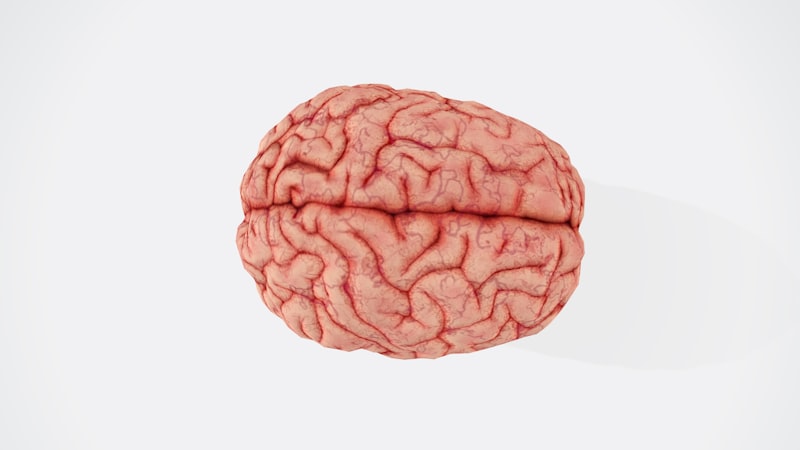
Contemporary behavioral neuroscience integrates these historical theories by locating the neural substrates responsible for both the initiation of prepotent responses (often subcortical or posterior cortical regions) and the subsequent inhibition required to suppress them (primarily the prefrontal cortex). This modern understanding views prepotency not just as a learned probability, but as a system of neural pathways that are either highly myelinated, frequently activated, or intrinsically linked to survival centers, ensuring rapid and efficient execution, often bypassing slower, more resource-intensive cortical processing entirely.
The Biological Imperative of Prepotency
The biological underpinning of the prepotent response is fundamentally tied to evolutionary pressures and the necessity of rapid environmental interaction. In ancestral environments, the cost of delay often equated to death; therefore, the selection favored organisms capable of executing critical responses instantly. These immediate reactions, often mediated by the brainstem and limbic system, constitute the core set of innate prepotent behaviors. The rapid assessment of threat and the subsequent deployment of defensive mechanisms, such as freezing, fleeing, or fighting, are all examples of behavioral sequences that achieved prepotency through natural selection, maximizing the probability of immediate survival.
This biological imperative ensures that responses critical for homoeostasis and survival automatically take priority over non-essential activities. For example, severe physiological needs—such as oxygen deprivation or extreme thermal distress—immediately trigger prepotent responses that mobilize the entire system. When the body detects a critical imbalance, the automatic response overrides voluntary control, demonstrating the hierarchical superiority of these biological mandates. These responses bypass the slower, more flexible cortical systems in favor of rapid, hardwired circuits, reflecting a fundamental trade-off between speed and accuracy: in critical situations, speed of execution is overwhelmingly more valuable than measured deliberation.
Furthermore, the physiological mechanisms of attention are intrinsically linked to prepotency. Stimuli that are particularly salient, novel, or threatening automatically capture attention, initiating the corresponding prepotent response. This phenomenon, known as the orienting reflex, ensures that resources are immediately directed toward the source of the dominant stimulus. The neural architecture supporting this process involves rapid signaling from sensory organs through the thalamus to specialized cortical and subcortical regions, ensuring that the necessary motor plan (the prepotent response) is activated before detailed cognitive analysis of the stimulus even concludes. The inherent bias toward processing negative or threatening information, often termed negativity bias, is itself a form of prepotency in cognitive processing, guaranteeing that potential harm is prioritized over potential reward.
Cognitive Mechanisms and Inhibition Failures
Within cognitive psychology, the prepotent response is frequently studied in the context of cognitive control, specifically examining the executive function responsible for response inhibition. Cognitive control is the capacity to regulate thoughts and actions in accordance with internally maintained goals, particularly when the environment promotes automatic or habitual reactions. When a habitual or automatic response is triggered, cognitive control must intervene to suppress that prepotent reaction and select a more appropriate, often novel, course of action. Failures of inhibition are thus directly attributable to the strength of the prepotent response overwhelming the regulatory capacity of the frontal lobes.
The classic experimental paradigm illustrating this conflict is the Stroop effect. In the Stroop task, participants are shown the name of a color printed in an incongruent ink color (e.g., the word “BLUE” printed in red ink) and asked to name the color of the ink, ignoring the written word. The prepotent response here is the automatic reading of the word, a highly practiced skill. To succeed in the task, the participant must inhibit the prepotent reading response and execute the less practiced color-naming response. The resulting delay and increased error rate (the Stroop interference) precisely quantify the effort required to suppress the dominant, automatic reaction, providing a direct measure of the cognitive load associated with overcoming prepotency.
Response inhibition is primarily mediated by structures within the prefrontal cortex (PFC), particularly the right inferior frontal gyrus (rIFG). The rIFG acts as a critical brake system, receiving signals from other cortical areas and generating the necessary output to halt or redirect the motor program associated with the prepotent response. Damage or temporary impairment (e.g., due to fatigue, stress, or alcohol) to the PFC dramatically compromises inhibitory control, leading to an increase in impulsive behavior and the unchecked execution of prepotent responses. This highlights the crucial, yet fragile, balance between the automatic efficiency of prepotency and the adaptive flexibility afforded by executive inhibition.
Furthermore, cognitive load significantly impacts the ability to manage prepotent responses. When an individual’s working memory or attentional resources are taxed by secondary tasks, the capacity for effortful inhibition diminishes. This phenomenon explains why people often revert to established habits or impulsive reactions when they are stressed, tired, or distracted. The default pathways—the prepotent responses—require minimal cognitive energy, whereas overriding them demands significant cognitive resources. When resources are scarce, the system naturally defaults to the path of least resistance, allowing the prepotent response to dominate the behavioral output.
The study of inhibition failures also reveals the persistence of prepotent responses even after they are deemed inappropriate. For instance, in tasks requiring rapid switching between rules, participants often exhibit perseveration errors—the continuation of a previously correct but now incorrect response pattern. This perseveration indicates that the old, recently reinforced response has achieved a temporary prepotency that resists immediate modification, further demonstrating the robustness of established action tendencies, even in the face of conscious knowledge that they are incorrect.
Prepotent Responses in Clinical Psychology
The framework of the prepotent response is highly relevant to understanding various clinical disorders characterized by deficits in impulse control and executive function, particularly addiction, Attention Deficit Hyperactivity Disorder (ADHD), and certain anxiety disorders. In these contexts, the prepotent response is often maladaptive, leading to detrimental long-term outcomes, yet it remains intensely difficult for the individual to suppress.
In substance use disorders, the intense craving and subsequent drug-seeking behavior constitute a powerful prepotent response. Through repeated use, the neural pathways associated with seeking and consuming the substance become hyper-sensitized and highly automatic. Environmental cues (e.g., seeing a specific location, person, or object associated with drug use) trigger an immediate, overwhelming urge—the prepotent craving response—that subordinates rational consideration of consequences, long-term goals, and health risks. The therapeutic challenge in addiction treatment is fundamentally about strengthening the inhibitory control mechanisms of the PFC to successfully override this deeply entrenched, pathological prepotency.
Similarly, in anxiety and obsessive-compulsive disorders (OCD), the prepotent response often manifests as avoidance or compulsive rituals. For an individual with phobia, the immediate, prepotent response to the feared object or situation is avoidance (fleeing). This avoidance, while providing temporary relief, reinforces the cycle of anxiety. In OCD, the anxiety-reducing ritual (e.g., excessive washing, checking) becomes the prepotent response to intrusive thoughts; it is the immediate, automatic action taken to reduce discomfort, even though the individual intellectually recognizes the irrationality of the compulsion. Overcoming these disorders requires systematically dismantling the automaticity of these maladaptive prepotent responses through exposure and response prevention therapies.
In the context of ADHD, deficits in inhibitory control are a defining feature. Individuals with ADHD frequently struggle to suppress immediate impulses or stay focused on long-term tasks because the prepotent response—the immediate distraction, the spontaneous verbal comment, or the urge to shift attention—is executed before the slower, goal-directed inhibitory system can intervene. These difficulties reflect a systemic imbalance where the threshold required for a response to become dominant is lower, or the efficiency of the inhibitory brake is reduced, resulting in behavior that appears highly impulsive and disorganized.
Measurement and Experimental Paradigms
Psychologists and neuroscientists employ specific experimental tasks to objectively measure the strength of prepotent responses and the efficiency of inhibitory control. These tasks are critical for diagnosing clinical conditions and for mapping the neural correlates of behavioral regulation.
The most widely used methods involve timing and tracking responses in situations where subjects must withhold a motor action. The Go/No-Go task is a foundational paradigm. In this task, participants are instructed to execute a “Go” response (e.g., pressing a button) to the majority of stimuli, which establishes the “Go” response as the prepotent action. Occasionally, a “No-Go” stimulus appears, requiring the participant to inhibit the established prepotent response. Errors in the No-Go condition (false alarms) serve as a direct measure of the failure to inhibit the prepotent action, quantifying the strength of the automatic tendency versus the inhibitory capacity.
A more sophisticated variant is the Stop Signal Task (SST). Here, subjects initiate the prepotent “Go” response, but on a subset of trials, an auditory or visual “Stop” signal is presented shortly after the Go cue. The task measures the Stop Signal Reaction Time (SSRT)—an estimate of the time required for the inhibitory process to successfully arrest the already-initiated motor program. A longer SSRT indicates less efficient inhibitory control and, by extension, a highly robust or rapidly executed prepotent response that is difficult to stop once triggered. The SST provides a precise chronometric measure of the struggle between the automatic impulse and the conscious override.
Furthermore, neuroimaging techniques, such as functional Magnetic Resonance Imaging (fMRI) and electroencephalography (EEG), are used simultaneously with these behavioral tasks to identify the neural circuits involved. During successful inhibition of a prepotent response (e.g., a No-Go trial), fMRI studies consistently show heightened activation in the right inferior frontal gyrus (rIFG) and the supplementary motor area (SMA), confirming their role as the key neural components of the inhibitory mechanism. Conversely, errors in inhibition often correlate with a failure to recruit these frontal cortical regions effectively.
These experimental tools allow researchers to track how prepotency changes across the lifespan, noting that inhibitory control is slow to develop in childhood and typically declines in older age, leading to periods where prepotent responses exert greater influence over behavior. They also enable the precise assessment of how various factors, such as pharmacological agents, sleep deprivation, or emotional stress, modulate the balance between automatic action and controlled inhibition.
Development and Learning of Prepotent Responses
While some prepotent responses are innate (e.g., pain withdrawal, startle reflex), the vast majority of complex human behaviors that achieve prepotency are developed through extensive learning, repetition, and reinforcement. The transition from effortful, deliberative action to automatic, prepotent behavior is the essence of habit formation and skill acquisition.
The learning process begins with cognitive encoding, where the desired response requires high attention and deliberate control. As the action is repeated, the neural representation shifts from the declarative memory system to the procedural system, gradually reducing dependence on the prefrontal cortex for execution. This process is driven by the principle of frequency: the more often a specific action is reliably executed in response to a specific cue, the stronger the stimulus-response association becomes. Eventually, the response becomes context-specific and automatic—it becomes prepotent—requiring minimal cognitive resources and occurring without conscious monitoring.
Examples of learned prepotency include highly developed motor skills, such as driving a car, typing on a keyboard, or playing a musical instrument. Initially, these actions require intense concentration; however, with mastery, the sequences of movements are executed automatically. If a driver suddenly needs to perform an emergency maneuver, the learned, prepotent evasive action is executed instantly, overriding the slower, cognitive impulse to analyze the situation. This automaticity, while highly efficient, also contributes to difficulties when rules change (e.g., driving on the opposite side of the road), as the deeply ingrained prepotent habit must be continuously suppressed.
Conclusion and Implications
The prepotent response is a critical concept for understanding the architecture of human behavior, highlighting the inherent tension between efficient automaticity and flexible, goal-directed control. Behavior is not a single, linear process, but rather a constant competition between a hierarchy of potential responses, where the prepotent reaction holds a default advantage, whether due to evolutionary necessity, physiological urgency (like pain), or extensive reinforcement through learning and habit formation.
The study of prepotency underscores the importance of the executive functions, particularly inhibitory control, as the gateway to adaptive and complex behavior. The ability to suppress a strong, immediate urge—to delay gratification, to resist distraction, or to choose a long-term goal over a short-term reward—is predicated entirely upon the successful override of a prepotent response. This mechanism is central not only to typical cognitive function but also to therapeutic interventions aimed at restructuring maladaptive habits and addictions.
Ultimately, the prepotent response provides a lens through which we can analyze the efficiency and limitations of the human mind. While the automatic, superior reaction saves time and cognitive resources, its dominance necessitates a constant cognitive effort to maintain behavioral flexibility. Psychological research continues to explore how this fundamental behavioral hierarchy can be intentionally modified, offering pathways for improving self-control, enhancing learning, and mitigating the effects of clinical disorders rooted in failures of response inhibition.