Projection Fibers: The Brain’s Hidden Neural Highways
Scientifically Reviewed · Dr. Marwa Abd-Alazim · October 11, 2026
Review Criteria & Clinical Standards
This content undergoes rigorous scientific peer-review and medical editorial standards at Arab Psychology Network to ensure clinical accuracy, validity, and compliance with evidence-based guidelines from leading psychological and healthcare authorities (APA / WHO).
The Core Definition of Projection Fibers
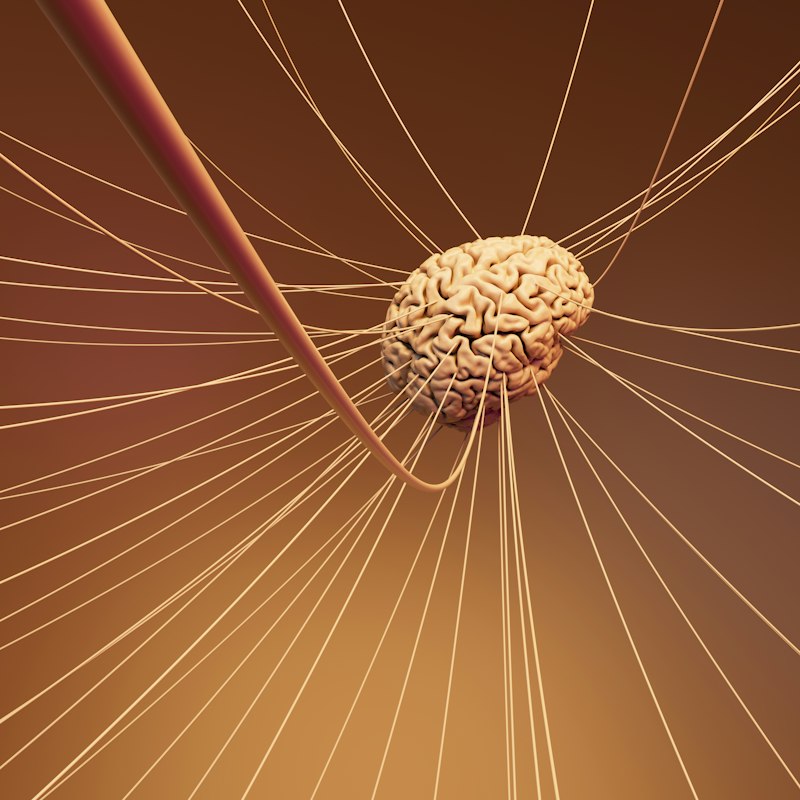
In the intricate landscape of the human brain, projection fibers represent a fundamental class of white matter tracts that serve as vital communication conduits. These fibers are essentially bundles of myelinated axons responsible for transmitting signals between the cerebral cortex and other subcortical structures, the brainstem, and the spinal cord. They form the essential neural pathways that allow the highest cognitive centers of the brain to interact with, control, and receive input from the rest of the nervous system, enabling a seamless integration of sensory perception, motor execution, and complex thought processes.
The fundamental mechanism behind projection fibers lies in their role as long-distance relay stations. They facilitate both ascending and descending information flow. Ascending projection fibers carry sensory information, such as touch, temperature, pain, and proprioception, from the periphery and lower brain regions up to the cerebral cortex for conscious perception and processing. Conversely, descending projection fibers transmit motor commands from the cortex down to the brainstem and spinal cord, ultimately controlling voluntary movements of the body. This bidirectional flow of information is critical for nearly every aspect of human function, from the simplest reflex to the most sophisticated cognitive endeavors.
Beyond sensory and motor functions, projection fibers are also integral to various higher-order cognitive processes. For instance, pathways connecting the cortex to the thalamus and basal ganglia are crucial for attention, memory, and executive functions. Their organized structure ensures that specific types of information are routed efficiently and precisely to their target destinations, forming the neural architecture that supports the complexity and adaptability of the human mind. Understanding projection fibers is therefore paramount for comprehending how the brain orchestrates its vast array of functions and integrates information across different hierarchical levels.
Historical Discovery and Neuroanatomical Context
The detailed understanding of projection fibers, like much of modern neuroanatomy, began to solidify in the late 19th and early 20th centuries. Pioneers such as Santiago Ramón y Cajal, often considered the father of modern neuroscience, utilized revolutionary staining techniques, most notably the Golgi stain developed by Camillo Golgi, to visualize individual neurons and their intricate axonal extensions. These techniques allowed researchers to trace neural pathways, including the long tracts that constitute projection fibers, revealing the cellular architecture that underpins brain function. Before this, the brain was often viewed as a reticular network, a continuous syncytium, rather than a system composed of discrete, communicating units.
Further advancements in histological methods, such as the Weigert stain, which selectively colors myelin, provided unprecedented clarity in distinguishing white matter tracts from grey matter. This allowed anatomists to map the extensive networks of myelinated axons that form the projection fibers, differentiating them from shorter association fibers and commissural fibers. The meticulous work of these early neuroanatomists laid the groundwork for understanding how different brain regions are interconnected, moving beyond simple localization theories to appreciate the complex interplay of distributed neural networks. The realization that specific bundles of fibers consistently connected particular cortical areas to subcortical nuclei and the spinal cord was a pivotal moment in understanding the functional organization of the central nervous system.
The historical context also involved a shift from purely structural observations to functional interpretations. As clinical neurology advanced, correlations began to emerge between specific neurological deficits and damage to particular brain regions, including white matter tracts. This clinical-pathological correlation reinforced the importance of projection fibers in mediating various functions. For instance, observing motor paralysis after damage to certain descending tracts provided strong evidence for their role in voluntary movement, solidifying their place as crucial components of the brain’s functional architecture. This interdisciplinary approach, combining detailed anatomical mapping with clinical observation, was instrumental in developing the comprehensive understanding of projection fibers we have today.
Major Projection Fiber Systems and Their Pathways
The human brain harbors several prominent projection fiber systems, each meticulously organized to serve distinct functional roles. One of the most well-known and crucial descending pathways is the corticospinal tract, often referred to as the pyramidal tract. Originating primarily from the primary motor cortex, premotor cortex, and supplementary motor area, these fibers descend through the internal capsule, brainstem, and eventually decussate (cross over) in the medulla oblongata before continuing down the spinal cord. Their primary function is to directly control voluntary, skilled movements of the limbs and trunk, enabling fine motor coordination and dexterity. Damage to this tract can result in significant motor deficits, including paralysis or paresis.
Another critical descending pathway is the corticobulbar tract, which shares a similar origin with the corticospinal tract but projects to the motor nuclei of cranial nerves in the brainstem. These fibers are responsible for controlling voluntary movements of the face, head, and neck, including functions like chewing, swallowing, and facial expressions. Together, the corticospinal and corticobulbar tracts represent the primary efferent pathways through which the cerebral cortex exerts conscious control over skeletal muscles throughout the body. Their precise anatomical arrangement and extensive connections highlight the brain’s remarkable capacity for intricate motor control.
In terms of ascending pathways, the thalamocortical radiations are paramount. These fibers transmit sensory information from the thalamus, a major relay station for sensory input, to various areas of the cerebral cortex. For example, somatosensory radiations carry tactile, proprioceptive, and pain signals to the primary somatosensory cortex, while optic radiations convey visual information from the thalamus (specifically, the lateral geniculate nucleus) to the primary visual cortex in the occipital lobe. The auditory radiations similarly carry acoustic information. These ascending projection fibers are essential for conscious perception of sensory stimuli, allowing the brain to construct a coherent and detailed representation of the external world and the body’s internal state. The complex network of these fibers ensures that sensory data is processed and interpreted at the highest cortical levels.
Functional Significance in Brain Communication
The importance of projection fibers to the field of psychology cannot be overstated, as they are the fundamental highways for integrating diverse brain functions, ultimately enabling complex behaviors, sensory perception, and voluntary movement. Without these long-distance connections, the highly specialized regions of the cerebral cortex would function in isolation, rendering complex cognition and coordinated action impossible. They facilitate the intricate communication between cortical regions responsible for planning, executing, and monitoring behavior, and subcortical structures involved in emotion, motivation, and basic physiological regulation. This hierarchical and distributed communication is what allows the brain to generate a cohesive and adaptive response to its environment.
Moreover, projection fibers are critical for the formation and retrieval of memories, the execution of executive functions such as decision-making and problem-solving, and the regulation of attention and arousal. For instance, pathways connecting the prefrontal cortex to deeper brain structures are vital for sustained attention and working memory. Damage to these fiber tracts, often seen in conditions like traumatic brain injury or neurodegenerative diseases, frequently results in significant cognitive and behavioral deficits, underscoring their irreplaceable role in maintaining normal psychological function. The integrity of these communication lines is directly linked to an individual’s cognitive capacity and emotional well-being.
In a broader context, the study of projection fibers has profoundly impacted our understanding of brain plasticity and recovery after injury. While historically thought to be fixed, research now suggests that these pathways can exhibit some degree of reorganization, especially following targeted rehabilitation. This adaptability highlights the dynamic nature of the brain’s connectivity. Clinically, understanding the precise pathways of projection fibers is crucial for neurosurgeons planning interventions and for neurologists diagnosing and treating conditions that affect white matter, such as Multiple Sclerosis (MS) or stroke. Their functional significance is thus not only theoretical but also profoundly practical in clinical neuroscience and psychology.
A Practical Example: The Act of Voluntary Movement
To illustrate the crucial role of projection fibers in everyday life, consider the simple yet remarkably complex act of reaching out to pick up a cup of coffee. This seemingly automatic action involves a sophisticated interplay of sensory processing, motor planning, and execution, all orchestrated through various projection fiber pathways. The initial visual perception of the cup, for instance, begins with light striking the retina, which sends signals via the optic nerves and tracts to the thalamus, and then through thalamocortical projection fibers to the primary visual cortex in the occipital lobe for initial processing. This allows the brain to identify the cup’s location, shape, and orientation.
Once the cup is identified, the brain must plan the movement. This involves higher-order motor areas such as the premotor cortex and supplementary motor area, which communicate with the primary motor cortex. These planning areas utilize complex neural circuits, and their output is transmitted via descending projection fibers, specifically the corticospinal tract, which originates from the primary motor cortex. These fibers descend through the internal capsule, pass through the brainstem, and largely cross over to the opposite side of the body in the medulla oblongata before continuing down the spinal cord. At each segment of the spinal cord relevant to the arm and hand, these fibers synapse with motor neurons that directly innervate the muscles required to reach for and grasp the cup.
As the hand moves towards the cup, continuous sensory feedback is transmitted back to the brain. Proprioceptive information (about joint position and muscle stretch) and tactile information (about the cup’s surface as the fingers make contact) travel via ascending projection fibers from the spinal cord, through the brainstem and thalamus, to the primary somatosensory cortex. This sensory input allows for real-time adjustments to the movement, ensuring a smooth and accurate grasp. This intricate, bidirectional flow of information facilitated by projection fibers underscores their indispensable role in integrating sensory perception with motor control, enabling us to perform even the most routine tasks with precision and adaptability.
Clinical Implications and Research Methodologies
The clinical implications of understanding projection fibers are profound, particularly in neurology and neuropsychology. Damage to these critical white matter tracts, whether from vascular events like stroke, traumatic brain injury, tumors, or neurodegenerative diseases such as Multiple Sclerosis (MS), can lead to a wide spectrum of neurological and psychological deficits. For instance, lesions in the corticospinal tract can cause hemiparesis or hemiplegia (weakness or paralysis on one side of the body), while damage to thalamocortical radiations can impair sensory perception or lead to cognitive processing difficulties. The specific location and extent of the damage within these fiber systems often dictate the precise nature of the functional impairment, making their accurate mapping essential for diagnosis and prognosis.
Advancements in neuroimaging have revolutionized the study of projection fibers in living human brains. One of the most powerful techniques is Diffusion Tensor Imaging (DTI), a specialized form of Magnetic Resonance Imaging (MRI). DTI measures the diffusion of water molecules within brain tissue, which is constrained by the myelinated axons of white matter. Because water diffuses more freely along the length of axons than across them, DTI can infer the orientation and integrity of white matter tracts, including projection fibers. This allows researchers and clinicians to visualize these pathways, assess their health, and detect abnormalities that may not be apparent on conventional MRI scans. DTI has become an invaluable tool for studying conditions affecting white matter, such as MS, and for understanding brain development and connectivity in both healthy and diseased states.
Beyond DTI, other research methodologies, including functional MRI (fMRI) and electrophysiology, contribute to our understanding of projection fiber function. While fMRI primarily visualizes changes in blood flow associated with neuronal activity in grey matter, its findings can be interpreted in the context of underlying white matter connections. Electrophysiological techniques, such as transcranial magnetic stimulation (TMS) or direct cortical stimulation, can probe the functional integrity of motor projection pathways. Together, these tools allow for a comprehensive investigation into how projection fibers contribute to brain function, how they are affected by disease or injury, and how interventions might promote recovery or mitigate deficits, thereby continually expanding our knowledge of the brain’s complex communication network.
Connections to Related Neuroanatomical Structures
To fully appreciate the role of projection fibers, it is crucial to understand their relationship with other major categories of white matter tracts and broader neuroanatomical concepts. The brain’s white matter, which constitutes a significant portion of its volume, is broadly categorized into three types of fiber tracts: projection fibers, association fibers, and commissural fibers. While projection fibers connect the cerebral cortex to subcortical structures and the spinal cord, association fibers connect different cortical areas within the same hemisphere. These can range from short U-shaped fibers connecting adjacent gyri to long bundles like the arcuate fasciculus, which links frontal and temporal lobes, crucial for language. This distinction highlights the different spatial scales of communication within the brain.
Commissural fibers, on the other hand, connect corresponding cortical areas in opposite hemispheres, facilitating interhemispheric communication. The most prominent example of a commissural fiber bundle is the corpus callosum, a massive tract of over 200 million axons that enables the left and right sides of the brain to share information and coordinate functions. While distinct in their anatomical targets, these three types of white matter fibers collectively form the intricate neural network that supports all brain functions. Projection fibers are thus integral components of a larger, highly interconnected system, working in concert with association and commissural fibers to ensure seamless information processing across the entire brain.
Furthermore, projection fibers exist in a dynamic relationship with grey matter, which comprises neuronal cell bodies, dendrites, synapses, and unmyelinated axons. Grey matter is where much of the brain’s computational and processing work takes place, forming the cortical and subcortical nuclei. Projection fibers, as bundles of myelinated axons, originate from neurons within these grey matter regions and terminate in other grey matter regions, forming the conductive pathways that transmit the processed information. The white matter, composed largely of projection, association, and commissural fibers, acts as the communication infrastructure that links these computational hubs. Understanding this fundamental dichotomy and the interdependence between grey and white matter is essential for a complete appreciation of brain structure and function in the context of neuroanatomy, biopsychology, and cognitive neuroscience.
Broader Fields of Study
The study of projection fibers is not confined to a single discipline but spans several interdisciplinary fields, underscoring their fundamental importance to our understanding of the nervous system and behavior. At its core, the detailed anatomical mapping and characterization of these fiber tracts fall under the purview of Neuroanatomy, which focuses on the structural organization of the nervous system. Neuroanatomists employ a variety of techniques, from classical histological staining to advanced in-vivo imaging, to delineate the precise origins, courses, and terminations of these pathways, forming the foundational knowledge base for all other related fields.
From a functional perspective, the role of projection fibers in mediating behavior, cognition, and emotion is extensively explored within Biopsychology (also known as Biological Psychology or Behavioral Neuroscience). Biopsychologists investigate how these neural pathways contribute to sensory processing, motor control, learning, memory, and psychological disorders. By studying the effects of lesions or specific stimulation on projection fibers, researchers gain insights into the biological underpinnings of psychological phenomena, bridging the gap between brain structure and mental function. This field often utilizes animal models and human neuroimaging to understand the functional significance of these tracts.
Furthermore, Cognitive Neuroscience leverages our knowledge of projection fibers to understand the neural basis of higher cognitive functions. This field examines how these pathways enable complex processes such as language, attention, decision-making, and executive control. For instance, understanding the projection fibers that connect the prefrontal cortex to other cortical and subcortical regions is crucial for explaining the neural circuits involved in working memory and cognitive flexibility. By integrating anatomical data with cognitive task performance and advanced imaging techniques, cognitive neuroscientists continue to unravel the intricate ways in which projection fibers facilitate the sophisticated capabilities of the human mind, providing a holistic view of brain-behavior relationships.