Prototypicality: How Your Brain Organizes Reality
Scientifically Reviewed · Dr. Marwa Abd-Alazim · September 22, 2026
Review Criteria & Clinical Standards
This content undergoes rigorous scientific peer-review and medical editorial standards at Arab Psychology Network to ensure clinical accuracy, validity, and compliance with evidence-based guidelines from leading psychological and healthcare authorities (APA / WHO).
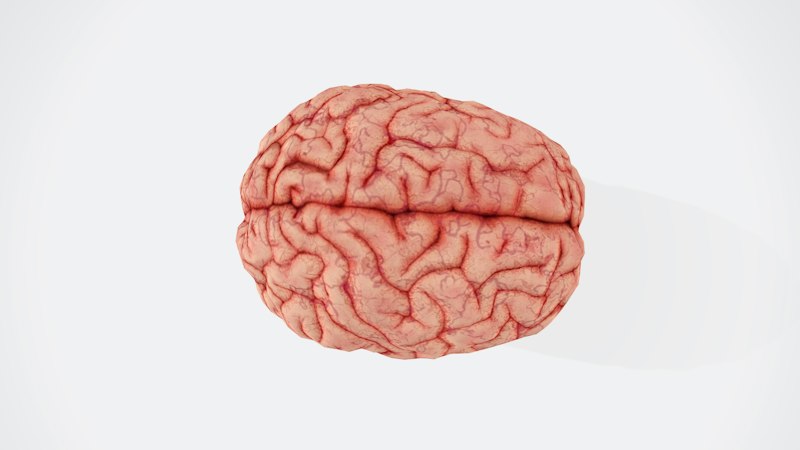
The Conceptual Framework of Prototypicality in Cognitive Psychology
The concept of prototypicality serves as a cornerstone in cognitive psychology, providing a specialized metric for understanding how human beings perceive, organize, and interact with various concepts and categories. At its most fundamental level, prototypicality measures the degree to which a specific instance or member of a category reflects the central or ideal characteristics of that category. It essentially determines the “goodness of fit” between an individual’s mental representation and a specific stimulus. By examining how closely a concept matches a perceived standard or norm, psychologists can gain profound insights into the architecture of the human mind and the mechanisms of information processing.
Research into prototypicality has spanned several decades and has been applied to diverse fields such as memory, linguistics, and categorization. Classical studies, most notably those conducted by Mervis and Rosch (1981) and Eleanor Rosch (1975), established that human categorization is not merely a matter of checking off a list of necessary and sufficient conditions. Instead, it is a fluid and graded process where some members are viewed as “more typical” than others. This suggests that our mental world is organized around central tendencies rather than rigid boundaries, allowing for a more flexible and efficient way of navigating complex environments.
Understanding prototypicality requires an exploration of how we reason and draw conclusions about the world. When we encounter a new object, our cognitive system does not usually compare it to every single instance we have ever seen; rather, it compares the object to a prototype, which acts as a mental summary of the category. This article explores the origins of this concept, its operational mechanics in human cognition, and the significant implications it holds for reasoning, judgment, and the potential for cognitive bias. Through a detailed analysis of semantic categories and mental representations, we can better understand the nuances of human thought.
The Historical Development of Prototype Theory
The formal introduction of prototypicality is credited to the pioneering work of Eleanor Rosch, specifically in her seminal 1975 paper, “Cognitive Representations of Semantic Categories.” Before Rosch’s contributions, the dominant view in psychology and philosophy was the classical view of categorization, which posited that categories are defined by distinct boundaries and that all members of a category are equal. However, Rosch challenged this notion by demonstrating that individuals consistently rank certain members of a category as better examples than others. This led to the development of Prototype Theory, which suggests that categories are structured around a hierarchical core of representative attributes.
According to Rosch’s findings, prototypes represent the most salient members of a category, possessing the highest number of attributes in common with other category members and the fewest attributes in common with members of contrasting categories. For instance, in the category of “bird,” a robin is often cited as a prototypical example because it possesses feathers, wings, the ability to fly, and a specific size that aligns with the general concept of a bird. In contrast, an ostrich or a penguin, while still biologically categorized as birds, are considered low in prototypicality because they lack several key features, such as the ability to fly or a standard avian silhouette.
This shift from the classical view to Prototype Theory revolutionized the field of cognitive science. It moved the focus from external definitions of objects to the internal mental representations that humans construct. Rosch proposed that these prototypes serve as cognitive reference points, allowing for faster recognition and more efficient classification. By focusing on the most representative attributes, the human brain can process vast amounts of sensory data without becoming overwhelmed by the unique variations of every individual member within a category.
Mechanisms of Categorization and Family Resemblance
The process of categorization via prototypicality is closely linked to the concept of family resemblance, a term originally coined by Ludwig Wittgenstein and later integrated into psychology by Mervis and Rosch (1981). Family resemblance suggests that members of a category are related by a series of overlapping similarities rather than a single shared trait. In a prototypical framework, the items that share the most features with the rest of the category are deemed the most typical. This creates a graded membership structure where some items are “in the center” of the category and others are at the “periphery.”
In practice, this means that human categorization is often probabilistic rather than absolute. When an individual identifies an object, they are essentially calculating the probability that the object belongs to a certain prototype. This calculation is influenced by the density of shared features. For example, in the category of “furniture,” a chair is highly prototypical because it shares many features with other furniture items like tables and sofas, such as being used in a home and being made of wood or metal. A telephone or a lamp, however, might be seen as less prototypical because their features do not overlap as strongly with the “core” furniture group.
Furthermore, the internal structure of these categories is often organized into different levels of abstraction. Cognitive psychologists identify three primary levels:
- Superordinate level: The most general level (e.g., “animal”).
- Basic level: The level at which prototypes are most clearly defined and where most categorization occurs (e.g., “dog”).
- Subordinate level: The most specific level (e.g., “Golden Retriever”).
The basic level is particularly important because it is where prototypicality is most functional, providing the most useful information for everyday interaction and communication.
Prototypicality and Its Influence on Memory
One of the most significant areas of study regarding prototypicality is its impact on human memory. Research has consistently shown that prototypicality significantly influences how information is encoded, stored, and retrieved. According to Mervis and Rosch (1981), individuals tend to remember prototypical examples of a category much more accurately and quickly than non-prototypical ones. This phenomenon is often referred to as the typicality effect, where the time taken to verify a statement (e.g., “An apple is a fruit”) is significantly shorter than the time taken for a less typical member (e.g., “A tomato is a fruit”).
The typicality effect suggests that our long-term memory is organized in a way that prioritizes the most representative information. When we think of a category, the prototype is the first thing that comes to mind, acting as a “gateway” to the rest of the category’s information. This prioritization helps reduce cognitive load. If we can store a single prototype as a representative for hundreds of different instances, we conserve mental energy. However, this also means that peripheral members of a category are more likely to be forgotten or misclassified over time, as they do not adhere to the schema established by the prototype.
Additionally, memory recall is often biased toward the prototype. In experiments where participants are shown a series of related objects, they often “falsely remember” seeing the prototypical version of the object even if it was never presented. This suggests that our memory systems are reconstructive; we fill in the gaps of our experiences using our knowledge of prototypes. While this makes us more efficient at predicting what we might see in a familiar environment, it can also lead to inaccuracies in eyewitness testimony or other situations where precise detail is required over general typicality.
The Role of Prototypicality in Language and Communication
The relationship between prototypicality and language is profound, as our choice of words and the speed of our semantic processing are both dictated by how typical a concept is. Mervis and Rosch (1981) found that words representing highly prototypical members are used more frequently in everyday speech and are learned earlier by children during language acquisition. For example, a child is likely to learn the word “apple” or “banana” as a representative for “fruit” long before they learn “pomegranate” or “guava.” The prototypicality of the object makes the word more accessible and easier to link to the concept.
Moreover, prototypicality influences how we construct sentences and use metaphors. In communication, we often use the most prototypical member of a category to stand in for the category as a whole. This is known as exemplar-based communication. When someone asks you to “draw a house,” you are likely to draw a prototypical house with a triangular roof and a chimney, even if you live in an apartment complex. This shared understanding of prototypes allows for more efficient communication, as it ensures that the speaker and the listener are operating from the same mental model.
In linguistic research, it has also been observed that prototypical members are more likely to be chosen in priming tasks. If a person is primed with the word “bird,” they will recognize the word “robin” faster than “turkey.” This indicates that the semantic network in the brain is structured such that the prototype is at the center of the network, with stronger neural connections to the category label than non-prototypical members. This semantic priming is a key indicator of how prototypicality facilitates rapid language comprehension and production.
Cognitive Heuristics and the Implications for Reasoning
The reliance on prototypicality has deep implications for how we reason and make judgments. Because our brains are designed for efficiency, we often use heuristics—mental shortcuts—based on prototypical information. While these shortcuts are usually helpful, they can lead to systematic errors in logic. For instance, individuals may judge the likelihood of an event based on how well it matches a prototype, a phenomenon known as the representativeness heuristic. This can cause people to ignore base rates and statistical probabilities in favor of what “feels” typical.
This tendency to think in prototypes rather than individual examples means that we often overlook the diversity within a category. We tend to generalize the characteristics of the prototype to all other members, regardless of whether those members actually possess those traits. This can lead to stereotyping, where an individual applies the perceived “central” characteristics of a social group to every person within that group. When we rely on prototypes to judge people, we fail to account for the unique variations that exist, leading to biased judgments and potentially harmful inaccurate conclusions.
Furthermore, prototypicality can affect problem-solving. When faced with a challenge, we often look for prototypical solutions—methods that have worked in the most common situations in the past. While this is often effective, it can lead to functional fixedness, where we are unable to see a novel or creative use for an object because it does not fit the prototypical use of that object. Thus, while prototypicality is essential for basic cognition, it can also act as a barrier to logical reasoning and creative thinking if not balanced with an awareness of individual differences.
Social and Cultural Variations in Prototypicality
While the underlying mechanism of prototypicality is a universal feature of human cognition, the specific prototypes themselves are often shaped by cultural and environmental factors. What is considered a prototypical member of a category in one culture may be completely different in another. For example, the prototypical “breakfast” in the United States might involve eggs and toast, whereas in Japan, it might involve rice and fish. These cultural prototypes are learned through experience and social reinforcement, highlighting the plasticity of the human mind.
Social prototypes also play a role in how we perceive leadership and social roles. People often have a prototype of a “leader” or a “scientist,” and individuals who match these prototypes are more likely to be perceived as competent or successful in those roles. This has significant implications for diversity and inclusion. If the prototype of a certain profession is narrow or exclusionary, individuals who do not fit that prototype may face implicit bias, even if they are objectively highly qualified. Recognizing that prototypes are socially constructed is the first step in addressing these systemic biases.
The environmental context also dictates prototypicality. A person living in a tropical climate will have a different prototype for “trees” (perhaps a palm tree) than someone living in a temperate forest (perhaps an oak or maple). This demonstrates that prototypicality is a dynamic process that adapts to the information available in an individual’s surroundings. By understanding the cultural and contextual nature of prototypes, psychologists can better understand how different groups of people interpret the world and communicate with one another.
Conclusion: The Enduring Significance of Prototype Theory
In conclusion, the concept of prototypicality provides invaluable insight into the perceptual and logical frameworks of the human mind. It reveals that our categorization processes are not based on rigid definitions but on flexible, graded mental representations. By relying on prototypes, we are able to navigate a world of infinite variety with relative ease, using central examples to anchor our understanding of complex concepts. From memory recall and language use to social judgment, prototypicality influences nearly every aspect of cognitive life.
However, the efficiency provided by prototypicality comes with inherent risks. The tendency to rely on stereotypes and heuristics can lead to biased judgments and inaccurate conclusions about individuals and situations. As we move forward in the study of cognitive psychology, it is essential to remain aware of how these mental shortcuts function. By understanding the prototypical nature of our thoughts, we can strive for more analytical and objective reasoning, ensuring that we do not lose sight of the individual examples that make up the richness of our world.
Ultimately, the work of Rosch and Mervis continues to resonate in modern psychological research, artificial intelligence, and educational theory. As we develop machine learning algorithms that attempt to mimic human categorization, the prototype model remains a primary point of reference. By continuing to explore the depths of prototypicality, we gain a clearer picture of what it means to think, reason, and perceive as a human being.
References
- Mervis, C. B., & Rosch, E. (1981). Categorization of Natural Objects. Annual Review of Psychology, 32(1), 89-115.
- Rosch, E. (1975). Cognitive Representations of Semantic Categories. Journal of Experimental Psychology: General, 104(3), 192-233.