Psittacism: Why We Speak Without Thinking
Scientifically Reviewed · Dr. Marwa Abd-Alazim · September 27, 2026
Review Criteria & Clinical Standards
This content undergoes rigorous scientific peer-review and medical editorial standards at Arab Psychology Network to ensure clinical accuracy, validity, and compliance with evidence-based guidelines from leading psychological and healthcare authorities (APA / WHO).

Etymological Foundations and Historical Context
The term psittacism finds its linguistic roots in the Latin word psittacus, which translates directly to “parrot.” Historically, the term was adopted into psychological and philosophical discourse to describe the human tendency to replicate speech patterns, phrases, or complex ideas without an underlying grasp of their conceptual significance. This phenomenon was famously addressed by the philosopher Gottfried Wilhelm Leibniz, who utilized the concept to critique the mechanical use of language in philosophical and theological debates. Leibniz argued that when individuals utilize specialized terminology without a clear mental representation of the ideas those terms signify, they are engaging in a form of intellectual mimicry that obstructs true understanding. This historical perspective frames psittacism not merely as a linguistic quirk, but as a fundamental barrier to epistemological clarity and authentic communication.
In the transition from classical philosophy to modern psychology, the definition of psittacism expanded to encompass various states of cognitive functioning. Early psychologists viewed the phenomenon through the lens of associative memory, suggesting that the brain is capable of storing and retrieving phonological strings independently of the semantic networks required for comprehension. This distinction is crucial for understanding how a person can recite complex poetry, scientific formulas, or religious litanies with perfect phonetic accuracy while remaining entirely ignorant of the content. The historical evolution of the term highlights a persistent concern within human sciences regarding the discrepancy between verbal fluency and actual cognitive depth, suggesting that the ability to speak does not always presuppose the ability to think.
Furthermore, the historical context of psittacism involves its application in social and political critiques. Throughout the 19th and 20th centuries, social theorists observed that mass communication and standardized education systems often encouraged a form of collective psittacism. By promoting the repetition of slogans and dogmatic formulas, institutions could foster a sense of shared identity or adherence to ideology without requiring individual critical engagement. This application of the term underscores the danger of language becoming a tool for social conformity rather than a medium for individual expression. Consequently, the study of psittacism serves as a vital intersection between linguistics, psychology, and sociology, examining the ways in which the mechanics of speech can be decoupled from the internal life of the mind.
Cognitive Mechanics of Rote Repetition
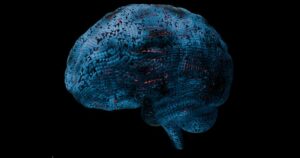
At the core of psittacism lies a specific interaction between different systems of human memory. Cognitive psychology distinguishes between the phonological loop—a component of working memory that deals with auditory information—and semantic memory, which stores meanings and conceptual knowledge. In instances of psittacism, the phonological loop functions at a high level of efficiency, allowing for the rapid acquisition and playback of verbal sequences. However, there is a failure in the integration process where these verbal sequences should be mapped onto semantic structures. This decoupling allows for rote learning, where the brain treats language as a series of acoustic patterns rather than a symbolic system representing external or internal realities.
The neurological basis for this phenomenon often involves the Broca’s area and Wernicke’s area, the primary regions responsible for speech production and comprehension, respectively. In a healthy cognitive state, these regions work in tandem to ensure that what is spoken is also understood. However, psittacism suggests a pathway where motor output (speech) can be triggered by sensory input or memory retrieval without the intervention of the higher-order processing centers located in the prefrontal cortex. This “bypass” mechanism explains why individuals under stress, extreme fatigue, or certain neurological conditions may find themselves speaking in clichés or repetitive phrases that they do not truly mean or understand, reflecting a temporary or permanent lapse in executive function.
Another critical element in the cognitive mechanics of psittacism is the role of priming and habituation. When a phrase is repeated frequently within a specific environment, the neural pathways associated with that phrase become highly sensitized. Over time, the utterance becomes an automatic response to environmental cues, requiring minimal cognitive effort. This automaticity is beneficial for basic motor tasks but becomes problematic when applied to complex language. When speech becomes purely automatic, it loses its intentionality. The speaker is no longer selecting words to represent a thought; instead, the words are “speaking the speaker,” a state that epitomizes the psychological definition of psittacism as a mechanical rather than a mental act.
Psittacism in Developmental Psychology
In the field of developmental psychology, psittacism is recognized as a standard, and even necessary, phase of language acquisition. Young children often engage in echolalia or “parroting” as they attempt to master the phonemes and syntax of their native tongue. During this stage, the child may repeat entire sentences or questions directed at them without understanding the underlying grammatical rules or the meaning of the words. This imitative behavior serves as a scaffold for future learning, allowing the child to practice the physical mechanics of speech and social turn-taking before they have the cognitive maturity to engage in original thought. In this context, psittacism is a transitional tool rather than a cognitive deficit.
However, the transition from mechanical imitation to symbolic comprehension is a critical milestone in child development. As the child’s brain matures, particularly the temporal lobes, they begin to associate specific sounds with specific objects, actions, and emotions. If a child continues to rely primarily on psittacism beyond the typical developmental window, it may indicate an underlying neurodevelopmental disorder. For instance, children on the autism spectrum may utilize delayed echolalia—repeating phrases heard hours or days earlier—as a way to self-soothe or attempt communication when they lack the tools for spontaneous language generation. In such cases, the mechanical nature of the speech is a compensatory strategy for challenges in social-emotional processing.
Educational psychologists also monitor for psittacism in classroom settings, particularly during the early school years. A student who can recite the multiplication table or a historical definition perfectly but cannot apply that information to a new problem is demonstrating rote psittacism. This suggests that the information has been encoded as a verbal string rather than a conceptual framework. To combat this, educators employ strategies that force students to paraphrase, synthesize, and apply information, thereby moving the knowledge from the superficial level of mechanical repetition to the deeper level of cognitive integration. Understanding the role of psittacism in development helps clinicians and teachers differentiate between healthy imitation and a failure to achieve meaningful learning.
Pathological Manifestations and Clinical Observations
Beyond the realm of normal development, psittacism manifests in various clinical pathologies, often serving as a diagnostic indicator for neurological or psychiatric conditions. In patients suffering from dementia or Alzheimer’s disease, the degradation of semantic memory often leaves the phonological systems intact for a longer period. This results in a phenomenon where the patient may utilize “empty speech,” characterized by a high frequency of pronouns, filler words, and repetitive clichés. While the speech sounds fluent and follows grammatical rules, it lacks substantive meaning, reflecting the patient’s loss of access to the underlying concepts. This clinical psittacism is a profound marker of the neurodegenerative process affecting the brain’s associative networks.
In the context of schizophrenia and other psychotic disorders, psittacism may appear as part of a broader pattern of disorganized speech. Patients may experience “word salad” or “verbigeration,” where words and phrases are repeated obsessively without any apparent communicative intent. In these instances, the mechanical repetition is often driven by internal stimuli or a breakdown in the inhibitory controls that normally prevent irrelevant thoughts from being vocalized. The presence of psittacism in these patients highlights the fragmentation of the self, as the biological machinery of language continues to operate even when the ego-functions responsible for coherent thought are severely impaired.
Furthermore, certain types of aphasia, specifically transcortical sensory aphasia, present with a striking form of psittacism. Patients with this condition can repeat complex sentences perfectly and even correct grammatical errors in the speech they hear, yet they have no comprehension of what they are saying or hearing. This condition is typically caused by lesions that isolate the language centers from the rest of the cerebral cortex. Clinical observations of such patients have provided invaluable insights into the modular nature of the brain, proving that the capacity for syntactic and phonological processing is anatomically distinct from the capacity for semantic understanding. These pathological cases represent the most extreme and literal forms of human psittacism.
Philosophical Implications of Meaningless Speech
The existence of psittacism raises profound questions regarding the relationship between language and thought. Philosophically, it challenges the assumption that speech is a direct “window into the soul” or an infallible indicator of intelligence. If a machine or a person can produce linguistically correct output without an internal experience of meaning, then the nature of consciousness itself must be scrutinized. This is famously illustrated in John Searle’s “Chinese Room” thought experiment, which argues that symbols can be manipulated according to rules (syntax) without any understanding of what the symbols represent (semantics). Psittacism is the human embodiment of this thought experiment, representing a state where the individual acts as a biological processor of empty symbols.
Furthermore, psittacism intersects with the concept of authenticity in existential philosophy. Philosophers like Martin Heidegger discussed “idle talk” (Gerede), a mode of being where individuals repeat what “they” say—the common opinions and clichés of the masses—without taking personal responsibility for the truth of the words. In this view, psittacism is not just a cognitive error but an ontological failure. It is a way of existing where the individual disappears behind a facade of borrowed language, sacrificing their unique perspective for the safety of conventionality. Authenticity, therefore, requires the active rejection of psittacism in favor of language that is grounded in personal experience and genuine intellectual conviction.
The ethical implications are equally significant. When communication becomes psittacistic, the potential for deception and manipulation increases. If individuals repeat slogans or directives without understanding their consequences, they can be easily led to perform actions that contradict their own values. This “thoughtlessness,” as Hannah Arendt famously described in her analysis of the “banality of evil,” is a form of moral psittacism. By operating on a level of mechanical linguistic obedience, individuals bypass the moral reasoning that should accompany human action. Thus, the struggle against psittacism is not only a matter of mental health or educational achievement but a fundamental requirement for ethical agency and a functioning democracy.
Educational Perspectives: Rote Learning vs. Deep Understanding
In the realm of pedagogy, the concept of psittacism is used to critique traditional teaching methods that prioritize memorization over comprehension. Rote learning, while useful for basic facts, often leads to a “bulimic” educational pattern where students ingest large amounts of information to be repeated during examinations and then promptly forgotten. This type of learning produces a superficial mastery that fails to translate into real-world skills or critical thinking abilities. Educational theorists argue that when students are assessed primarily on their ability to replicate the teacher’s words, the system inadvertently rewards psittacism, devaluing the constructivist process of building personal meaning from information.
To move beyond psittacism, modern educational frameworks emphasize Bloom’s Taxonomy, which places “remembering” at the lowest level of cognitive complexity. Higher-order skills such as analysis, synthesis, and evaluation require the student to break down information, see how parts relate to one another, and justify a stand or decision. By engaging in these higher-level tasks, students are forced to move the information through their own cognitive filters, ensuring that the resulting language is an expression of their own understanding. Techniques such as inquiry-based learning and the “Feynman Technique”—explaining a concept in simple terms to someone else—are specifically designed to identify and eliminate pockets of psittacism in a student’s knowledge base.
Moreover, the rise of digital information and artificial intelligence has introduced new challenges regarding psittacism in education. With the ease of “copy and paste” and the availability of AI-generated text, students may produce high-quality written work that they do not actually understand. This digital psittacism threatens the integrity of the learning process, as the output no longer reflects the student’s internal cognitive state. Educators must therefore shift their focus toward the process of learning rather than just the final product, utilizing oral defenses, personalized reflections, and real-time problem-solving to ensure that the language used by the student is a genuine reflection of their own intellectual labor.
Sociolinguistic Dimensions and Contemporary Communication
In contemporary society, psittacism has taken on sociolinguistic dimensions that reflect the changing nature of human interaction in the digital age. The prevalence of social media and the “soundbite” culture encourages the rapid dissemination of phrases, memes, and hashtags that individuals adopt and repeat with minimal reflection. This collective psittacism can lead to the formation of echo chambers, where the primary goal of communication is not the exchange of ideas but the signaling of group membership through the repetition of “correct” linguistic markers. In this context, language functions as a tribal identifier, and its semantic content becomes secondary to its role as a tool for social cohesion or exclusion.
The phenomenon is also highly visible in political and corporate discourse. The use of “buzzwords”—terms like “synergy,” “disruption,” or “sustainability”—often falls into the category of psittacism when they are used as substitutes for concrete plans or genuine understanding. Politicians and executives may utilize formulaic language to obscure meaning or avoid commitment, relying on the rhythmic and familiar nature of these terms to create an illusion of competence. This “managerial psittacism” serves to insulate the speaker from accountability, as the words used are so detached from specific realities that they become impossible to challenge or verify. It represents a degradation of public discourse, where language is used to perform rather than to inform.
Finally, the advent of Large Language Models (LLMs) has brought the concept of psittacism into the forefront of technological ethics. These AI systems are, by definition, the ultimate practitioners of psittacism; they predict the next most likely word in a sequence based on massive datasets without any subjective experience or conceptual understanding. As humans increasingly interact with these models, there is a risk of a “looping effect,” where human speech begins to mimic the predictable, standardized patterns of the AI. This reciprocal psittacism could lead to a narrowing of human expression, as the nuances and idiosyncrasies of individual thought are smoothed over by the mechanical efficiency of algorithmic language production.
Diagnostic Distinctions and Differential Analysis
For clinicians, it is essential to distinguish psittacism from related but distinct communication disorders. While psittacism refers to the general mechanical repetition without understanding, echolalia is the immediate or delayed repetition of words spoken by another person. While all echolalia is a form of psittacism, not all psittacism is echolalic. A person might engage in psittacism by reciting a textbook they read years ago, which would not be considered echolalia. Similarly, palilalia involves the repetition of one’s own words or phrases, often with increasing speed and decreasing volume, and is frequently associated with Parkinson’s disease or Tourette syndrome. These distinctions are vital for accurate differential diagnosis and the development of appropriate treatment plans.
Another important distinction is between psittacism and jargon aphasia. In jargon aphasia, the patient produces fluent but unintelligible speech, often including made-up words (neologisms). While the patient may believe they are communicating effectively, the structural integrity of the language is lost. In contrast, psittacism maintains grammatical and phonological accuracy; the failure is purely at the level of semantic integration. Understanding these nuances allows neuropsychologists to pinpoint exactly where in the linguistic processing chain the breakdown is occurring—whether it is in the retrieval of words, the construction of syntax, or the mapping of meaning onto the linguistic framework.
In summary, the study of psittacism provides a comprehensive framework for examining the complexities of human language. By analyzing the instances where speech becomes detached from thought, researchers can better understand the delicate balance required for authentic communication. Whether viewed as a developmental stage, a clinical symptom, or a social trend, psittacism serves as a reminder that the true power of language lies not in the sounds we produce, but in the depth of understanding those sounds are meant to convey. Addressing psittacism in all its forms is essential for fostering a society where language remains a vibrant, meaningful, and uniquely human endeavor.
- Etymological Root: Derived from the Latin “psittacus” (parrot).
- Core Definition: Mechanical repetition of speech without semantic comprehension.
- Cognitive Basis: Disconnection between the phonological loop and semantic memory.
- Clinical Context: Observed in dementia, schizophrenia, and specific aphasias.
- Developmental Role: A normal phase of imitation in early language acquisition.
- Philosophical Significance: Relates to the “Chinese Room” argument and the concept of authenticity.
- Observation: Identify the presence of repetitive or formulaic speech patterns.
- Comprehension Testing: Ask the individual to paraphrase or explain the meaning of the repeated terms.
- Contextual Analysis: Determine if the speech is appropriate for the social or cognitive situation.
- Differential Diagnosis: Rule out related conditions like echolalia, palilalia, or aphasia.
- Intervention: Implement strategies to encourage semantic integration and critical engagement.