The Psyche: Unlocking Your Hidden Mental Potential
Scientifically Reviewed · Dr. Marwa Abd-Alazim · September 3, 2026
Review Criteria & Clinical Standards
This content undergoes rigorous scientific peer-review and medical editorial standards at Arab Psychology Network to ensure clinical accuracy, validity, and compliance with evidence-based guidelines from leading psychological and healthcare authorities (APA / WHO).
The Definitional Scope of the Psyche
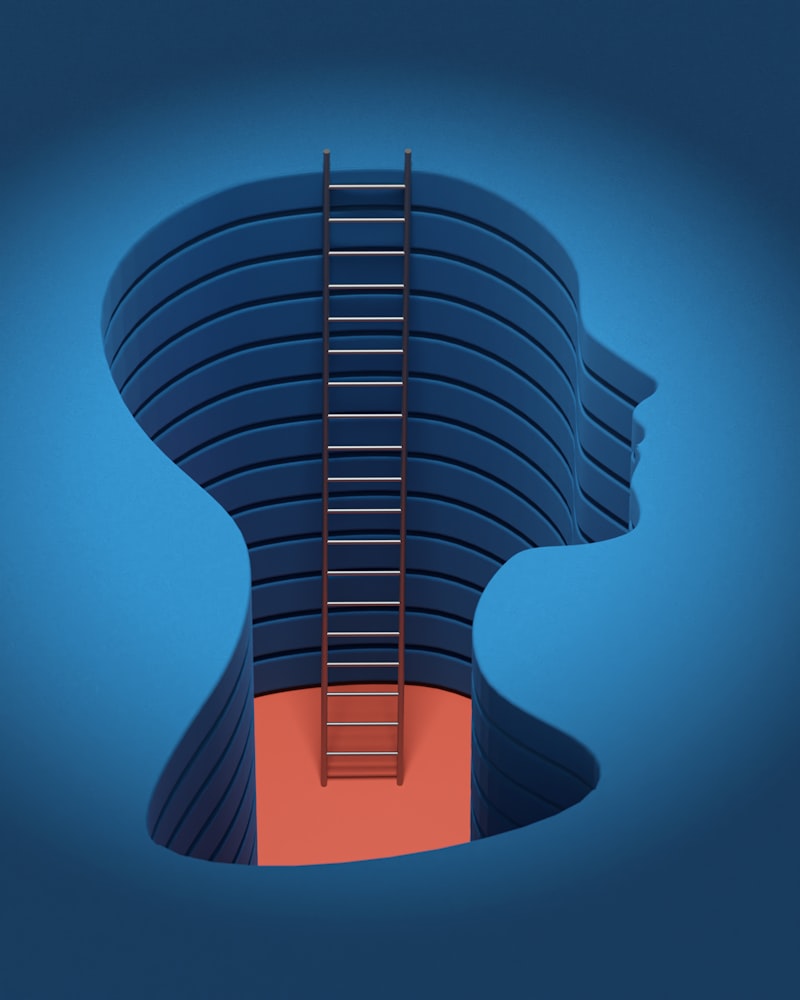
The term psyche represents a fundamental concept in psychology, deriving from the ancient Greek word for ‘breath,’ ‘spirit,’ or ‘soul.’ Psychologically, it is defined as the mind in its totality, encompassing all mental and emotional processes, both conscious and unconscious, that characterize an individual. This comprehensive definition explicitly distinguishes the psyche from the brain, which is understood solely as the physical organ—the biological apparatus composed of neural pathways and tissue—responsible for physiological functions. The psyche, conversely, is the non-material, integrated system of subjective experience, behavior, cognition, and personality that constitutes the individual’s internal world. It serves as the organizing principle for human experience, providing the framework through which motivations, perceptions, memories, and affects are synthesized into a coherent self. This holistic view necessitates the study of the psyche as an emergent property that, while dependent upon the brain, is not entirely reducible to its physical components, thereby bridging the gap between biological mechanism and subjective reality.
The inclusion of the concepts of essence of life or soul within the definition of the psyche reflects its deep historical and philosophical roots. Before the advent of modern empirical psychology, the term served a metaphysical function, designating the enduring, vital principle that defined human existence and provided continuity of identity across time. In contemporary psychological discourse, while the focus has shifted toward observable and measurable mental phenomena, the psyche retains its utility as a construct necessary for discussing the overall integrity and coherence of the self. Analyzing the state of an individual’s psyche involves assessing the stability of their mental health, the resilience of their coping mechanisms, and the internal harmony between various mental facets. When individuals face profound emotional distress or existential crises, it is often described as a threat to the safety and stability of the psyche itself, signifying a disturbance to the core structure of the self rather than merely a localized neurological failure.
Understanding the psyche requires acknowledging its role as the locus of self-awareness and intentionality. It is the realm where subjective meaning is created, where moral and ethical judgments are processed, and where the complex interplay between internal drives and external societal demands is managed. This expansive scope allows the term to unify various subdisciplines within psychology, including clinical, cognitive, and developmental fields. Cognitive science may analyze specific information processing within the mind, yet it is the totality of the psyche that integrates these processes into a living, functioning individual. Therefore, while neuroscience details the mechanisms, the study of the psyche provides the necessary context for understanding the behavioral outcomes and experiential qualities of human life, making it the central, unifying subject matter of the entire field of psychological inquiry.
Historical and Philosophical Roots
The concept of the psyche has been central to Western thought since antiquity, predating its formal adoption by scientific psychology. In classical Greek philosophy, particularly the works of Plato and Aristotle, the psyche was rigorously analyzed. Plato, in dialogues such as the Phaedo and the Republic, formalized the distinction between the immortal, non-physical soul (psyche) and the mortal body (soma). Plato posited that the psyche was the true identity of the person, capable of pure knowledge and composed of three distinct parts: the logos (reason, intellect), the thumos (spirit, emotion, courage), and the epithumia (appetite, desire). The healthy functioning of the individual, according to Plato, relied on the logical element controlling and harmonizing the spirited and appetitive components, establishing a hierarchical structure that profoundly influenced subsequent psychological models of personality organization.
Aristotle, while retaining the concept of the psyche as the animating principle, offered a more biological and functional interpretation. In De Anima (On the Soul), Aristotle argued that the psyche was not separable from the body in the Platonic sense but rather the form or essence of a living creature—the efficient cause of its life functions. He defined different levels of the psyche corresponding to different life forms: the vegetative soul (responsible for nutrition and reproduction), the sensitive soul (responsible for sensation and locomotion, found in animals), and the rational soul (unique to humans, responsible for thought and reason). Aristotle’s framework moved the understanding of the psyche away from purely metaphysical speculation toward a functional analysis of life processes, laying groundwork for future empirical studies by emphasizing the connection between the psyche and observed activities of the organism.
During the medieval and early modern periods, the concept of the psyche often became interwoven with theological definitions of the soul, focusing primarily on its moral and spiritual qualities, though philosophers like René Descartes reintroduced a sharp duality. Descartes’ dualism cemented the separation between the res cogitans (the thinking substance, mind/psyche) and the res extensa (the extended substance, body/matter). This rigorous separation defined the philosophical landscape for centuries and provided the intellectual backdrop against which modern psychology eventually emerged, seeking a way to study the non-physical thinking substance using empirical, scientific methods. The transition from the philosophical soul to the psychological mind required retaining the term psyche to capture the complexity and totality of subjective mental life while stripping away its purely theological connotations.
The Psyche in Modern Psychological Theory
The formal establishment of psychology as a scientific discipline in the late 19th century necessitated a reinterpretation of the psyche. Two major theoretical frameworks, psychoanalysis and analytical psychology, heavily relied upon and expanded the classical concept. Sigmund Freud, the founder of psychoanalysis, redefined the psyche primarily through the lens of internal conflict and drive theory. Freud’s structural model posited a psyche composed of the Id (instinctual drives), the Ego (the rational mediator dealing with reality), and the Superego (internalized moral standards). For Freud, a significant portion of the psyche was submerged in the unconscious, exerting profound influence over conscious thought and behavior. The health of the psyche, in the psychoanalytic view, depended heavily on the Ego’s ability to manage the demands placed upon it by the Id, the Superego, and external reality, often requiring therapeutic intervention to reveal hidden unconscious dynamics.
Carl Jung, initially a collaborator of Freud, developed Analytical Psychology, which offered an even more expansive and spiritual view of the psyche. Jung accepted Freud’s personal unconscious but added the crucial layer of the collective unconscious—a repository of shared human experiences and archetypes inherited across generations. For Jung, the psyche was a self-regulating system striving for wholeness and integration, a process he termed individuation. The psyche contained the conscious mind, the personal unconscious (containing repressed or forgotten material), and the collective unconscious (containing universally shared patterns like the Persona, the Shadow, and the Anima/Animus). Jung’s framework emphasized the symbolic life and the powerful role of mythology and culture in shaping the individual psyche, viewing psychological distress as a blockage in the natural flow towards self-realization.
Beyond these depth psychologies, the concept of the psyche influenced humanistic and existential approaches. Humanistic psychologists like Carl Rogers and Abraham Maslow focused on the conscious, striving aspect of the psyche, emphasizing intrinsic potential and the innate drive toward self-actualization. In these perspectives, the psyche is viewed less as a battleground for internal forces (as in Freud) and more as a dynamic system seeking congruence and meaning. Similarly, cognitive psychology, while often avoiding the philosophical weight of the term, deals directly with the processes—perception, memory, and reasoning—that constitute the functional operation of the psyche. Thus, whether implicitly or explicitly, the term remains central, providing the essential conceptual boundary for the study of subjective, intentional, and experiential human existence.
Distinction Between Psyche and Soma (The Mind-Body Problem)
One of the most enduring challenges in the study of the psyche is the philosophical and empirical problem of its relationship to the body, often referred to as the mind-body problem (or psyche-soma distinction). Historically, this relationship was viewed dualistically, asserting that the psyche and the soma (body) are fundamentally different substances. While Cartesian dualism provided a clear theoretical separation, modern science and psychology largely reject strict dualism, favoring models that acknowledge an intense and intricate interaction between mental experience and physical embodiment. The psyche, though not physical itself, is demonstrably affected by somatic conditions, and conversely, psychological states profoundly impact physical health, forming the basis of fields like psychosomatic medicine and health psychology.
The contemporary scientific understanding tends toward monistic or interactionist theories. Monism suggests that the psyche and soma are two aspects of the same underlying reality, whether that reality is physical (materialism/physicalism) or involves a neutral substance (neutral monism). Physicalism, the dominant view in neuroscience, holds that mental states are ultimately brain states; however, it struggles to fully account for the qualitative nature of subjective experience, known as qualia. In psychological practice, a pragmatic interactionism is often adopted: emotional states (part of the psyche) trigger measurable physiological changes (in the soma), such as the release of stress hormones (cortisol) or changes in heart rate variability. These measurable somatic changes, in turn, feed back into the psychological state, creating a continuous, self-reinforcing loop.
The clinical importance of the psyche-soma distinction is paramount in understanding psychological disorders. Conditions like anxiety and depression are recognized as disorders of the psyche, yet they manifest with profound somatic symptoms—chronic pain, fatigue, immune system suppression, and digestive issues. Treating the psyche through psychotherapy or cognitive restructuring often leads to the amelioration of these physical symptoms, demonstrating that the integrity of the mind is intrinsically linked to the health of the body. Conversely, physical interventions, such as medication targeting neurotransmitter systems in the brain, directly alter the state of the psyche. Therefore, the concept of the psyche allows clinicians to approach the individual holistically, treating the integrated person rather than focusing exclusively on either the physical brain or the isolated mental processes.
The Structure and Components of the Psyche
In analytical and dynamic psychologies, the psyche is often conceptualized not as a monolithic entity but as a dynamic system comprised of various interacting components or levels of awareness. The most widely accepted structural model divides the psyche based on the accessibility of mental content. This includes the conscious mind, which contains all thoughts, feelings, and perceptions of which an individual is currently aware; the conscious realm is the immediate subjective reality and the primary point of contact with the external world. Beneath this lies the preconscious (or subconscious), which holds mental content that is not currently conscious but can be easily recalled or brought into awareness, such as memories, learned skills, and accessible knowledge. These two levels represent the immediately available resources of the self, essential for daily functioning and rational decision-making.
The most profound and influential component, particularly in depth psychology, is the unconscious mind. The unconscious contains thoughts, desires, memories, and motivations that are deeply repressed, unacceptable to the conscious self, or simply operating outside of voluntary awareness. According to psychoanalytic theory, these submerged elements exert immense influence over behavior, dreams, neurotic symptoms, and emotional reactions. The unconscious serves as a reservoir for instinctual drives and unresolved conflicts. Accessing and integrating unconscious material is often the central goal of various psychotherapies, as bringing these hidden dynamics into consciousness is deemed necessary for psychological resolution and mastery over self.
Beyond the levels of consciousness, structural models describe the functional components of the psyche. Freud’s Id, Ego, and Superego define the functional conflicts within the psyche, illustrating how the self manages internal pressure and external demands. The Ego, representing the rational part of the psyche, is responsible for maintaining psychic equilibrium through defense mechanisms—unconscious strategies used to cope with anxiety and protect the self from intolerable realities. Jungian theory further expands the structural complexity by including the archetypes (e.g., the Self, the Shadow, the Anima/Animus) and the collective unconscious, viewing the psyche as a system that transcends individual experience and connects to universal human patterns. These structural models collectively underscore the fact that the psyche is not static; it is a continuously negotiating, dynamic system always striving for internal balance and adaptation to the environment.
The Development of the Psyche
The psyche is not fully formed at birth but undergoes a complex, staged process of development across the lifespan, shaped by both intrinsic biological maturation and extrinsic environmental and social interactions. Developmental psychology focuses heavily on the emergence of crucial psychic structures, such as the sense of self, emotional regulation, and cognitive abilities. Early childhood development, for instance, is critical for establishing primary attachment patterns, which fundamentally influence the child’s burgeoning internal working model of relationships—a key component of the adult psyche. The ability to form secure attachments is essential for developing the capacity for empathy and stable emotional processing later in life.
As individuals mature, the complexity of the psyche increases through stages of cognitive and psychosocial development. Jean Piaget detailed the stages through which the capacity for logical thought and abstract reasoning develops, demonstrating how the psyche’s cognitive apparatus evolves from sensorimotor responses to highly abstract operations. Erik Erikson’s psychosocial model highlighted the series of identity crises and developmental tasks that must be successfully navigated throughout the lifespan, from basic trust versus mistrust in infancy to ego integrity versus despair in old age. Each successful resolution contributes to a more resilient and integrated psyche, while failures can lead to lingering psychological vulnerabilities and the formation of maladaptive personality traits.
Adolescence represents a particularly transformative period for the psyche, marked by the intensive search for identity, the integration of sexual drives, and the establishment of autonomy from parental figures. The psyche must integrate the internal world of desires and emerging self-concept with the external demands of social roles and cultural expectations. Furthermore, lifelong development continues well into adulthood and old age, where the psyche faces challenges related to career satisfaction, generativity, and confronting mortality. The continuous development of the psyche is thus characterized by ongoing processes of differentiation (separating the self from others) and integration (unifying disparate internal experiences), ultimately aiming toward a state of holistic selfhood.
The Psyche in Clinical Practice
In clinical psychology and psychiatry, the primary focus is the assessment, diagnosis, and treatment of disorders affecting the integrity and functioning of the psyche. Mental illness is conceptualized as a significant disturbance in the psyche, manifesting through impaired cognition, emotional dysregulation, behavioral dysfunction, and distress. Whether the etiology is primarily biological (e.g., neurotransmitter imbalance), psychological (e.g., trauma and relational deficits), or social (e.g., environmental stress), the resulting suffering impacts the totality of the individual’s mental life. Therefore, treatments are designed to restore equilibrium and enhance the adaptive capacities of the psyche.
Psychotherapeutic interventions, such as Cognitive Behavioral Therapy (CBT), psychoanalysis, and humanistic therapies, are specifically aimed at restructuring the dysfunctional aspects of the psyche. CBT focuses on altering maladaptive thought patterns and behaviors that maintain psychological distress, thereby improving the conscious and preconscious operations of the mind. Depth therapies seek to bring unconscious conflicts into awareness, allowing the ego to process and integrate previously repressed material, fundamentally changing the underlying structure of the psyche. The overall goal of clinical work is to enhance ego strength, improve emotional intelligence, and foster self-awareness, enabling the individual to manage life’s challenges without falling into debilitating psychological patterns.
The concept of the psyche is also central to the diagnostic process. Mental health professionals evaluate symptoms across multiple domains—affective, cognitive, behavioral, and relational—to map the specific way the psyche has been compromised. For example, in generalized anxiety disorder, the psyche exhibits hypervigilance and persistent worry, while in schizophrenia, there is a profound break from shared reality, reflecting a fragmentation of the integrated self. The clinical assessment is an attempt to understand the subjective experience of the patient’s psyche, validating the distress while applying scientific principles to facilitate healing. The recovery process is characterized by the patient rebuilding their internal resources, achieving greater coherence, and asserting mastery over their own mental life, thus ensuring the safety and resilience of their psyche.
Cross-Cultural Perspectives on the Psyche
While Western psychology has developed a specific, individualized definition of the psyche, cross-cultural studies reveal significant variations in how different societies conceptualize and locate mental and spiritual life. In many non-Western traditions, the boundaries of the psyche are far more porous and relational than the autonomous, highly individualized psyche emphasized in modern Western thought. For instance, in certain collectivist cultures, the self is understood primarily through its relationships and social roles, meaning the functional unit of the psyche extends beyond the individual mind to encompass the family or community structure. Distress is often viewed not as an individual psychological failure but as a disruption in the harmonious relationship between the individual and their social or spiritual environment.
Cultural context deeply influences the manifestation and interpretation of psychological phenomena. Concepts related to spiritual possession, ancestor influence, or the role of the environment in shaping internal states are commonly integrated into the definition of the psyche in many indigenous healing systems. These systems often employ rituals, communal healing practices, or spiritual interventions that aim to restore balance not just within the individual mind but within the larger cosmic or social order. The emphasis is frequently on restoring external harmony as a prerequisite for internal well-being, contrasting with the Western focus on internal cognitive restructuring.
Anthropological psychology utilizes the term psyche to explore how cultural scripts and linguistic structures shape conscious experience. The very language used to describe emotions, motivations, and mental states varies drastically across cultures, suggesting that the subjective experience of the psyche is itself a culturally mediated phenomenon. Recognizing these variations is crucial for developing culturally competent clinical practice. A comprehensive understanding of the psyche must therefore acknowledge its universality as the totality of mental life, while simultaneously recognizing the myriad ways in which culture molds its structure, expression, and developmental trajectory, challenging the notion of a single, universally defined psychological self.