Proxemic Boundaries: Master Your Personal Space
Scientifically Reviewed · Dr. Marwa Abd-Alazim · October 8, 2026
Review Criteria & Clinical Standards
This content undergoes rigorous scientific peer-review and medical editorial standards at Arab Psychology Network to ensure clinical accuracy, validity, and compliance with evidence-based guidelines from leading psychological and healthcare authorities (APA / WHO).
The Public Distance Zone: A Core Definition
The Public Distance Zone (PDZ) is a conceptual framework and practical proposal for managing social interactions in public spaces, particularly in contexts requiring social distancing. At its core, the PDZ is defined as a specifically designated area, often situated within an existing public space like a park or plaza, that is meticulously designed to facilitate safe social gathering while simultaneously enforcing recommended physical separation between individuals or groups. This innovative approach seeks to mitigate the challenges posed by widespread health crises, such as the COVID-19 pandemic, by offering a structured environment where community life can persist without compromising public health. The fundamental mechanism behind the PDZ is its ability to create controlled social environments that balance the inherent human need for social interaction with the critical imperative of minimizing pathogen transmission. It transforms an open, undifferentiated public space into a regulated zone, where the parameters of interaction are explicitly defined and visually reinforced.
Unlike more restrictive measures, such as blanket lockdowns or complete closures of public areas, the PDZ champions a nuanced approach. It aims to provide a supervised and adaptable solution that allows for a degree of public assembly and recreational activity, rather than outright prohibiting it. This is achieved through a combination of physical barriers, controlled entry points, clear signage, and visual cues, all working in concert to guide human behavior. The key idea is to proactively engineer the environment to encourage adherence to physical distancing guidelines, thereby reducing the risk of disease transmission while preserving vital aspects of social life and community well-being. It represents a shift from purely restrictive public health mandates to a more facilitative and design-oriented strategy.
The concept emphasizes flexibility, allowing the PDZ to be adapted to various urban landscapes and adjusted in response to evolving public health needs or community requirements. It is envisioned as a versatile space capable of hosting a diverse range of activities, from informal social gatherings and family picnics to structured educational events or cultural performances. By providing a secure and comfortable setting, the PDZ seeks to alleviate the psychological strain and social isolation often associated with prolonged periods of stringent social restrictions. It acknowledges the multifaceted impact of pandemics, not only on physical health but also on mental health and social cohesion, proposing a solution that attempts to address both simultaneously through thoughtful environmental design.
Historical Context: Responding to a Global Pandemic
The concept of the Public Distance Zone emerged as a direct response to the unprecedented challenges presented by the COVID-19 pandemic in the early 2020s. This period was characterized by a global health crisis that necessitated rapid, large-scale behavioral changes to curb the spread of the novel coronavirus. With its highly transmissible nature, COVID-19 quickly overwhelmed healthcare systems worldwide, prompting governments and public health authorities to implement drastic measures. Among the most critical and widely adopted strategies was social distancing, defined as maintaining a safe space between oneself and other people not from one’s household. This imperative led to widespread restrictions on public gatherings, business closures, and in many instances, full-scale lockdowns.
While these stringent measures proved effective in flattening epidemic curves and reducing infection rates, they also incurred significant economic, social, and psychological costs. Businesses suffered immensely, educational institutions faced profound disruption, and individuals experienced increased social isolation, mental health challenges, and diminished quality of life. Critics frequently highlighted the lack of flexibility inherent in blanket restrictions, arguing that they often failed to differentiate between high-risk and low-risk activities or environments. This context created a compelling need for innovative solutions that could achieve the public health objectives of social distancing without imposing the same level of societal disruption and individual hardship. The PDZ concept arose from this demand, seeking to bridge the gap between absolute restriction and uncontrolled public interaction, thereby offering a more sustainable and nuanced approach to pandemic management.
The development of the PDZ was implicitly influenced by ongoing discussions among urban planners, public health officials, and social scientists about how to adapt urban environments to new public health realities. It reflects an understanding that human behavior is heavily influenced by environmental design. Rather than relying solely on individual compliance with abstract rules, the PDZ proposal advocates for a proactive modification of physical spaces to naturally guide people towards safer interactions. This approach acknowledges the limitations of solely educational campaigns and mandates, instead focusing on creating environments that make safe behavior the default. The historical backdrop of a global health emergency, coupled with the desire for more adaptive and less economically damaging interventions, provided the fertile ground for concepts like the Public Distance Zone to be proposed as viable alternatives.
Design and Implementation Principles of the PDZ
The effective implementation of a Public Distance Zone relies on a set of carefully considered design and operational principles aimed at fostering both safety and usability. Fundamentally, a PDZ is delineated by a physical barrier, such as a fence, ropes, or temporary partitions, which clearly marks its boundaries and controls access. This barrier serves multiple purposes: it visually distinguishes the zone from surrounding public areas, helps to manage the flow of people, and restricts the total number of individuals who can enter at any given time, thereby maintaining a safe occupancy level. The controlled entry points are crucial for monitoring capacity and ensuring that the prescribed physical distance can be comfortably maintained by all occupants within the zone. This proactive management of density is a cornerstone of the PDZ’s efficacy in reducing transmission risk.
Beyond physical segregation, the PDZ incorporates a robust system of visual cues and signage to reinforce desired behaviors. These can include floor markings or designated seating areas indicating appropriate spacing, informational posters reminding individuals of hygiene protocols (e.g., hand sanitization, mask-wearing where applicable), and directional signs to manage circulation within the zone. The goal is to make the recommended social distancing guidelines intuitive and easy to follow, reducing cognitive load and reliance on constant self-monitoring. By embedding these cues directly into the environment, the PDZ leverages principles of nudge theory from behavioral economics, gently guiding individuals towards safer practices without resorting to overt enforcement in every instance. The environment itself becomes an active participant in promoting public health.
Furthermore, the PDZ’s design prioritizes adaptability and cost-effectiveness. It is envisioned as a temporary or semi-permanent installation that can be rapidly deployed and adjusted according to local needs, epidemiological conditions, and available resources. Its flexibility allows for varying sizes, configurations, and functional capacities, making it suitable for diverse public spaces ranging from small urban plazas to expansive park sections. The design should also consider accessibility for all members of the community, ensuring that the barriers and internal layouts do not impede access for individuals with disabilities. The emphasis on minimal disruption to the local community during implementation underscores its practicality and potential for widespread adoption as a responsive tool in public health management strategies, offering a scalable solution that integrates rather than disrupts existing urban infrastructure.
A Practical Application: Reimagining Public Gatherings
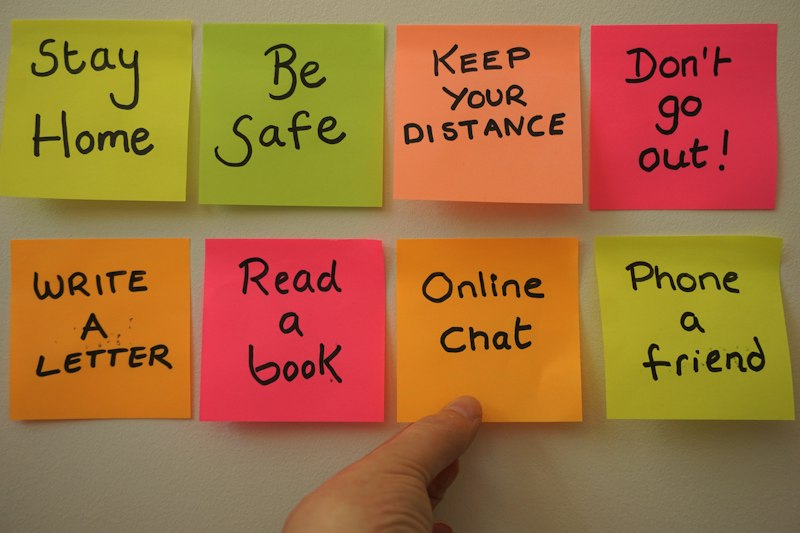
To illustrate the practical utility of the Public Distance Zone, consider its implementation in a bustling urban park during a period requiring enhanced social distancing. Imagine a popular section of the park, usually teeming with people, that has been largely underutilized due to pandemic restrictions. City officials identify this area as an ideal candidate for a PDZ. The “how-to” of its application would involve several key steps. First, a section of the park, perhaps a large grassy clearing or a paved plaza, is clearly demarcated using temporary but sturdy fencing and visible entry/exit points. These barriers serve as a psychological and physical cue, signaling that this is a controlled environment with specific rules for interaction. Signage at each entry point would prominently display the zone’s capacity, current occupancy, and essential guidelines, such as maintaining a minimum six-foot physical distance, wearing face coverings, and utilizing hand sanitizing stations.
Upon entry, which might be managed by a park attendant or an automated system, individuals or small household groups are directed to designated “pods” or marked areas within the zone. These areas are strategically spaced, perhaps 10 to 12 feet apart, to ensure ample distance even when people are moving around. For instance, families could bring their picnic blankets and settle within their assigned pod, while individuals seeking a quiet reading spot could occupy another. The pathways within the PDZ would also be clearly delineated, possibly with one-way flow indicators, to minimize close contact as people navigate the space. Visual markers like painted circles, colored tape, or even temporary seating arrangements would reinforce the required spacing, making it almost effortless for visitors to comply with the guidelines. This environmental structuring removes much of the ambiguity and individual burden of constantly measuring distances, thereby enhancing user comfort and adherence.
Furthermore, the PDZ could host various activities that respect the spatial limitations. For example, a local musician could perform on a small stage positioned to allow for distant viewing, or an outdoor yoga class could be conducted with participants positioned within their individual designated spots. The flexibility of the PDZ allows for a dynamic schedule of events, transforming a previously restricted public space into a vibrant, yet safe, community hub. Regular announcements, perhaps through a discreet public address system, could remind visitors of safety protocols and upcoming activities. This practical application demonstrates how the PDZ moves beyond simple prohibition, instead creating a managed environment that supports both public health objectives and the intrinsic human need for social engagement and access to public amenities, offering a tangible solution for maintaining a semblance of normalcy during challenging times.
Significance and Broader Societal Impact
The Public Distance Zone concept holds significant importance for the field of public health psychology and society at large, primarily by offering a pragmatic bridge between stringent public health mandates and the essential human need for social interaction and access to public spaces. Its significance lies in its potential to mitigate the negative social and psychological consequences often associated with prolonged periods of severe social distancing and lockdowns. By providing a structured yet accessible environment for gathering, the PDZ addresses issues of social isolation, mental health decline, and the erosion of community ties that can arise when public life is entirely suspended. It represents an evolution in pandemic response strategies, moving towards solutions that are not merely restrictive but also facilitative of well-being under challenging circumstances.
The application of the PDZ extends beyond immediate pandemic response, offering valuable lessons for urban planning and disaster preparedness. It highlights how thoughtful environmental design can influence collective behavior and support public health goals. In future scenarios requiring temporary behavioral modifications, the PDZ model could be adapted for various purposes, from managing crowds during large-scale events to providing safe gathering spaces in post-disaster recovery efforts. Its emphasis on clear communication through visual cues and environmental structuring can be seen as an application of environmental psychology, demonstrating how physical spaces can be designed to promote specific behavioral outcomes. This makes the concept particularly relevant for planners and policymakers seeking resilient and adaptable urban solutions.
Furthermore, the PDZ offers an economically viable alternative to complete closures, allowing for a degree of economic activity to continue in public spaces. This can support local businesses, cultural institutions, and recreational services that rely on public assembly. By fostering a sense of safety and predictability, it encourages greater public participation in outdoor activities, which are generally considered lower risk than indoor gatherings. This dual benefit—protecting public health while enabling social and economic functions—underscores its potential for positive societal impact. The concept challenges the dichotomy of “open” or “closed,” proposing a third way that allows for controlled public engagement, thereby contributing to a more sustainable and less disruptive approach to managing crises that demand behavioral adjustments.
Psychological Underpinnings and Related Concepts
The Public Distance Zone, while a practical public health intervention, draws heavily on fundamental principles from various subfields of psychology, particularly social psychology, environmental psychology, and public health psychology. A primary related concept is proxemics, the study of human use of space and the effects that population density has on behavior, communication, and social interaction. Edward T. Hall’s work on proxemics identifies various zones of personal space, including “public distance,” typically extending beyond 12 feet, where interactions are more formal and less personal. The PDZ leverages this understanding by physically designing environments to maintain or even exceed these public distances, thereby making the adherence to physical distancing a built-in feature of the space rather than a constant conscious effort. By pre-structuring spatial relationships, it reduces the cognitive load on individuals to negotiate appropriate distances in dynamic social settings.
Moreover, the PDZ incorporates elements of behavioral economics, especially the concept of “nudge theory.” Nudges are subtle interventions that guide people’s choices in a predictable direction without restricting options or significantly changing economic incentives. The use of clear visual cues, floor markings, and designated areas within the PDZ acts as a powerful nudge, subtly directing individuals to maintain appropriate separation. This approach recognizes that human decision-making is often influenced by context and environmental design, making it more effective than simply issuing abstract guidelines. Rather than relying solely on individual willpower or memory, the environment itself becomes a supportive scaffold for desired public health behaviors, increasing compliance rates naturally and with less perceived effort from the public.
The broader category of psychology to which the PDZ most directly belongs is Public Health Psychology, an interdisciplinary field that applies psychological principles to promote public health and prevent disease. The PDZ exemplifies this field’s goal by integrating psychological insights into a practical intervention aimed at improving community health outcomes during a pandemic. It also touches upon Urban Planning and design, demonstrating how psychological considerations can inform the creation of resilient and health-promoting urban environments. The connection to these fields underscores the PDZ’s holistic approach, recognizing that managing a public health crisis requires not only medical and epidemiological expertise but also a deep understanding of human behavior, social dynamics, and environmental influences. It serves as a compelling example of applied psychology contributing directly to real-world societal challenges.
Conclusion: A Flexible Approach to Public Health
In conclusion, the Public Distance Zone (PDZ) represents a thoughtful and innovative approach to managing social distancing in public spaces, particularly in the context of widespread health crises like the COVID-19 pandemic. By meticulously designing designated areas within existing public infrastructure, the PDZ successfully balances the critical imperative of minimizing pathogen transmission with the essential human need for social interaction and access to community life. It stands apart from more rigid lockdown measures by offering a flexible, adaptable, and cost-effective solution that can be rapidly implemented and adjusted to suit diverse environments and evolving public health requirements. This concept underscores the power of environmental design to shape human behavior positively, contributing to both physical safety and psychological well-being during challenging times.
The core strength of the PDZ lies in its ability to create a safe and comfortable environment where people can gather while instinctively maintaining recommended physical distance. Through the strategic use of physical barriers, controlled access, clear signage, and visual cues, it effectively “nudges” individuals toward compliance without constant direct enforcement. This proactive environmental structuring, informed by principles from environmental psychology and behavioral economics, makes adherence to public health guidelines more intuitive and less burdensome for the general public. As an applied concept within public health psychology, the PDZ offers valuable insights into how psychological principles can be leveraged to craft effective, humane, and sustainable interventions for societal challenges.
Ultimately, the Public Distance Zone is an ideal solution for mitigating the risk of transmission while simultaneously allowing communities to retain a vital degree of social and recreational activity. Its adaptability ensures that it can be integrated with other public health measures, such as mask-wearing and hand sanitization, further enhancing its protective capabilities. As societies continue to navigate complex health landscapes, the PDZ serves as a compelling model for future urban planning and public health strategies, demonstrating how intelligent design can foster resilience, support community well-being, and enable a more nuanced and sustainable approach to managing collective behavior in the face of widespread public health threats.