Reading Delay: Unlocking Every Child’s Cognitive Potential
Scientifically Reviewed · Dr. Marwa Abd-Alazim · October 9, 2026
Review Criteria & Clinical Standards
This content undergoes rigorous scientific peer-review and medical editorial standards at Arab Psychology Network to ensure clinical accuracy, validity, and compliance with evidence-based guidelines from leading psychological and healthcare authorities (APA / WHO).
Introduction to Reading Delay
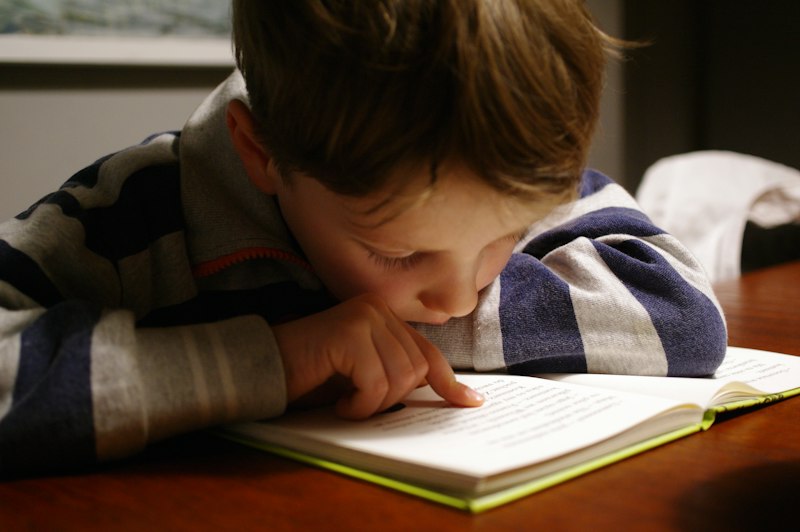
Reading delay refers to a significant discrepancy between an individual’s actual reading ability and their expected reading ability, typically based on age, grade level, and intellectual potential. This pervasive educational issue affects a substantial portion of the school-age population, with estimates suggesting that up to 15% of children experience some degree of difficulty in developing proficient reading skills. The core principle behind understanding reading delay is recognizing that reading is not a monolithic skill but rather a complex interplay of various cognitive processes, including phonological processing, decoding, vocabulary, fluency, and comprehension. When one or more of these foundational components are underdeveloped or impaired, the overall reading process is hindered, leading to measurable delays.
These delays are not merely a matter of academic performance; they often signify deeper underlying challenges that can profoundly affect a child’s development. A child with a reading delay struggles to master the fundamental mechanisms of literacy, which are crucial for accessing the broader curriculum and engaging with written language. This can manifest in difficulties recognizing words accurately and quickly, understanding the meaning of text, or reading smoothly and expressively. Addressing these challenges requires a nuanced understanding of their origins and a multifaceted approach to intervention.
The implications of unaddressed reading delay extend far beyond the classroom, impacting self-esteem, social interactions, and future educational and career prospects. Therefore, identifying and intervening early is paramount to mitigating these long-term negative consequences. This encyclopedia entry aims to provide a comprehensive overview of reading delay, exploring its historical context, underlying mechanisms, diverse causes, significant impacts, and effective intervention strategies, ultimately providing a holistic understanding of this critical developmental and educational concern.
Historical Evolution of Reading Difficulty Recognition
The recognition and systematic study of difficulties in learning to read have a history spanning well over a century, evolving from initial observations of “word blindness” to sophisticated models of dyslexia and reading delay. Early pioneers in the late 19th and early 20th centuries, such as German physician Rudolf Berlin and British ophthalmologist James Hinshelwood, first described cases of individuals who struggled with reading despite having normal intelligence and vision. Hinshelwood, in particular, used the term “congenital word blindness” to describe a condition where a child had difficulty learning to read, attributing it to a neurological basis. These early observations marked a crucial shift from viewing reading difficulties as a general intellectual deficit to recognizing them as a specific, distinct challenge.
Throughout the mid-20th century, research began to move beyond simple descriptions to explore the underlying cognitive processes involved. Researchers like Samuel T. Orton introduced the concept of “strephosymbolia” (twisted symbols), linking reading difficulties to issues in cerebral dominance and laterality, although these specific theories were later refined and largely superseded by more empirical evidence. This period was characterized by a growing awareness that reading challenges were not simply a matter of poor teaching or lack of effort, but rather complex issues requiring specialized understanding and intervention. The development of standardized tests also played a significant role in identifying children whose reading performance deviated significantly from their peers, providing a more objective measure of delay.
The latter half of the 20th century and the early 21st century witnessed a significant advancement in the scientific understanding of reading delay, largely fueled by advances in cognitive psychology, linguistics, and neuroscience. The focus shifted towards understanding the specific cognitive deficits, particularly in phonological awareness, that underpin many reading difficulties. This era saw the rise of evidence-based interventions and a more precise definition of learning disability in reading, distinguishing it from general learning challenges. This historical journey underscores a progressive refinement in diagnosis, theory, and intervention, moving from broad categorization to highly specific, empirically supported approaches.
Defining Reading Delay: Core Mechanisms and Characteristics
At its core, reading delay is characterized by an individual’s inability to acquire reading skills at the expected rate for their age and educational opportunities. The fundamental mechanism often implicated in reading delay, particularly in its most common form, dyslexia, is a deficit in phonological awareness. This refers to the ability to recognize and manipulate the individual sounds (phonemes) within words. For example, a child with poor phonological awareness might struggle to identify that the word “cat” is made up of three distinct sounds: /c/, /a/, /t/. This foundational skill is critical for decoding new words and understanding the alphabetic principle, which is the understanding that letters and letter patterns represent the sounds of spoken language.
Beyond phonological processing, other cognitive mechanisms contribute significantly to reading proficiency and, consequently, to reading delay when impaired. These include deficits in rapid automatic naming, which is the ability to quickly retrieve names for familiar symbols (like letters or numbers), and weaknesses in working memory. Working memory is essential for holding and manipulating information in the mind, such as remembering the beginning of a sentence while reading its end, or holding decoded sounds in mind long enough to blend them into a word. When working memory capacity is limited, the cognitive load of reading becomes overwhelming, hindering comprehension and fluency.
Furthermore, reading delay can manifest through various observable characteristics. Children often exhibit slow and effortful reading, inaccurate word recognition, frequent guessing based on context or initial letters, and poor reading fluency, which refers to the ability to read text accurately, quickly, and with appropriate expression. Even if a child can eventually decode words, a lack of fluency can severely impede comprehension, as too much cognitive energy is expended on deciphering individual words rather than understanding the overall meaning of the text. These characteristics collectively indicate a significant struggle with the complex, multi-component task of reading.
Understanding the Multifaceted Causes of Reading Delay
The causes of reading delay are diverse and often multifactorial, encompassing a range of intrinsic individual differences and extrinsic environmental influences. One significant category involves specific learning disorders such as dyslexia, which is a neurobiological condition characterized by difficulties with accurate and/or fluent word recognition and by poor spelling and decoding abilities. Another related neurodevelopmental condition, Attention Deficit Hyperactivity Disorder (ADHD), can also contribute to reading difficulties by impacting attention, focus, and sustained engagement with reading tasks, even if the core phonological processing abilities are intact. These conditions often necessitate specialized interventions due to their inherent neurological basis.
Beyond specific learning disorders, various other cognitive deficits can impede reading development. These may include broader language delays, affecting vocabulary acquisition, grammatical understanding, or narrative skills, which are all crucial for comprehending written text. Sensory impairments also play a role; uncorrected hearing problems can make it difficult to distinguish sounds necessary for phonological processing, while vision problems can interfere with tracking words on a page or maintaining focus. In some cases, a combination of these factors creates a complex web of challenges, where the precise cause of the reading delay might not be easily attributable to a single issue.
Environmental and instructional factors are equally critical in the development and perpetuation of reading delay. Poor instruction in early literacy, which may lack systematic phonics instruction or opportunities for meaningful engagement with text, can significantly hinder a child’s progress. Similarly, inadequate exposure to literacy materials at home, such as books, magazines, or print-rich environments, can limit a child’s foundational knowledge and motivation for reading. Broader environmental influences, such as poverty or chronic family stress, can impact a child’s readiness to learn, access to resources, and overall cognitive development, indirectly contributing to reading difficulties.
Profound Impacts on Academic, Social, and Emotional Development
The presence of a reading delay can have far-reaching and profound impacts on a child’s overall development, extending well beyond their academic performance. Academically, reading is a gateway skill for nearly all other subjects; difficulties in reading inevitably lead to struggles across the curriculum, including history, science, and even mathematics where word problems require strong comprehension. This often results in lower levels of academic achievement, a persistent cycle of frustration, and ultimately, an increased risk of academic failure, potentially culminating in school dropout. The constant struggle to keep up can erode a child’s confidence in their learning abilities, even if they possess high intelligence.
Beyond the classroom, reading delay significantly affects a child’s emotional well-being and self-esteem. The ongoing experience of struggling with tasks that peers find easy can lead to feelings of inadequacy, embarrassment, and shame. This can manifest as a lack of motivation, avoidance of reading activities, and a general disengagement from school. Such emotional distress can contribute to anxiety, depression, and a negative self-concept, impacting their willingness to try new things or persevere through challenges. The psychological burden of reading difficulties can be immense, requiring sensitive and supportive approaches to address both the academic and emotional needs of the child.
Socially, children with reading delays may face challenges in peer interactions and relationships. They might feel excluded from activities that involve reading, such as reading aloud in class, participating in book clubs, or understanding popular culture references derived from written media. This can lead to social isolation or difficulties forming strong peer bonds, further compounding feelings of difference or inferiority. Moreover, the frustration arising from academic struggles can sometimes spill over into behavioral issues, as children might act out to avoid reading tasks or to mask their difficulties. Thus, the comprehensive impact of reading delay touches every facet of a child’s life, underscoring the urgency of effective intervention.
Effective Strategies for Intervention and Support
Early intervention is the cornerstone of effectively addressing reading delay, as the brain is most receptive to learning foundational literacy skills in the early years. Interventions must be highly individualized and tailored to the specific needs of the student, following a thorough assessment that identifies precise areas of weakness. A comprehensive approach typically focuses on developing critical reading skills such as phonemic awareness, which involves recognizing and manipulating sounds in spoken words, and phonics, which teaches the relationship between letters and sounds. These foundational skills enable accurate decoding of words, a prerequisite for fluent reading.
Beyond decoding, interventions also target essential components like sight word recognition, enabling children to instantly recognize high-frequency words without decoding them letter by letter, thereby improving reading speed. Developing fluency is crucial, often achieved through repeated reading of texts at an appropriate challenge level, allowing students to read smoothly and with expression. Finally, comprehension strategies are taught to help students understand the meaning of what they read, including techniques like summarizing, questioning, clarifying, and predicting. Effective interventions integrate these components systematically, ensuring that children build a robust set of reading skills.
Pedagogically, strategies such as explicit instruction are highly effective, meaning that skills are taught directly, clearly, and systematically, with clear explanations and guided practice. Repeated reading of texts helps build fluency and automaticity. Text-based discussions encourage deeper engagement with content and promote critical thinking and comprehension. Furthermore, multisensory activities, which engage multiple senses (e.g., seeing, hearing, touching, moving) simultaneously, can significantly enhance learning and memory, especially for students with learning differences. These varied strategies, when implemented consistently and adaptively, can empower children to overcome their reading challenges and become successful readers.
A Practical Illustration of Reading Delay
Consider a third-grade student named Alex who, despite being bright and engaged in classroom discussions, consistently struggles with reading. His teachers have noticed that he reads very slowly, often mispronounces words, and frequently loses his place on the page. When asked to read aloud, he becomes anxious and hesitant, and while he can answer questions about a story if it’s read to him, his comprehension of texts he reads independently is significantly weaker. This scenario exemplifies a typical presentation of reading delay, where underlying cognitive difficulties impede the acquisition of fluent and meaningful reading skills.
The “how-to” of addressing Alex’s reading delay begins with a comprehensive assessment by an educational psychologist. This assessment reveals that Alex has significant deficits in phonemic awareness, struggling to blend sounds into words and segment words into individual sounds. He also shows weaknesses in rapid automatic naming, making it difficult for him to quickly recognize and retrieve common sight words. Based on these findings, an individualized intervention plan is developed. This plan includes daily, focused sessions with a reading specialist, utilizing a structured literacy approach.
In these sessions, Alex receives explicit, systematic instruction in phonics, learning letter-sound correspondences and blending sounds to decode words. Multisensory techniques are employed, such as tracing letters in sand while saying their sounds, to reinforce learning. He practices sight word recognition through flashcards and engaging games. To build fluency, Alex engages in repeated readings of short, controlled texts at his instructional level, gradually increasing the complexity. Through consistent practice and targeted strategies, Alex slowly begins to improve his decoding skills, his reading becomes less effortful, and his confidence in approaching new texts steadily grows. This integrated, multi-faceted approach directly addresses his specific areas of weakness, demonstrating how psychological principles translate into practical educational support.
Significance, Broader Applications, and Interconnected Concepts
The concept of reading delay holds immense significance within the field of psychology, particularly in educational psychology, cognitive psychology, and developmental psychology. It highlights the complex interplay between neurological processes, cognitive functions, environmental influences, and educational practices in shaping a fundamental human skill. Understanding reading delay has propelled extensive research into typical reading development, brain function during reading, and the most effective pedagogical methods. It underscores the importance of early identification and intervention not just for academic success, but for fostering positive self-concept and overall well-being throughout a child’s life.
The applications of research into reading delay are broad and impactful. In education, this understanding directly informs the design of literacy curricula, teacher training programs, and the implementation of screening tools to identify at-risk readers early. In clinical settings, it guides the assessment and diagnosis of learning disability, particularly dyslexia, and the development of specialized therapeutic interventions. Furthermore, insights from reading delay research contribute to broader public policy discussions regarding educational equity, resource allocation for special education, and the societal costs of illiteracy. It also influences parent education, empowering families to support their children’s literacy development effectively.
Reading delay is intricately connected to several other key psychological concepts. It often overlaps with language acquisition difficulties, as strong oral language skills are a prerequisite for reading comprehension. Deficits in working memory and executive functions (such as planning and self-regulation) are frequently observed alongside reading difficulties, highlighting the cognitive resources required for effective reading. The impact of socioeconomic status (SES) on early literacy exposure and achievement is also a well-established connection, demonstrating how broader societal factors influence individual development. By examining these interconnections, psychology continues to refine its understanding of reading delay and develop more comprehensive strategies for prevention and intervention.