Dyslexia: Decoding the Science of Reading Struggles
Scientifically Reviewed · Dr. Marwa Abd-Alazim · September 11, 2026
Review Criteria & Clinical Standards
This content undergoes rigorous scientific peer-review and medical editorial standards at Arab Psychology Network to ensure clinical accuracy, validity, and compliance with evidence-based guidelines from leading psychological and healthcare authorities (APA / WHO).

Definition and Diagnostic Criteria
A reading disability represents a significant and persistent deficit in reading ability, wherein an individual’s performance falls substantially below the level expected for their chronological age, measured intelligence, and educational opportunities. This determination is crucial because it establishes a discrepancy between the potential ability of the individual and their actual academic achievement in the domain of reading. Historically, the most commonly recognized and studied manifestation of this disability is Dyslexia, which is characterized by difficulties with accurate and/or fluent word recognition and by poor spelling and decoding abilities. These difficulties typically result from a deficit in the phonological component of language that is often unexpected in relation to other cognitive abilities. The formal diagnosis requires the ruling out of other primary causes, such as uncorrected visual or hearing impairments, intellectual disability, or inadequate educational instruction, ensuring that the core issue resides specifically in the neurocognitive processes underlying reading acquisition.
The criteria for establishing a reading disability rely heavily on standardized assessment tools that measure specific skills, including word reading accuracy, reading fluency (speed and prosody), and reading comprehension. A key diagnostic element is the persistence of the difficulty; it must not be transient but must be evident over a prolonged period, often despite targeted intervention efforts within the classroom setting. Furthermore, the severity of the disability is graded based on the degree to which these deficits interfere with academic functioning, occupational performance, or daily life activities requiring literacy skills. This approach ensures that instructional challenges are differentiated from genuine neurological learning disorders, highlighting that the disability possesses a clear, measurable impact on the individual’s capacity to navigate literacy demands required by their developmental stage.
While a reading disability is fundamentally defined by low competency relative to peers, it is critically understood as having a neurological component, meaning it originates from differences in brain structure and function, rather than environmental deficits alone. This neurological basis distinguishes it from reading difficulties that arise purely from socioeconomic factors or poor schooling. The definition spans various aspects of reading proficiency, incorporating not only the mechanical act of decoding letters into sounds but also the resultant ability to derive meaning from text. Thus, the disability is recognized as a complex profile often characterized by a fundamental perceptual deficit related to sound processing, leading sequentially to poor comprehension and, subsequently, a host of associated emotional and psychological issues stemming from repeated academic failure.
The Neurological Basis of Reading Disability
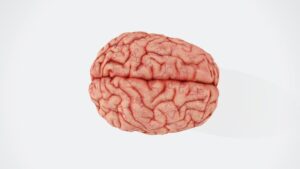
The consensus in cognitive neuroscience is that reading disability, particularly dyslexia, is rooted in distinct differences in the organization and activation of neural pathways dedicated to language processing, primarily located within the left cerebral hemisphere. Functional magnetic resonance imaging (fMRI) studies consistently demonstrate that typical readers engage a robust network connecting the posterior regions, including the occipitotemporal cortex (often referred to as the visual word form area), the temporoparietal cortex (Wernicke’s area and angular gyrus), and the inferior frontal gyrus (Broca’s area). In contrast, individuals with reading disability often show underactivation in these critical posterior reading circuits, specifically those involved in rapid, automatic word recognition and phonological mapping. This neurological distinction provides a powerful explanation for why learning to read is effortful and slow, even when the individual possesses high general intelligence and strong motivation.
Further neurological examination reveals differences in brain structure, particularly in areas related to white matter integrity. White matter tracts, such as the arcuate fasciculus and the superior longitudinal fasciculus, are essential for connecting different language processing centers, allowing for efficient communication between the areas that process sounds (phonology) and the areas that recognize visual symbols (orthography). Studies using diffusion tensor imaging (DTI) suggest that these pathways may be less dense or less organized in individuals with reading disabilities, impeding the rapid transfer of information necessary for fluent reading. This structural difference underscores the inherent difficulty in establishing the automatic link between printed letters and their corresponding speech sounds—a link that must become instantaneous for reading to transition from a laborious cognitive task to an automatic, fluid process.
The neurological profile is not merely one of deficit but also one of compensatory activity. When the specialized posterior reading systems fail to activate efficiently, individuals with reading disability often rely more heavily on frontal brain regions, such as the inferior frontal gyrus (Broca’s area), which is typically associated with articulation and effortful speech production. While this compensatory mechanism allows reading to occur, it requires significantly more cognitive energy and resources, explaining the slow, labored nature of their reading, even in adolescence or adulthood. This high cognitive load directly contributes to the characteristic poor comprehension, as the majority of working memory capacity is consumed by the fundamental task of decoding, leaving insufficient resources available for extracting meaning, making inferences, or retaining information.
Core Characteristics: Phonological and Perceptual Deficits
The most robust and primary deficit characterizing reading disability is a weakness in phonological awareness. This is not a visual problem but a perceptual deficit related to the processing of language sounds. Phonological awareness refers to the ability to recognize and manipulate the sound structure of spoken language—for example, isolating the initial sound in a word, blending sounds to form a word, or segmenting a word into individual phonemes. Because reading an alphabetic language like English requires mapping visual symbols (letters) onto these underlying speech sounds (phonemes), a deficiency in manipulating sounds creates a profound barrier to decoding. This deficit explains why the individual struggles to sound out unfamiliar words or recognize familiar words automatically, as the fundamental connection between the orthographic code and the phonological code is impaired.
This perceptual deficit manifests acutely in early reading attempts as slow, effortful decoding and a high rate of reading errors, particularly those involving phonetic approximations or reversals, such as reading ‘b’ for ‘d’ or ‘was’ for ‘saw’. While some difficulties might initially appear visual, the underlying cause remains phonological; the visual confusion is often a symptom of poor sound-symbol linkage rather than a primary visual processing error. Beyond core phonological processing, many individuals also exhibit difficulties with Rapid Automatized Naming (RAN). RAN tasks require quickly naming a series of familiar items (e.g., colors, letters, objects) presented visually. A slow RAN score is highly correlated with reading disability and is thought to reflect a general difficulty in rapid retrieval and sequencing of information, which significantly impacts reading fluency and speed, even after basic decoding accuracy has improved.
The interplay between phonological deficits and slow processing speed creates a cycle of reduced reading exposure. Because the act of reading is difficult and yields less reward, individuals with the disability spend less time reading than their peers. This reduced exposure leads to secondary deficits, including a smaller vocabulary, limited knowledge of complex grammatical structures, and a weaker grasp of orthographic patterns. Therefore, while the initial and core deficit is phonological, the disability rapidly branches out to affect general language knowledge and processing speed, further exacerbating the difficulty in achieving reading fluency and ultimately contributing substantially to the documented perceptual deficit profile.
Impact on Reading Comprehension
The hallmark of a reading disability is often the observable poor comprehension that arises either directly from decoding failure or from co-occurring language weaknesses. When reading is slow and non-automatic, the reader must dedicate nearly all available cognitive resources to simply figuring out what the words are. This effortful decoding creates a “bottleneck effect” on the working memory system, leaving few or no resources available for the higher-level cognitive tasks required for comprehension, such as integrating information across sentences, monitoring understanding, or building a mental model of the text. Consequently, the individual might accurately read the words on the page but be unable to summarize the plot or answer basic questions about the content, having forgotten the beginning of the passage by the time they reached the end.
Furthermore, reading comprehension difficulties are often compounded by underlying deficits in general oral language comprehension. While reading disability is defined primarily by a decoding problem, a significant subset of affected individuals also exhibits weaknesses in areas such as vocabulary, syntax, and background knowledge—components collectively known as the “language comprehension” side of the reading equation. If a student struggles to understand a sentence when it is spoken to them, they will certainly struggle when trying to decode that same sentence in text. The lack of wide reading practice further inhibits vocabulary growth, creating a widening gap between their knowledge base and that of their typically developing peers, making advanced academic texts increasingly inaccessible.
In academic settings, the deficit in comprehension shifts from simply understanding isolated facts to managing complex text structures. Individuals with reading disabilities frequently struggle with metacognitive comprehension strategies, such as distinguishing main ideas from supporting details, making sophisticated inferences about character motivation or scientific processes, and summarizing lengthy passages. They may also exhibit difficulty in identifying cohesive ties within the text, leading to fragmented understanding. Successful intervention requires explicit instruction not only in decoding mechanics but also in these advanced comprehension strategies, often utilizing visual organizers and structured questioning techniques to compensate for the cognitive resources lost during the arduous process of word recognition.
Associated Emotional and Behavioral Issues
The experience of persistent academic failure due to a reading disability inevitably leads to significant emotional issues and psychological distress. For a student who tries diligently but consistently performs below expectations, feelings of frustration, shame, and inadequacy are common. The continuous gap between their perceived intellectual ability and their inability to perform basic literacy tasks undermines their confidence, leading to chronically low self-esteem. This is particularly acute when the disability goes undiagnosed or is misattributed to laziness or lack of effort, intensifying feelings of isolation and misunderstanding. Performance anxiety related to reading, especially reading aloud in class or taking timed literacy tests, can become debilitating, further compromising their ability to demonstrate their true knowledge.
These internal emotional struggles often translate into observable behavioral issues within the educational environment. Avoidance behaviors are a frequent coping mechanism; students may refuse to complete homework, “forget” necessary materials, or exhibit generalized school refusal as a means of escaping situations where their deficits will be exposed. In some cases, frustration may lead to externalizing behaviors, such as disrupting class, defiance, or acting out. These behaviors, while problematic, often serve as a protective shield, diverting attention from the underlying academic weakness and preventing peers and teachers from identifying the true source of difficulty.
Furthermore, reading disability frequently co-occurs with other neurodevelopmental conditions, most notably Attention-Deficit/Hyperactivity Disorder (ADHD) and generalized anxiety disorders. The presence of these co-morbid conditions complicates both diagnosis and treatment. For example, the inattentiveness characteristic of ADHD can exacerbate reading difficulties, making it harder to sustain the focus required for decoding practice, while the academic failure stemming from the reading disability can heighten anxiety. Therefore, effective intervention must adopt a holistic approach, providing not only intensive academic remediation but also robust psychological support, including counseling and social-emotional learning strategies, to rebuild self-efficacy and address the profound psychological impact of living with a learning disability.
Diagnostic Assessment and Evaluation
The comprehensive diagnosis of a reading disability is a multidisciplinary effort, typically involving educational psychologists, specialized educators, and speech-language pathologists. The evaluation process must be meticulous, designed to differentiate a specific learning disorder from other potential causes of poor academic performance. The initial steps involve thorough screening to rule out sensory impairments (vision and hearing) and intellectual limitations, ensuring that the difficulty is specific to the acquisition and use of academic skills. Once these factors are excluded, the assessment focuses on documenting the specific academic deficits and confirming the neurological basis through the testing of underlying cognitive processes.
A core element of the diagnostic protocol involves administering a battery of formal, standardized, norm-referenced tests. These instruments measure the individual’s performance against that of thousands of peers, establishing the degree of discrepancy between expected and actual performance. Key areas of testing include measures of intellectual potential (IQ), foundational reading skills (word recognition, decoding of non-words), reading fluency (words correct per minute), and reading comprehension. The results must demonstrate that the deficit is substantial—typically defined as performance two standard deviations or more below the mean for their age group, or a persistent failure to respond to high-quality, research-based instruction.
The cognitive processing component of the assessment is crucial for confirming the neurological etiology and informing intervention planning. Specific assessments target the core deficits identified in research. These assessments are typically summarized in the evaluation report using an ordered list to clearly delineate the areas of weakness:
- Phonological Awareness: Testing the ability to segment, blend, and manipulate phonemes (e.g., Elkonin boxes, phoneme deletion tasks).
- Rapid Automatized Naming (RAN): Measuring the speed of accessing and verbalizing sequences of familiar visual stimuli (e.g., letters, numbers, colors).
- Phonological Memory: Assessing the capacity to hold and recall sequences of verbal information in short-term memory (e.g., non-word repetition tasks).
- Orthographic Processing: Evaluating the ability to recognize and store visual representations of whole words for rapid retrieval.
- Working Memory: Determining the ability to simultaneously store and manipulate information, which is critical for complex comprehension.
Intervention Strategies and Remediation
Effective intervention for reading disability requires instruction that is explicit, systematic, intensive, and delivered early. Because the disability is rooted in phonological processing difficulties, remediation must focus on directly addressing this core deficit through structured literacy approaches. Programs based on the principles of the Orton-Gillingham method are highly effective, utilizing a multisensory approach that connects auditory, visual, and kinesthetic learning channels simultaneously to reinforce the sound-symbol relationships. Instruction progresses sequentially, starting with basic phonemic awareness and moving systematically through advanced phonics rules, morphology, and syntax. The intensity of the intervention—frequent sessions, often one-on-one or in small groups—is crucial for driving the necessary neuroplastic changes and establishing automaticity.
Remediation must also include dedicated training for reading fluency and comprehension. Fluency training utilizes techniques such as repeated reading of controlled texts, assisted reading (e.g., reading along with an audio model), and practice in reading connected text with appropriate expression (prosody). The goal is to reduce the cognitive burden associated with decoding so that attention can be redirected toward meaning. For comprehension, instruction must be equally explicit, teaching students specific strategies for interacting with the text, such as summarizing, predicting, questioning the text, and using graphic organizers to map complex relationships and narrative structures.
Beyond direct skill remediation, successful intervention involves implementing appropriate academic accommodations to ensure students can access the general education curriculum while they build foundational skills. Accommodations are adjustments to the learning environment or assessment methods that level the playing field without lowering academic standards. Common accommodations include extended time on tests and assignments, use of technological aids such as text-to-speech software or dictation tools, and access to alternative formats of educational materials (e.g., audiobooks). These supports acknowledge that the individual’s knowledge base and conceptual understanding may far exceed their ability to efficiently process written text, thereby preventing the reading deficit from unfairly hindering performance across other subjects like science or history.
Long-Term Outcomes and Adult Functioning
Reading disability is recognized as a lifelong neurodevelopmental condition, meaning that the underlying neurological differences persist into adulthood, even if the observable symptoms change due to maturation and compensatory strategy development. Adults with reading disabilities often exhibit residual difficulties, particularly in tasks requiring rapid reading, complex spelling, and efficient processing of lengthy written information. However, many individuals develop sophisticated and highly effective compensatory skills, leveraging their strengths in areas such as verbal reasoning, critical thinking, and visual-spatial abilities to navigate academic and professional demands successfully.
In professional settings, challenges may manifest as slower reading speed necessary for reviewing documents, increased time required for written reports, or difficulty taking accurate notes during lectures or meetings. However, adults successfully mitigate these issues by strategically utilizing assistive technologies, relying on strong organizational systems, and excelling in careers that prioritize oral communication, problem-solving, and non-literacy-dependent skills. The key to successful adult functioning lies in self-awareness—understanding one’s specific learning profile and advocating effectively for necessary supports and accommodations in both educational and occupational environments.
The long-term emotional and psychological outcomes are closely linked to the quality and timing of early intervention and support. Individuals who received early, effective remediation and whose disability was acknowledged positively often maintain higher levels of self-efficacy and resilience. Conversely, those whose difficulties were ignored or stigmatized may continue to struggle with the associated emotional issues, including chronic anxiety and reduced professional ambition. Research consistently confirms that reading disability is orthogonal to intelligence; many highly successful professionals, entrepreneurs, and artists have reading disabilities, demonstrating that with appropriate support and self-acceptance, the condition does not preclude achievement of high educational and occupational goals.