Realistic Group Conflict: Why We Fight Over Scarcity
Scientifically Reviewed · Dr. Marwa Abd-Alazim · October 8, 2026
Review Criteria & Clinical Standards
This content undergoes rigorous scientific peer-review and medical editorial standards at Arab Psychology Network to ensure clinical accuracy, validity, and compliance with evidence-based guidelines from leading psychological and healthcare authorities (APA / WHO).
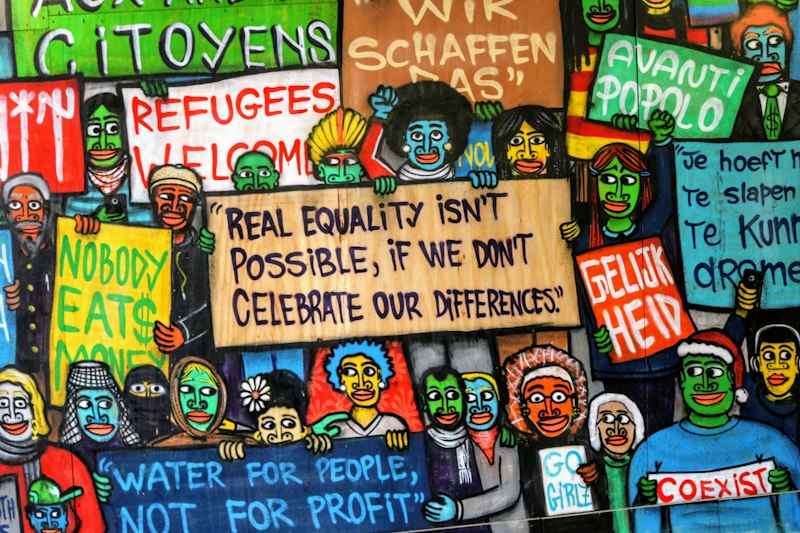
The Core Tenets of Realistic Group-Conflict Theory
The Realistic Group-Conflict Theory (RGCT) stands as a foundational framework within social psychology, positing that intergroup conflict arises primarily from direct competition between groups over actual or perceived scarce resources. This initial, straightforward definition expands into a more nuanced understanding: when different social groups find themselves vying for limited, valued commodities—be they material resources like land, food, or jobs, or symbolic resources such as power, prestige, or political influence—their interactions are likely to escalate from mere differences to overt hostility and conflict. The theory emphasizes that this competition is not merely a perceived threat but is often rooted in objective, tangible conditions where one group’s gain genuinely implies another group’s loss, creating a zero-sum dynamic.
At its fundamental core, RGCT proposes that the existence of incompatible group goals, particularly those tied to resource acquisition, is the driving force behind negative attitudes and discriminatory behaviors between groups. As groups strive to secure these vital resources for their own members, they develop negative stereotypes and prejudices towards outgroups, viewing them as obstacles or rivals. This process is further exacerbated by the belief that securing the group’s success will yield personal benefits for individual members. Consequently, loyalty to the ingroup intensifies, and a sense of collective identity becomes more pronounced, often at the expense of harmonious intergroup relations. The theory suggests that this direct competition creates a context ripe for ethnocentrism, where one’s own group is seen as superior and deserving, while competing groups are devalued.
The main propositions underpinning the Realistic Group-Conflict Theory can be systematically outlined to illustrate its comprehensive scope. Firstly, it asserts that genuine competition over scarce resources is the primary antecedent to intergroup conflict. This foundational premise distinguishes RGCT from theories that prioritize psychological factors or mere perceptual differences. Secondly, the theory posits that individuals within a group will actively support their group’s objectives and engage in intergroup hostility if they perceive that the group’s success will lead to direct personal advantages or improved welfare for themselves. This self-interest, embedded within a collective framework, strengthens ingroup cohesion and fuels the competitive drive. Thirdly, RGCT suggests that the intensity of intergroup conflict is likely to be amplified when the competing groups differ significantly in size or power, as imbalances can exacerbate feelings of threat or dominance, leading to more aggressive strategies from both sides.
Historical Foundations and Key Proponents
The origins of the Realistic Group-Conflict Theory are commonly attributed to the pioneering work of social psychologist Muzafer Sherif and his colleagues, notably through a series of seminal field experiments conducted in the mid-20th century. While the original content cites S.A. Miller in 1941, the most widely recognized and influential empirical validation and elaboration of RGCT came from Sherif’s studies, particularly the famous Robbers Cave Experiment in 1954. Sherif’s work provided robust empirical evidence for the theory, demonstrating how intergroup hostility could be experimentally induced through competition for scarce resources and subsequently reduced through the introduction of superordinate goals requiring intergroup cooperation. This series of experiments meticulously documented the stages of group formation, intergroup conflict, and conflict resolution, solidifying RGCT’s position in social psychology.
Prior to Sherif’s definitive work, the intellectual landscape was already fertile for theories explaining social conflict. The early to mid-20th century was a period marked by significant global conflicts, economic depressions, and social tensions, prompting scholars to investigate the root causes of prejudice, discrimination, and violence between groups. Sociologists and anthropologists had long observed patterns of conflict tied to resource distribution, but Sherif’s psychological approach provided an experimental lens. His research built upon existing sociological insights, translating them into a psychological framework that could be tested and refined. The context of these studies was often driven by a desire to understand and mitigate real-world social problems, making the theory highly relevant to contemporary issues.
Sherif’s methodology in the Robbers Cave experiment was particularly innovative. He created two distinct groups of boys in a summer camp setting, initially fostering strong ingroup cohesion within each. Subsequently, he introduced situations of competition where only one group could win desirable resources or privileges, such as prizes or access to recreational areas. This competition quickly led to the development of negative stereotypes, hostility, and aggressive behaviors between the groups, vividly demonstrating the core proposition of Realistic Group-Conflict Theory. The ingenious design allowed researchers to observe the dynamic emergence of intergroup conflict in a controlled environment, providing a powerful empirical foundation that continues to influence research in intergroup relations today.
Mechanisms of Intergroup Hostility
The Realistic Group-Conflict Theory elucidates several mechanisms through which competition for scarce resources translates into overt intergroup conflict and hostility. One primary mechanism is the development of negative interdependence. When groups are in competition, the success of one group inherently means the failure of the other, creating a zero-sum situation. This perception of negative interdependence fosters a sense of threat and animosity towards the outgroup, as their existence or success is perceived as a direct impediment to the ingroup’s well-being and goal attainment. This mechanism is crucial because it highlights that hostility is not necessarily irrational but a logical response to a perceived threat to group interests.
Another critical mechanism involves the escalation of ingroup loyalty and outgroup derogation. As groups engage in competition, internal cohesion within each group tends to increase. Members become more loyal to their own group, perceiving it as a source of support and identity in the face of an external threat. This heightened ingroup solidarity is often accompanied by the demonization or dehumanization of the outgroup. Negative stereotypes are formed and reinforced, attributing undesirable characteristics to the competing group, which serves to justify hostile actions and maintain a moral high ground for the ingroup. This psychological distancing makes it easier for members to engage in discriminatory behaviors without experiencing significant cognitive dissonance.
Furthermore, the theory suggests that the intensity of intergroup conflict can be modulated by various factors, including the perceived value of the resources at stake and the perceived legitimacy of the competition. If the resources are highly valued and absolutely essential for the group’s survival or prosperity, the conflict is likely to be more severe. Similarly, if the competition is perceived as unfair or illegitimate by one or both parties, it can further inflame tensions and lead to more aggressive tactics. The dynamic interplay between the objective reality of resource scarcity and the subjective interpretations of that scarcity and competition drives the complex manifestation of intergroup hostility, illustrating the comprehensive scope of Realistic Group-Conflict Theory.
Empirical Evidence and Supporting Research
The empirical foundation for the Realistic Group-Conflict Theory is robust, drawing from a wide array of experimental, correlational, and observational studies across various contexts. The most celebrated evidence comes from Muzafer Sherif’s aforementioned Robbers Cave experiments, which meticulously demonstrated how intergroup hostility and prejudice could be systematically generated by introducing competition over desirable scarce resources, and subsequently reduced through cooperation on superordinate goals. These field experiments provided a compelling, real-world illustration of RGCT’s core tenets, showing how boys who were initially friends turned into bitter rivals when pitted against each other for prizes, and then reconciled when forced to work together to achieve a common, mutually beneficial objective.
Beyond Sherif’s pioneering work, numerous subsequent studies have corroborated and expanded upon the empirical support for RGCT. For instance, research has consistently found that the presence of objective competition over resources significantly increases negative attitudes and hostility between groups. Studies cited by Barker (1983) and Blalock (1967) highlighted how economic downturns or perceived threats to employment opportunities can exacerbate racial or ethnic tensions within communities, aligning perfectly with the theory’s predictions. Furthermore, the proposition that individuals are more likely to support their group goals when they believe it will lead to personal benefits has also received strong support. Brewer (1979) and DeSouza (2007) provided evidence that perceived instrumental benefits for ingroup members serve as a powerful motivator for collective action and ingroup favoritism, even in minimal group paradigms where group identity is arbitrarily assigned.
Further empirical investigations have also explored the nuance of group size and power dynamics within the framework of RGCT. Research has indicated that intergroup conflict can be particularly intense when the competing groups are of significantly different sizes or possess unequal power, as noted in studies by Brewer (1979) and DeSouza (2007). In such scenarios, smaller or less powerful groups may perceive a greater threat to their existence or access to resources, leading to defensive or retaliatory actions, while larger or more powerful groups might engage in more aggressive dominance. This body of evidence collectively underscores the enduring validity of the Realistic Group-Conflict Theory, demonstrating its applicability across diverse social settings and its capacity to explain a wide spectrum of intergroup phenomena, from subtle prejudices to overt aggression.
A Practical Illustration: The Neighborhood Dispute
To illustrate the Realistic Group-Conflict Theory in a simple, relatable scenario, consider a neighborhood composed of two distinct communities: long-term residents, many of whom are retirees, and a newer influx of young families with children. The central “resource” at stake is the local community park, a beloved shared space. Initially, both groups coexist peacefully, utilizing the park for their respective needs—retirees for quiet strolls and picnics, and families for children’s playtime and sports. However, a local government decision to cut funding for park maintenance leads to a perceived scarcity: the park can no longer adequately serve both groups’ needs simultaneously without significant degradation or overcrowding, particularly in its limited recreational facilities.
The “how-to” of RGCT’s application unfolds as the perceived scarcity transforms into competition and then into intergroup conflict. First, the long-term residents, prioritizing peace and quiet, begin to resent the noise and activity generated by the children and their families, perceiving it as encroaching on their established use of the park. Concurrently, the young families, needing safe and engaging spaces for their children, feel that the retirees’ desire for tranquility unfairly restricts the park’s utility for active play. Each group begins to view the other as an obstacle to their rightful enjoyment of the park. Verbal altercations may ensue, complaints to local authorities escalate, and negative stereotypes emerge: retirees are labeled as “grumpy” or “unwelcoming,” while families are seen as “noisy” or “disrespectful.”
As the conflict intensifies, each group rallies around its group goals. Retirees form an “Our Park, Our Peace” committee, advocating for stricter rules on noise and designated quiet zones, believing this will restore their personal enjoyment of the park. Young families counter with a “Kids Deserve to Play” petition, demanding more child-friendly facilities and flexible usage hours, viewing these changes as crucial for their children’s well-being. Both groups perceive that their individual welfare is tied to their group’s success in dominating the park’s use. This escalating dispute, rooted in the genuine competition over a diminished shared resource, vividly demonstrates the core principles of Realistic Group-Conflict Theory, where objective resource scarcity drives subjective hostility and organized group action.
Broader Significance and Contemporary Applications
The Realistic Group-Conflict Theory holds immense significance for the field of social psychology, providing a powerful lens through which to understand the pervasive nature of prejudice, discrimination, and conflict in human societies. Its enduring importance lies in its ability to pinpoint a tangible, material basis for intergroup hostility, moving beyond purely psychological or ideological explanations. By highlighting the role of competition over scarce resources, RGCT offers a practical framework for identifying the root causes of many social problems and, crucially, for developing targeted interventions. The theory underscores that while cognitive biases and social identities play a role, the material conditions of groups often lay the groundwork for their interactions, whether cooperative or confrontational.
The applications of RGCT are far-reaching and extend into various domains, influencing strategies for conflict resolution, public policy, and even marketing. In international relations, the theory informs analyses of geopolitical conflicts arising from competition for oil, water, or land, suggesting that diplomatic solutions must address the underlying resource disputes. Within communities, RGCT can help explain tensions between different ethnic or socioeconomic groups vying for jobs, housing, or educational opportunities, guiding policymakers to implement programs that foster cooperation rather than exacerbate competition. For example, rather than allowing groups to fight over limited resources, interventions might focus on expanding the resource pool or creating superordinate goals that require intergroup collaboration, mirroring the resolution phase of Sherif’s experiments.
Moreover, the implications of RGCT are profound for understanding and ultimately reducing intergroup conflict. The theory suggests that merely promoting tolerance or understanding between groups may be insufficient if the underlying competition for scarce resources remains unaddressed. Therefore, effective strategies for conflict reduction often involve restructuring situations to reduce perceived competition, creating conditions for positive interdependence, and emphasizing shared superordinate goals that transcend individual group goals. This practical orientation makes RGCT an invaluable tool for practitioners in fields ranging from community development and organizational management to peace studies and humanitarian aid, offering tangible pathways toward more harmonious intergroup relations by tackling the material realities that often fuel division.
Related Psychological Concepts and Theoretical Context
The Realistic Group-Conflict Theory is a cornerstone of social psychology, particularly within the study of intergroup relations, but it does not exist in isolation. It is closely related to, and often contrasted with, other prominent theories that seek to explain prejudice, discrimination, and conflict. One such theory is Social Identity Theory (SIT), proposed by Henri Tajfel and John Turner. While RGCT emphasizes the material basis of conflict, SIT posits that intergroup discrimination can arise even in the absence of competition for scarce resources, simply from the desire to achieve or maintain a positive social identity by differentiating one’s ingroup from an outgroup. Though distinct, these theories are not mutually exclusive; RGCT provides the ‘realistic’ context of resource conflict, while SIT explains the cognitive and motivational processes of identity that can amplify or be influenced by this conflict.
Another concept closely linked to RGCT is Relative Deprivation Theory. This theory suggests that conflict and unrest arise not necessarily from absolute deprivation, but from a perceived discrepancy between what one expects to receive and what one actually receives, especially when compared to a relevant reference group. While RGCT focuses on objective resource scarcity and competition, Relative Deprivation Theory highlights the subjective perception of injustice and unfairness in resource distribution. This means that even if resources are not objectively scarce, a feeling of being unfairly deprived relative to another group can ignite conflict, complementing RGCT’s emphasis on material conditions with a crucial psychological component of perceived fairness and equity.
The broader category to which Realistic Group-Conflict Theory belongs is social psychology, specifically the subfield concerned with intergroup relations, prejudice, and social conflict. It provides a macro-level explanation for how structural factors and material conditions shape group interactions, offering a counterbalance to purely individual-level or cognitive explanations of prejudice. By focusing on the tangible competition for scarce resources, RGCT offers invaluable insights into the dynamics of many real-world conflicts, from ethnic strife and labor disputes to political rivalries. Its continued relevance in understanding contemporary social issues underscores its foundational status within psychological theory.