Cognitive Reasoning: Master Your Mental Logic
Scientifically Reviewed · Dr. Marwa Abd-Alazim · October 4, 2026
Review Criteria & Clinical Standards
This content undergoes rigorous scientific peer-review and medical editorial standards at Arab Psychology Network to ensure clinical accuracy, validity, and compliance with evidence-based guidelines from leading psychological and healthcare authorities (APA / WHO).
Defining Reasoning Tests: An Overview
A reasoning test is a specialized psychological assessment meticulously designed to evaluate an individual’s capacity for logical thought, critical analysis, and effective problem-solving. These assessments move beyond merely measuring acquired knowledge, instead focusing on an individual’s inherent ability to process new information, identify underlying patterns, and derive sound conclusions from given premises. They are instrumental in understanding the fundamental mechanisms of human cognition, offering insights into how individuals approach and resolve novel intellectual challenges.
The fundamental principle underpinning reasoning tests is the evaluation of an individual’s cognitive flexibility and efficiency in handling abstract concepts and complex situations. These tests probe the mental processes involved in learning, adapting, and making informed judgments, rather than what one has previously learned. This involves assessing the ability to engage in deductive reasoning (drawing specific conclusions from general principles), inductive reasoning (forming general conclusions from specific observations), and spatial reasoning (manipulating and understanding visual information). The efficacy of these cognitive processes directly correlates with an individual’s potential for success in demanding intellectual tasks.
Positioned within the broader landscape of psychological evaluations, reasoning tests serve as a distinct category from achievement tests, which measure specific learned knowledge, or personality inventories, which gauge behavioral traits. Their primary utility lies in assessing fluid intelligence – the capacity to reason and solve problems in novel situations, independent of acquired knowledge. This makes them invaluable across various sectors, ranging from identifying academic potential in educational settings to predicting job performance in employment screenings and aiding in the diagnosis of cognitive impairments in clinical evaluations.
The Historical Roots of Cognitive Assessment
The conceptual genesis of modern reasoning tests can be traced back to the late 19th century, spearheaded by the pioneering work of Sir Francis Galton. A prominent polymath, Galton embarked on ambitious endeavors to quantify human traits, including intelligence and sensory-motor abilities. His laboratory at the South Kensington Museum became a hub for measuring individual differences in areas such as reaction time, visual acuity, and memory. These early efforts, though often crude by today’s standards, laid the essential groundwork for the scientific study of individual cognitive variations and the subsequent development of psychometrics.
Galton’s foundational work profoundly influenced subsequent generations of psychologists. In the early 20th century, French psychologist Alfred Binet, in collaboration with Theodore Simon, developed the first practical intelligence test. Commissioned to identify Parisian schoolchildren requiring special educational assistance, Binet and Simon’s scale shifted the focus from elementary sensory tasks to more complex cognitive functions like comprehension, judgment, and reasoning. This marked a crucial evolution, moving towards tests that directly assessed higher-order thinking abilities relevant to academic success.
The utility and refinement of reasoning tests accelerated significantly during the 20th century, particularly in response to the demands of two World Wars. Standardized intelligence and aptitude tests were developed for military selection and placement, demonstrating their practical value on a large scale. This period fostered rigorous statistical validation and the establishment of normative data, transforming these assessments into robust instruments. Continuous refinement has since adapted these tests for diverse cultural and educational contexts, leveraging ongoing advancements in cognitive psychology and neuroscience.
Psychometric Approaches to Reasoning Evaluation
Psychometric tests represent a core category of reasoning assessments, characterized by their standardized format, objective scoring, and rigorous statistical validation. These instruments are meticulously designed to measure specific cognitive abilities such as logical reasoning, abstract thinking, and deductive inference in a quantifiable manner. Their development involves extensive research to ensure reliability (consistency of results) and validity (measuring what they purport to measure), often relying on norm-referenced scores to compare an individual’s performance against a large, representative sample.
Prominent examples of psychometric reasoning tests include the `Raven’s Progressive Matrices`, the `Cattell Culture Fair Intelligence Test`, and the `Wechsler Adult Intelligence Scale`. The Raven’s Progressive Matrices, for instance, is a non-verbal test assessing abstract reasoning by requiring the test-taker to identify the logical progression to complete a visual pattern. The Cattell Culture Fair Intelligence Test endeavors to minimize cultural bias using non-verbal, perceptual reasoning tasks. The Wechsler Adult Intelligence Scale (WAIS) is a comprehensive battery measuring verbal comprehension, perceptual reasoning, working memory, and processing speed, offering a holistic view of cognitive functioning.
The applications of psychometric reasoning tests are extensive. In educational settings, they are utilized for admissions, identifying gifted students, and diagnosing specific learning difficulties. Within employment screening, they serve as crucial tools for assessing an individual’s aptitude for complex roles, predicting job performance, and identifying potential for leadership. Clinically, they assist in assessing cognitive functioning, particularly in cases of suspected `cognitive impairments` or neurological conditions, contributing to diagnosis and treatment planning. Despite their widespread use, these tests are sometimes criticized for potential cultural biases or for providing a somewhat narrow snapshot of intelligence.
Experimental Methodologies in Reasoning Assessment
In contrast to the standardized, outcome-focused nature of psychometric tests, experimental tests for reasoning delve deeper into the process of problem-solving, often within more dynamic and realistic contexts. These methodologies emphasize observing how an individual approaches a challenge, adapts to changing rules, and employs various strategies to arrive at a solution. They are less concerned with a single score and more interested in the qualitative aspects of cognitive performance, providing rich data about an individual’s cognitive flexibility, planning abilities, and strategic thinking.
Key examples of experimental reasoning tests include the `Problem Solving Test` (a general category often involving novel, complex scenarios), the `Tower of Hanoi`, and the `Wisconsin Card Sorting Test (WCST)`. The Tower of Hanoi is a classic puzzle requiring sequential planning and foresight, as participants move discs between pegs following specific rules to reach a target configuration. This task effectively measures planning abilities, working memory, and the capacity to inhibit impulsive moves. The Wisconsin Card Sorting Test, on the other hand, assesses executive functions such as set-shifting, abstract reasoning, and the ability to adapt to changing contingencies.
These experimental tests offer invaluable insights that psychometric tests might miss, providing a window into an individual’s cognitive strategies, their ability to learn from feedback, and their capacity for creative and adaptive problem-solving in novel situations. Consequently, they are particularly useful in research settings to understand the neural underpinnings of complex cognition, to study cognitive deficits associated with various neurological or psychological conditions, and to track the development of problem-solving skills across different age groups. Their interactive nature often makes them more engaging and ecologically valid, reflecting real-world cognitive demands more closely.
A Practical Illustration: Solving a Logic Puzzle
To truly grasp the essence of reasoning tests, consider a common scenario: a candidate undergoing an assessment for a role that demands strong analytical and critical thinking skills, such as a data analyst or a management consultant. In such a context, a logic puzzle serves as a miniature reasoning test, designed to evaluate how an individual processes information, identifies relationships, and deduces conclusions. Imagine a puzzle where several individuals, each with a different profession and pet, live in distinct houses, and the task is to correctly match each person to their profession, pet, and house based on a series of complex, interlinked clues.
Approaching this puzzle systematically mirrors the cognitive processes measured by formal reasoning tests. The “how-to” involves several critical steps: First, one must carefully read and comprehend all the premises or clues, paying close attention to both explicit statements and implied relationships. Second, the individual typically creates a structured framework, such as a grid or a table, to organize the information and track possibilities. Third, they engage in a process of elimination and deduction, systematically ruling out possibilities based on the given clues and identifying logical inconsistencies. This iterative process of inferring new information from existing facts is central to reasoning.
The skills honed and assessed in solving such a logic puzzle are directly transferable to a multitude of real-world challenges. The ability to engage in structured thinking, demonstrate meticulous attention to detail, and perform robust inferential reasoning is paramount in fields ranging from scientific research and legal analysis to strategic business planning and software debugging. These exercises are not merely abstract intellectual games; they are powerful predictors of an individual’s capacity to navigate complex information, anticipate outcomes, and devise effective solutions in professional and academic environments where cognitive agility is a prized attribute.
The Multifaceted Impact of Reasoning Tests
Reasoning tests hold profound importance within the field of psychology, serving as foundational instruments for understanding the intricate architecture of human intelligence, cognitive development across the lifespan, and the nuanced impact of various neurological and psychological conditions. They provide empirical data essential for validating theories of cognition, delineating individual differences in mental capabilities, and exploring the interplay between various cognitive functions. Without these tools, psychologists would lack a critical empirical lens through which to observe and quantify the complex processes of human thought and problem-solving.
The applications of reasoning tests span a wide array of domains, demonstrating their versatility and utility. In education, they are indispensable for identifying students with exceptional intellectual gifts, diagnosing specific learning disabilities, and guiding curriculum development. In employment, these tests are routinely employed in recruitment processes to assess candidates’ aptitude for complex roles, predict job performance, and identify high leadership potential. Within clinical settings, they are crucial for diagnosing `cognitive impairments` associated with conditions such as dementia, ADHD, or traumatic brain injury, as well as for monitoring recovery and evaluating the efficacy of interventions.
Beyond their direct applications, reasoning tests exert a significant broader societal and economic impact. By providing objective measures of cognitive potential, they contribute to more equitable and efficient resource allocation, ensuring individuals are guided towards appropriate educational pathways and professional opportunities. When utilized thoughtfully and ethically, they can help mitigate biases inherent in subjective evaluations, fostering meritocratic systems. Moreover, the insights garnered from reasoning test research inform public policy, particularly in areas related to educational reform, workforce development, and mental health initiatives, ultimately contributing to a more cognitively informed and adaptive society.
Interconnections within Cognitive Psychology
Reasoning tests are deeply interwoven with several core concepts and theories within psychology, particularly `Cognitive Psychology`. They serve as direct measures of various facets of intelligence, often differentiating between fluid intelligence (the ability to reason and solve novel problems) and crystallized intelligence (accumulated knowledge and skills). The very acts of critical thinking and deduction evaluated by these tests are fundamental components of broader problem-solving abilities. Many experimental reasoning tasks, such as the Wisconsin Card Sorting Test, are specifically designed to assess executive functions, which include working memory, cognitive flexibility, and inhibitory control – essential cognitive processes for goal-directed behavior.
At their broadest classification, reasoning tests fall squarely within the domain of Cognitive Psychology. This prominent subfield of psychology is dedicated to the scientific study of mental processes such as attention, language, memory, perception, and, critically, thinking and problem-solving. Reasoning, as a higher-order cognitive function, represents the culmination of many of these basic mental operations, allowing individuals to form judgments, make decisions, and construct meaning from information. Thus, reasoning tests offer tangible data points for cognitive psychologists to analyze and build models of human thought.
Beyond cognitive psychology, reasoning tests establish vital links with other specialized psychological fields. `Neuropsychology` utilizes these tests to understand the brain’s role in reasoning, examining how brain injuries or neurological conditions affect cognitive functions. `Differential Psychology` draws upon reasoning test data to study and explain individual differences in cognitive abilities across populations. Furthermore, `Educational Psychology` leverages these assessments to comprehend how reasoning skills develop in children and adolescents, informing pedagogical strategies and curriculum design to foster optimal cognitive growth.
Future Directions and Contemporary Relevance
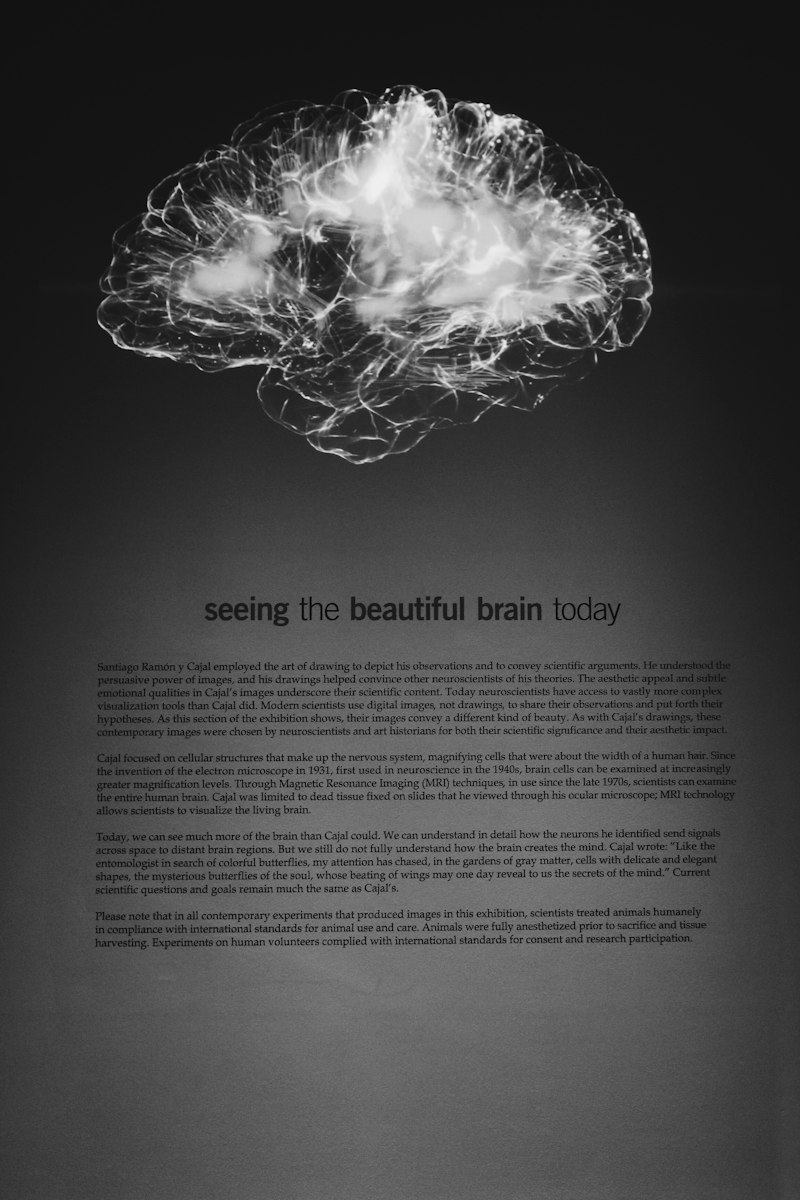
Recent advancements in the field of cognitive neuroscience have profoundly reshaped our understanding and application of reasoning tests. Modern neuroimaging techniques, such as functional magnetic resonance imaging (fMRI) and electroencephalography (EEG), allow researchers to observe the brain in action as individuals engage in reasoning tasks. This provides unprecedented insights into the neural correlates of logical thought, revealing which brain regions and networks are activated during specific problem-solving processes. Such neuroscientific data not only enriches the theoretical understanding of reasoning but also paves the way for more targeted interventions for cognitive deficits.
Technological integration is continuously transforming the landscape of reasoning assessment. The development of adaptive testing platforms, for instance, allows tests to dynamically adjust the difficulty of items based on a test-taker’s performance, providing more precise and efficient evaluations. Furthermore, the emergence of gamified assessments and virtual reality simulations offers more engaging and ecologically valid ways to measure reasoning skills, mimicking real-world challenges more closely than traditional paper-and-pencil tests. These innovations promise to enhance the accuracy, accessibility, and motivational aspects of reasoning assessments.
As the understanding of human cognition evolves, so too does the refinement of reasoning tests. Ongoing research continues to address critical considerations such as fairness, cultural bias, and the holistic representation of intelligence. There is a continuous effort to develop tests that are not only psychometrically sound but also culturally sensitive and predictive of success across diverse global contexts. By integrating insights from cognitive science, technology, and ethical considerations, reasoning tests are poised to remain indispensable tools, offering increasingly nuanced and equitable assessments that empower individuals and organizations to better understand and leverage human cognitive potential in an ever more complex world.