Genetic Inheritance: How Your DNA Shapes Your Mind
Scientifically Reviewed · Dr. Marwa Abd-Alazim · October 13, 2026
Review Criteria & Clinical Standards
This content undergoes rigorous scientific peer-review and medical editorial standards at Arab Psychology Network to ensure clinical accuracy, validity, and compliance with evidence-based guidelines from leading psychological and healthcare authorities (APA / WHO).
The Core Definition of Genetic Recombination
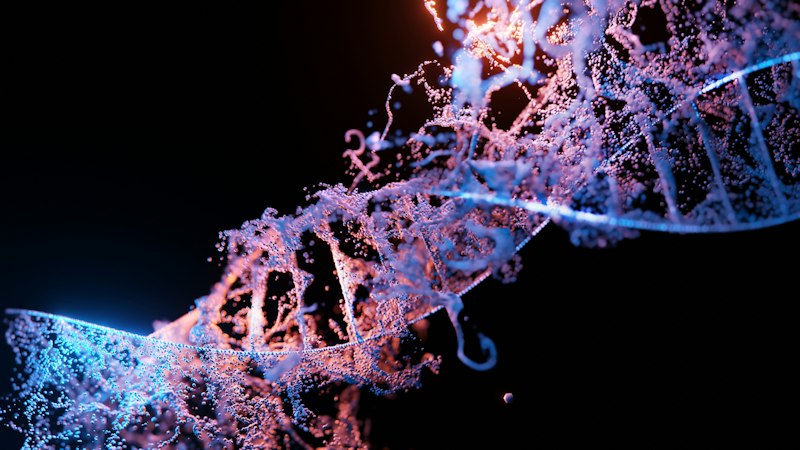
Recombination is a fundamental biological process that involves the rearrangement of genetic material, primarily DNA. It is a ubiquitous mechanism occurring across all forms of life, from the simplest prokaryotic cells to complex eukaryotic organisms. At its essence, recombination facilitates the exchange of segments between two or more DNA molecules, or between different regions of the same DNA molecule. This exchange leads to the creation of novel combinations of genetic information that were not present in the original strands. The immediate outcome is an alteration in the sequence of nucleotides, which are the basic building blocks of DNA, thereby generating new genetic variants.
The core principle behind recombination is the breaking and rejoining of DNA strands. This intricate process is not random but often guided by specific sequences or cellular machinery, ensuring that the integrity of the genetic code is largely maintained while promoting variation. It is a critical driver of genetic diversity within populations and species, providing the raw material upon which natural selection can act. Without recombination, populations would accumulate mutations in a linear fashion, and the rate of adaptation to changing environments would be significantly slower, hindering the evolutionary potential of organisms.
Beyond its crucial role in evolution, recombination also plays a vital part in DNA repair. When DNA is damaged, for instance, by ionizing radiation or certain chemical agents that cause double-strand breaks, recombination pathways can utilize an undamaged homologous DNA molecule as a template to accurately repair the lesion. This precise repair mechanism prevents the accumulation of harmful mutations and maintains genomic stability. This dual function—generating diversity and repairing damage—underscores its indispensable nature in sustaining life, ensuring both adaptability to environmental changes and the integrity of genetic information passed down through generations.
Fundamental Mechanisms of Recombination
The fundamental mechanism of genetic recombination involves a series of precisely coordinated molecular events, which vary depending on the type of recombination but share common themes of DNA manipulation. For homologous recombination, the process typically initiates with the recognition and processing of DNA double-strand breaks or nicks. Specialized protein complexes bind to these sites and resect the DNA ends, generating single-stranded DNA overhangs. These single-stranded regions are then coated by recombinase proteins, such as RecA in bacteria or RAD51 in eukaryotes, which form a nucleoprotein filament.
The recombinase-coated single-stranded DNA then embarks on a critical step known as strand invasion. This involves the search for and pairing with a homologous sequence on an intact double-stranded DNA molecule. Upon finding a match, the invading single strand displaces one of the strands in the homologous duplex, forming a D-loop (displacement loop) structure. This strand invasion leads to the formation of a heteroduplex DNA, where one strand originates from the invading molecule and the other from the recipient. This initial exchange is followed by DNA synthesis, catalyzed by DNA polymerases, which extends the invading strand using the intact homologous DNA as a template.
Subsequently, the process often involves the formation and resolution of intricate four-way DNA junctions known as Holliday junctions. These cruciform structures are formed when two homologous DNA molecules become interconnected by the exchange of two of their four strands. Holliday junctions can migrate along the DNA, effectively extending the region of heteroduplex DNA. The final step involves the resolution of these junctions by specific nucleases and ligases, which cut and rejoin the DNA strands. Depending on the orientation of cuts, resolution can lead to either non-crossover products (gene conversion without flanking marker exchange) or crossover products (reciprocal exchange of genetic material and flanking markers), both contributing to genetic variation.
Historical Discoveries and Early Insights
The concept of genetic recombination has a rich history, with its foundations laid in the early 20th century through meticulous experimental observations. A pivotal figure in this historical narrative is Thomas Hunt Morgan, whose groundbreaking work with the fruit fly, Drosophila melanogaster, provided the first conclusive evidence for the physical exchange of genetic material. In 1911, Morgan and his students observed that traits inherited together, known as linked genes, could occasionally separate during inheritance. This phenomenon, which they termed “crossing over,” indicated that genes were not rigidly fixed but could be exchanged between homologous chromosomes during the formation of gametes.
Building upon Morgan’s insights, his student Alfred Sturtevant made a remarkable contribution in 1913 by using the frequencies of these crossing-over events to construct the first genetic map. Sturtevant hypothesized that the likelihood of recombination between two genes was directly proportional to their physical distance on a chromosome: the further apart they were, the more frequently crossing over would occur between them. This quantitative approach transformed genetics, providing a powerful tool for mapping gene locations and understanding the linear arrangement of genes on chromosomes. These early discoveries were revolutionary, challenging the prevailing notion of unchangeable gene linkage and revealing the dynamic nature of heredity.
While these early studies established the genetic consequences of recombination, the molecular mechanisms remained elusive until the elucidation of the DNA double helix structure by Watson and Crick in 1953. This monumental discovery provided the chemical framework necessary to understand how genetic information could be stored, replicated, and, crucially, recombined. Subsequent advancements in molecular biology, particularly in the 1960s, led to the development of molecular models for recombination, such as Robin Holliday’s model proposed in 1964, which described the formation and resolution of Holliday junctions. These historical milestones represent a journey from phenotypic observation to the intricate molecular choreography that underpins genetic diversity and evolution.
Types of Recombination: Homologous and Non-Homologous
Genetic recombination is broadly classified into two principal types based on the degree of sequence similarity required between the interacting DNA molecules: homologous recombination and non-homologous recombination. Homologous recombination, often referred to as general recombination, is the more precise and ubiquitous form, involving the exchange of genetic material between DNA molecules that share extensive stretches of identical or highly similar nucleotide sequences. This high degree of homology ensures that the exchange is accurate, maintaining the integrity of the genetic code and preventing large-scale deletions or insertions.
The most well-known instance of homologous recombination occurs during meiosis, the specialized cell division that generates haploid gametes (sperm and egg cells) from diploid cells. During prophase I of meiosis, paired homologous chromosomes undergo crossing over, physically exchanging segments of their chromatids. This reciprocal exchange results in recombinant chromosomes that carry a unique combination of alleles from both parental chromosomes, thereby dramatically increasing the genetic diversity within a population of sexually reproducing organisms. Beyond meiosis, homologous recombination is also a critical mechanism for DNA repair, particularly in repairing double-strand breaks by using an undamaged sister chromatid or homologous chromosome as a template for faithful repair.
In contrast, non-homologous recombination, also known as illegitimate recombination, occurs between DNA molecules or segments that possess little to no sequence similarity. This type of recombination does not rely on extensive homology for alignment and is often mediated by distinct enzymatic pathways. A prime example is transposition, where mobile genetic elements called transposons (often dubbed “jumping genes”) move from one genomic location to another, either within the same chromosome or to an entirely different one. This movement can lead to gene insertions, deletions, inversions, or translocations, often generating significant genomic rearrangements. Another crucial form is non-homologous end joining (NHEJ), a primary DNA repair pathway for double-strand breaks in the absence of a homologous template. While NHEJ is efficient, it is often error-prone, potentially leading to small insertions or deletions at the repair site. Despite their less precise nature, non-homologous recombination events are vital contributors to genome evolution and plasticity.
Enzymatic Machinery of Recombination
The intricate choreography of genetic recombination is meticulously executed by a sophisticated ensemble of enzymes and protein complexes, each performing specialized tasks in the processes of unwinding, cutting, exchanging, and rejoining DNA strands. In homologous recombination, the initial processing of DNA breaks often involves proteins like the MRE11-RAD50-NBS1 (MRN) complex, which senses double-strand breaks and facilitates the resection of DNA ends to create single-stranded overhangs. These single-stranded regions are then protected and coated by single-strand binding proteins (e.g., RPA) before the binding of key recombinase enzymes.
Central to homologous recombination are the recombinases, such as RecA in bacteria and RAD51 in eukaryotes. These enzymes polymerize onto the single-stranded DNA to form a nucleoprotein filament, which is crucial for mediating the homology search and strand invasion. Once strand invasion has successfully occurred, resulting in the formation of a D-loop, DNA synthesis is initiated and sustained by DNA polymerase enzymes, which extend the invading strand using the intact homologous DNA as a template. Other vital accessory enzymes include DNA helicases, which are responsible for unwinding DNA duplexes to facilitate strand exchange and Holliday junction migration, and DNA ligases, which seal the nicks in the DNA backbone, completing the rejoining of phosphodiester bonds and resolving the final recombinant products.
The enzymatic machinery for non-homologous recombination is distinct, reflecting its independence from extensive sequence homology. In the case of transposition, specialized enzymes called transposases are the primary architects. These enzymes recognize specific inverted repeat sequences flanking the transposon, catalyze its excision from the donor site, and facilitate its insertion into a new, often non-homologous, genomic location. Similarly, integrases are critical enzymes utilized by certain viruses, such as retroviruses, to precisely integrate their viral DNA into the host cell’s genome, often at specific but non-homologous sites. For non-homologous end joining (NHEJ), the primary repair pathway for double-strand breaks when homologous templates are absent, proteins like Ku (a heterodimer) and DNA-PKcs (DNA-dependent protein kinase catalytic subunit) bind to the broken DNA ends, protecting them and recruiting additional factors, including DNA ligase IV, which, along with its cofactors, directly ligates the broken ends, often resulting in small deletions or insertions.
Recombination in Action: A Practical Example
To grasp the real-world implications of genetic recombination, consider its indispensable role in the agricultural industry, specifically in the selective breeding of crop plants. Imagine a scenario where farmers aim to develop a new variety of corn that possesses both high yield and resistance to a particular fungal disease. Let’s say one existing corn variety consistently produces large harvests but is highly susceptible to the fungal infection, leading to significant crop losses. Conversely, another wild corn variety exhibits robust resistance to the fungus but yields meager harvests due to undesirable traits like small kernels or slow growth.
The “how-to” of applying recombination to achieve this goal begins with cross-pollination, a controlled mating between the two desirable parent plants. Pollen from the disease-resistant, low-yield variety is transferred to the silks of the high-yield, disease-susceptible variety, or vice-versa. This sexual reproduction initiates the cellular processes where genetic recombination plays its crucial role. As both parent plants produce their reproductive cells (pollen and ovules), the process of meiosis occurs. During prophase I of meiosis, the homologous chromosomes from each parent align, and crucially, crossing over takes place. Segments of DNA are exchanged between the homologous chromosomes, effectively reshuffling the genes.
Through this act of recombination, the genes for high yield (which might be on one chromosome from the high-yield parent) and the genes for disease resistance (potentially on a different chromosome or a different part of the same chromosome from the resistant parent) can be exchanged and combined onto single chromosomes. The resulting seeds, therefore, carry a novel mosaic of genetic material. When these seeds are planted, the breeder carefully observes the offspring. Some plants will inherit only the high-yield trait, some only disease resistance, and others, due to successful recombination, will possess the desired combination: both high yield and strong disease resistance. Through repeated cycles of crossing and selection for these advantageous recombinant individuals, a new, superior corn variety can be developed and commercialized, directly benefiting from the natural power of genetic recombination to create enhanced genetic combinations.
Evolutionary Significance and Biological Impact
Genetic recombination holds paramount importance in the grand tapestry of evolution, serving as a primary engine for generating the genetic diversity that is indispensable for species survival and adaptation. By shuffling alleles (alternative forms of genes) between homologous chromosomes, recombination creates new combinations of traits within a population. This reshuffling allows beneficial mutations that arise on different chromosomes to be brought together on a single chromosome, or conversely, deleterious mutations to be separated from advantageous ones. Without recombination, linked beneficial alleles would remain associated with their original genetic background, potentially hindering their independent selection and rapid spread through a population, thus slowing down the pace of adaptive evolution.
The ability to produce novel combinations of genes through recombination provides populations with a wider range of phenotypic variation. This expanded variation acts as the raw material upon which natural selection can operate more effectively. In the face of dynamic environments, such as the emergence of new pathogens, shifts in climate, or changes in resource availability, a population with high genetic diversity is significantly more likely to contain individuals with advantageous gene combinations that enable them to survive, reproduce, and pass on their advantageous traits. For example, if a population encounters a novel pathogen, recombination can rapidly generate individuals that carry resistance genes from multiple sources, thereby increasing the population’s chances of adapting and avoiding extinction.
Beyond its crucial role in generating diversity for adaptation, recombination also plays a vital role in the long-term maintenance of genome integrity. It is an integral component of several sophisticated DNA repair pathways, particularly those that address highly damaging double-strand breaks. By utilizing an intact homologous template, recombination ensures accurate and error-free repair, thereby minimizing the accumulation of harmful mutations that could otherwise lead to genetic instability, cellular dysfunction, and diseases such as cancer. Thus, recombination is not merely a mechanism for reshuffling genes; it is a fundamental biological process that underpins the robustness of genomes, the adaptability of species, and the very trajectory of life’s complex evolutionary journey.
Applications and Broader Implications
The profound understanding of genetic recombination has paved the way for far-reaching applications across diverse scientific, medical, and industrial domains. In the field of medicine, particularly in the study of inherited diseases, understanding recombination frequencies is crucial for genetic linkage analysis. This technique allows researchers to map the locations of disease-causing genes on chromosomes and predict inheritance patterns, which has been instrumental in identifying genes responsible for conditions like cystic fibrosis, Huntington’s disease, and various predispositions to cancer. This knowledge is invaluable for genetic counseling, prenatal diagnosis, and the development of targeted therapies.
In biotechnology and genetic engineering, controlled recombination is a foundational technique. Recombinant DNA technology, for instance, involves artificially combining DNA from different sources to create novel genetic constructs. This technology enables the cost-effective production of therapeutic proteins (such as human insulin for diabetics or growth hormones) in microbial systems, the development of genetically modified organisms (GMOs) with enhanced traits (e.g., herbicide-resistant crops, nutrient-fortified foods), and the burgeoning field of gene therapy aimed at correcting genetic defects by introducing functional genes into patients’ cells. Furthermore, studying recombination in pathogens like viruses and bacteria is critical for understanding their rapid evolution, development of drug resistance, and the design of effective vaccines and antiviral treatments.
Beyond these direct applications, the principles of recombination profoundly influence our understanding of fundamental biological processes, including chromosome segregation during cell division, the mechanisms of aging, and the intricate processes of speciation. It highlights the dynamic and fluid nature of genomes, which are constantly being reshuffled, refined, and diversified over evolutionary timescales. Ongoing research continues to explore the precise regulatory mechanisms of recombination, its potential misregulation in disease states like cancer, and its interplay with epigenetic phenomena. The continuous study of recombination promises to unlock new avenues for scientific discovery, impacting fields ranging from synthetic biology and personalized medicine to conservation biology and our deepest understanding of life itself.
Connections to Other Genetic and Biological Concepts
Genetic recombination is intricately connected to numerous other core concepts in biology and molecular biology, serving as a central process that intertwines with various cellular and evolutionary phenomena. Its most direct and perhaps most celebrated connection is with meiosis, the specialized cell division that generates gametes. During prophase I of meiosis, homologous recombination, specifically through the event of crossing over, ensures that each gamete receives a unique combination of alleles from both parental chromosomes. This genetic reshuffling is the primary source of genetic variation in sexually reproducing organisms, profoundly impacting heredity and population diversity, and standing in stark contrast to mitosis, which aims for genetically identical daughter cells.
Recombination is also fundamentally linked to DNA repair, acting as a critical pathway for maintaining genomic stability. Homologous recombination repair (HRR) is a major mechanism for accurately fixing highly deleterious DNA double-strand breaks. When such a break occurs, HRR utilizes an intact homologous DNA sequence (typically from a sister chromatid or the homologous chromosome) as a template to precisely resynthesize the damaged region. This mechanism is essential for preventing mutations and chromosome rearrangements. It contrasts sharply with non-homologous end joining (NHEJ), another double-strand break repair pathway that simply ligates broken ends together, often with some loss of genetic information, thereby underscoring recombination’s role in high-fidelity genome maintenance.
Furthermore, recombination is a cornerstone of evolutionary biology and population genetics. As one of the primary sources of genetic variation, alongside mutation and gene flow, it provides the raw material upon which natural selection acts, driving adaptation and speciation. By breaking down linkage disequilibrium—the non-random association of alleles at different loci—recombination allows advantageous alleles to be tested in various genetic backgrounds and to spread more rapidly through a population. This process facilitates the efficient purging of deleterious alleles and the accumulation of beneficial ones. The broader category to which recombination unequivocally belongs is Genetics, with strong ties to Molecular Genetics, Cell Biology, and Evolutionary Biology, illustrating its pervasive influence across biological disciplines.
Conclusion: The Enduring Role of Recombination
In conclusion, genetic recombination stands as a pivotal biological process, central to the generation of genetic diversity and the meticulous maintenance of genome integrity across all domains of life. Whether through the precise exchange of segments between homologous chromosomes during meiosis or the more opportunistic movements of mobile elements, recombination continually reshuffles the genetic deck, producing novel combinations of alleles. This constant innovation is the very fuel for evolution, enabling organisms and populations to adapt to ever-changing environments, resist pathogens, and explore new ecological niches over vast spans of time, thus ensuring the long-term viability of species.
Beyond its evolutionary imperative, recombination is also indispensable for cellular well-being, actively participating in critical DNA repair pathways that safeguard the genome from damaging lesions like double-strand breaks. The intricate interplay of specialized enzymes ensures that these processes are generally accurate and highly regulated, preventing uncontrolled genetic instability that could lead to cellular dysfunction or disease. From the earliest observations of crossing over in fruit flies to the sophisticated modern applications in biotechnology and medicine, our understanding of recombination has grown exponentially, revealing its multifaceted and profound importance in biology.
As scientific research continues to unravel the complexities of genomic dynamics, the study of recombination remains at the forefront, providing invaluable insights into disease mechanisms, informing strategies for crop improvement and livestock breeding, and shaping our fundamental understanding of life itself. Its enduring role as a sculptor of genomes and a relentless driver of biological change ensures its continued relevance as a cornerstone concept in genetics, molecular biology, and evolutionary biology, a testament to the elegant efficiency and adaptability inherent in natural processes.