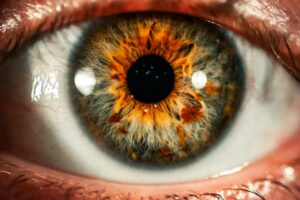
Ocular Reflexes: Unlocking the Secrets of the Mind
Scientifically Reviewed · Dr. Marwa Abd-Alazim · September 18, 2026
Review Criteria & Clinical Standards
This content undergoes rigorous scientific peer-review and medical editorial standards at Arab Psychology Network to ensure clinical accuracy, validity, and compliance with evidence-based guidelines from leading psychological and healthcare authorities (APA / WHO).

Introduction to the Red Reflex
Reflexes represent automatic, involuntary responses mediated by the nervous system in reaction to specific stimuli. Within the domain of ophthalmology, the assessment of ocular reflexes provides critical insights into the structural and functional integrity of the visual pathway and the eye itself. Among these vital screening tools, the red reflex stands out as a fundamental diagnostic indicator. Defined as the reddish-orange glow observed when a bright light is directed through the pupil and reflects off the vascularized retina at the back of the eye, the red reflex offers a rapid, non-invasive method for evaluating the transparency of the ocular media. The presence of a clear, symmetric red reflex signifies that the path light takes—from the cornea, through the anterior chamber, the lens, and the vitreous humor—is unobstructed and healthy, indicating intact ocular structures. This reflex is sometimes referred to as the direct ophthalmoscope reflex, acknowledging the primary instrument used for its elicitation, and its routine assessment is paramount, particularly in pediatric care, as it serves as an early screening mechanism for potentially blinding or life-threatening conditions.
The examination of the red reflex is a cornerstone of comprehensive eye evaluations and is mandated during standard pediatric physicals and well-child visits. Unlike subjective vision tests that require patient cooperation, the red reflex is an objective assessment that relies solely on observation, making it exceptionally valuable for screening infants and young children who cannot communicate their visual symptoms effectively. The simplicity and speed of the test belie its immense diagnostic power; it requires minimal equipment and training but can identify serious pathologies requiring urgent intervention. A normal red reflex confirms the clear passage of light to the retina and its reflection back to the observer, suggesting proper alignment and transparency of the ocular media. Understanding the expected appearance of the normal reflex—its uniform color, intensity, and symmetry between both eyes—is essential for healthcare providers, as deviations from this norm necessitate immediate referral to an ophthalmologist for detailed examination and definitive diagnosis.
While the red reflex is an involuntary phenomenon, its clinical utilization transforms it into a powerful diagnostic instrument. The integrity of the reflex is directly correlated with the health of the internal eye structures, especially the lens and the vitreous body. Any abnormality, whether it be an opacity, misalignment, or mass, will disrupt the normal reflection pattern. For instance, opacities in the lens (cataracts) or the vitreous humor will scatter the light, often causing the reflex to appear dull, patchy, or absent. Furthermore, masses situated in the retina, such as tumors, can block the light reflection completely or result in a white or yellow appearance, a critical finding known as leukocoria. Thus, the red reflex test acts as a highly efficient filter, helping practitioners quickly distinguish between eyes with clear media and those requiring immediate specialized attention. Its importance cannot be overstated in public health strategies aimed at preventing childhood blindness, emphasizing the necessity of its inclusion in all primary care settings.
Physiological Mechanism and Anatomy
The physiological mechanism underpinning the red reflex is rooted in the optics of the human eye and the rich vascular supply of the posterior segment. When the examiner projects a focused, intense beam of light through the patient’s pupil, the light travels through the transparent anterior structures—the cornea, aqueous humor, lens, and vitreous humor—before reaching the fundus. The resulting reddish hue is primarily generated by the light reflecting off the extensive vascular network of the choroid, a highly pigmented and vascular layer situated between the retina and the sclera, and the blood vessels embedded within the retina itself. The blood within these vessels absorbs some wavelengths and reflects others, resulting in the characteristic red-orange glow visible through the pupil. This reflection occurs only when the observer’s viewing axis is coaxial with the light source, meaning the light source and the observer’s eye are aligned, which is the operational principle utilized by direct ophthalmoscopes.
The intensity and exact shade of the red reflex are subject to variation based on several anatomical and physiological factors, most notably the patient’s inherent level of ocular pigmentation. Individuals with darker complexion and heavily pigmented retinas tend to exhibit a deeper, duller red or brownish reflex, owing to the increased absorption of light by melanin pigments present in the retinal pigment epithelium and choroid. Conversely, patients with lighter pigmentation, such as those with fair skin or albinism, typically display a brighter, more pronounced orange-red reflex due to lower light absorption. The size of the pupil is also a critical determinant; the examination is optimally performed when the pupil is maximally dilated, either naturally in a darkened room or through pharmacological mydriasis, as a larger aperture allows greater light entry and exit, enhancing the clarity and visibility of the reflected glow. Any anatomical irregularity in the curvature of the cornea or lens, while not necessarily pathognomonic for disease, can sometimes lead to slight variations in the reflex’s uniformity, prompting the need for further investigation.
For a normal red reflex to be present, all media along the visual axis must maintain high levels of transparency. The eye functions similarly to a camera obscura; the light must pass cleanly to the back of the chamber and reflect back without significant scattering. The lens, in particular, must be perfectly clear, as cataracts represent the most common cause of an abnormal red reflex due to light scattering. The vitreous humor, a gel-like substance filling the large space behind the lens, must also be free of opacities, such as hemorrhage or inflammatory cells (vitritis). Furthermore, proper alignment of the visual axes is necessary to ensure symmetry. If one eye is significantly misaligned (strabismus), the light reflecting from that eye may return at a different angle than the observer’s viewing axis, potentially causing an apparent asymmetry in the reflex, known as the Bruckner test result. Therefore, a comprehensive assessment considers not only the color and intensity but also the symmetry and clarity of the reflected image.
Clinical Examination Procedure
The examination of the red reflex is a swift and straightforward procedure typically performed using a direct ophthalmoscope or a specialized camera designed for pediatric screening. The primary objective is to shine a beam of light directly into the patient’s pupils from a distance, usually between 12 to 18 inches (30 to 45 centimeters), while the examiner observes the reflection through the viewing aperture of the instrument. The room should be sufficiently dimmed to promote natural pupillary dilation, optimizing the visibility of the fundus reflection. The examiner must ensure that their viewing angle is coaxial with the emitted light beam. This technique allows for the instantaneous evaluation of both eyes simultaneously, which is critical for assessing symmetry, a key diagnostic feature. The ophthalmoscope should be set to the zero diopter setting to focus on the structures within the eye, and the light intensity should be adequate to elicit a bright reflection without causing excessive discomfort to the patient.
The standardized procedure involves observing the reflex across three distinct planes: first, the color, intensity, and clarity of the red glow; second, the presence of any dark spots or opacities within the reflex field; and third, the symmetry between the two eyes. When comparing the two eyes, the reflexes should exhibit a similar hue and brightness. Asymmetry can manifest in several ways: one eye might show a significantly dimmer reflex (reduced intensity), a different color (heterochromia of the reflex), or a distorted shape. Any such deviation warrants immediate concern. Furthermore, the examiner should slowly move the light source slightly up, down, left, and right while maintaining the coaxial view. This movement helps to sweep the light across different parts of the lens and vitreous, potentially revealing subtle peripheral opacities or slight degrees of strabismus, which might cause the reflex to appear brighter or dimmer depending on the direction of gaze, a phenomenon often associated with the Bruckner test interpretation.
For optimal reliability, particularly in infants, the examination is best performed when the child is quiet, relaxed, and fixating on a distant object or a parent. If the child is crying or uncooperative, the resulting eye movements and blepharospasms can interfere with an accurate assessment. In clinical situations where pupillary dilation is insufficient, pharmacological mydriasis using topical dilating agents (such as tropicamide) may be required, especially if the initial screening suggests an abnormality or if a thorough fundus examination is warranted. Documentation of the procedure should include a clear description of the reflex findings: color (e.g., orange-red), clarity (e.g., clear, hazy, or spotted), and symmetry (e.g., symmetrical or asymmetric). Detailed documentation ensures continuity of care and provides a baseline for future comparisons, especially for monitoring subtle changes in ocular health over time.
Significance in Pediatric Screening
The red reflex test holds immense significance in pediatric screening, serving as a rapid, life-saving diagnostic tool for conditions that primarily affect infants and young children. Unlike adults, children cannot reliably verbalize subtle changes in vision, making objective screening methods indispensable. Routine screening for the red reflex is mandatory for all newborns before hospital discharge and during every subsequent well-child checkup throughout early childhood, typically up to five years of age. This rigorous screening schedule is crucial because many severe childhood eye diseases, such as congenital cataracts and retinoblastoma, are manageable or curable only if detected and treated early. Delay in diagnosis, even by a few months, can result in profound, irreversible vision loss or, in the case of retinoblastoma, metastasis and death.
The primary benefit of routine pediatric screening is the early detection of opacities within the ocular media. Congenital cataracts, which affect the transparency of the lens, are a leading cause of treatable childhood blindness. If an infant cataract is not removed promptly, the brain fails to develop normal visual connections (a condition known as amblyopia), leading to permanent visual impairment despite subsequent surgical correction. The red reflex test is highly sensitive to lens opacities; even small cataracts can disrupt the uniformity of the reflex, presenting as dark spots or a generalized dullness. Similarly, the red reflex is the single most important screening tool for retinoblastoma, the most common intraocular malignancy in children. This tumor often presents initially as leukocoria—a white reflex—which is the most alarming finding detected during the red reflex examination. Early detection of retinoblastoma through routine screening dramatically improves survival rates and the chances of preserving the eye and useful vision.
Furthermore, the red reflex examination contributes to the detection of high refractive errors and strabismus (ocular misalignment). The Bruckner test variation, where the coaxial light is used to assess symmetry, can reveal subtle degrees of strabismus that might otherwise be missed. In strabismus, light reflecting off the retina may appear shifted, or the reflexes may be unequal in brightness dueness to the angle of reflection. High degrees of hyperopia (farsightedness) or myopia (nearsightedness) can also sometimes cause a slightly abnormal or asymmetrical reflex, signaling a need for formal vision testing and prescription of corrective lenses. Given the ease of administration and the critical nature of the conditions it screens for, the integration of the red reflex test into standard public health protocols represents a highly effective, cost-efficient strategy for reducing the burden of preventable childhood visual impairment. Healthcare providers must remain vigilant and treat any suspicious finding as an immediate referral, prioritizing speed of diagnosis over expectant management.
Abnormal Red Reflex Findings (Leukocoria)
An abnormal red reflex is a critical finding that demands immediate attention and specialized ophthalmological consultation. The term leukocoria, derived from Greek words meaning “white pupil,” is clinically used to describe the appearance of a white, yellow, or grayish reflex instead of the expected reddish-orange glow. Leukocoria is the hallmark sign of several serious ocular pathologies that are obstructing or altering the light reflection from the fundus. While a dull or hazy red reflex might indicate less severe issues like mild media opacities or insufficient pupillary dilation, the presence of frank leukocoria is considered an ocular emergency until proven otherwise, primarily due to its strong association with retinoblastoma. When leukocoria is identified, whether unilaterally or bilaterally, the urgency of referral cannot be overstated, as prompt diagnosis dictates the prognosis for both vision and life.
Abnormalities in the red reflex generally fall into categories relating to color, clarity, or symmetry. Regarding color, the transition from a red-orange reflex to white or yellow (leukocoria) suggests a significant blockage by a non-vascular structure, such as a tumor, a dense cataract, or organized vitreous remnants. Opacities in clarity refer to the presence of dark spots or haziness within the red field. These dark spots often represent localized opacities in the lens (partial cataracts) or floaters and debris in the vitreous humor. A diffuse haziness, on the other hand, might indicate widespread inflammation (endophthalmitis) or a cloudy cornea, scattering the light before it reaches the fundus. Any degree of dullness or haziness, especially if progressive, must be investigated to rule out subtle, developing pathologies that could impair visual development.
Asymmetry is another crucial abnormal finding. If one eye exhibits a bright, clear red reflex while the other is significantly dimmer or entirely absent, this strong difference suggests a unilateral pathological process, such as a unilateral cataract, unilateral retinal detachment, or strabismus resulting in a distorted reflection. Even subtle differences in the color or intensity of the reflexes between the eyes can be clinically significant, often indicating anisometropia (a large difference in refractive error between the two eyes), which can lead to amblyopia. Given the dire consequences of missed diagnoses like retinoblastoma, healthcare providers are trained to maintain a low threshold for suspicion; if the red reflex assessment is anything less than unequivocally normal, clear, and symmetric, immediate referral to a specialist for a dilated fundus examination is mandatory, ensuring that the full spectrum of potential underlying conditions is systematically ruled out.
Conditions Associated with Absent or Abnormal Red Reflex
A wide range of pediatric and adult conditions can lead to an absent, diminished, or abnormal red reflex, necessitating a thorough differential diagnosis. The most critical and life-threatening condition associated with leukocoria is retinoblastoma, an aggressive, malignant tumor of the retina that typically presents before the age of five. If detected early, the prognosis is excellent, but delayed treatment can result in optic nerve invasion, metastasis to the brain, and fatality. Therefore, retinoblastoma remains the highest priority in the differential diagnosis of any child presenting with leukocoria, driving the urgency of immediate referral. The tumor mass physically blocks the light reflection, presenting as a white or creamy-yellow mass behind the pupil.
Another major cause of an abnormal reflex is cataract, which refers to any opacity of the natural lens. Congenital cataracts are present at birth and can be partial or complete. A dense, complete cataract will completely obscure the fundus view, resulting in an absent red reflex, whereas a smaller, posterior cataract might appear as a distinct black spot against the red background. Early surgical removal of visually significant congenital cataracts is essential to prevent permanent visual deprivation amblyopia. Furthermore, infectious and inflammatory processes can also compromise the red reflex. Conditions such as toxocariasis, caused by parasitic infection, can lead to granuloma formation in the retina or vitreous, presenting as leukocoria or a localized abnormality within the reflex. Similarly, severe inflammation or infection of the vitreous (endophthalmitis) will cause the vitreous to become cloudy and hazy, leading to a dull or hazy red reflex.
Beyond cataracts and tumors, other conditions affecting the posterior segment include Retinopathy of Prematurity (ROP), especially in advanced stages where retinal detachment occurs; Vitreous Hemorrhage, where blood fills the vitreous cavity, resulting in a dark or absent reflex; and Persistent Fetal Vasculature (PFV), a congenital anomaly where remnants of the embryonic blood supply persist, often presenting as a stalk of tissue pulling on the retina, causing leukocoria and potentially retinal detachment. Less commonly, conditions like Coat’s disease, characterized by abnormal retinal blood vessels and exudation, can result in subretinal fluid accumulation and a yellow-white mass effect, leading to an abnormal reflex. Due to this complex array of potential causes, the finding of an abnormal red reflex is not a final diagnosis but rather a prompt for specialized imaging, examination under anesthesia, and often surgical intervention.
Differential Diagnosis of Leukocoria
The systematic differential diagnosis of leukocoria is a critical process aimed at quickly distinguishing between benign conditions and sight- or life-threatening pathologies. Once leukocoria is identified, ophthalmologists utilize a structured approach involving detailed history taking, specialized imaging, and often examination under anesthesia (EUA) for infants. The most common cause of leukocoria overall is congenital cataract. Differentiation relies heavily on observing the morphology: cataracts appear as distinct white opacities of the lens itself, visible immediately behind the pupil, whereas other conditions typically involve the posterior chamber, behind the lens. The history of maternal infections (e.g., TORCH infections) or genetic syndromes may also point towards a congenital cataract etiology.
When differentiating retinoblastoma from other causes of leukocoria, the characteristic appearance on indirect ophthalmoscopy and imaging is key. Retinoblastoma often presents as a nodular, chalky-white mass that may contain calcification, which is readily visible on orbital ultrasound or computed tomography (CT) scans. In contrast, conditions like Coat’s disease typically cause extensive subretinal exudation, appearing yellow-white, but lacking the calcification characteristic of retinoblastoma. Another important differential is persistent hyperplastic primary vitreous (PHPV), now referred to as Persistent Fetal Vasculature (PFV). PFV usually presents unilaterally and is characterized by a central fibrous stalk extending from the optic nerve to the posterior lens capsule, drawing the retina forward. This condition often results in microphthalmia (a small eye) and can be distinguished by the specific anatomical location of the fibrous tissue.
The use of advanced diagnostic techniques is indispensable in narrowing the differential diagnosis. B-scan ultrasonography is non-invasive and highly effective in identifying calcification (suggesting retinoblastoma), retinal detachment, or vitreous opacities. Furthermore, fluorescein angiography can help delineate vascular abnormalities seen in ROP or Coat’s disease. In the context of infection, such as toxocariasis, serologic testing may confirm exposure to the causative parasite. Given the devastating implications of a delayed retinoblastoma diagnosis, any case of suspected leukocoria requires urgent review by an experienced ocular oncologist or pediatric ophthalmologist, ensuring that the necessary diagnostic procedures, including EUA and potential biopsy, are executed promptly to initiate timely treatment and maximize patient outcomes.
Advanced Diagnostic Techniques
While the red reflex test serves as an indispensable screening tool, its limitations necessitate the employment of advanced diagnostic techniques when an abnormality is detected. The primary follow-up procedure is a comprehensive dilated fundus examination, typically performed using an indirect ophthalmoscope. This instrument provides a wide-field, stereoscopic (3D) view of the retina, allowing the ophthalmologist to precisely locate and characterize any posterior pole lesions, such as tumors, retinal detachments, or vascular anomalies, which are obscured or only vaguely suggested by the red reflex test. Dilating the pupil pharmacologically is essential for this examination, ensuring that the maximum extent of the retina can be surveyed, particularly the periphery where many pathologies, including early retinoblastoma, can reside.
In cases of opaque ocular media where the fundus view is impossible (e.g., dense cataract or vitreous hemorrhage), B-scan ultrasonography becomes the next critical step. This imaging modality uses high-frequency sound waves to generate detailed two-dimensional cross-sectional images of the internal eye structures. B-scan is invaluable for detecting calcification within masses (a strong indicator of retinoblastoma), assessing the presence and extent of retinal detachment, and characterizing the nature of vitreous opacities. It is a non-invasive tool that is particularly well-suited for infants, as it does not require sedation and provides crucial information when direct visualization is compromised. The ability to measure the size of intraocular masses also aids in monitoring treatment effectiveness or disease progression.
Further imaging modalities often include Computed Tomography (CT) and Magnetic Resonance Imaging (MRI), especially when retinoblastoma is suspected. CT scans are highly sensitive for detecting intralesional calcification, which is present in over 90% of retinoblastoma cases. However, due to concerns regarding radiation exposure in children, MRI is often preferred for assessing the extent of soft tissue involvement, particularly checking for optic nerve invasion or spread of the tumor to the brain, which are critical prognostic factors. Additionally, newer technologies like Optical Coherence Tomography (OCT), though sometimes challenging to perform on uncooperative infants, provides high-resolution, cross-sectional views of the retina and subretinal layers, assisting in the diagnosis of exudative conditions or subtle macular lesions that contribute to an abnormal light reflection.
Conclusion and Public Health Role
The red reflex test remains one of the simplest yet most profoundly effective screening tools available in primary care and pediatric ophthalmology. Its foundation lies in observing the basic optical principle of light reflection from the fundus, allowing for an immediate, objective assessment of the clarity and integrity of the entire visual axis. The presence of a clear, bright, and symmetric red reflex provides reassurance that the ocular media is transparent and the major structures are intact. Conversely, the finding of an absent, dull, or asymmetric reflex, particularly the presence of leukocoria, acts as a high-alert signal for potentially catastrophic conditions, including congenital cataracts, advanced Retinopathy of Prematurity, and the malignancy of retinoblastoma.
In the public health sphere, mandatory red reflex screening during routine pediatric examinations serves as a crucial preventive measure against permanent visual impairment and childhood mortality. The efficacy of the test is directly tied to the diligence of primary care providers in performing the examination correctly and consistently across all age-appropriate visits. Training in the nuanced interpretation of the reflex—recognizing subtle differences in color and intensity—is paramount for maximizing its detection capabilities. Given that treatment outcomes for most serious pediatric eye diseases are highly time-dependent, the immediate referral pathway triggered by an abnormal red reflex finding is perhaps the most important contribution of this simple test to global eye health initiatives.
Future directions in red reflex assessment involve the increasing integration of automated digital screening technologies, often utilizing specialized cameras that capture high-resolution images of the fundus reflection. These devices offer benefits such as greater objectivity, the ability to store images for longitudinal comparison, and potentially greater sensitivity in detecting subtle refractive errors or peripheral lesions. Regardless of technological advancements, the fundamental principle of comparing the light reflection between the two eyes remains the cornerstone of this vital diagnostic procedure, underscoring the enduring value of the red reflex as a frontline defense against preventable childhood blindness.
References
-
American Academy of Ophthalmology. (2018). Direct ophthalmoscopy. Retrieved from https://www.aao.org/eye-health/treatments/direct-ophthalmoscopy
-
Lloyd, J. (2020). Red reflex test in infants. Retrieved from https://www.healthline.com/health/red-reflex-test-in-infants
-
Vitale, S., Sperduto, R. D., & Ferris, F. L. (Eds.). (2018). Section 10: Pediatrics. In Eye and vision. Retrieved from https://www.ncbi.nlm.nih.gov/books/NBK551543/