Social Rejection: Why It Stings and How to Heal
Scientifically Reviewed · Dr. Marwa Abd-Alazim · August 22, 2026
Review Criteria & Clinical Standards
This content undergoes rigorous scientific peer-review and medical editorial standards at Arab Psychology Network to ensure clinical accuracy, validity, and compliance with evidence-based guidelines from leading psychological and healthcare authorities (APA / WHO).

The Core Definition of Rejection
The psychological concept of rejection fundamentally refers to the act of being excluded or dismissed by other individuals or groups, resulting in the withholding of love, affection, or approval that is typically expected within social interactions. It is a profoundly powerful emotional experience rooted in our evolutionary need for social connection and acceptance, which are vital for survival. While it can manifest as an explicit and aggressive refusal of a person’s presence or request, rejection often occurs through more subtle, passive means, such as ignoring, distancing, or showing indifference. Psychologically, the experience of rejection severely affects an individual’s sense of self-esteem, leading to acute distress and often triggering a threat defense system designed to mitigate social injury and prevent future exclusion. This initial definition encompasses both immediate interpersonal slights and broader, systemic forms of exclusion, such as a discriminatory outlook or refusal of inclusion directed toward a specific group of people based on demographic or social characteristics.
At its essence, rejection signifies a break in the social contract, signaling to the individual that they are valued less, or not at all, by the source of the rejection. This perception of devaluation is what drives the emotional pain associated with the experience. The intensity of the response is not always proportional to the magnitude of the objective event; rather, it is highly dependent on the perceived importance of the rejecting agent and the individual’s existing psychological vulnerabilities, such as attachment style and history of trauma. The mechanism of social rejection is so potent because humans are fundamentally social creatures, and being cast out historically meant a significant decrease in access to resources and protection. Thus, the psychological mechanisms involved in processing rejection are deeply ingrained and highly reactive, utilizing the same neural circuitry involved in processing physical pain, underscoring the vital importance of belonging.
The Psychological Mechanism of Exclusion
The fundamental mechanism behind the pain of exclusion lies in the violation of core human needs, often articulated through theories such as the Need to Belong. When an individual experiences rejection, several psychological needs are immediately threatened. These typically include the need for belonging (the most obvious), the need for control over one’s social environment, the need for high self-esteem and self-worth, and the need for a sense of meaningful existence. The simultaneous assault on these foundational pillars leads to a rapid cascade of emotional and cognitive responses, including heightened anxiety, a drop in intellectual performance, and an increase in aggression or, conversely, profound withdrawal. Researchers posit that the psychological system interprets rejection not merely as an insult, but as a genuine threat to safety and social standing, mobilizing resources to either repair the damaged relationship or protect the self from further harm.
Furthermore, the mechanism involves a critical shift in attention and cognitive processing. Rejected individuals often enter a state of hypervigilance regarding social cues, desperately seeking information about why they were excluded and how they might repair the damage or avoid future incidents. This cognitive preoccupation can detract significantly from executive functions, impairing abilities related to planning, self-regulation, and logical reasoning. In cases of chronic or severe rejection, this constant state of threat and repair can lead to the development of maladaptive behavioral patterns, such as chronic people-pleasing, social avoidance, or preemptive aggression designed to push others away before they have the chance to inflict further pain. The experience of social rejection, therefore, is not merely an emotional injury but a complex cognitive and physiological event that disrupts normal functioning and prioritizes social survival above all else.
Historical Perspectives and Early Research
The systematic study of rejection, particularly in the context of psychological well-being, gained significant traction in the mid-to-late 20th century, though its roots lie in earlier works on group dynamics and attachment. Key foundational work was provided by researchers such as John Bowlby, whose Attachment Theory highlighted the critical need for early social bonding and the profound distress caused by separation and loss, which are essentially forms of parental rejection. This framework established the understanding that our early experiences of acceptance or rejection shape our internal working models for future relationships and dramatically influence how we process later experiences of exclusion. Later research began to focus less on attachment breakdown and more on the immediate, observable effects of social exclusion in controlled settings, moving the topic firmly into the domain of social psychology.
A pivotal turning point in rejection research came with the work of Kipling Williams and his colleagues, who formalized the study of Ostracism—the act of being ignored and excluded by a group. Williams developed the now-famous Cyberball paradigm, a virtual ball-tossing game designed to experimentally induce feelings of exclusion in participants. This research demonstrated conclusively that even brief, non-face-to-face rejection, administered by strangers in a trivial setting, could elicit significant emotional distress, anger, and feelings of loss of control. These experiments provided the empirical evidence necessary to prove that the fundamental psychological pain of exclusion is a universal and immediate reaction, independent of the context or the identity of the rejectors, thereby elevating rejection from a mere social inconvenience to a fundamental psychological stressor worthy of serious academic study.
The Neurobiology of Social Pain
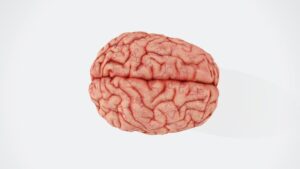
Modern neuroscience has provided compelling evidence regarding the profound biological impact of rejection, supporting the hypothesis that social pain is processed similarly to physical pain. Key research, spearheaded by Naomi Eisenberger and Matthew Lieberman, utilized functional magnetic resonance imaging (fMRI) to monitor brain activity while participants experienced social exclusion, typically through the Cyberball paradigm. The results demonstrated a striking overlap: the brain regions activated during social rejection were the same areas known to process the unpleasantness or “distress” component of physical pain, particularly the affective component.
Specifically, the area most consistently implicated is the dorsal anterior cingulate cortex (dACC). The dACC is crucial for detecting physical threats and monitoring conflicts, and its activation during social exclusion suggests that the brain interprets the loss of social connection as a significant threat requiring immediate attention and emotional mobilization. Furthermore, the right ventral prefrontal cortex (RVPFC), which is known to regulate distress, also showed increased activity, suggesting that the brain attempts to suppress or mitigate the emotional reaction to social pain. This neurobiological evidence provides a powerful explanation for why rejection “hurts” so intensely, confirming that the psychological injury is translated into a genuine, measurable neurological event, lending credibility to the subjective experience of social pain and establishing social rejection as a biological imperative.
A Practical Illustration: Peer Rejection
To illustrate the psychological dynamics of rejection, consider the scenario of a high school student, Sarah, who attempts to join a specific social clique or group of peers but is systematically ignored and excluded from their activities, a common form of peer rejection. Sarah perceives this lack of invitation and acknowledgement as a clear instance of social dismissal, impacting her deeply. This real-world scenario demonstrates the multi-stage application of the psychological principle, moving from perception to reaction and eventual coping. The rejection is manifest not as a single aggressive act, but as a persistent, discriminatory pattern of withholding approval and inclusion, which signals to Sarah that she is an outsider.
The application of the principle unfolds in the following steps. First, the Perceived Threat: Sarah’s fundamental need for belonging and acceptance is instantly violated, triggering an acute emotional response characterized by sadness, shame, and anxiety. Second, the Cognitive Response: She immediately engages in social hypervigilance, attempting to attribute cause—”What is wrong with me?” or “Did I say something wrong?” This rumination negatively impacts her self-concept, eroding her self-esteem. Third, the Behavioral Outcome: Sarah may respond in one of two primary ways: she might become overly compliant and desperate for approval, attempting to conform to the group’s standards (repair attempt), or she may withdraw completely from social interactions, becoming isolated to protect herself from further potential hurt (defensive avoidance). This cycle demonstrates how a seemingly mundane social interaction can activate deep-seated psychological mechanisms that govern social behavior and emotional health.
This example highlights that the perceived importance of the rejecting source is critical. Because social standing in adolescence is so heavily dependent on peer acceptance, the rejection from this group carries immense weight. The persistent nature of this exclusion ensures that the threat system remains activated, leading to chronic stress that can eventually contribute to clinical symptoms such as school avoidance or depressive episodes, underscoring the severe impact of sustained social rejection during developmental periods.
Significance and Clinical Impact
The study of rejection holds profound significance for the field of psychology, particularly in clinical and developmental contexts. Understanding the mechanisms of social pain is crucial because chronic or early-life rejection is a major risk factor and maintaining cause for numerous psychopathologies. Consistent experiences of exclusion, whether within the family unit or peer group, can lead to deeply entrenched feelings of worthlessness and self-blame, contributing significantly to the onset and severity of disorders such as major depressive disorder, social anxiety disorder, and certain personality disorders, notably Borderline Personality Disorder, which is characterized by an extreme sensitivity to perceived rejection.
In clinical practice, the principles derived from rejection research are applied in various therapeutic modalities. Cognitive Behavioral Therapy (CBT) often addresses the maladaptive cognitive schemas and negative self-talk that accompany rejection, helping patients to reframe the rejection event and challenge their inherent belief that they are fundamentally flawed or unworthy of love. Dialectical Behavior Therapy (DBT) specifically targets emotional regulation skills to help individuals manage the intense affective responses triggered by perceived rejection, minimizing self-destructive behaviors. Furthermore, the concept is widely applied in understanding social phenomena, such as prejudice and discrimination, where the systematic Ostracism of marginalized groups leads to measurable decreases in well-being and an increase in societal health disparities, demonstrating the crucial importance of social acceptance for public health.
Connections and Related Theoretical Frameworks
Rejection is not a standalone concept but is deeply interwoven with several major theoretical frameworks within social and personality psychology. It is most clearly situated within the subfield of Social Psychology, specifically concerning intergroup relations and social cognition, but it also draws heavily upon tenets of Evolutionary Psychology and Developmental Psychology.
Related concepts include:
- Need to Belong Theory: Proposed by Roy Baumeister and Mark Leary, this theory posits that humans possess a fundamental, innate drive to form and maintain stable, positive, and lasting interpersonal relationships. Rejection is the direct frustration of this core need, explaining its overwhelming psychological impact.
- Sociometer Theory: Also linked closely to Baumeister’s work, this theory argues that self-esteem is not an end in itself but rather an internal, subjective gauge (or sociometer) that monitors the degree to which an individual is being accepted or rejected by others. When the sociometer detects social rejection, self-esteem drops, motivating the individual to seek reconnection and acceptance, thereby protecting the individual from social exclusion.
- Attachment Theory: As mentioned previously, this framework explains how early experiences of rejection or inconsistent caregiving lead to insecure attachment styles (anxious, avoidant, or disorganized). These insecure styles predispose individuals to either overreact to perceived rejection or preemptively avoid deep intimacy to prevent the pain of future exclusion, demonstrating how early relational experiences set the stage for later responses to rejection.
Ultimately, the psychological study of rejection serves as a critical bridge between various subfields, illustrating how evolutionary pressures (the need for group protection) shaped neurobiological mechanisms (the overlap of social and physical pain), which, in turn, influence cognitive processing, emotional regulation, and social behavior throughout the lifespan, confirming its status as one of psychology’s most vital and enduring topics of study.