Psychological Relief: How Letting Go Heals Your Mind
Scientifically Reviewed · Dr. Marwa Abd-Alazim · August 20, 2026
Review Criteria & Clinical Standards
This content undergoes rigorous scientific peer-review and medical editorial standards at Arab Psychology Network to ensure clinical accuracy, validity, and compliance with evidence-based guidelines from leading psychological and healthcare authorities (APA / WHO).

Introduction: Defining the Psychological State of Relief
The psychological state of Relief is defined fundamentally as the feeling of gladness or tranquility that arises when an unpleasant, painful, or threatening condition has ceased or has been successfully avoided. It is a profound shift in hedonic tone, moving rapidly from negative valence (distress, anxiety, pain) toward a neutral or mildly positive state. While often confused with joy or happiness, relief is distinct because its experience is contingent upon the prior presence and subsequent removal of an aversive stimulus. The intensity of the feeling of relief is directly proportional to the perceived severity or duration of the preceding negative experience, meaning a prolonged or life-threatening situation will elicit a far stronger sense of relief upon its termination than a minor inconvenience.
Psychologically, relief functions as a crucial signal indicating safety and the successful restoration of psychological equilibrium. It serves as an immediate, adaptive reward mechanism that reinforces behavior leading to the cessation of suffering. This immediate feedback loop is vital for survival, as it teaches organisms which actions lead to escape from danger or mitigation of harm. Consequently, relief is not merely a passive feeling but an active emotional response tightly integrated with behavioral learning and self-regulation processes, solidifying its importance within the broader study of emotion and motivation.
The core definition highlights the binary nature of the experience: distress followed by cessation. For instance, the original observation that “The patient felt relief when the dentist ceased drilling into her rotten tooth” perfectly encapsulates this structure—the highly aversive stimulus (drilling pain) is terminated, yielding immediate mitigation of distress. This mechanism is central to understanding how we cope with chronic stress and acute danger, as the anticipation of relief often motivates the endurance of necessary but uncomfortable procedures or circumstances.
The Core Mechanisms of Relief: Aversiveness and Cessation
The psychological mechanism underlying relief is deeply rooted in the principle of negative reinforcement. In behavioral terms, negative reinforcement involves the removal of an unpleasant stimulus following a specific behavior, which increases the likelihood of that behavior being repeated in the future. Relief is the subjective, emotional manifestation of this successful negative reinforcement cycle. It is the internal reward associated with escape or avoidance. Unlike positive reinforcement, which adds something desirable (e.g., receiving a compliment), relief stems from the removal of something undesirable (e.g., silence after a loud noise).
This mechanism ensures that behaviors associated with self-preservation, such as seeking shelter during a storm or completing a difficult assignment to avoid a penalty, are strongly cemented into the behavioral repertoire. The feeling of relief provides the immediate affective feedback necessary for learning. Without this internal feeling, the mere objective cessation of the threat might not be powerful enough to shape future avoidance or escape behaviors effectively. Therefore, relief acts as a powerful motivational engine, driving individuals away from perceived threats and towards psychological safety.
Furthermore, relief plays a critical role in managing psychological homeostasis. When an individual is under stress or experiencing pain, the body and mind are thrown into a state of heightened arousal and imbalance. The moment the threat is removed, the nervous system shifts gears, triggering physiological and psychological calming responses—the subjective experience of which is relief. This rapid shift from sympathetic nervous system dominance (fight or flight) back to parasympathetic dominance (rest and digest) highlights the restorative function of the relief experience, allowing resources depleted by stress to be replenished and regulatory systems to stabilize.
Historical Roots and Behavioral Perspectives
While the subjective experience of relief has been recognized throughout history, its formal study and integration into psychological theory largely solidified during the mid-20th century, particularly within the framework of behaviorism. Key figures like Clark Hull and later B. F. Skinner were instrumental in defining the objective conditions that produce relief. Skinner’s operant conditioning paradigm provided the terminology—negative reinforcement—that precisely describes the functional relationship between a response and the termination of an aversive stimulus, which is the behavioral antecedent to the feeling of relief.
Another pivotal historical contribution came from two-factor theory, developed by O. Hobart Mowrer. Mowrer sought to explain avoidance learning, a complex behavior where an organism performs an action to prevent an anticipated threat from ever appearing. The theory posits that the initial learning involves classical conditioning, where a neutral stimulus becomes associated with fear. Subsequently, the avoidance response itself is maintained by operant conditioning, specifically through negative reinforcement. When the organism successfully avoids the anticipated fear (e.g., pressing a lever when a warning light flashes), the immediate cessation of the fear response—the feeling of relief—reinforces the lever-pressing behavior, thereby maintaining the avoidance habit even when the initial external threat is absent.
Therefore, the historical context reveals that relief is not merely a pleasant afterthought; it is the core driver of specific classes of motivated behavior. Early psychological researchers were able to demonstrate empirically that the feeling derived from the removal of pain or distress is a primary reinforcer, essential for understanding phenomena ranging from phobia maintenance to the successful adoption of safety behaviors. This focus shifted the analysis of relief from philosophical discussion to measurable behavioral outcomes based on environmental contingencies.
Neurobiological Underpinnings of Relief
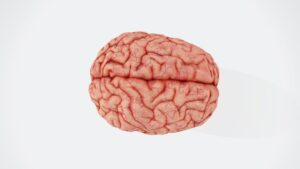
Neuroscience has provided increasingly detailed insights into how the brain processes relief, confirming its status as a powerful, chemically mediated reward state. The experience of relief involves a complex interplay between brain regions responsible for processing pain and stress (such as the amygdala and insula) and those associated with reward and motivation (the ventral tegmental area and the nucleus accumbens, key components of the mesolimbic pathway). When an aversive state is terminated, there is a measurable decrease in activity in brain areas associated with distress, accompanied by a surge in activity within the reward circuits.
The successful removal of a threat triggers the release of neurotransmitters, most notably dopamine, in the nucleus accumbens. This dopamine burst serves as the “stamping in” mechanism, reinforcing the preceding actions that led to the relief. Additionally, endogenous opioids (endorphins) may be released, contributing to the subjective sense of calm and well-being that defines relief, acting as natural pain and stress mitigators. This neurochemical release helps the brain categorize the escape behavior as highly adaptive and desirable for repetition.
The prefrontal cortex, which handles higher-level executive functions and cognitive appraisal, also plays a crucial role. It assesses the severity of the threat and the success of the escape strategy. The intensity of the dopamine response is modulated by this cognitive assessment; if the prefrontal cortex determines that the threat was significant and the escape highly skillful, the resulting feeling of relief and subsequent reinforcement will be greater. Understanding these neural pathways is vital for developing effective treatments for conditions characterized by maladaptive avoidance, such as chronic anxiety and post-traumatic stress disorder.
A Practical Illustration: The Everyday Experience of Stress Reduction
Consider the common scenario of a student facing a significant, looming academic deadline, such as a major thesis submission. For weeks, the student experiences high levels of stress, disrupted sleep, and general anxiety—an intense, aversive psychological state. This state is characterized by constant rumination and the physical tension associated with anticipated failure or negative consequences.
- The Aversive State: The student is experiencing chronic distress driven by the deadline (the aversive stimulus) and the fear of failure.
- The Response Behavior: The student engages in the demanding task of writing, editing, and formatting the thesis, ultimately submitting the completed work moments before the deadline expires.
- Cessation and Relief: The moment the submission confirmation screen appears, the external threat (the looming deadline and its associated consequences) is instantly terminated. This leads to an immediate and palpable wave of relief. The physical tension dissipates, the racing thoughts slow down, and the psychological burden lifts.
- Reinforcement: The powerful feeling of relief reinforces the demanding behavior (the intense work and successful submission). In the future, when faced with a similar overwhelming deadline, the memory of the relief experienced will motivate the student to engage in the hard work necessary to terminate the aversive state successfully once again.
This example clearly demonstrates relief as the emotional signature of successful negative reinforcement. The student was not rewarded with something positive immediately upon submission (e.g., a grade), but rather with the removal of the negative psychological pressure. This illustrates how relief, even in the context of cognitive tasks, acts as a primary emotional mechanism driving motivated behavior and the successful completion of challenging, stressful tasks.
Clinical and Therapeutic Significance
The understanding of relief is fundamentally important in clinical psychology, particularly in the treatment of anxiety disorders, phobias, and obsessive-compulsive disorder (OCD). Many anxiety disorders are characterized by excessive or maladaptive avoidance behaviors, which are maintained by the powerful, short-term reward of relief. For example, a person with social anxiety who avoids a party feels immediate relief from the anticipated fear, thereby strongly reinforcing the avoidance behavior and perpetuating the disorder.
Therapies like exposure therapy directly manipulate the mechanism of relief to facilitate recovery. In exposure therapy, the patient is gradually exposed to the feared stimulus while being prevented from engaging in the typical avoidance or safety behaviors. Initially, this causes intense distress, but as the patient remains in the presence of the stimulus and realizes the anticipated negative consequence does not occur (or is manageable), the fear response naturally habituates and dissipates. The eventual decline of anxiety and the realization of safety constitutes a profound feeling of relief, which actively extinguishes the learned fear association and reinforces the non-avoidance behavior, reprogramming the brain’s threat assessment system.
Furthermore, relief is a critical component of stress management and resilience training. Teaching individuals to differentiate between constructive behaviors that lead to genuine relief (e.g., problem-solving, emotional regulation) and maladaptive behaviors that provide only momentary escape (e.g., substance abuse, dissociation) is key to promoting long-term mental health. The clinical goal is often to harness the powerful reinforcing qualities of relief toward healthy coping mechanisms.
Connections to Other Psychological Constructs
Relief belongs broadly to the subfield of Affective psychology, intersecting deeply with theories of motivation, learning, and emotion regulation. Its closest conceptual neighbor is Joy, but they are differentiated by their origin: Joy is usually a response to the addition of a positive event, whereas relief is a response to the subtraction of a negative event. A person wins the lottery and feels joy; a person learns they did not win the lottery but also did not lose their job, and feels relief.
Relief is also inextricably linked to Anxiety and Fear. It is the necessary counterpoint to these negative anticipatory emotions. The function of anxiety is to signal potential threat; the function of relief is to signal the successful resolution of that threat. In terms of cognitive appraisal, relief requires the assessment that a previously high-risk situation is now safe.
Finally, relief plays a significant role in understanding Coping Mechanisms. Many successful coping strategies are inherently relief-seeking behaviors. For example, seeking social support after a tragedy provides relief from emotional isolation; organizing a cluttered space provides relief from cognitive overload. However, the search for relief can also lead to problematic addictive behaviors, where the substance or behavior provides intense, immediate relief from withdrawal or emotional pain, creating a highly destructive negative reinforcement loop that is difficult to break.