Cognitive Development: Closing the Learning Gap
Scientifically Reviewed · Dr. Marwa Abd-Alazim · August 23, 2026
Review Criteria & Clinical Standards
This content undergoes rigorous scientific peer-review and medical editorial standards at Arab Psychology Network to ensure clinical accuracy, validity, and compliance with evidence-based guidelines from leading psychological and healthcare authorities (APA / WHO).
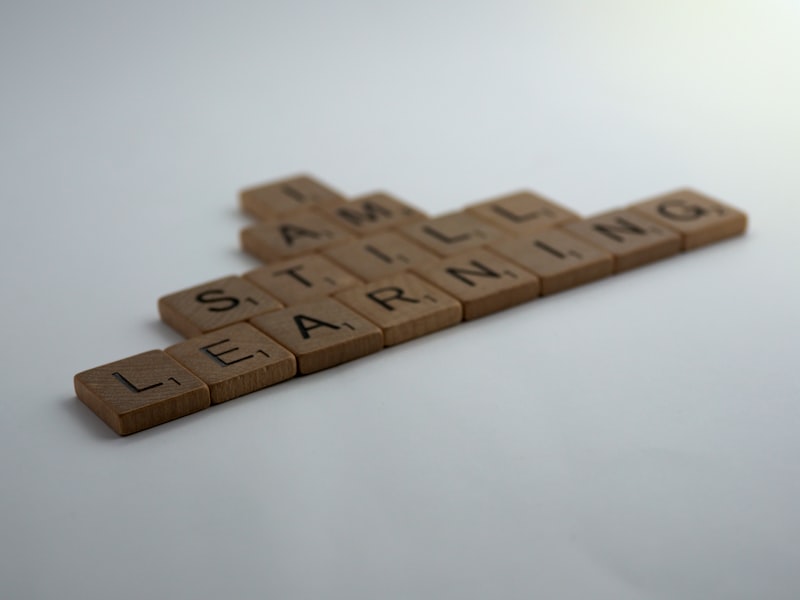
Introduction to Remedial Education
Remedial education, often termed developmental education in postsecondary settings, refers to an educational process composed primarily of specialized coursework or targeted instruction intended to elevate a student to the necessary level of skill competency required by more advanced, credit-bearing courses. The fundamental purpose of these programs is to bridge significant gaps in foundational knowledge or academic skills—most commonly in mathematics, reading comprehension, and written composition—that prevent students from successfully engaging with standard curriculum. This form of instruction is crucial for ensuring academic preparedness, particularly among diverse student populations entering higher education or transitioning between key educational stages. It addresses deficiencies that may stem from varied high school quality, learning disabilities, or extended breaks from schooling, acting as a critical preparatory step before matriculation into core academic programs.
The necessity of remedial coursework reflects broader systemic challenges regarding educational equity and access. For instance, it is widely observed that many new college freshmen require remedial education in one or more areas, illustrating a persistent disconnect between high school graduation standards and the rigorous demands of college-level work. Without this intervention, students lacking requisite foundational skills are placed at a severe disadvantage, leading to higher rates of academic failure and dropout. Consequently, remedial programs are designed not merely to reteach material but to offer focused, intensive strategies aimed at mastery learning, ensuring students possess the cognitive tools and conceptual understanding necessary to succeed in subsequent academic endeavors, thus maximizing their potential for long-term educational attainment.
While the concept of remediation is straightforward—filling skill gaps—its implementation is complex, involving intricate diagnostic testing, specialized pedagogical approaches, and significant institutional resources. The courses themselves are typically non-credit bearing, meaning they do not count toward a degree, yet successful completion is often a prerequisite for enrollment in college-level courses. This unique characteristic places remediation at a critical, sometimes contentious, intersection of access, accountability, and institutional effectiveness within the educational system. The goal remains consistent across all contexts: to provide a structured pathway for underprepared students to achieve academic parity with their peers, thereby leveling the academic playing field and promoting greater persistence in challenging fields of study.
Historical Context and Evolution
The concept of providing supplementary instruction to underprepared students is not new, tracing its roots back to the 19th century in American higher education. Early colleges, particularly those adopting open enrollment policies or serving immigrant populations, recognized the inherent variability in incoming students’ academic backgrounds. Initially, this support often took the form of preparatory schools or specialized classes integrated loosely into the college environment. However, the modern structure of formalized developmental education largely solidified in the mid-20th century, driven significantly by post-World War II expansion, including the implementation of the GI Bill, which dramatically broadened access to higher education for veterans with diverse and often interrupted educational histories.
The latter half of the 20th century saw the proliferation of community colleges, which embraced an open access mission as a core institutional philosophy. This commitment to educational democratization meant accepting virtually all applicants, regardless of their prior academic performance. As enrollments surged, so did the need for formalized, standardized remedial programs to address the foundational gaps present in a high percentage of incoming students. Policy shifts, such as the accountability movement embodied by initiatives like the No Child Left Behind Act (NCLB) in K-12 settings, further emphasized the necessity of identifying and remediating academic weaknesses early, leading to standardized testing protocols that fed directly into remedial placement decisions at the postsecondary level.
More recently, the historical model of remediation—often involving long sequences of standalone, non-credit courses—has faced increasing criticism regarding its efficiency and high costs. This scrutiny has propelled a significant evolution in practice toward accelerated and integrated models. Contemporary trends emphasize placing students directly into college-level courses while simultaneously providing intensive, corequisite academic support. This shift reflects a move away from the traditional “gatekeeper” function of remediation and toward a more student-centric approach focused on maximizing student momentum and reducing the time and financial burden required to attain college readiness. Understanding this historical trajectory is essential for appreciating current policy debates surrounding how best to prepare diverse student populations for academic success.
Target Populations and Educational Settings
Remedial education serves varied populations across different educational levels, though the challenges addressed remain fundamentally similar: addressing skill deficits. In K-12 settings, remedial support often overlaps significantly with specialized intervention programs, Title I services, or specific learning disability accommodations, focusing on ensuring students meet grade-level proficiencies before moving into the next grade band. This early intervention is crucial, as unaddressed foundational deficits compound rapidly, making remediation exponentially more challenging later in a student’s academic career. The instruction in K-12 is typically integrated within the school day, utilizing small group instruction or pull-out programs to target specific learning gaps identified through formative and summative assessments.
The most prominent and publicly debated setting for remedial education is the postsecondary institution, particularly community colleges, where remediation rates can exceed 50 percent of the incoming cohort. In this context, the target populations are generally recent high school graduates who failed to achieve satisfactory scores on placement exams, adults returning to school after long absences, or transfer students whose previous coursework did not sufficiently prepare them for the rigors of university academics. The primary areas of deficit are almost universally mathematics (algebra and quantitative reasoning) and English language arts (reading comprehension and academic writing). These courses, unlike their K-12 counterparts, are distinct, standalone classes that consume significant student time and tuition fees without yielding degree credit.
A critical distinction exists between traditional postsecondary remediation and other forms of academic assistance, such as tutoring or supplemental instruction. Remedial courses are formal, structured curricula designed to replace missing knowledge entirely, rather than merely assisting with current course material. Furthermore, students identified as needing remediation often exhibit a wide spectrum of learning needs, ranging from minor skill atrophy to profound, systemic gaps requiring extensive intervention. Therefore, effective remedial programs must employ highly differentiated instruction and flexible pathways to accommodate this diverse group, acknowledging that a one-size-fits-all approach is inherently inefficient and often detrimental to student morale and persistence.
Assessment and Identification Methods
Accurate identification of students requiring remedial support is the cornerstone of an effective program, preventing misplacement that can be costly both institutionally and individually. The identification process relies heavily on diagnostic assessment, which aims not just to measure overall proficiency but to pinpoint precise skill deficiencies. Historically, standardized, high-stakes placement testing, such as the ACCUPLACER or discontinued COMPASS exams, dominated this process. These tests measure fundamental math, reading, and writing skills and use empirically derived cut scores to determine the appropriate level of initial coursework, often dictating whether a student begins in college-level or remedial courses.
However, reliance solely on single, high-stakes placement exams has been widely criticized for potentially misplacing students, particularly those who exhibit test anxiety or whose performance on a single day does not accurately reflect their true academic potential. In response, many institutions have shifted toward utilizing multiple measures assessment, integrating a broader spectrum of data points into the placement decision. These measures often include high school transcripts, particularly focusing on GPA and performance in senior-year mathematics and English courses, alongside self-reported academic history and sometimes brief writing samples or interviews. The rationale is that a holistic view provides a more reliable predictor of success in college-level work than a single standardized score.
The goal of modern assessment methods is to minimize the number of students unnecessarily placed into remediation while ensuring that truly underprepared students receive the necessary support. The debate over the predictive validity of various assessment tools is ongoing, but the trend clearly favors contextualized, diagnostic tools over generic placement tests. For instance, specific diagnostic instruments can determine if a math deficiency stems from poor recall of basic facts versus a conceptual misunderstanding of algebraic principles, allowing instructors to tailor remedial content more precisely. Effective assessment is therefore less about exclusion and more about directing students efficiently to the most appropriate and least time-consuming academic pathway toward matriculation and degree completion.
Core Principles and Instructional Strategies
Instructional approaches in remedial education must deviate significantly from traditional lecture formats to be effective, focusing instead on active learning, student engagement, and tailored support. A core principle is mastery learning, where students are required to demonstrate competence in foundational skills before proceeding to the next level of instruction. This often involves continuous, low-stakes assessment and the opportunity for repeated practice and retesting, ensuring that gaps are truly closed rather than simply bypassed. Furthermore, effective pedagogy emphasizes metacognition—teaching students not just the content, but how to learn, study, and apply problem-solving strategies—thereby fostering self-regulated learning essential for success in independent college coursework.
A major innovation driving remedial reform is the utilization of accelerated models and module-based instruction. Traditional sequential remediation often involved two or three semesters of non-credit work, causing students to lose momentum and motivation. Accelerated courses compress material, often integrating multiple levels of skill building into a single semester. Module-based systems allow students to test out of specific units they have already mastered, focusing instructional time only on proven deficit areas, which significantly reduces the overall time required for readiness. This efficiency is paramount, as studies show that the longer a student spends in remediation, the lower their likelihood of graduating.
Perhaps the most transformative instructional strategy is the implementation of co-requisite remediation. Instead of requiring students to complete remedial courses before enrolling in college-level classes, the co-requisite model places underprepared students directly into the gateway course (e.g., College Algebra or English Composition I) and simultaneously enrolls them in a mandatory, just-in-time support course or lab. This model contextualizes the remedial instruction directly within the content of the credit-bearing course, making the learning immediately relevant and maximizing student progress. Evidence suggests that co-requisite models dramatically improve student success rates in gateway courses compared to traditional, sequential remediation, representing a fundamental shift in how institutions address academic underpreparedness.
Challenges and Criticisms
Despite its intended purpose as a mechanism for promoting access and equity, remedial education faces substantial challenges and has attracted significant criticism, primarily concerning its effectiveness and the burdens it imposes on students. One of the most severe criticisms focuses on the high attrition rates associated with traditional remedial sequences. A large percentage of students placed into remediation, particularly those placed in the lowest levels, never successfully complete the sequence necessary to enter college-level coursework, effectively creating an expensive and time-consuming bottleneck that halts their academic progress entirely. For these students, remediation acts as a “leaky pipeline,” diverting them from degree completion rather than enabling it.
The financial and time costs represent another major point of contention. Because traditional remedial courses are non-credit bearing, students must pay tuition and fees for classes that do not advance them toward their degree, increasing their overall debt burden and extending the time required for graduation. This disproportionately affects low-income students and minority groups, who are often overrepresented in remedial placements. The opportunity cost is also significant; time spent in remediation is time not spent earning a degree or entering the workforce, exacerbating the economic challenges faced by these students. This financial burden has fueled policy efforts to eliminate or drastically restructure traditional remedial offerings.
Furthermore, psychological and pedagogical challenges exist, including the stigma associated with remedial placement. Students placed into these courses may experience reduced self-efficacy and motivation, believing they are inherently less capable than their peers. Instructors also face the difficulty of teaching basic skills to adult learners who may resent being placed in non-college-level courses. Addressing these issues requires sensitivity, strong pedagogical training for remedial educators, and institutional commitment to providing integrated, non-stigmatizing support systems, such as placing academic assistance within general learning centers rather than isolating it in dedicated remedial departments. The challenge lies in balancing the necessary rigor of skill development with the imperative of maintaining student engagement and momentum toward their ultimate academic goals.
Measuring Effectiveness and Outcomes
Assessing the effectiveness of remedial education is crucial for justifying institutional expenditures and guiding policy reform. The metrics used must move beyond simple course completion rates to evaluate long-term student success. Key performance indicators include the rate at which students successfully transition from remedial courses into their first gateway courses (e.g., college-level math or English), and, critically, their subsequent performance and persistence in those credit-bearing classes. If students pass remediation but fail their subsequent gateway courses, the remediation model is fundamentally flawed in preparing them adequately.
The ultimate measure of success, however, is longitudinal student persistence and degree attainment. Studies examining the long-term graduation rates of students placed in remediation versus their non-remedial peers provide the strongest evidence base for evaluating program efficacy. Traditional remedial models have historically underperformed on this metric, leading to widespread calls for reform. Conversely, emerging models, particularly co-requisite support, are being evaluated based on their ability to close the achievement gap between remedial and non-remedial students in terms of course completion and subsequent graduation rates within a defined period (e.g., three or six years).
Institutions must also track qualitative outcomes, such as student self-efficacy, changes in study habits, and the perceived value of the support received. The data collected from these evaluations inform continuous improvement cycles, allowing programs to refine their diagnostic tools, instructional content, and delivery methods. As educational policy increasingly emphasizes accountability and measurable outcomes, the requirement for robust, transparent data collection regarding remedial outcomes becomes a central driver of institutional decision-making and resource allocation. The focus is shifting from simply providing access to ensuring that access translates into meaningful and timely degree completion for all students, regardless of their initial level of preparedness.
Future Trends and Policy Implications
The future of remedial education is defined by systemic policy reform aimed at reducing reliance on the traditional, sequential model. Driven by data indicating the failure of these older methods to promote timely graduation, numerous state systems and major university consortia are mandating the adoption of accelerated and co-requisite approaches. For instance, some states have implemented policies restricting the ability of colleges to offer extensive sequences of non-credit remedial courses, effectively forcing institutions to adopt models that place the majority of underprepared students directly into credit-bearing courses with integrated support. This reflects a philosophical commitment to maximizing student momentum toward a degree.
Technological advancements are also playing a crucial role in shaping future remedial strategies, fostering highly personalized learning pathways. Adaptive learning software and artificial intelligence tools are increasingly used to provide individualized skill practice and diagnostic feedback, allowing students to progress at their own pace and target only the specific knowledge deficits they possess. This technology supports the modularization of content and enables instructors to manage larger groups of students with diverse learning needs more effectively, moving away from a uniform curriculum toward truly customized instruction.
Finally, there is a growing emphasis on addressing the non-cognitive factors that influence academic success. Future remedial programs are expected to integrate stronger elements of student advising, mentorship, and instruction in self-regulation, time management, and motivation. By coupling rigorous academic instruction with robust psycho-social support, institutions aim to create a more holistic environment conducive to learning and long-term persistence. The trend is clear: remedial education is moving away from being a segregated, standalone system and toward becoming a fully integrated academic support service that is indistinguishable from the overall student success strategy of the institution.