Remote Association: Unlocking Hidden Mental Patterns
Scientifically Reviewed · Dr. Marwa Abd-Alazim · October 6, 2026
Review Criteria & Clinical Standards
This content undergoes rigorous scientific peer-review and medical editorial standards at Arab Psychology Network to ensure clinical accuracy, validity, and compliance with evidence-based guidelines from leading psychological and healthcare authorities (APA / WHO).

The Essence of Remote Association
Remote association is a fascinating cognitive phenomenon where an individual demonstrates the remarkable ability to identify a connection or commonality between two or more concepts, words, or ideas that, on the surface, appear entirely unrelated. This process is not about recognizing obvious links but rather about uncovering hidden, indirect, or distant relationships that require a leap of thought beyond conventional associative patterns. It represents a fundamental aspect of human thought, reflecting our capacity to synthesize disparate pieces of information into a coherent whole, often leading to moments of insight or creative breakthroughs.
At its core, the mechanism behind remote association involves the activation of broader semantic networks within the brain. When presented with seemingly unrelated stimuli, the mind does not simply search for direct links but rather casts a wider net, exploring peripheral associations until a common thread is discovered. This often necessitates a process of cognitive restructuring, where initial mental frameworks are reconfigured to accommodate new relationships. The successful completion of a remote association task typically results in a sudden realization, a “eureka” moment, as the previously obscure connection becomes apparent, demonstrating the brain’s impressive ability to bridge conceptual gaps.
The ability to make these novel and creative connections between ideas is considered a hallmark of higher-order cognitive processes. It is not merely a memory retrieval task but involves active problem-solving and the integration of information from various domains. Understanding this capacity provides crucial insights into how humans generate new ideas, solve complex problems, and engage in creative thought, making it a pivotal area of study within the broader field of cognitive neuroscience.
Unraveling the Cognitive Mechanism
The underlying mechanism of remote association is believed to involve a complex interplay of various cognitive functions. When faced with a remote association task, the brain doesn’t follow a linear path; instead, it engages in a more diffuse search pattern. This involves activating a wide range of semantically related concepts, even those that might seem weakly linked at first, and then evaluating potential convergences. This expansive search is distinct from typical memory recall, which often relies on strong, direct associations. The process requires a degree of cognitive flexibility, allowing the mind to shift perspectives and consider alternative interpretations of the given stimuli.
Furthermore, the successful identification of remote associations is often characterized by a period of mental reorganization. Initial attempts to find a connection might lead to dead ends, requiring the individual to abandon previous lines of thought and explore new ones. This iterative process of generating hypotheses, testing them against existing knowledge, and then refining or rejecting them is central to the mechanism. The “aha!” moment associated with solving a remote association problem indicates a sudden shift in cognitive understanding, where disparate pieces of information click into place, forming a novel and coherent pattern.
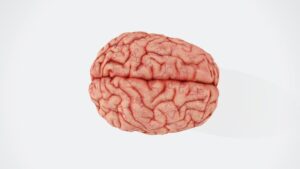
Neuroscientific research, particularly utilizing techniques like functional magnetic resonance imaging (fMRI), has shed light on the neural basis of this phenomenon. Studies have consistently pointed to increased activation in specific brain regions, most notably the left prefrontal cortex (PFC), during remote association tasks. This area is critically involved in executive functions such as planning, working memory, and cognitive control, suggesting its role in managing the extensive search and integration required for remote associations. The PFC’s involvement underscores the idea that remote association is an effortful, executive-driven process rather than a purely automatic one.
Tracing the Historical Roots
The systematic study of remote association gained significant traction in the early 1960s, largely propelled by the pioneering work of American psychologist Sarnoff Mednick. Mednick, in his seminal 1962 paper “The Associative Basis of the Creative Process,” proposed an associative theory of creativity. He posited that creative individuals possess flatter associative hierarchies, meaning they are more likely to generate a wider range of responses, including remote ones, to a given stimulus compared to less creative individuals whose associative hierarchies are steeper and more conventional.
Mednick’s research focused on examining the ability of individuals to make connections between seemingly disparate words. He developed the Remote Associates Test (RAT) as a tool to measure this ability. In the RAT, participants are given three seemingly unrelated words (e.g., “cottage,” “Swiss,” “cake”) and asked to find a fourth word that connects all three (e.g., “cheese”). This innovative test provided an empirical method for quantifying an individual’s capacity for remote association, thereby opening avenues for extensive research into its psychological underpinnings.
The context for Mednick’s work was a burgeoning interest in understanding the mechanisms of creative thought, which was often seen as an elusive and difficult-to-study phenomenon. By framing creativity in terms of associative processes, Mednick offered a quantifiable and theoretically grounded approach. His work established that the ability to form these indirect connections was not merely a random occurrence but an important cognitive skill, laying the groundwork for subsequent investigations into the cognitive and neural substrates of creative problem-solving and insight.
A Practical Illustration: The Everyday Connection
To make the concept of remote association more tangible, consider a common scenario: you are in a brainstorming session with colleagues, trying to come up with a new, catchy slogan for a product, let’s say, an innovative smart home device designed to monitor air quality. Initial ideas might revolve around direct associations like “clean air,” “healthy home,” or “breathe easy.” These are strong, close associations. However, the goal is often to find something more unique and memorable, something that stands out. This is where remote association comes into play.
Let’s break down the “how-to” of applying remote association in this example. You might start by listing words associated with the core concept “air quality.” This could include words like “fresh,” “pollution,” “lungs,” “health,” “invisible,” “future.” Next, you might list words associated with the product’s function: “monitor,” “detect,” “protect,” “smart,” “control.” Now, the challenge is to find an unexpected bridge. What if you consider something seemingly unrelated, like “ocean” or “mountain”? These words evoke feelings of purity, vastness, and natural freshness.
The remote association emerges when you connect “invisible” (from air quality) with “ocean” (from nature’s vastness and purity), leading to an idea like “Dive into invisible freshness.” Or connecting “monitor” (product function) with “mountain” (symbolizing clarity and height), inspiring a slogan like “Elevating your home’s unseen breath.” These slogans are not immediately obvious; they require a mental leap, drawing from diverse semantic fields to create a novel and impactful message. This process illustrates how remote association can transform a routine task into an opportunity for true divergent thinking and creative output.
Profound Implications for Psychology
The concept of remote association holds profound importance for the field of psychology, particularly in understanding the mechanisms of human thought, problem-solving, and insight. It highlights that our cognitive architecture is not limited to linear, logical processing but possesses a remarkable capacity for non-obvious connections. This understanding challenges simplistic models of cognition and emphasizes the role of less direct, more expansive associative processes in high-level cognitive tasks. It provides a framework for analyzing how individuals break free from conventional thinking to arrive at novel solutions or understandings.
Moreover, remote association offers a valuable lens through which to study individual differences in cognitive abilities. Research has consistently shown a correlation between the capacity for remote association and measures of creativity. Individuals who excel at remote association tasks tend to score higher on tests of creative potential, suggesting that this ability is a core component of divergent thinking and innovative thought. This connection is vital for understanding why some individuals are more adept at generating original ideas or finding unconventional solutions to complex challenges.
From a developmental perspective, studying remote association can also inform our understanding of how cognitive abilities evolve. Investigating how children and adolescents develop the capacity to make these distant connections can provide insights into the maturation of semantic networks, executive functions, and creative thinking skills. Furthermore, in clinical psychology, deficits in remote association might be indicative of certain neurological or psychological conditions, making it a potential diagnostic or research tool for understanding various cognitive impairments.
Modern Applications and Therapeutic Potential
The insights gained from studying remote association have found numerous practical applications across various domains, extending beyond theoretical psychology into areas that directly impact daily life and professional practice. In the realm of creativity and innovation, understanding remote association has led to the development of training programs aimed at enhancing creative thinking in fields such as design, marketing, and scientific research. These programs often incorporate exercises designed to encourage individuals to explore unconventional connections, thereby fostering more imaginative and groundbreaking ideas.
In education, the principles of remote association are applied to foster deeper learning and critical thinking. Educators can design activities that encourage students to connect seemingly disparate subjects or concepts, promoting a more holistic and integrated understanding of knowledge. For instance, linking historical events to modern societal issues, or scientific principles to artistic expressions, can stimulate remote associative thinking, helping students to see the broader relevance and interconnectedness of their studies. This approach moves beyond rote memorization towards a more dynamic and generative form of learning.
Within clinical and therapeutic contexts, remote association has potential utility. For example, some therapeutic approaches, particularly those focused on cognitive restructuring or enhancing insight, might implicitly or explicitly leverage the ability to form new connections. Understanding how individuals make or fail to make remote associations could also inform interventions for conditions characterized by rigid thinking patterns. Furthermore, the correlation between remote association and brain activation, particularly in the left PFC, suggests its potential as a metric in studies examining the effects of cognitive training or pharmacological interventions on brain function and cognitive flexibility.
Interconnections within Cognitive Psychology
Remote association does not exist in isolation within the vast landscape of psychology; rather, it is deeply interconnected with several other key cognitive psychology concepts and theories. One of its closest relatives is insight, often described as a sudden understanding of a problem or concept, frequently accompanied by an “aha!” moment. Remote association can be seen as a fundamental mechanism underlying many instances of insight, where the solution to a problem emerges from the recognition of a distant, previously unnoticed connection. The ability to form remote associations is often a prerequisite for experiencing such insightful breakthroughs.
Another strongly related concept is cognitive flexibility. This refers to an individual’s ability to adapt their thinking processes and shift between different mental sets or strategies in response to changing task demands. Remote association inherently requires a high degree of cognitive flexibility, as it involves moving beyond initial, obvious associations to explore less conventional pathways. Without this flexibility, individuals might remain stuck in rigid thought patterns, unable to identify the indirect links necessary for successful remote association.
Furthermore, remote association plays a crucial role in theories of creativity. As Mednick’s original theory suggested, the capacity to generate remote associations is often considered a hallmark of creative individuals. Creativity is not merely about producing something new, but often about combining existing ideas in novel and useful ways. Remote association provides a cognitive mechanism for this recombination, enabling individuals to bridge conceptual gaps and generate original ideas by linking disparate elements from their knowledge base. It underpins the generative aspect of creative thought, allowing for the synthesis of unique perspectives.
The Broader Psychological Landscape
Remote association firmly belongs to the subfield of cognitive psychology, which is dedicated to studying mental processes such as attention, memory, perception, language, problem-solving, and thinking. Within this domain, remote association offers a specific window into how information is organized, retrieved, and recombined in the human mind, particularly concerning the generation of novel ideas and solutions. It provides empirical evidence for the complex, non-linear nature of thought, moving beyond simpler models of associative learning.
Beyond cognitive psychology, its implications extend into other areas. In social psychology, understanding remote association can shed light on how stereotypes are formed or how individuals make novel social judgments by linking seemingly unrelated pieces of information about others. In developmental psychology, researching how the ability to make remote associations develops in children and adolescents can offer insights into the maturation of higher-order cognitive functions and the emergence of creative thinking.
Moreover, the neural underpinnings of remote association, particularly the involvement of the prefrontal cortex, position it as a significant topic within cognitive neuroscience. This interdisciplinary field seeks to understand the biological mechanisms that underlie cognitive processes. By mapping the brain regions and networks involved in remote association, researchers can gain a deeper understanding of the neural architecture supporting creativity, insight, and complex problem-solving. Thus, remote association serves as a valuable bridge, connecting theoretical cognitive constructs with their biological foundations.