Remote Grandparenting: Bridging the Distance for Connection
Scientifically Reviewed · Dr. Marwa Abd-Alazim · August 23, 2026
Review Criteria & Clinical Standards
This content undergoes rigorous scientific peer-review and medical editorial standards at Arab Psychology Network to ensure clinical accuracy, validity, and compliance with evidence-based guidelines from leading psychological and healthcare authorities (APA / WHO).
Definition and Scope of the Remote Grandparent Role
The concept of the remote grandparent refers to an individual occupying the grandparenting role who maintains a relationship with their grandchildren characterized by infrequency, sporadic interaction, and low emotional intensity. This pattern of interaction is typically established due to significant physical or emotional separation between the generations. Unlike other typologies that emphasize active engagement or deep affection, the remote grandparent is often perceived by the family unit, and sometimes by the grandparent themselves, as a relatively peripheral figure in the grandchild’s life, playing a minimal role in socialization, development, or daily support. This designation does not necessarily imply a malicious intent or complete disinterest, but rather reflects the practical reality of limited contact, which may be driven by complex biographical, geographical, or interpersonal factors. Understanding the remote grandparent requires acknowledging the inherent tension between the societal expectation of grandparental involvement and the reality of modern family structures that frequently prioritize nuclear unit autonomy and geographical mobility, thus formalizing distance as a dominant relational characteristic.
The defining feature of this role is the scarcity of direct, meaningful engagement. Interactions are often limited to highly formalized occasions, such as major holidays, brief telephone calls, or the sending of gifts and cards, rather than sustained, spontaneous, or routine contact. This lack of regular presence fundamentally shapes the quality of the bond; the relationship remains largely symbolic rather than functional. The grandchild may hold an abstract knowledge of the grandparent’s existence, but often lacks the deep, shared history, mutual understanding, and emotional reliance that characterizes more involved grandparenting styles. Sociological research consistently places this archetype at the lowest end of the involvement spectrum, highlighting that while the biological link remains, the social and emotional performance of the role is severely curtailed, necessitating a formal and often distant demeanor during the brief periods of interaction.
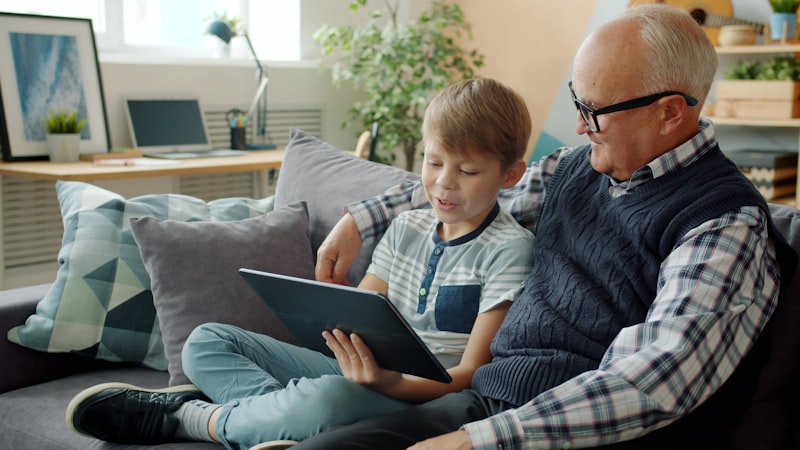
It is crucial to differentiate the state of being a remote grandparent from the mere fact of geographical distance. While physical separation, such as living across continents or far distant states, is a potent contributing factor, it is the *quality* and *frequency* of interaction that defines remoteness. In contemporary society, technological advancements offer numerous avenues for maintaining communication—video calls, instant messaging, and shared digital content—that can mitigate the impact of physical distance. A grandparent who uses these tools consistently to engage in the grandchild’s life, despite hundreds of miles separating them, would likely fall into the companionate grandparent category, not the remote type. Conversely, a grandparent living in the same city who actively avoids or limits contact due to unresolved family conflict or personal preference is definitively a remote grandparent, illustrating that emotional distance often serves as a more powerful and enduring barrier than geographical separation alone.
Historical Context and Sociological Typologies
The systematic classification of grandparenting roles gained significant traction with the pioneering work of sociologists like Cherlin and Furstenberg in the 1980s. Their research established a widely accepted framework that categorized grandparental involvement along three primary dimensions: the involved grandparent, the companionate grandparent, and the remote grandparent. This typology provided a critical lens through which to analyze the heterogeneity of intergenerational relationships in modern families, moving beyond monolithic assumptions about the universality of the supportive elder role. The remote grandparent, within this seminal model, represents the least engaged archetype, characterized by formal, infrequent, and often highly ritualized contact. This structure helped researchers understand that demographic shifts, including increased life expectancy, mobility, and high divorce rates, profoundly fragmented traditional family support networks, necessitating a descriptive framework for roles that did not align with historical norms of continuous, localized kinship.
Historically, the role of the grandparent was often tightly integrated into the extended family structure, particularly in agrarian or pre-industrial societies where multi-generational households were common and economic interdependence was high. The transition to industrial and post-industrial economies, characterized by urbanization and the nuclear family ideal, inherently created conditions conducive to remoteness. The sociological recognition of the remote grandparent role reflects this structural shift—a normalization of low contact resulting from voluntary choices (such as career-driven relocation) or involuntary circumstances (such as systemic family breakdown). This formal recognition allows for a necessary departure from idealized models, acknowledging that for a significant minority of families, the grandparental presence is minimal, often constrained by the preferences of the middle generation (the parents) who act as gatekeepers to the relationship.
Subsequent research has largely validated and refined these original typologies, integrating factors like cultural background, socioeconomic status, and health. However, the designation of remoteness remains robustly defined by the lack of functional integration into the grandchild’s daily life. Studies utilizing large longitudinal datasets confirm that the frequency of face-to-face interaction is the single strongest predictor of whether a grandparent is categorized as remote. Furthermore, the persistence of the remote status often correlates with factors such as complex remarriage patterns or long-standing emotional estrangement that predates the birth of the grandchildren. Understanding the remote status thus requires a multi-level perspective, examining not just individual choices but the broader socio-structural forces that inhibit intergenerational intimacy and continuous interaction, leading to a relationship that exists more in theory than in practical reality.
Primary Determinants of Remoteness: Geographical and Emotional Separation
The trajectory toward becoming a remote grandparent is typically catalyzed by two overarching categories of separation: physical distance, often resulting from geographical migration, and affective distance, stemming from emotional estrangement or unresolved family conflict. While geographical separation is arguably the most straightforward and quantifiable cause, its impact is mediated by the commitment of all parties to bridge the spatial gap. For instance, career opportunities or retirement choices that necessitate relocation far from the children and grandchildren can physically enforce remoteness. In these scenarios, the relationship is sustained primarily through mediated communication—technology, letters, or annual visits—but the lack of spontaneous, routine interaction limits the grandparent’s ability to participate meaningfully in the grandchild’s developmental milestones, school activities, or casual daily life, thus solidifying the remote status.
The role of emotional separation, however, presents a more complex and often more challenging barrier to involvement. This form of distance typically arises from pre-existing intergenerational conflicts, often between the grandparent and the parent (their adult child), concerning lifestyle choices, parenting philosophies, financial disputes, or historical grievances. In cases of significant family discord, the parent may intentionally restrict or sever contact, positioning themselves as a strict gatekeeper. This scenario, often rooted in emotional volatility or protective measures following events like divorce, alienation, or abuse, results in a grandparent who is remote not by choice but by exclusion. The affective distance in these cases is profound, often leading to feelings of sadness, frustration, and helplessness on the part of the remote grandparent, especially if they desire greater involvement but are systematically denied access to their kin.
Furthermore, a subset of remote grandparenting arises from the grandparent’s own volition or lifestyle preferences. Some grandparents, due to intense professional commitments, personal health issues, or a conscious desire to maintain autonomy and focus on non-family interests (such as travel or hobbies), choose a low-involvement role. This is known as voluntary remoteness, where the grandparent actively minimizes caregiving responsibilities or frequent visits, preferring a formal, non-intensive relationship that places minimal demands on their time or resources. While this choice may simplify their personal lives, it ensures the maintenance of a remote status, reinforcing the idea that the remote grandparent archetype encompasses individuals whose low involvement is both externally imposed by circumstance or conflict, and internally driven by personal priorities that diverge from the expectation of active familial participation.
Manifestations and Characteristics of Low Involvement
The relationship dynamic between a remote grandparent and their grandchild is characterized primarily by formality, low emotional investment, and an absence of shared daily context. Interactions, when they occur, tend to be scripted and highly structured, often revolving around ritualistic gift-giving or the exchange of pleasantries during brief, mandatory family gatherings. The communication lacks the spontaneity and depth found in involved or companionate relationships. For the grandchild, the remote grandparent may feel like a character from a story—a known figure but not a functional, reliable presence in their emotional landscape. This superficiality prevents the development of the deep, trusting bonds that grandparents often provide as crucial sources of non-parental support, wisdom, and intergenerational perspective. The relationship exists largely on a symbolic plane, validating kinship without requiring the labor of emotional maintenance.
A key manifestation of low involvement is the lack of direct caregiving or educational participation. Remote grandparents rarely, if ever, take on responsibilities such as babysitting, school pick-ups, financial aid, or assistance during parental crises. This absence contrasts sharply with the substantial support networks provided by involved grandparents, who often serve as auxiliary parents or critical safety nets. The remote grandparent’s non-participation means that the middle generation must rely entirely on their own resources or external aid, underscoring the peripheral nature of the remote grandparent’s role. Furthermore, the remote grandparent typically possesses minimal knowledge about the grandchild’s daily life—their friends, academic challenges, personal interests, or emotional needs—making any attempts at meaningful conversation difficult and often stilted, reinforcing the perception of distance.
The low perceived salience of the relationship is a reciprocal characteristic. For the grandparent, the relationship may represent a fulfilled obligation rather than a central emotional fulfillment. For the grandchild, especially as they age, the remote grandparent often occupies a lower rank in their hierarchy of significant figures, frequently holding less importance than close friends, teachers, or even other, more accessible relatives. In many cases, the remote relationship is stable precisely because it demands so little emotional energy from either party. There are fewer opportunities for conflict, disappointment, or strain, resulting in a formal but often emotionally neutral bond. This equilibrium, while lacking warmth, ensures that the relationship, though minimal, is often free from the intense relational pressures that can characterize highly involved, high-conflict family dynamics.
Comparative Analysis with Other Grandparenting Styles
The clearest way to understand the remote grandparent is through direct comparison with the other primary typologies: the companionate grandparent and the involved grandparent. These distinctions are critical for researchers and clinicians seeking to assess family functioning and intergenerational resource flow. The involved grandparent stands at the opposite end of the spectrum, defined by high frequency of contact, high emotional intensity, and significant functional involvement, often assuming quasi-parental roles. Involved grandparents may provide extensive financial support, daily childcare, or even reside in the same household, fully integrating themselves into the family’s decision-making and crisis management. Their relationship with the grandchild is deep, continuous, and highly influential, often blurring the lines between parental and grandparental authority.
The companionate grandparent occupies the middle ground and is arguably the most common modern grandparenting style. This role is defined by affection, leisure-oriented activities, and fun, but crucially, it avoids the daily responsibilities and disciplinary roles associated with parenting. Companionate grandparents prioritize quality time—trips to the park, shared hobbies, and occasional special outings—without the burden of continuous childcare or financial obligation. Their involvement is voluntary, pleasurable, and supportive, but stops short of assuming responsibility for the grandchild’s upbringing. While they may live far away, they utilize technology or committed travel schedules to maintain regular, emotionally rich contact. The remote grandparent differs fundamentally from the companionate type because the remote relationship lacks this consistent emotional richness and shared leisure activity; the interactions are obligations, not opportunities for mutual enjoyment or deep bonding.
The starkest contrast lies in the concept of functional participation. While the involved grandparent is a functional resource (providing care, finances, structure), and the companionate grandparent is an emotional resource (providing fun, affection, validation), the remote grandparent is neither a functional nor a consistent emotional resource. Their contribution is primarily symbolic—they represent the continuation of the lineage but offer little in terms of practical support or psychological presence in the grandchild’s daily life. This lack of functional exchange is often the clearest metric for distinguishing remoteness, as it reflects the minimal interdependence between the generations. This absence of functional flow is often the defining factor that shapes the grandchild’s perception of the relationship as distant, formal, and non-essential to their immediate well-being or routine.
Psychological and Developmental Impact on the Grandchild
For the grandchild, the presence of a remote grandparent often creates an ambiguous relational status. Unlike the complete absence of a relative, the remote grandparent is known but not experienced, existing as an abstract family member. This ambiguity can sometimes lead to feelings of confusion or curiosity, especially when the child observes their peers enjoying close, active relationships with their own grandparents. While the remote relationship rarely causes direct psychological harm, its absence of meaningful contribution represents a missed opportunity for developmental support. Grandparents typically offer a unique intergenerational perspective, providing emotional buffering during family transitions, offering non-judgmental counsel, and serving as a critical link to family history and heritage. The remote status effectively deprives the child of these potential benefits, limiting their access to an important source of identity formation and emotional resilience.
In situations where the remoteness is due to severe family conflict or alienation, the psychological impact can be more pronounced. Children may internalize the tension or ambiguity surrounding the absent figure, leading to questions about their own worth or family stability. Conversely, if the remoteness is simply due to geographical distance and is handled transparently by the parents, the impact is generally benign; the child simply adapts to a world where that particular relationship is formal and infrequent. It is crucial to note that the emotional health of the relationship between the middle generation (the parents) and the child is far more predictive of the child’s well-being than the presence or absence of a remote grandparent. If the nuclear family is stable and emotionally supportive, the lack of an involved grandparent is often seamlessly compensated for by other social supports, such as fictive kin or close family friends.
However, the developmental literature emphasizes the unique nature of the grandparental bond in fostering resilience. Grandparents often act as mentors and transmitters of cultural capital. The remote grandparent, by definition, cannot perform this role effectively. The absence of regular interaction means the child lacks access to this specific historical and cultural knowledge, potentially leading to a weakened sense of rootedness or lineage understanding. The relationship remains a polite formality, devoid of the emotional depth required to serve as a reliable source of refuge or secondary attachment, leaving the child reliant solely on the primary caregivers and potentially vulnerable if those caregivers experience personal or relational crises.
Challenges and Potential for Transition
The remote grandparent role, while stable, presents significant challenges, particularly concerning the potential for regret and the difficulty of later re-engagement. For the grandparent, especially those whose remoteness was involuntary due to physical barriers or conflict, later life often brings reflections on missed opportunities and a profound sense of loss regarding the chance to influence their grandchildren’s upbringing. As grandchildren mature, the window for creating deep, foundational bonds narrows significantly; attempting to transition from remote to companionate involvement once the child reaches adolescence or adulthood is often met with resistance, as the relationship history necessary to support intimacy is simply absent.
Transitioning out of the remote category requires intentional effort, often necessitating significant life changes. For those separated by geography, retirement or changes in financial status might enable a move closer to the family, providing the proximity needed for regular contact. However, overcoming emotional remoteness is often far more arduous. It requires reconciliation with the middle generation, a resolution of long-standing conflicts, and a willingness by the parent-gatekeeper to grant access. This process is complex, often requiring therapeutic intervention or years of patient, low-pressure attempts at rapprochement, as deep emotional wounds and established patterns of non-contact are difficult to reverse. The stability of the remote role often becomes a self-fulfilling prophecy, where the lack of effort reinforces the distance, making any future involvement feel intrusive or unnatural to the established family dynamic.
Furthermore, technology, while capable of mitigating geographical distance, can also subtly reinforce emotional remoteness if used purely for superficial communication. Sending occasional texts or brief, scheduled video calls fulfills a minimal obligation but does not constitute genuine involvement. For a true transition toward a more companionate role, the grandparent must commit to substantive, emotionally present interaction, showing genuine curiosity and providing consistent, non-judgmental support. The primary challenge inherent in moving away from remoteness is the necessity of rebuilding trust and establishing a shared history, tasks which are exponentially harder when starting from a foundation defined by scarcity and formality, demanding profound personal and relational reorganization.