The Repetition Effect: Why What You Hear Sticks
Scientifically Reviewed · Dr. Marwa Abd-Alazim · August 20, 2026
Review Criteria & Clinical Standards
This content undergoes rigorous scientific peer-review and medical editorial standards at Arab Psychology Network to ensure clinical accuracy, validity, and compliance with evidence-based guidelines from leading psychological and healthcare authorities (APA / WHO).

The Core Definition of the Repetition Effect
The Repetition Effect, in the context of cognitive psychology and memory research, describes the phenomenon where exposure to material multiple times leads to enhanced understanding, greater recognition, and significantly improved long-term recall of that information. Essentially, material which is presented in a repetitive way tends to be better understood, solidifying its place within the cognitive architecture of the learner. This mechanism operates on the principle that each exposure reinforces the neural trace associated with the information, making the retrieval pathway more robust and resistant to forgetting over time. The initial presentation establishes a tentative memory trace, while subsequent repetitions strengthen this trace, transforming fragile short-term memories into stable, accessible long-term memories.
The fundamental mechanism driving this effect is the increased processing fluency that results from repeated exposure. When a concept, word, or image is encountered repeatedly, the brain requires less effort and time to process it upon subsequent encounters. This improved efficiency, known as cognitive fluency, is often misinterpreted by the individual as a sign of familiarity or correctness, which further aids in the belief that the information has been mastered and stored effectively. Crucially, the Repetition Effect is closely linked to the establishment of strong mental associations; the more frequently two pieces of information are presented together or the more frequently a single piece of information is retrieved, the stronger the associative link becomes, thereby accelerating both encoding and retrieval processes.
While the effect is generally positive for memory, its effectiveness is highly dependent on the quality and spacing of the repetitions. Simply repeating information rapidly without context or engagement—a technique often referred to as “massed practice”—yields diminishing returns compared to strategically spaced repetitions. Therefore, a complete understanding of the Repetition Effect necessitates distinguishing between rote rehearsal and meaningful, strategic reinforcement designed to promote deeper semantic encoding and integration into existing knowledge frameworks.
Historical Foundations and Early Research
The psychological foundations of the Repetition Effect can be traced back to the earliest experimental studies of memory and learning, particularly the work conducted by the German psychologist, Hermann Ebbinghaus, in the late 19th century. Ebbinghaus is famous for his pioneering use of scientific methods to study higher mental processes, specifically memory, through his self-experiments using nonsense syllables. His groundbreaking work established the first quantitative evidence for the relationship between the number of learning repetitions and the amount of material retained.
Ebbinghaus observed that the time required to relearn a list of syllables decreased systematically as the number of initial learning repetitions increased. This finding solidified the concept that sheer frequency of exposure was a critical determinant of memory strength, an idea he formalized as part of his early “Law of Frequency.” This law posited that the strength of an association between two ideas is directly proportional to the number of times that association has been experienced. This early formulation provided the crucial groundwork for later theories, including associationism and behaviorism, which heavily relied on the principle of reinforcement through frequency.
Following Ebbinghaus, researchers in the early 20th century, notably those studying classical conditioning, further demonstrated the power of repetition. Ivan Pavlov’s experiments, for instance, showed that repeated pairings of a neutral stimulus (a bell) with an unconditioned stimulus (food) were necessary to establish a strong, reliable conditioned response (salivation). These findings across different domains—from verbal learning to behavioral modification—reinforced the overarching idea that repetition is a fundamental requirement for establishing new learning and modifying existing behaviors, thus cementing its central role across various schools of psychological thought.
Mechanisms of Memory Encoding
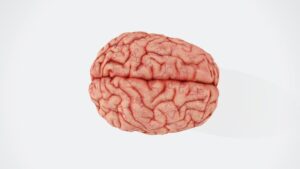
Understanding the Repetition Effect requires a look into the biological and cognitive processes involved in memory encoding and consolidation. Repetition works primarily by strengthening the synaptic connections within the brain that form the physical basis of memory, often referred to as neural pathways. When information is encountered for the first time, a weak connection is formed. Each subsequent encounter activates the same circuit, which, according to the principle of Hebbian learning (“neurons that fire together wire together”), leads to long-term potentiation (LTP). LTP is a persistent strengthening of synapses based on recent patterns of activity, which is widely believed to be the cellular mechanism underlying learning and memory.
Furthermore, repetition aids in the transfer of information from short-term or working memory into long-term memory stores. Initial exposure often only engages shallow processing, such as surface features or acoustic properties. However, repeated exposure, especially when varied or spaced, encourages deeper cognitive engagement, prompting the learner to relate the new information to existing knowledge structures—a process called elaborative rehearsal. This deeper processing ensures the information is encoded semantically, making it more meaningful and therefore more resistant to forgetting.
Another key mechanism involves the reduction of proactive and retroactive interference. By continuously reinforcing the target material, repetition helps to distinguish it clearly from other, similar information stored in memory. If a concept is only weakly learned, competing memories are likely to interfere with its retrieval. High levels of repetition, however, create a dominant memory trace that is readily accessible, minimizing the confusion caused by other stored data and ensuring the signal of the target memory is stronger than the surrounding noise.
Nuances and Caveats: Massed vs. Distributed Practice
While repetition is essential, the method of repetition is paramount, leading to a crucial distinction between massed practice and Distributed Practice. Massed practice involves cramming or repeating information numerous times in a single, continuous session. Conversely, distributed practice (also known as the spacing effect) involves repeating the material across several shorter study sessions interspersed with periods of rest or focus on other material. Research consistently shows that distributed practice is vastly superior for long-term retention and meaningful understanding.
The efficacy of distributed practice stems from several factors. First, the act of attempting to retrieve information after a delay serves as a powerful retrieval practice, strengthening the memory trace more effectively than simple re-reading. Second, the varying contexts introduced during spaced repetitions (different times, places, or moods) lead to multiple encoding paths, making the memory less dependent on a single environmental cue for retrieval. Finally, massed practice often leads to a decline in attention and increased cognitive fatigue, reducing the quality of encoding during the later repetitions within a single session, a drawback largely avoided by spacing sessions out over time.
The application of the Repetition Effect must therefore be strategic. Simple rote repetition, or “cramming,” might temporarily enhance performance for immediate testing, but the memory trace rapidly decays, conforming to the typical pattern of the forgetting curve. True, durable learning utilizes repetition not just to review but to actively test and retrieve the information after optimal intervals, a technique that leverages the challenges of forgetting to strengthen the memory upon successful retrieval.
A Real-World Illustration
To illustrate the Repetition Effect, consider the common challenge of memorizing a new, complex password or a sequence of identification numbers (e.g., a new security code at work). Initial exposure to the seven-digit code, 459-3210, results in only a fleeting memory, likely stored briefly in working memory.
-
Initial Encoding (Shallow Repetition): The individual reads the code 459-3210 ten times in a row before lunch (massed practice). They can recall it immediately afterward, thanks to short-term rehearsal. However, by the evening, the code is fuzzy, and only the first few digits are reliably recalled, demonstrating the rapid decay associated with shallow, unspaced repetition.
-
Strategic Repetition (Deepening the Trace): The individual decides to employ a distributed strategy. They review the code once before leaving work, again the next morning, and then once more three days later. Each successful retrieval attempt reinforces the neural pathway. Furthermore, the individual begins to associate the digits with meaningful concepts (e.g., 459 is the street address of a friend; 3210 is a countdown). This adds semantic encoding layers.
-
Consolidation and Fluency: After a week of spaced retrieval practice, the code 459-3210 is recalled effortlessly, without conscious effort or hesitation. This ease of recall signifies the achievement of cognitive fluency. The repetition has not just stored the data, but it has made the retrieval automatic, demonstrating the long-term benefit of strategically repeated exposure combined with elaborative processing.
This example highlights how repetition transforms effortful recall into automatic recognition. The difference between the initial massed repetition and the later distributed repetition is critical: the former only offers temporary familiarity, while the latter establishes a robust, long-lasting memory trace highly resistant to interference and decay.
Significance in Marketing and Persuasion
The Repetition Effect extends far beyond academic learning, playing a profound role in social psychology, particularly in the areas of marketing, advertising, and attitude formation. The concept of the Mere-exposure effect, a closely related phenomenon, states that people tend to develop a preference for things merely because they are familiar with them. Repetition in advertising capitalizes directly on this principle.
Advertisers understand that repeated exposure to a brand name, slogan, or jingle increases the consumer’s familiarity and liking of the product, even if the consumer cannot explicitly recall seeing the advertisement multiple times. This occurs because the repeated exposure increases processing fluency; the brand name is easier to recognize and process in the future, and this ease of processing is subconsciously interpreted as positive affect or trustworthiness. For a consumer facing a choice between two similar products, the one that is more familiar due to repetitive advertising will often be chosen simply because it feels safer or more correct.
However, there are limits to the effectiveness of repetition in persuasion. Extreme levels of unvaried repetition can lead to advertising wear-out, where the audience becomes annoyed or bored by the message, resulting in a negative rather than positive association. Effective marketing repetition often involves slight variations in the message or presentation across exposures to maintain interest while still reinforcing the core brand identity—a strategy that mirrors the benefits of distributed practice in academic learning by varying the context of encoding.
Connections to Broader Cognitive Concepts
The Repetition Effect belongs fundamentally to the domain of Cognitive Psychology, specifically intersecting with memory, learning, and perception studies. Its principles are intertwined with several other key theories:
-
The Law of Frequency: As mentioned previously, this is the historical precursor, asserting that the strength of an association is directly proportional to its frequency of occurrence. The modern Repetition Effect refines this law by emphasizing the importance of spacing and active retrieval over passive frequency alone.
-
Priming: Repetition leads to priming, where prior exposure to a stimulus affects the speed or accuracy of a subsequent response to that same stimulus. Repetition strengthens both perceptual priming (e.g., recognizing a logo quickly) and conceptual priming (e.g., quickly retrieving a learned definition).
-
Decay Theory: The Repetition Effect acts as a direct countermeasure to the decay theory of forgetting, which posits that memory traces weaken naturally over time if not rehearsed. Repetition serves as the necessary rehearsal or reactivation required to combat this natural degradation.
-
Retrieval Practice Effect: Highly related to distributed repetition, the retrieval practice effect (or testing effect) demonstrates that actively testing oneself on material is a far more powerful learning tool than simply reviewing the material. Repetition, when implemented as spaced retrieval, leverages the testing effect to maximize long-term retention.
In summary, the Repetition Effect is not a monolithic concept but a fundamental principle that underlies nearly all forms of human learning and memory formation. Its success relies not just on the quantity of exposure, but on the strategic quality, timing, and depth of processing achieved during those repeated encounters.