Response Learning: Master Skills Through Movement
Scientifically Reviewed · Dr. Marwa Abd-Alazim · October 24, 2026
Review Criteria & Clinical Standards
This content undergoes rigorous scientific peer-review and medical editorial standards at Arab Psychology Network to ensure clinical accuracy, validity, and compliance with evidence-based guidelines from leading psychological and healthcare authorities (APA / WHO).
The Core Definition of Response Learning
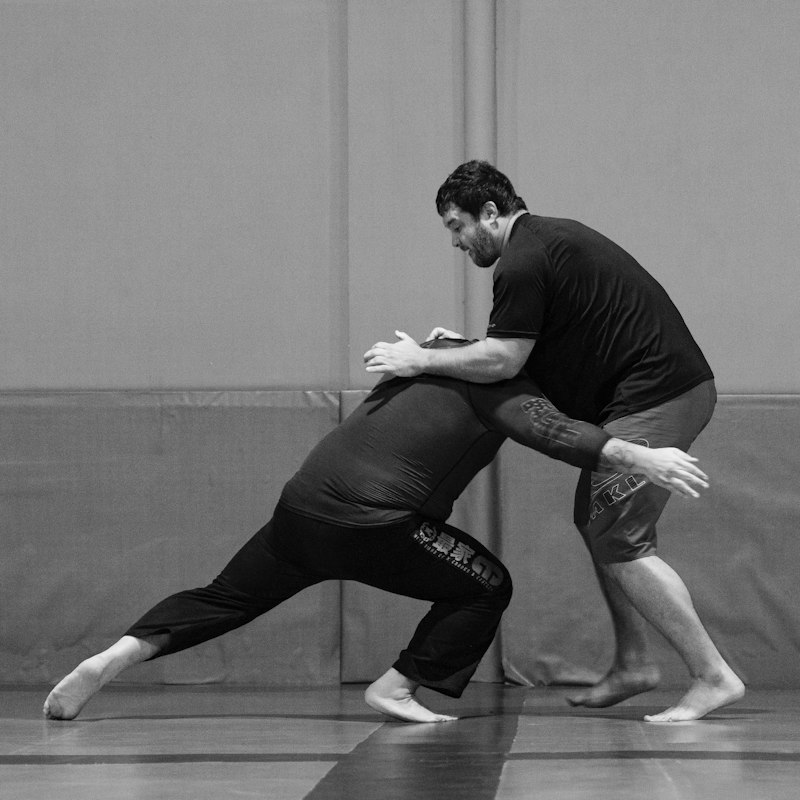
Response Learning, often interchangeably termed Motor learning or Movement Learning, is fundamentally the process through which an organism ascertains how to perform particular movements or responses effectively and efficiently. This psychological concept describes the relatively permanent changes in the capability for skilled movement resulting from practice or experience. Unlike simple reflex actions, which are innate and involuntary, response learning involves complex cognitive, perceptual, and motor processes that reshape the neural pathways to execute a specific task with increasing precision and decreasing conscious effort. It encompasses everything from the basic motor milestones acquired in infancy—such as grasping or walking—to highly complex skills developed later in life, such as playing a musical instrument or performing surgery.
The core mechanism behind Response Learning centers on the adaptive modification of the sensorimotor system. Initially, a new movement is often clumsy, slow, and requires intense Response Learning involves significant cognitive load; the learner must actively monitor every step and correct errors consciously. Over time, through iterative practice and continuous feedback loops, the central nervous system refines the motor plan. This refinement involves establishing a motor program—a stored representation of the movement sequence—which allows the action to be executed automatically. This transition from controlled processing to automaticity is the hallmark of successful response learning and is crucial for freeing up cognitive resources for higher-level tasks.
This type of learning is essential for survival and adaptation, beginning immediately after birth. As the original content notes, infants often acquire new abilities through Response Learning, learning to coordinate their limbs, balance their bodies, and interact with objects in their environment. The fundamental principle is that the nervous system maps specific sensory inputs to motor outputs, strengthening the connections that yield successful outcomes while weakening those that lead to errors or failure. This mapping process is dynamic and continues throughout the lifespan, allowing individuals to acquire new skills and adapt existing ones in response to changing environmental demands or physical capabilities.
Historical Foundations and Conceptual Origin
While the specific term “Response Learning” gained prominence in cognitive and motor control studies during the mid-20th century, its conceptual roots lie deep within the early schools of experimental psychology, particularly Behaviorism. Early researchers like Edward Thorndike, with his Law of Effect, and B.F. Skinner, who developed the framework of Operant Conditioning, laid the groundwork by emphasizing the role of consequences (reinforcement and punishment) in shaping behavior. Although these early models focused broadly on all behaviors, they provided the necessary empirical tools to study how specific motor responses could be strengthened or weakened based on the feedback received following their execution.
A pivotal development occurred when researchers began to differentiate between stimulus learning (S-S associations, primarily cognitive or perceptual) and response learning (S-R or R-S associations, emphasizing movement execution). During the 1940s and 1950s, the study of human performance during World War II spurred significant research into how people acquire complex physical skills, such as flying aircraft or operating radar systems. This necessity highlighted the limitations of purely associative models and necessitated the creation of models that focused specifically on motor control and the internal processes governing movement planning. Key figures like Franklin Fitts and Michael Posner formalized the stages of motor skill acquisition, providing a cognitive structure to the formerly purely behavioral domain.
The shift toward dedicated motor learning research recognized that movement acquisition involved more than just simple repetition; it required perceptual processing, decision-making, and error detection. This era saw the emergence of information processing models, treating the human learner as an active processor of information, translating sensory data into coordinated motor commands. This historical context solidified Response Learning as a specialized area within psychology, distinct from verbal or conceptual learning, focusing instead on the development and refinement of motor programs within the nervous system.
The Dynamic Role of Feedback and Practice
The acquisition of a motor skill through Response Learning is heavily reliant on two interconnected variables: practice structure and the quality of feedback. Practice, the repetitive execution of the desired movement, drives the initial cognitive stage and subsequent refinement. Psychologists differentiate between massed practice (many trials in a short period) and distributed practice (trials spread out over time). Generally, distributed practice is superior for the retention and long-term consolidation of complex skills, as it allows for better neural processing and less fatigue, solidifying the motor program through repeated, lower-intensity exposures.
Feedback serves as the critical mechanism for error correction and reinforcement within Response Learning. Feedback can be intrinsic (the sensory information the learner receives naturally from their body, such as proprioception, vision, and touch) or extrinsic (augmented feedback provided by an external source, like a coach or a machine). Extrinsic feedback is further categorized into Knowledge of Results (KR), which informs the learner about the outcome of the movement (e.g., “The ball landed 5 feet short”), and Knowledge of Performance (KP), which provides information about the quality of the movement itself (e.g., “Your elbow dropped during the swing”).
Effective Response Learning requires a delicate balance in the provision of augmented feedback. While frequent feedback is necessary during the early, cognitive stages of learning to guide the learner, excessive or constant feedback can lead to dependency, hindering the development of the learner’s intrinsic error detection mechanisms. Therefore, as the learner progresses into the associative and autonomous stages, feedback is often faded or reduced, forcing the individual to rely more on internal sensory information to gauge performance and self-correct. This strategic withdrawal of external guidance is crucial for achieving true automaticity and robustness in the learned response.
Stages of Motor Skill Acquisition
The process of Response Learning is not instantaneous but follows identifiable stages of development, most famously formalized by Fitts and Posner (1967). These stages describe the qualitative changes in performance and the underlying cognitive processes as a new motor response is mastered. Understanding these stages allows educators, therapists, and trainers to tailor their instruction to the specific needs of the learner at any given point in the acquisition process.
The first stage is the Cognitive Stage. During this phase, the learner is highly focused on understanding the task requirements, often relying on verbal instructions and mental rehearsal. Performance is inconsistent, highly error-prone, and requires significant conscious attention. The learner is establishing a cognitive map of the movement, determining “what to do.” All actions are deliberate, and the flow of movement is often jerky or fragmented. The high cognitive load means the learner cannot easily multitask.
The second stage is the Associative Stage. Here, the learner has determined the most effective strategies and begins to refine the movement pattern. Errors decrease, and performance becomes more consistent. Conscious effort begins to recede, and the learner starts to link specific environmental cues directly to the necessary movements, minimizing the need for constant mental deliberation. This stage focuses on “how to do it better,” and the role of feedback shifts from basic instruction to refinement of timing and amplitude. It is during this phase that the motor program starts to become solidified and resistant to external distraction.
The final stage is the Autonomous Stage. At this point, the skill has become largely automatic. Execution requires minimal conscious attention, allowing the learner to focus on strategic aspects of the task (e.g., in tennis, focusing on the opponent’s strategy rather than the mechanics of the serve). Movements are fluid, efficient, and highly consistent. Crucially, the motor response can be performed effectively even when the learner is distracted or under pressure. This automaticity is the ultimate goal of Response Learning, representing a deep consolidation of the response into long-term procedural memory.
A Practical Illustration: Learning to Type
To illustrate Response Learning in a relatable, everyday context, consider the process of learning to touch-type on a standard QWERTY keyboard. Initially, the learner is in the cognitive stage, relying heavily on visual cues and explicit instructions. The response is slow, characterized by “hunting and pecking,” where the eyes constantly shift between the screen and the keys. The sequence required to type a single word, such as “response,” is broken down into individual, highly effortful steps: locate ‘r’, strike ‘r’, locate ‘e’, strike ‘e’, and so forth. Errors are frequent, and correcting them demands a pause in the flow of the action.
As the learner progresses into the associative stage through deliberate practice, the visual dependence decreases. The motor system begins to associate the desired letter (the stimulus) directly with the necessary finger movement (the response). The learner no longer thinks, “Where is the ‘S’?” but rather, the appearance of the word “response” triggers the rapid, sequential firing of motor commands for the required keys. Feedback becomes intrinsic; errors are detected not by looking, but by the proprioceptive feel of a wrong key press or the visual feedback of an incorrectly spelled word appearing on the screen.
Finally, in the autonomous stage, the skill becomes habitual and unconscious. The typist can now carry on a conversation or think about the content they are writing without devoting any cognitive resources to the physical act of striking the keys. The movement sequence—the response—is executed flawlessly as a single, integrated motor program. This proficiency, where the response is entirely procedural, exemplifies successful Response Learning, demonstrating a permanent change in the capability to perform the skill efficiently.
Significance in Cognitive and Behavioral Science
Response Learning holds profound significance for the field of psychology, particularly in understanding how humans and animals develop complex adaptive behaviors. It bridges the gap between basic conditioning models and higher-level cognitive theories by providing a framework for understanding how physical action is planned, executed, and refined. Without the ability to acquire and automate complex motor responses, human beings would be overwhelmed by the sheer cognitive demand of performing even simple daily activities, such as walking, eating, or communicating.
In developmental psychology, the study of Motor Skill Acquisition provides crucial benchmarks for assessing healthy neurological development. Delays or deficits in response learning often signal underlying neurological or physical challenges, allowing for early intervention strategies. Furthermore, understanding the mechanisms of response learning, particularly the role of practice structure and feedback, has revolutionized areas of expertise development, showing that true expertise is not merely a matter of innate talent but rather highly structured, deliberate engagement with the task.
Moreover, Response Learning offers a powerful paradigm for studying brain plasticity. The acquisition of a new skill literally reshapes the motor and sensory cortices, demonstrating the brain’s remarkable ability to reorganize itself based on experience. Neuroscientific research employs response learning tasks to map cortical activity, track the consolidation of memories, and understand how the cerebellum, basal ganglia, and motor cortex cooperate to produce coordinated movement, thereby providing critical insights into the neural basis of human action.
Connections to Related Psychological Concepts
Response Learning exists within a broad ecosystem of learning theories, sharing common ground with, but also distinctly separating itself from, other conditioning models. The most important distinction lies between Response Learning (R-S association, emphasizing the outcome of the action) and Classical Conditioning (S-S association, emphasizing involuntary physiological responses). While both involve learning, classical conditioning results in an automatic, involuntary response to a previously neutral stimulus (e.g., salivating at a bell), whereas response learning focuses on voluntary, goal-directed movements that are refined based on their consequences.
However, Response Learning is deeply intertwined with Operant Conditioning. In operant models, behavior is controlled by consequences: a response that is followed by a reward is strengthened (reinforced). Response learning is essentially a highly specialized form of operant learning where the “behavior” is a complex motor sequence and the “consequence” is the successful achievement of a movement goal (e.g., hitting the baseball, successfully landing a jump). The principles of scheduling reinforcement, shaping behavior, and extinction are all highly relevant to the structured training involved in acquiring a physical skill.
Furthermore, Response Learning is closely related to implicit learning. Many motor skills, once automated, are stored as procedural memories that are difficult or impossible to articulate verbally. The ability to ride a bicycle is known implicitly; one cannot fully describe the complex balance and coordination required, one can only demonstrate it. This relationship highlights that the processes underlying motor skill acquisition often bypass conscious awareness, relying instead on subcortical structures and the refinement of internal, non-declarative knowledge structures.
Applications in Rehabilitation and Training
The principles derived from the study of Response Learning have critical, life-altering applications across various fields, most prominently in physical rehabilitation, vocational training, and athletic coaching. In clinical settings, the goal of physical and occupational therapy following injury or stroke is often to restore lost motor function or facilitate the acquisition of compensatory movements—a direct application of response learning principles.
Therapists utilize structured practice schedules and targeted feedback (KR and KP) to help patients relearn basic motor patterns, such as walking or grasping objects. Techniques like constraint-induced movement therapy (CIMT) rely on forcing the use of an impaired limb, increasing the intensity and frequency of practice, thereby driving neuroplastic changes essential for the re-acquisition of the motor response. The focus is always on creating an environment that promotes active problem-solving and self-correction, moving the patient through the cognitive and associative stages of learning.
Beyond clinical settings, response learning models inform high-stakes training environments, such as pilot training, surgical simulations, and military drills. These programs emphasize variable practice, realistic feedback mechanisms, and stress inoculation to ensure that the learned responses—the complex motor skills—are robust, efficient, and resistant to degradation under high-pressure conditions. By systematically applying the knowledge of how the nervous system acquires and consolidates movements, educators and trainers can drastically accelerate the rate of Motor Skill Acquisition and maximize the long-term retention of critical skills.