Retinotopic Mapping: How Your Brain Projects Reality
Scientifically Reviewed · Dr. Marwa Abd-Alazim · October 19, 2026
Review Criteria & Clinical Standards
This content undergoes rigorous scientific peer-review and medical editorial standards at Arab Psychology Network to ensure clinical accuracy, validity, and compliance with evidence-based guidelines from leading psychological and healthcare authorities (APA / WHO).
The Core Definition of the Retinotopic Map
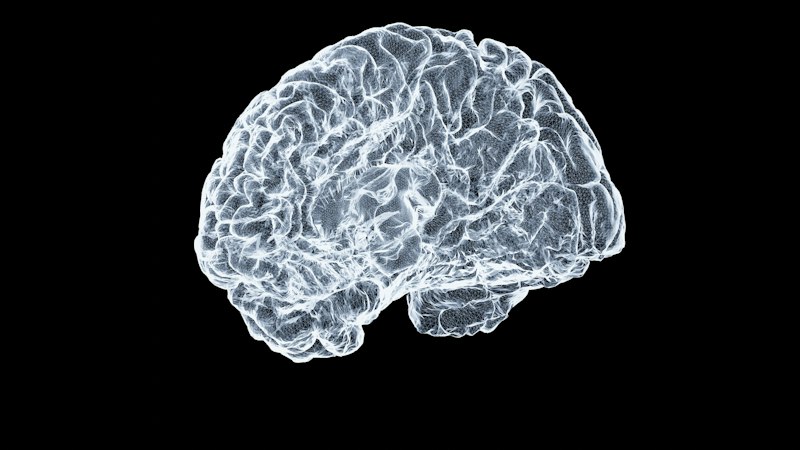
The Retinotopic Map is one of the most fundamental and elegant organizational principles of the mammalian visual system. In essence, it describes the precise, spatial arrangement where the visual field—the world we see—is systematically projected, point-for-point, onto the surface of the brain’s primary visual cortex, known as V1. This mapping ensures that neighboring points in the external world are processed by neighboring neurons in the cortex. This principle is not a simple photographic reproduction, but rather a complex transformation that prioritizes information density and relevance, forming the essential foundation upon which all conscious visual perception is built.
The mechanism underpinning the Retinotopic Map begins with the sensory input received by the photoreceptor cells in the Retina at the back of the eye. Electrical signals generated here travel along the optic nerve, relay through the lateral geniculate nucleus (LGN) of the thalamus, and finally arrive at the cortical receiving area, the Primary Visual Cortex (V1), located in the occipital lobe. Crucially, the spatial relationships inherent in the visual scene are maintained throughout this journey. If two objects are adjacent in the visual field, the corresponding neural activity they generate will activate adjacent populations of neurons in V1, establishing a reliable neural representation of the external world.
While the map preserves spatial proximity, it is not an isomorphic, one-to-one scaling. The representation is highly distorted to accommodate the varying resolution capabilities of the retina. The most critical area of the retina, the fovea, which is responsible for high-acuity central vision, occupies a disproportionately large area of the cortical surface compared to the peripheral regions. This differential allocation of neural real estate is known as the cortical magnification factor and is a defining characteristic of the retinotopic organization, reflecting the brain’s investment in processing the most detailed information available.
Fundamental Principles: Organization and Structure
The organization of the Retinotopic Map is characterized by a precise form of Topographical Organization, meaning the physical location of the stimulus in space directly correlates with the physical location of its processing center in the brain. This structure is highly efficient, allowing the brain to process spatial relationships quickly and integrate features like color, motion, and form that are essential for coherent perception. The map is geometrically complex, involving inversions and flips along the visual pathway. For instance, the image projected onto the retina is inverted and reversed, and this mapping is maintained as the signals project through the LGN and into V1.
A key structural feature is the division of the map along the calcarine sulcus within the occipital lobe. The upper bank of this sulcus typically represents the lower half of the Visual Field, while the lower bank represents the upper half. Furthermore, the entire map is contralateral: the left half of the visual field is mapped onto the right hemisphere’s V1, and the right half of the visual field is mapped onto the left hemisphere’s V1. This crossed representation ensures that sensory information from both eyes is integrated and processed by the opposite side of the brain, a pattern common throughout much of the sensory and motor systems.
The concept of the Magnification Factor is central to understanding the functional significance of the retinotopic structure. The high density of cones in the fovea—the central fixation point—provides the sharpest vision. To support this high resolution, the cortical region dedicated to the fovea is dramatically expanded. A tiny area of the retina might command many square millimeters of cortical tissue, whereas a much larger area of the peripheral retina might only occupy the same amount of space. This immense investment of neural resources highlights the behavioral importance of high-acuity central vision for tasks ranging from reading to object recognition.
Historical Discovery and Early Research
The initial evidence for the retinotopic organization of the human brain emerged not from controlled laboratory experiments, but tragically, from clinical observations during wartime. During World War I, Japanese ophthalmologist Tatsuji Inouye and British neurologist Gordon Holmes independently studied soldiers who had sustained bullet wounds to the occipital lobe. They meticulously correlated the specific location and extent of the brain injury with the precise areas of blindness, or scotomas, experienced by the soldiers in their visual fields.
Inouye and Holmes were able to deduce that specific portions of the visual field corresponded reliably to specific anatomical regions within the Primary Visual Cortex. For example, damage near the occipital pole (the very back tip of the brain) resulted in central blindness, while damage further forward along the calcarine sulcus resulted in peripheral vision loss. These clinical mappings provided the first compelling, albeit rough, evidence that the visual world was spatially preserved in the neural architecture of the cerebral cortex, laying the groundwork for modern visual neuroscience.
Decades later, pioneering work by David Hubel and Torsten Wiesel using single-cell electrophysiological recordings in cats and monkeys provided the definitive experimental proof of retinotopy. By projecting light spots onto the animals’ retinas and recording the activity of individual neurons in V1, they confirmed that cells were spatially organized according to their receptive fields. Their foundational research in the 1960s not only confirmed the existence of the map but also revealed the functional architecture of V1, including the concepts of orientation columns and ocular dominance columns, which are superimposed upon the basic retinotopic structure.
The Mechanisms of Visual Processing
The processing of visual information within the retinotopic map involves several crucial steps that ensure high fidelity and efficiency. After the signal passes the LGN, it enters V1, where individual neurons possess specific receptive fields. A receptive field is the particular area of the visual field that, when stimulated, causes a response in a specific neuron. Due to the retinotopic arrangement, these receptive fields are systematically tiled across the cortical surface, ensuring complete coverage of the visual world.
Furthermore, V1 neurons are specialized to respond to elementary features of the visual scene, such as lines, edges, and orientations. This specialization is organized in a columnar fashion, where cells stacked vertically in the cortex share similar response properties. The retinotopic map dictates where the information originates, while the columnar organization dictates what specific feature of that location is being analyzed. This layered processing allows the brain to simultaneously identify both the location (“where”) and the characteristics (“what”) of visual stimuli.
This initial retinotopic representation serves as the gateway for all subsequent visual analysis. From V1, information is channeled into two major processing streams: the dorsal stream (often called the “where” or “how” pathway, dealing with spatial location and action) and the ventral stream (the “what” pathway, dealing with object recognition and identification). Critically, many of the areas higher up in the visual hierarchy (V2, V3, etc.) also maintain their own, though progressively more complex and abstract, retinotopic organization. These higher areas process larger sections of the visual field and integrate more complex features, moving away from the simple point-to-point correspondence of V1 toward invariant representations of objects.
A Real-World Example: Reading and Saccades
A perfect, everyday demonstration of the retinotopic map and its magnification factor in action is the simple act of reading a sentence in a book or on a screen. When a person reads, the eyes do not glide smoothly across the text. Instead, they make rapid, ballistic movements called saccades, interspersed with momentary fixations. During each fixation, the central point of vision (the fovea) is directed at a specific word or group of letters.
The application of the retinotopic principle during reading can be broken down step-by-step:
- Fixation and Foveal Input: When the eye fixates on a word, that word falls onto the fovea, the small area of the retina with the highest acuity.
- Cortical Magnification: Because the foveal input is mapped onto a vastly disproportionate area of the Primary Visual Cortex (V1), the letters being fixated upon receive the maximum possible computational power for detailed analysis.
- Peripheral Gaze: Words just outside the fovea, in the parafoveal region, fall onto the peripheral retina. While these words are still represented retinotopically in V1, they occupy far less cortical space, meaning their detail is processed much less efficiently.
- Saccadic Planning: Information derived from the less detailed peripheral representation is often used to plan the next saccade, guiding the eye rapidly to the next relevant fixation point.
- Dynamic Mapping: Every time a saccade occurs, the entire visual input shifts, and the specific population of neurons activated in V1 changes instantly, yet the brain seamlessly merges these disparate snapshots into a continuous, stable visual experience.
This example illustrates how the unequal allocation of V1 resources, driven by the retinotopic structure, optimizes a complex, high-speed cognitive function like reading by prioritizing central, detailed input.
Significance and Impact
The understanding of the Retinotopic Map has profound significance, serving as a cornerstone for both theoretical and clinical neuroscience. Theoretically, it validates the concept of modularity in the brain, demonstrating how large-scale sensory systems employ topographical organization to efficiently encode spatial information. It provides a reliable framework for understanding how the brain transitions from raw sensory input to constructed visual perception, highlighting the necessary transformation that occurs between the retinal image and the cortical representation.
In clinical practice, the map is invaluable for localizing neurological damage. Detailed knowledge of the retinotopic organization allows neurologists and ophthalmologists to accurately predict the location and extent of a lesion in the visual pathway based solely on the patient’s symptoms, such as specific blind spots (scotomas). Functional neuroimaging techniques, particularly fMRI, utilize the principle of retinotopy to precisely map the boundaries of visual areas in living subjects, a process often referred to simply as “retinotopy.”
Furthermore, the retinotopic principle is critical in the development of advanced visual prosthetics. Devices designed to restore sight, such as retinal or cortical implants, must be engineered to stimulate the appropriate neural tissue in a spatially organized manner that respects the underlying map. By stimulating the correct location in the cortex, researchers aim to evoke the perception of light or form in the corresponding area of the Visual Field, offering hope for individuals with severe vision loss due to retinal degeneration or optic nerve damage.
Connections and Relations
The study of the Retinotopic Map belongs primarily to the subfields of Sensory Psychology and Cognitive Neuroscience. It is part of a broader category of sensory mapping principles found throughout the brain, demonstrating a fundamental organizational strategy employed by the central nervous system to deal with spatial data.
The Retinotopic Map is closely related to two other major topographical maps:
- Somatotopic Maps: Found in the somatosensory and motor cortices, this organization maps the surface of the body onto the brain. This is famously visualized by the cortical homunculus, where body parts are represented according to their density of innervation, much like the fovea’s magnification in the visual system.
- Tonotopic Maps: Located in the auditory cortex, this structure maps sound frequency onto the cortical surface. Neighboring neurons respond to neighboring frequencies, providing a spatial representation of pitch, analogous to the spatial representation of location in the visual cortex.
Beyond these sensory analogues, retinotopy is crucial for understanding the hierarchical nature of visual processing. While V1 contains the primary retinotopic map, subsequent visual areas (V2, V3, and beyond) also maintain progressively more complex representations. For instance, V2 contains a complete retinotopic map that is split and mirrored relative to V1. This chain of interconnected, retinotopically organized areas allows the brain to build increasingly abstract and globally integrated perceptions from the raw, spatially preserved input provided by the initial Retina-to-cortex projection. The stability and predictability of these maps are essential for theories regarding visual constancy and the binding problem in perception.