Retrieval Block: Why Your Brain Hides What You Know
Scientifically Reviewed · Dr. Marwa Abd-Alazim · October 17, 2026
Review Criteria & Clinical Standards
This content undergoes rigorous scientific peer-review and medical editorial standards at Arab Psychology Network to ensure clinical accuracy, validity, and compliance with evidence-based guidelines from leading psychological and healthcare authorities (APA / WHO).
The Core Definition of Retrieval Block
Retrieval block is a crucial concept within Cognitive Psychology, defined as a temporary but compelling inability to access and articulate information that is demonstrably stored within memory. This phenomenon is distinct from true forgetting, where the memory trace itself has decayed or been permanently lost. Instead, retrieval block suggests a failure in the dynamic process of Memory Retrieval, indicating that the necessary information is present and encoded, but access pathways are temporarily obstructed. The experience is often frustrating and immediate, characterized by the conviction that the required information is “just out of reach.”
The fundamental mechanism underlying retrieval block is generally understood to be interference. This interference arises when competing memory traces or irrelevant cues become highly activated during the retrieval attempt, effectively hijacking the cognitive resources needed to locate the target memory. The resulting blockage is not random; rather, it often involves the intrusion of closely related, but ultimately incorrect, information. For instance, attempting to recall the name of a familiar acquaintance might result in the persistent recall of a similar-sounding name belonging to a different person, suggesting a competition between high-priority, yet erroneous, memories.
Understanding retrieval block requires acknowledging memory as an active, constructive process, rather than a passive storage system. When a retrieval cue is presented, the brain engages in a complex search operation that activates numerous associated pathways. If the signal-to-noise ratio is poor—meaning the target memory signal is weak, or the noise from competing memories is too strong—the system defaults to a blocked state. This state highlights the necessity of successful inhibitory control mechanisms, which must actively suppress competing traces to allow the target information to surface cleanly, a process that frequently fails during a block episode.
Historical Foundations and Early Research
The formal investigation into retrieval block began in earnest with the pioneering work of psychologists M. M. Gruneberg and M. J. Sykes in 1971. Their foundational paper described and formalized the phenomenon, moving it from anecdotal observation into the realm of rigorous experimental psychology. Before their work, instances of failed recall were often broadly categorized under the umbrella of Forgetting, with less emphasis placed on the transient nature and specific mechanisms of temporary access failure. Gruneberg and Sykes introduced experimental evidence demonstrating that the difficulty in retrieving information, particularly in controlled learning environments, was not due to poor initial learning or storage decay, but rather the presence of active, conflicting cues.
Their research often involved tasks where participants learned lists of items and were then asked to recall them, sometimes while being presented with misleading or similar cues. They proposed that the difficulty experienced by participants was directly attributable to the existence of interfering information—either material learned subsequently (retroactive interference) or material learned previously (proactive interference)—that conflicted with the desired target information. This interference was conceptualized as a physical “blockage” preventing the proper activation and selection of the correct memory trace, thereby establishing retrieval block as a distinct concept separate from simple memory lapse.
The seminal contribution of Gruneberg and Sykes was shifting the focus of memory research from storage capacity to retrieval dynamics. By identifying interference as the core mechanism, they laid the groundwork for future studies investigating the role of cognitive control and inhibitory processes in memory success. This historical context positioned retrieval block as a critical indicator of the complexity of memory access, emphasizing that memory failure can often be a consequence of the brain’s internal conflict resolution mechanisms failing under pressure from highly activated, non-target memories.
Cognitive Mechanisms Underlying Retrieval Block
Retrieval block is a highly complex process modulated by several interacting cognitive functions, including activation, Inhibition, and executive control. Activation refers to the neural process by which a target memory is brought to a state of readiness, making it available for conscious recall. During a block, the target memory may have a low level of activation, or, crucially, competing, incorrect memories may possess an equivalent or even higher level of activation, creating a state of competitive overload where the correct item cannot be selected. This balance between activating the correct information and suppressing the incorrect information is delicate and prone to failure when cognitive load is high.
Inhibition is arguably the most critical process related to overcoming or succumbing to a retrieval block. Inhibition involves the active suppression of irrelevant or interfering information. When a person attempts to recall a specific item, the cognitive system must inhibit all closely associated items that are incorrect but highly activated. If this inhibitory mechanism fails or is insufficient, the competing information persists, directly causing the block. Research into phenomena like Retrieval-Induced Forgetting (RIF) demonstrates the power of inhibition, where the successful retrieval of one item actively suppresses related items, suggesting that retrieval success relies heavily on efficient, systematic suppression of alternatives.
Furthermore, the roles of retrieval cues and context are undeniable factors in determining the severity and occurrence of retrieval block. Retrieval cues are external or internal stimuli that trigger the memory search. When cues are too general, ambiguous, or strongly associated with multiple memories, the likelihood of interference increases exponentially. Similarly, context, referring to the environment, emotional state, or mental framework present during encoding and retrieval, plays a powerful role. If the retrieval context differs significantly from the encoding context, the memory may be harder to access—a phenomenon known as context-dependent memory—making the individual more vulnerable to blockages caused by interference from currently activated, but irrelevant, contextual information.
Neural Correlates and Brain Activity
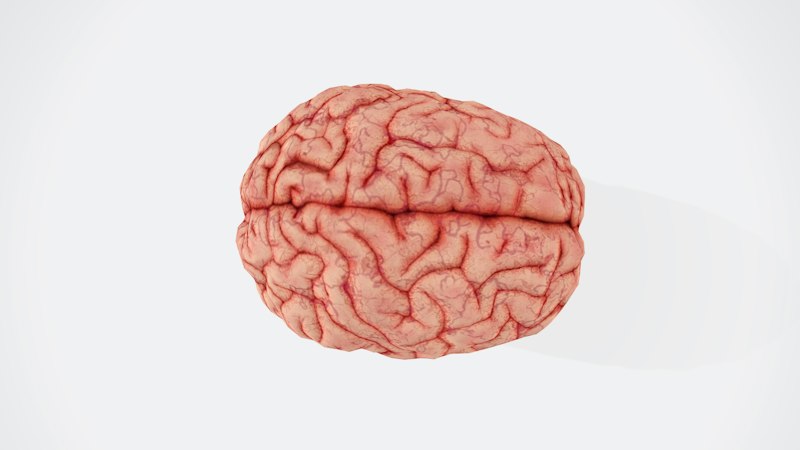
Neuroscientific investigations using fMRI and EEG have begun to localize the brain regions involved in the successful resolution, or failure, of retrieval attempts, providing concrete evidence for the interplay of activation and inhibition. Studies have consistently implicated the Prefrontal Cortex (PFC), particularly its lateral and superior regions, as central to executive control processes necessary to manage retrieval block. The PFC is responsible for monitoring retrieval outcomes, detecting conflicts, and implementing inhibitory control. Increased activity in the PFC during difficult retrieval attempts suggests the brain is actively exerting effort to suppress interfering thoughts and guide the search towards the desired memory trace.
In conjunction with the PFC, the Hippocampus, a structure vital for the formation and retrieval of episodic and relational memories, is also highly relevant. While the hippocampus is critical for initially binding the elements of a memory together (encoding), its activity during retrieval is crucial for reconstructing the memory based on partial cues. Some research suggests that during a retrieval block, the synchronization or communication between the hippocampus and the neocortex is temporarily compromised, failing to adequately integrate the contextual details needed to differentiate the target memory from its competitors. This failure in relational processing can lead to the persistence of highly-activated, but structurally similar, interfering memories.
Moreover, subcortical structures such as the amygdala have been studied in relation to retrieval block, especially when retrieval attempts are emotionally charged or highly stressful. Stress hormones can modulate the consolidation and retrieval processes, sometimes enhancing the retrieval of emotional memories while simultaneously impairing the recall of neutral information, potentially inducing blockages in non-emotional domains. The overall neural picture points toward retrieval block being an outcome of a transient systemic failure: a breakdown in the communication between the control center (PFC) and the memory storehouse (hippocampus), exacerbated by the high activation of competing information.
A Practical Illustration
A common and relatable scenario illustrating retrieval block occurs when attempting to introduce two people whose names are similar, or when encountering a person you know well in an unfamiliar context. Imagine attending a professional conference and needing to introduce your current colleague, Dr. Elaine Harris, to a potential client. You have known Dr. Harris for years, yet when you open your mouth, you can only recall the name of your former colleague who left the company six months ago, Dr. Eleanor Harrison. The intense momentary confusion and inability to retrieve the correct name, despite knowing it perfectly well moments earlier, exemplify a classic retrieval block.
The application of the psychological principles to this scenario can be broken down into clear steps. First, the intention to retrieve Dr. Harris’s name activates the memory trace. Second, because of the high degree of phonological and structural similarity, the memory trace for Dr. Harrison (the interfering item) is also highly activated, perhaps even more so due to the novelty and stress of the introduction setting. Third, the cognitive system, specifically the executive control mechanism governed by the prefrontal cortex, attempts to inhibit the interfering name, Dr. Harrison. The retrieval block occurs precisely when this Inhibition fails, causing the incorrect name to persist at the forefront of consciousness, effectively blocking access to the correct name.
The resolution of the block typically occurs moments later, often when attention is diverted or when a new, more effective retrieval cue (such as recalling the first letter of the name or an event shared with Dr. Harris) is consciously or unconsciously engaged. This eventual successful retrieval confirms that the information was not lost, but merely inaccessible due to transient interference. This practical example underscores that retrieval block is often experienced with information that is highly familiar and well-learned, demonstrating the power of competing traces over weak or lost memories.
Significance in Psychological Theory and Practice
Retrieval block holds immense theoretical significance for the field of psychology, primarily by refuting simplistic views of memory as a static repository. The existence of the block underscores that remembering is an effortful, dynamic, and reconstructive process requiring continuous cognitive regulation. It demonstrates that the failure to recall is not always a storage problem but frequently an access problem, highlighting the crucial role of executive functions in successful memory performance. This understanding has propelled research into how cognitive decline and neurological disorders affect the control mechanisms necessary to suppress interference.
In applied settings, the concept of retrieval block is critical across several domains. In clinical psychology, understanding retrieval difficulties helps distinguish between temporary blockages and permanent memory loss associated with conditions like dementia or amnesia. Therapeutic interventions can then be designed to strengthen executive control and improve cueing strategies rather than focusing solely on re-encoding lost information.
The principles derived from studying retrieval block are also highly applicable in forensic psychology and education. In the context of eyewitness testimony, retrieval block helps explain why witnesses might struggle to recall details under pressure, especially if suggestive questioning introduces interfering information. In education, optimizing learning involves minimizing interference; thus, study schedules and instructional design often incorporate distributed practice and varied contexts to reduce the likelihood of proactive and retroactive interference that can lead to retrieval blocks during high-stakes exams. The application of these insights aids in creating learning environments that promote robust and accessible Human Memory traces.
Connections to Related Memory Phenomena
Retrieval block is situated firmly within the broader subfield of Cognitive Psychology, specifically concerning memory failures and access mechanisms. It shares close conceptual ties with several related phenomena, the most famous being the Tip-of-the-Tongue (TOT) State. While often used interchangeably in popular discourse, the TOT state is generally considered a specific, highly frustrating subjective experience of retrieval block where partial information (like the first letter or number of syllables) is available, strongly indicating that the target memory is highly activated but temporarily selection-blocked. Retrieval block is the broader, objective failure of access, whereas TOT is the subjective, partial awareness of that failure.
Furthermore, retrieval block is intrinsically linked to Proactive and Retroactive Interference. Proactive interference occurs when older memories interfere with the retrieval of newer ones, while retroactive interference occurs when newer information impedes the retrieval of older memories. These two types of interference provide the raw material—the competing memory traces—that the inhibitory mechanisms fail to suppress, thereby causing the block. The block itself is the momentary cognitive outcome of this underlying interference conflict.
Finally, retrieval block contrasts with, but informs, the concept of Retrieval-Induced Forgetting (RIF). RIF is an active, often long-lasting form of forgetting where the intentional, successful retrieval of one item causes the long-term suppression (inhibition) of related, non-retrieved items. Retrieval block, conversely, is a transient failure to retrieve the target item due to the *failure* of inhibition. Studying both phenomena together provides a complete picture of the dynamic tension between activation and suppression that governs all successful and unsuccessful memory operations.