Genetic Reversion: Why Ancestral Traits Reappear
Scientifically Reviewed · Dr. Marwa Abd-Alazim · August 21, 2026
Review Criteria & Clinical Standards
This content undergoes rigorous scientific peer-review and medical editorial standards at Arab Psychology Network to ensure clinical accuracy, validity, and compliance with evidence-based guidelines from leading psychological and healthcare authorities (APA / WHO).
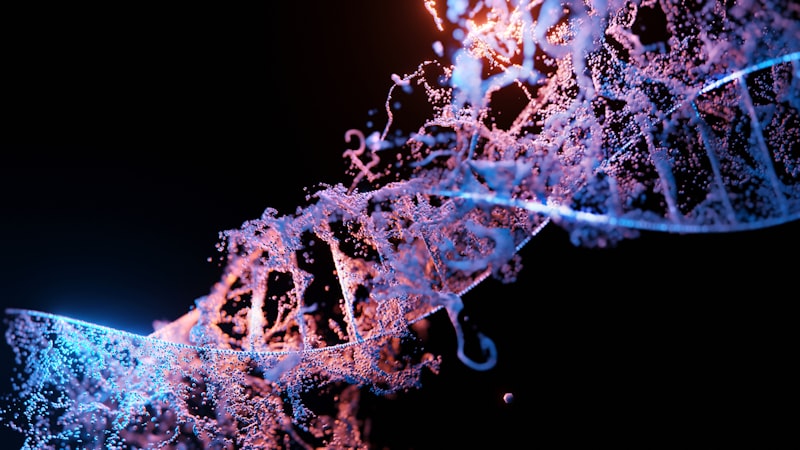
Definition and Core Mechanism of Reversion
Reversion, in the context of genetics and hereditary traits, refers specifically to the phenomenon where an offspring displays characteristics or traits that were not evident in the immediate parents but were present in a more distant ancestor. It is fundamentally defined as a hereditary trait which has not expressed itself in the parent, allowing offspring to look more like a great-great grandfather or other distant relative than anyone in the immediate family unit. This concept is distinct from typical dominant-recessive inheritance patterns, as it often involves traits that have been dormant across multiple generations, sometimes suggesting a temporary evolutionary setback or the reemergence of ancestral characteristics.
The core mechanism behind reversion centers on the complex interplay between the genotype and the phenotype. While the genetic information (the genotype) for a specific ancestral trait may persist within the lineage, its physical manifestation (the phenotype) is suppressed or masked by other, more dominant or recently acquired genes across successive generations. Reversion occurs when the specific combination of alleles necessary for the expression of that ancient trait is reunited in the germline of the offspring. This often involves polygenic traits where multiple genes interact, or the deactivation of suppressor genes that previously prevented the expression of the latent characteristic.
The key idea differentiating reversion from standard inheritance is the depth of the skip in generations. It implies that the underlying genetic machinery for traits considered obsolete or dormant remains viable, hidden within the vast complexities of the genome. While the term Reversion is sometimes used interchangeably with Atavism, the latter term usually carries a stronger connotation of the reappearance of traits that were present in very remote evolutionary ancestors (e.g., developing a tail structure), whereas reversion often describes the sudden reappearance of traits found only a few generations back, perhaps involving specific facial features, hair color combinations, or specific morphological characteristics.
Historical Roots: Darwin, Galton, and Mendelian Genetics
The concept of reversion gained significant attention during the 19th century, particularly within the framework of evolutionary theory. Charles Darwin, in his extensive work on variation and natural selection, frequently observed instances of reversion in domesticated animals, such as pigeons and fowl, where selective breeding caused certain ancestral characteristics to suddenly reappear in the offspring. Darwin viewed these events as strong evidence supporting the theory of descent with modification, suggesting that organisms retain the latent genetic blueprint of their forebears, which occasionally surfaces when conditions or genetic combinations permit.
Following Darwin, early quantitative geneticists, including Sir Francis Galton, explored the statistical aspects of inheritance, particularly focusing on the concept of “regression to the mean.” While Galton’s work on regression dealt primarily with the tendency of extreme traits in parents to average out in the offspring, it laid critical groundwork for understanding how traits might skip generations or revert to a mean, albeit often confusing the statistical phenomenon with true genetic reversion. The historical context provided an initial, often imprecise, framework for understanding how traits could be inherited without immediate expression.
The true mechanistic understanding of reversion became clearer with the rediscovery and acceptance of Gregor Mendel’s laws of inheritance. Mendelian inheritance provided the necessary vocabulary—dominant and recessive alleles—to explain simple cases of trait skipping. While simple recessive traits skipping one generation is commonplace, true reversion, involving multiple generations and complex traits, required the appreciation of linked genes, incomplete penetrance, and epigenetics, concepts that would only fully develop in the 20th century. Nonetheless, the shift from blending inheritance theories to particulate inheritance was crucial for conceptualizing how genetic material could remain intact and unexpressed for long periods.
The Biological Principle: Dormant Genes and Atavism
The biological reality underlying reversion is complex and touches upon principles of developmental biology and molecular genetics. When a trait lies dormant, it is often because the necessary genetic instructions are present but are not being properly transcribed or translated into functional proteins, a phenomenon known as incomplete penetrance or variable expressivity. Environmental factors or the presence of modifier genes can also contribute to the suppression of a specific phenotype, ensuring that the trait remains hidden across several generations until the specific inhibitory factors are absent in a subsequent pairing.
In more dramatic instances of reversion, the term Atavism is often applied. Atavistic traits are those that represent characteristics of phylogenetically distant ancestors, often millions of years old, rather than merely a few generations back. Examples include the rare birth of human infants with vestigial tails, or the occasional development of supernumerary nipples in humans, a trait common in early mammalian ancestors. These events demonstrate that the genetic coding for ancestral structures is remarkably stable and conserved within the genome, even if the necessary regulatory pathways for their development have been silenced by evolution.
The mechanism by which these ancient genes are reawakened involves mutations in regulatory genes, rather than the structural genes themselves. Structural genes responsible for building the ancestral trait might still be functional, but their expression is typically suppressed by upstream regulatory elements that evolved later. Reversion or atavism can occur if a specific mutation or a unique genetic recombination event damages or bypasses the silencing mechanism, allowing the ancient, non-expressed developmental pathway to reactivate, thereby causing the offspring to manifest a trait unseen in recent ancestry.
Practical Illustration in Human Phenotypes
To illustrate reversion, consider a common scenario involving complex human physical characteristics, such as specific patterns of hair growth or a unique facial structure. Imagine a family where both immediate parents have dark hair, brown eyes, and smooth foreheads, typical of their respective families. However, their child is born with bright red hair, distinctive high cheekbones, and slightly lighter eyes—a combination that is entirely novel within the immediate family structure.
Upon reviewing family history, the parents discover that the child’s great-great-grandmother, who lived over a century prior, possessed this exact combination of features. In this practical example, the trait for red hair (a highly recessive trait often requiring specific allelic combinations) and the genes for the unique bone structure lay dormant in the intervening generations. While the parents carried the necessary recessive alleles, their own genotype contained sufficient dominant genes to mask these characteristics.
The “How-To” of this reversion application is understood through step-by-step genetic recombination:
- The great-great-grandmother possessed the full expression of the ancestral trait (e.g., homozygous for red hair and the specific bone structure genes).
- Her children inherited the genes, but perhaps only half the necessary recessive alleles, resulting in a masked phenotype (dark hair, typical features).
- Subsequent generations continued to carry these recessive genes, masked by the influx of dominant traits from spouses outside the lineage.
- The immediate parents, unbeknownst to them, are both carriers of the specific combination of dormant recessive alleles (the red hair allele, the high cheekbone alleles).
- Through random genetic shuffling during conception, the offspring receives the precise homozygous or polygenic combination required to fully express the ancestral phenotype, resulting in the “reversion” to the great-great-grandmother’s appearance.
Significance in Evolutionary Psychology and Genetics
The study of reversion and atavism holds profound significance for both evolutionary biology and psychological fields like behavioral genetics and Evolutionary psychology. In genetics, these phenomena confirm the remarkable stability of genetic information across evolutionary time. They demonstrate that selection pressure operates primarily on regulatory mechanisms—the switches that turn genes on and off—rather than always eliminating the structural genes themselves. Understanding how these ancient pathways are conserved provides critical insight into human development and potential vulnerabilities to genetic disorders that might result from the reactivation of normally suppressed pathways.
From the perspective of Evolutionary psychology, the concept of reversion is often invoked when discussing behavioral tendencies. While physical reversion is straightforward, behavioral reversion suggests that certain primal or ancestral behavioral patterns—such as specific fear responses, intense social bonding mechanisms, or even aggressive reactions—may lie dormant for generations, only to be triggered by specific modern environmental stressors or unique psychological conditions. Although harder to prove genetically, the hypothesis suggests that the underlying neural architecture for these behaviors remains intact, ready to express itself under the right circumstances.
Furthermore, reversion plays a role in applied fields such as conservation biology and agriculture. Breeders often observe the unexpected reappearance of wild-type traits in highly domesticated or cultivated species, forcing them to understand the underlying genetic load and the stability of specific desired traits. By studying the patterns of reversion, scientists can better predict the long-term stability of genetically modified or selectively bred organisms, ensuring that desirable traits do not unexpectedly disappear or revert to less functional ancestral forms.
Reversion in Behavior and Psychological Traits
While the most classical definitions of reversion focus on physical characteristics (phenotypes), the analogy extends into the realm of behavioral genetics. Psychological traits, such as temperament, specific cognitive biases, or even predisposition toward certain mental health conditions, are highly polygenic and follow complex inheritance patterns. It is hypothesized that just as physical traits skip generations, specific behavioral tendencies linked to ancestral adaptive strategies might also skip generations, remaining latent until the precise genetic and environmental conditions align for their expression.
For example, a specific pattern of extreme introversion or a unique talent for spatial reasoning might suddenly manifest in a child, despite being absent in both parents and immediate grandparents, only to be traced back to a great-aunt or great-uncle. This behavioral reversion suggests that the specific genetic architecture underpinning complex psychological characteristics, which might have been adaptive in a previous environmental context, was carried recessively by the intervening generations. The study of epigenetic inheritance further complicates this picture, suggesting that environmental factors experienced by ancestors might sometimes influence the expression potential of genes in later generations without altering the core DNA sequence.
It is important to distinguish psychological reversion from psychological regression. Regression is a psychoanalytic defense mechanism where an individual, facing stress or trauma, retreats to an earlier developmental stage of behavior (e.g., an adult throwing a tantrum). In contrast, behavioral reversion, as discussed here, is a strictly hereditary mechanism where an individual manifests a previously unseen, complex, innate psychological trait that belonged to a distant ancestor, reflecting a genetic resurgence rather than a coping strategy. This distinction is crucial for understanding the difference between learned or defensive behavior and inherited predisposition.
Related Concepts and Broader Context
Reversion is closely related to several other key psychological and biological concepts. The most significant connection is to Atavism, as noted previously, which describes the more dramatic, evolutionary resurgence of extremely ancient traits. Another related term is Genetic Load, which refers to the total burden of deleterious or sub-optimal recessive genes carried recessively within a population. Reversion events are, in many ways, manifestations of this genetic load when dormant alleles surface.
The broader category of psychology to which the study of reversion is most relevant is Behavioral Genetics and, secondarily, Evolutionary psychology. Behavioral genetics seeks to understand the role of genetic factors in human behavior and cognition, providing the framework for analyzing how specific complex traits can be inherited and expressed non-linearly. Evolutionary psychology utilizes the principle that the human mind is composed of adaptations that evolved to solve problems faced by ancestral hunter-gatherers, suggesting that reversion to ancient cognitive or emotional patterns may occasionally occur when specific genetic or environmental triggers are met.
Understanding reversion also necessitates knowledge of Epigenetics, the study of heritable changes in gene expression that do not involve changes to the underlying DNA sequence. Epigenetic mechanisms, such as DNA methylation or histone modification, can silence genes across generations. A breakdown or change in these epigenetic markers could potentially “unsilence” an ancestral gene, offering a molecular explanation for some forms of hereditary reversion that traditional Mendelian inheritance struggles to fully explain, thus tying the fields of genetics, evolution, and psychology together in a comprehensive approach to understanding complex human traits.