Cognitive Dissonance: Why Your Mind Battles Itself
Scientifically Reviewed · Dr. Marwa Abd-Alazim · October 23, 2026
Review Criteria & Clinical Standards
This content undergoes rigorous scientific peer-review and medical editorial standards at Arab Psychology Network to ensure clinical accuracy, validity, and compliance with evidence-based guidelines from leading psychological and healthcare authorities (APA / WHO).
Core Definition of Cognitive Dissonance
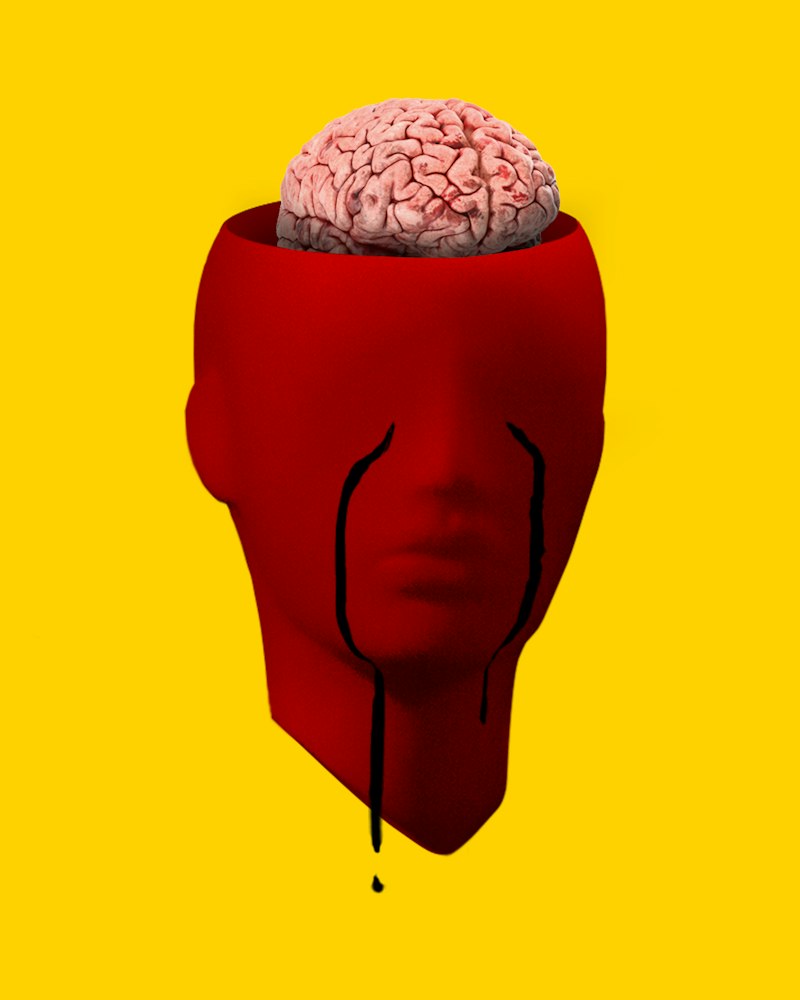
Cognitive dissonance is a powerful psychological phenomenon described as the mental stress or discomfort experienced by an individual who holds two or more contradictory beliefs, ideas, or values, or when they engage in an action that conflicts with one of their fundamental beliefs. It represents an internal conflict that arises when our thoughts (cognitions) are inconsistent with one another, or when a behavior is inconsistent with an attitude. This state of imbalance is not merely intellectual disagreement; rather, it is experienced as a profound, psychologically aversive state, akin to hunger or pain, which motivates the individual to seek reduction or resolution.
The fundamental principle underpinning the theory is the human drive for internal consistency. We are motivated to maintain coherence among our various thoughts, beliefs, and actions, as consistency provides a stable and predictable view of the self and the world. When inconsistency, or dissonance, is detected, the resulting psychological tension creates a strong pressure to eliminate the conflict. This elimination process often involves altering one of the conflicting cognitions, changing the behavior, or introducing new cognitions that rationalize the discrepancy, thereby restoring psychological equilibrium.
The term “cognitions” in this context is broad, encompassing not only abstract beliefs or opinions, but also specific knowledge about oneself, one’s behavior, and the environment. For example, knowing that one is a kind person is a cognition; knowing that one just yelled at a cashier is a contradictory cognition. The magnitude of the dissonance experienced depends heavily on the importance of the cognitions involved and the perceived ratio of conflicting versus consonant elements. The greater the importance and the higher the ratio of conflicting beliefs, the more intense the drive to reduce the resulting discomfort will be.
The Historical Foundation and Key Architects
The theory of cognitive dissonance was formally proposed by American social psychologist Leon Festinger in 1957. Although related concepts had been explored in previous psychological research, Festinger provided the first comprehensive, testable, and influential framework for understanding how inconsistency drives psychological change. His work marked a significant shift in Social Psychology, moving away from purely behavioral models toward models emphasizing internal cognitive processes and motivational states.
The origins of the theory can be traced back to Festinger’s earlier empirical observations, particularly his study with colleagues involving a small, doomsday cult known as “The Seekers.” This group firmly believed that the world would end on a specific date, and they made drastic life changes based on this prediction. When the prophesied date passed without incident, the researchers observed a phenomenon counterintuitive to common sense: instead of abandoning their belief, many members actually increased their devotion and attempted to recruit more followers. Festinger theorized that the immense psychological discomfort (dissonance) caused by the clear disconfirmation of their prophecy was so overwhelming that they had to rationalize the failure by adding consonant cognitions, such as believing that their faith had saved the world.
Before Festinger’s explicit formulation, other researchers had touched upon the concept of balance and consistency. Most notably, Fritz Heider’s Balance Theory (1946) posited that people prefer harmonious psychological structures, particularly regarding relationships between individuals and objects. However, Festinger’s contribution was the introduction of the motivational element—the idea that the inconsistency itself creates a measurable, uncomfortable drive state that forces attitude or behavior modification, making Cognitive Dissonance a central explanation for unexpected instances of attitude change.
Mechanisms of Dissonance Reduction
When an individual experiences cognitive dissonance, they instinctively employ various strategies aimed at reducing the uncomfortable tension. The choice of strategy often depends on which cognition is easier to modify or which modification results in the quickest return to consistency. Understanding these mechanisms is essential for grasping the theory’s predictive power regarding human behavior and irrationality. The three primary methods for dissonance reduction are changing one of the dissonant cognitions, adding new consonant cognitions, and reducing the importance of the conflicting cognitions.
Changing a dissonant cognition is the most direct route to resolution, though often the most difficult, especially if the cognition involves a long-held belief or a past behavior that cannot be undone. For example, if a person believes strongly in environmentalism (Cognition A) but drives a gas-guzzling truck (Cognition B), the easiest way to resolve the conflict might be to sell the truck. However, if the truck is necessary for work, changing the behavior is impractical. In such cases, the person might modify the belief, perhaps deciding that “environmental regulations are too strict anyway,” thereby reducing the severity of Cognition A.
A more common strategy is to add new cognitions that are consonant with the conflicting behavior, effectively justifying the action. In the truck example, the individual might introduce the thought: “Driving this truck is acceptable because I volunteer every weekend cleaning up local parks.” This new cognition reduces the overall ratio of dissonance by providing a positive, justifying element that mitigates the negative behavior. This mechanism explains why people often seek out information that confirms their choices after a difficult decision (post-decision dissonance).
Finally, individuals can minimize the importance of the conflicting elements. If the conflict is deemed unimportant, the psychological discomfort diminishes. The truck owner might trivialize the impact of their vehicle by concluding, “My one truck contributes only negligibly to global emissions; worrying about it is pointless.” This strategy involves downplaying the significance of the conflict rather than resolving the core inconsistency itself, often serving as a mental shortcut when the conflicting elements are too entrenched to be changed.
Illustrative Real-World Applications
One of the most relatable and often-cited real-world scenarios illustrating cognitive dissonance involves habits and behaviors that are known to be harmful, such as smoking or excessive consumption of unhealthy food. Consider an individual who smokes a pack of cigarettes daily. The core conflict lies between the knowledge of the health risks and the pleasure or addiction derived from the habit.
The conflicting cognitions are clear: Cognition 1 is, “I am a rational person who values long-term health and survival,” and Cognition 2 is, “I engage in the behavior of smoking, which is scientifically proven to cause cancer and early death.” The magnitude of this dissonance is high because both health and rationality are highly valued cognitions. The tension created by this fundamental contradiction demands immediate resolution, often in ways that seem irrational to an outsider.
The smoker typically applies one or more dissonance reduction strategies to continue the behavior without experiencing overwhelming anxiety. These strategies often involve adding consonant cognitions:
-
Minimizing Risk: The smoker might rationalize that the studies linking smoking to cancer are inconclusive, or that the risks are exaggerated (“My grandfather smoked two packs a day and lived to be 95”).
-
Adding Value: They may emphasize the stress-reducing benefits of smoking, arguing that the momentary relaxation gained outweighs the future health risks, or that the habit allows them to socialize effectively (“Smoking helps me manage my extreme work stress, which is also bad for my health”).
-
Trivializing the Behavior: They may decide that life is short and meant to be enjoyed, minimizing the importance of long-term health concerns in favor of immediate gratification, thereby reducing the perceived severity of the conflicting behavior. This continuous process of justification is what allows harmful habits to persist despite overwhelming contradictory evidence.
Research Paradigms: Classic Experiments
Festinger and his colleagues devised several elegant experimental paradigms to test the precise conditions under which dissonance arises and is resolved, providing strong empirical support for the theory. These studies focused primarily on areas like insufficient justification, effort justification, and post-decision dissonance, all of which remain foundational to Social Psychology research. These experiments were crucial because they demonstrated that attitude change could be manipulated internally, rather than solely through external reinforcement.
The most famous experiment, conducted by Festinger and Carlsmith in 1959, focused on induced compliance, often called the “dollar-versus-twenty-dollar” study. Participants were asked to perform extremely boring and repetitive tasks. Afterward, they were asked to lie to the next participant, telling them the tasks were fun and interesting. Crucially, participants were randomly assigned to receive either $1 (insufficient justification) or$20 (sufficient justification) for telling the lie. The findings were revolutionary: participants paid only $1 rated the boring task as significantly more enjoyable than those paid$20.
The explanation hinged on dissonance. Those paid $20 had an external justification for lying (the large payment), meaning their cognition “I lied” was consonant with “I received a large reward.” Thus, they experienced little dissonance. However, those paid only$1 lacked sufficient external justification for their lie, creating high dissonance: “I lied, but I had no good reason to.” To resolve this intense conflict, they changed the only cognition they could easily modify: their genuine attitude toward the task, convincing themselves that the task was genuinely interesting. This phenomenon of insufficient justification remains a powerful demonstration of Cognitive Dissonance leading to fundamental Attitude Change.
Significance in Social Psychology and Beyond
Cognitive dissonance theory is arguably one of the most significant and influential theories ever developed in Social Psychology. Its importance lies in its ability to explain seemingly irrational human behavior and, more critically, in its challenge to the prevailing behaviorist view that attitudes must precede behavior. Festinger’s work provided compelling evidence that the opposite is often true: we change our attitudes and beliefs to justify the behaviors we have already committed, highlighting the immense power of self-justification as a motivational force.
The practical applications of the theory span numerous fields. In marketing and sales, understanding post-decision dissonance (often called “buyer’s remorse”) is vital. Marketers often provide additional positive information about a product immediately after a purchase to reduce the buyer’s lingering doubts and reinforce their choice, increasing customer satisfaction and loyalty. Furthermore, the concept of effort justification is used in educational and training settings, where making people work hard for an outcome often leads them to value that outcome more highly, regardless of its objective quality.
In clinical psychology, dissonance principles underpin therapeutic approaches such as motivational interviewing. This technique intentionally heightens a client’s awareness of the discrepancy between their current behavior (e.g., substance abuse) and their fundamental life goals (e.g., being a responsible parent). By increasing this internal dissonance in a supportive environment, the therapist harnesses the client’s innate drive for consistency to motivate genuine and lasting behavioral change. The pervasive influence of the theory demonstrates its power as a tool for understanding how beliefs are maintained, justified, and ultimately transformed.
Theoretical Connections and Overlap
Cognitive dissonance belongs firmly within the realm of motivation and Social Psychology, specifically within the subfield concerned with attitudes and attitude change. It is one of several consistency theories that emerged in the mid-20th century, all sharing the core premise that humans are driven to minimize psychological inconsistency. However, it stands apart due to its strong emphasis on the aversive psychological arousal caused by the inconsistency.
The theory is often contrasted with Daryl Bem’s Self-Perception Theory (1967). Self-Perception Theory posits that people do not necessarily experience internal tension; rather, they simply infer their attitudes by observing their own behavior, especially when internal cues are weak or ambiguous. For instance, in the $1/$20 study, Bem argued that the $1 participants simply looked at their behavior (“I told the lie for almost no money”) and concluded, “I must have actually found the task interesting.” While both theories predict the same outcome (attitude change following behavior), dissonance attributes this change to the motivation to relieve internal tension, whereas self-perception attributes it to rational, cold observation. Research suggests that dissonance is more active when the conflicting cognitions involve highly important issues or beliefs.
Furthermore, dissonance heavily relates to broader models of Attitude Change, such as the Elaboration Likelihood Model (ELM). Dissonance provides a specific, motivational explanation for internal shifts in attitude, particularly those driven by insufficient justification or high effort. It helps explain why persuasive communication often fails if the recipient has already invested heavily in the contradictory belief. The strength of cognitive dissonance is its focus on the individual’s internal experience of conflict, providing a dynamic explanation for why individuals resist change and how they construct subjective reality to maintain a positive self-image.
Criticisms and Modern Refinements
Despite its profound influence, cognitive dissonance theory has faced significant theoretical and methodological criticisms over the decades. A primary criticism revolves around the ambiguity of the core construct: what exactly constitutes a “cognition,” and how can the internal state of “dissonance arousal” be reliably measured, independent of the behavioral outcomes it is supposed to predict? Critics argued that the theory lacked specificity regarding the conditions that cause dissonance to manifest as aversive arousal versus those that merely lead to rational self-observation.
In response to these criticisms, modern research has refined the theory, often integrating the role of the self-concept. The Self-Affirmation Theory, proposed by Claude Steele, suggests that dissonance is most intense when the conflict threatens an individual’s sense of moral integrity or competence. According to this view, people are motivated to reduce dissonance primarily to maintain the integrity of the self. If individuals are given an opportunity to affirm their self-worth in an unrelated domain (e.g., reflecting on their kindness or intelligence) before the dissonant act, the need to rationalize the specific conflict is reduced.
Contemporary research also utilizes neuroscientific methods to provide objective evidence for the internal arousal component. Studies employing fMRI technology have shown that regions of the brain associated with emotional distress and cognitive control, such as the anterior cingulate cortex (ACC) and the insula, show increased activity when participants are engaged in tasks designed to induce cognitive dissonance. These neurological findings provide physiological support for Festinger’s original premise that dissonance is indeed an aversive motivational state, reinforcing the theory’s standing as a robust explanation for human self-justification.