Right-Hemisphere Consciousness: Unlocking Your Hidden Mind
Scientifically Reviewed · Dr. Marwa Abd-Alazim · August 22, 2026
Review Criteria & Clinical Standards
This content undergoes rigorous scientific peer-review and medical editorial standards at Arab Psychology Network to ensure clinical accuracy, validity, and compliance with evidence-based guidelines from leading psychological and healthcare authorities (APA / WHO).
The Core Definition of Right-Hemisphere Consciousness
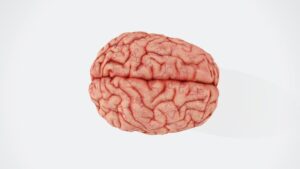
The concept of Right-Hemisphere Consciousness posits that the non-dominant half of the brain possesses its own distinct form of awareness, operating independently and often in parallel with the verbal, analytic consciousness housed in the left hemisphere. This assumption challenges earlier psychological models that largely equated conscious experience solely with linguistic capacity, which is predominantly controlled by the left side of the brain. While the right cerebral hemisphere lacks the robust ability to control speech and explicit communication, extensive research demonstrates its profound capacity for intricate non-verbal processing and integration of complex perceptual data, confirming a form of awareness that is rich, continuous, and vital for comprehensive cognitive function. This awareness is often described as holistic, focusing on the global structure and emotional context of stimuli rather than sequential, detail-oriented analysis.
Historically, the presence of consciousness in the right hemisphere was a topic of fierce debate, primarily because classic definitions of consciousness were inherently tied to the ability to articulate one’s internal state verbally. The fundamental mechanism revealed through clinical observation and experimental procedures demonstrates that consciousness does not necessitate linguistic expression. The right brain can perceive, interpret, form intentions, and react, even when the verbal centers of the left hemisphere are unable to report on these internal states. This mechanism highlights a crucial distinction between conscious awareness itself and the executive ability to communicate that awareness to others, establishing the right hemisphere as an equally important, though linguistically silent, partner in the total conscious experience of the individual.
The core principle behind this idea is functional specialization, where the right hemisphere is dedicated to specific, complex cognitive tasks that require rapid, holistic integration. These tasks include the processing of emotional tones (prosody) in speech, the swift recognition of familiar faces, and the interpretation of metaphors and humor. The right hemisphere processes the context, the feeling, and the overall picture, contributing a deep layer of non-verbal understanding that forms a significant portion of what we understand as subjective awareness. This integration of sensory and emotional data provides the necessary foundation for the complex thought processes involved in creativity and imagination, which are strongly associated with the right side of the brain.
Historical Foundations: The Split-Brain Studies
The definitive empirical evidence supporting the idea of Right-Hemisphere Consciousness emerged dramatically in the 1960s from the groundbreaking work conducted by neuroscientists Roger Sperry and Michael Gazzaniga. Their research focused on patients who had undergone a radical surgical procedure known as a corpus callosotomy, or “split-brain surgery,” as a last-resort treatment for intractable, severe epilepsy. This procedure involves severing the corpus callosum, the massive bundle of nerve fibers that connects the two cerebral hemispheres, effectively preventing communication between them. By isolating the hemispheres, Sperry and Gazzaniga were able to test the independent cognitive functions and awareness of the right brain for the first time in a controlled manner.
Prior to these studies, the left hemisphere was widely regarded as the dominant and primary seat of consciousness, largely due to its control over language and logical reasoning. The unique experimental setup with split-brain patients allowed researchers to present visual or tactile information exclusively to the right hemisphere, bypassing the verbal interpretation centers of the left hemisphere. The results were revolutionary: when an object was placed in the patient’s left hand (processed by the right hemisphere), the patient was unable to verbally identify the object, often stating they felt nothing or saw nothing. However, the right hand (controlled by the left hemisphere) could successfully retrieve the object from a group using only tactile cues, or the left hand could correctly point to a corresponding picture, clearly demonstrating that the right hemisphere had perceived, recognized, and remembered the stimulus, yet lacked the means to articulate this awareness verbally.
This historical research provided irrefutable proof that the right hemisphere possessed its own decision-making capacity and perceptive understanding, confirming that consciousness is not monolithic but rather distributed across the brain. Roger Sperry’s findings, which earned him the Nobel Prize in Physiology or Medicine in 1981, forced a fundamental re-evaluation of how consciousness and identity are defined within psychology and neuroscience, establishing the split-brain paradigm as the central pillar for understanding hemispheric specialization. The ability of the right hemisphere to respond meaningfully to stimuli without verbal access proved that an independent form of awareness existed, capable of sophisticated processing, even if it could not tell researchers what it knew.
Functional Lateralization and Non-Verbal Capabilities
The mechanism of functional lateralization explains the specific abilities attributed to the right-hemisphere consciousness. Unlike the left hemisphere, which manages sequential tasks, detailed analysis, and grammatical structure, the right hemisphere excels at tasks requiring simultaneous processing and the synthesis of information into comprehensive wholes. It is the primary center for the perception of spatial relationships, enabling us to understand depth, distance, and orientation within our environment. This specialization is crucial for tasks ranging from driving a car to interpreting complex architectural blueprints.
Furthermore, the right hemisphere is the undisputed master of non-verbal communication and emotional intelligence. It processes facial recognition and interprets the subtle cues of emotion conveyed through tone of voice (prosody), body language, and facial expressions. If the left hemisphere processes the literal meaning of the words “That was a great idea,” the right hemisphere simultaneously processes the sarcastic or genuine tone, determining the true intent of the speaker. This comprehensive, emotional filtering mechanism underscores why a purely linguistic definition of consciousness is inadequate, as the core of human social interaction and emotional awareness relies heavily on the right brain’s conscious processing abilities.
The right brain’s dominance in non-verbal cognition extends deeply into the realm of visual and auditory pattern recognition. It is responsible for shape/object recognition and the global perception of visual scenes, allowing rapid identification of complex stimuli. For instance, recognizing a melody or appreciating the composition of a painting is primarily a right-hemisphere function. This holistic processing capability is directly linked to the thought processes involved in creativity and imagination, where disparate elements are combined in novel ways to form new concepts or visual representations, suggesting that non-verbal consciousness plays a critical role in abstract thought and artistic production.
Real-World Manifestation: Artistic and Spatial Processing
A simple, relatable example illustrating the power of Right-Hemisphere Consciousness is navigating an unfamiliar environment or engaging in visual arts. Consider an individual who is driving through a new city without relying on verbal directions or GPS coordinates. The ability to form a comprehensive mental map, judge distances between cars, and intuitively select the correct route based on visual cues and global sense of direction is a clear manifestation of the right brain’s conscious spatial processing at work. The driver is consciously aware of their surroundings and making complex decisions, yet those decisions are based on visual, spatial relationships rather than internal verbal commands.
The “how-to” of this process involves several steps: First, the visual cortex sends raw data to the right hemisphere. Second, the right hemisphere rapidly synthesizes this information, creating a three-dimensional representation (a mental map) of the environment, processing all the spatial relationships simultaneously. Third, based on the goal (getting to the destination), the right hemisphere generates a non-verbal motor plan. Finally, this plan is executed without requiring detailed internal monologue; the driver simply “knows” to turn left or merge right. If the driver were asked mid-turn why they chose that specific moment to merge, they might struggle to articulate the precise calculation, stating only, “It felt right,” demonstrating a conscious process that bypasses the language centers entirely.
Another powerful example lies in the rapid recognition of complex stimuli, such as identifying a friend in a crowded room. This task involves quickly synthesizing countless details—facial structure, gait, clothing, and context—into a single, immediate recognition. This holistic, instantaneous understanding is characteristic of the right-hemisphere consciousness. When this capability is damaged, such as in cases of prosopagnosia (face blindness), the individual can verbally describe the features of a face but cannot integrate them into a recognizable whole, reinforcing the idea that the right brain provides the conscious, unifying perception necessary for complex pattern recognition.
Significance and Impact in Cognitive Psychology
The understanding of Right-Hemisphere Consciousness represents one of the most significant shifts in modern cognitive psychology, moving the field away from strictly modular, localized models of the mind towards a more integrated and distributed view of awareness. This concept is vital because it explains phenomena that were previously inexplicable under a language-centric model, particularly certain neurological disorders. For instance, patients suffering from unilateral neglect (following right hemisphere damage) may consciously ignore the entire left side of space, demonstrating that the right hemisphere is critical for consciously mapping and attending to the complete environment.
Its application today is extensive, particularly in clinical neuropsychology and rehabilitation. Stroke victims who have suffered damage to the left hemisphere often lose their ability to speak, but clinicians observe that their right hemisphere consciousness remains intact, allowing them to communicate needs and express emotions through non-verbal means, such as drawing, gesture, or interpreting the emotional tone of others. Therapies, therefore, often focus on activating and utilizing the intact right hemisphere functions to compensate for linguistic loss, employing creative arts or spatial tasks to facilitate recovery and communication.
In education and human development, the concept has influenced models emphasizing holistic learning and the cultivation of non-analytic skills. The understanding that the thought processes involved in creativity and imagination reside primarily in the non-verbal right brain has led to educational methodologies that prioritize visual learning, spatial reasoning, and artistic expression. This framework acknowledges that true cognitive mastery requires the effective integration of both the analytic, sequential processing of the left hemisphere and the intuitive, holistic awareness provided by the right-hemisphere consciousness.
Connections to Related Cognitive Theories
The concept of Right-Hemisphere Consciousness is intricately linked to several broader psychological theories, placing it firmly within the subfield of Cognitive Neuroscience. It strongly supports the Dual-Processing Theory, which posits that the mind operates through two distinct systems: System 1 (fast, intuitive, emotional, and non-conscious or sub-conscious) and System 2 (slow, deliberate, analytical, and conscious). The right hemisphere’s rapid, holistic awareness aligns closely with the intuitive processing power often attributed to System 1, though the split-brain research proves this awareness can be explicitly conscious, just non-verbal.
It also relates closely to the Global Workspace Theory (GWT) of consciousness, proposed by Bernard Baars. GWT suggests that consciousness acts as a “global workspace” or broadcasting system where information from specialized, unconscious modules (like visual processing or memory) is made globally available to the entire system. In the context of hemispheric consciousness, the GWT can be adapted to suggest that the right hemisphere maintains its own localized workspace, distinct from the left hemisphere’s workspace, especially when the connecting corpus callosum is severed. This allows both hemispheres to achieve conscious awareness of their specific inputs, even if only the left hemisphere can broadcast its findings verbally.
Finally, this topic is naturally contrasted with “left-hemisphere consciousness.” While the left hemisphere is characterized by its capacity for self-reflection, sequential logic, and verbal narrative—the classic definition of self-awareness—the right hemisphere provides the essential contextual awareness, emotional depth, and spatial grounding necessary for a full subjective experience. Both forms of consciousness are required for a complete, integrated personality, reinforcing the idea that consciousness is an emergent property arising from the complex interplay between specialized, yet interdependent, halves of the brain.
Assessment and Measurement Techniques
Ascertaining the presence and content of right-hemisphere consciousness often requires highly specialized experimental techniques designed to isolate the input to only one hemisphere. As noted in early observations, “Right-hemisphere consciousness can be ascertained by use of very simple tests,” primarily those that exploit the contralateral organization of the sensory and motor systems. The classic method involves the use of a tachistoscope, which presents visual stimuli (like words or pictures) to the right or left visual field for milliseconds (too fast for eye movement), ensuring the information is initially processed exclusively by the left or right cerebral hemisphere, respectively.
In clinical settings, the Dichotic Listening Task is a common technique used to assess hemispheric dominance for language and other functions. Participants listen to different auditory stimuli simultaneously in each ear. Since auditory pathways are predominantly crossed, the right ear input goes primarily to the left hemisphere, and the left ear input to the right hemisphere. By observing which ear’s stimuli the participant recalls or processes more effectively, researchers can infer the functional specialization and conscious processing ability of each side of the brain for specific tasks, such as emotional tone recognition (right-hemisphere dominance) versus verbal repetition (left-hemisphere dominance).
Furthermore, functional neuroimaging techniques, such as fMRI and PET scans, provide modern, non-invasive ways to visualize right-hemisphere activity during non-verbal tasks like mental rotation, spatial mapping, and facial emotion processing. These scans consistently show strong, localized neural activity in the right temporal and parietal lobes during these tasks, providing physical confirmation that complex, conscious processing is occurring in this hemisphere even in the absence of overt linguistic output, solidifying the modern acceptance of its independent awareness.