Cognitive Dissonance: Why Your Mind Craves Consistency
Scientifically Reviewed · Dr. Marwa Abd-Alazim · October 19, 2026
Review Criteria & Clinical Standards
This content undergoes rigorous scientific peer-review and medical editorial standards at Arab Psychology Network to ensure clinical accuracy, validity, and compliance with evidence-based guidelines from leading psychological and healthcare authorities (APA / WHO).
The Core Definition and Mechanism
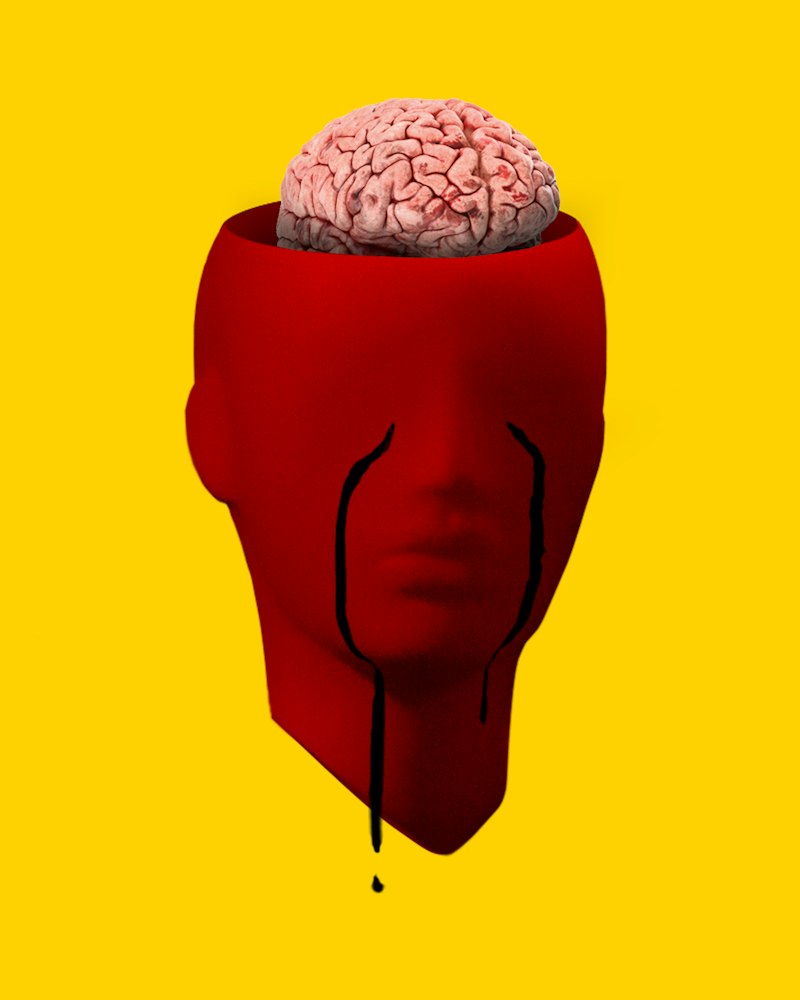
Cognitive dissonance is a state of psychological tension that arises when an individual simultaneously holds two or more conflicting cognitions—beliefs, attitudes, or values—or when an action they perform contradicts one of their core beliefs. This tension is experienced as profoundly uncomfortable, driving the individual toward a state of consistency or consonance. The theory postulates that humans are inherently motivated to maintain internal consistency, and the presence of dissonance acts as an aversive drive state, similar to hunger or thirst, compelling the person to reduce it. The magnitude of this dissonance is directly related to the importance of the cognitions involved and the number of conflicting elements present.
The fundamental mechanism behind this concept is the need for mental harmony. When a person is confronted with evidence that their behavior is inconsistent with their self-concept, or when two mutually exclusive beliefs are held, the resulting mental conflict necessitates a change. Crucially, it is often easier for individuals to change their attitudes or beliefs than it is to change past behavior or objective reality. Therefore, dissonance reduction frequently involves rationalization, minimization of the conflict, or the selective seeking of new information that supports the preferred belief or action. This innate desire for consistency shapes human decision-making and justification processes across diverse domains, from simple consumer choices to deeply held moral convictions.
This concept serves as a cornerstone of modern social psychology because it provides a powerful, motivational explanation for why attitudes change. Unlike theories that suggest rational processing of information leads to attitude shifts, dissonance theory posits that the discomfort itself is the catalyst. The mental work performed to reduce this unpleasant internal state often results in profound and sometimes illogical shifts in belief systems, simply to justify actions already taken or opinions already held. Understanding this motivational force is essential for analyzing persuasion, group dynamics, and self-justification.
Historical Foundations and Origin
The theory of cognitive dissonance was formally proposed by the American social psychologist Leon Festinger in his seminal 1957 book, A Theory of Cognitive Dissonance. Festinger built upon earlier concepts of consistency, notably Fritz Heider’s Balance Theory, but provided a more comprehensive and dynamic framework rooted in motivational psychology. Festinger’s work revolutionized the study of attitudes by shifting focus from external stimuli causing attitude change to internal psychological pressures. This marked a significant departure from behaviorist approaches prevalent at the time, which often neglected the role of internal cognitive processes in driving behavior and attitude formation.
The theoretical origin of cognitive dissonance is often traced back to Festinger’s observations while studying a doomsday cult in the 1950s, documented in the book When Prophecy Fails (1956), co-authored with Henry Riecken and Stanley Schachter. This group, led by Dorothy Martin (under the pseudonym Marian Keech), predicted a catastrophic flood and the subsequent rescue of only their devoted members by flying saucers on a specific date. When the predicted date passed without incident, the researchers observed a phenomenon counterintuitive to standard psychological expectations: instead of abandoning their belief system or admitting error, the cult members engaged in feverish proselytizing, attempting to convince others of their beliefs.
Festinger interpreted this intense proselytizing as a mechanism for dissonance reduction. The cognition “The world did not end” conflicted severely with the cognition “I gave up my job, home, and savings for this belief.” The magnitude of the dissonance was extremely high due to the sacrifices made. To reduce this painful conflict, the members added a new, consonant cognition: “The catastrophe was averted because of our faith and devotion.” By seeking new converts, they attempted to find external social support for their rationalization, thereby validating their costly commitment and reducing the internal tension caused by the failed prophecy. This real-world observation provided the critical foundation for the formal articulation of the dissonance theory.
The Mechanisms of Dissonance Reduction
Individuals employ several distinct strategies to alleviate the psychological discomfort caused by conflicting cognitions. These mechanisms are largely unconscious and operate automatically to restore psychological equilibrium. The success of a particular strategy depends heavily on the context, the individual’s existing cognitive resources, and the resistance to change presented by the cognitions involved. If one cognition is rooted in undeniable reality (e.g., “I smoke cigarettes”), that cognition is harder to change than a related attitude (e.g., “Smoking is harmful”).
There are typically three primary pathways through which dissonance is resolved. The first involves changing the behavior or one of the conflicting cognitions. For instance, a person who believes strongly in environmental conservation but frequently drives a gas-guzzling vehicle might attempt to sell the vehicle and buy an electric car, thereby aligning their behavior directly with their attitude. This is often the most difficult path because changing established habits requires significant effort and willpower, particularly if the behavior is enjoyable or addictive.
The second, and perhaps most common, pathway is changing the attitude or belief associated with the behavior. Using the same example, the driver might rationalize their consumption by deciding that global warming is not as severe as scientists suggest, or that their individual contribution to pollution is negligible. This approach reduces dissonance by minimizing the importance of the conflicting cognition. Finally, the third strategy involves adding new, consonant cognitions that outweigh the dissonant ones. The driver might decide that while their vehicle pollutes, it is also the safest vehicle available for their family, and safety outweighs environmental concerns, thereby adding a new, important belief that justifies the behavior.
A Practical Example: Post-Decision Dissonance
A highly relatable real-world manifestation of cognitive dissonance is known as post-decision dissonance, which occurs after an individual makes a significant choice between two equally attractive alternatives. Consider the scenario of purchasing an expensive, high-end laptop. Before the purchase, the consumer weighs the pros and cons of Laptop A (superior screen quality, lower battery life) versus Laptop B (inferior screen, exceptional battery life). Both options have appealing features, creating a high level of conflict before the decision is made.
Once the consumer decides to purchase Laptop A, the dissonance immediately spikes. The cognition “I chose Laptop A” clashes with the rejected positive aspects of Laptop B (“Laptop B had better battery life, which is important to me”). This realization creates psychological discomfort—the fear that they may have made the wrong choice. The consumer’s mind must now work quickly to justify the decision and reduce this internal friction.
The application of dissonance reduction mechanisms in this scenario follows a predictable, step-by-step process:
- The individual focuses intensely on the positive features of the chosen alternative (Laptop A). They might obsess over the clarity of the screen or the speed of the processor, actively inflating the value of these traits.
- Simultaneously, they actively downplay the negative features of the chosen item. The poor battery life of Laptop A is minimized: “I usually work near an outlet anyway; it’s not a big deal.”
- The individual then exaggerates the negative features of the rejected alternative (Laptop B). They might emphasize that Laptop B’s screen was not just inferior, but actually unusable for their graphics work, making the choice clearly superior in retrospect.
- Finally, they may selectively seek out information or reviews that support their purchase while ignoring or discrediting negative reviews of Laptop A or positive reviews of Laptop B. This internal propaganda reassures the consumer that their costly decision was, in fact, the correct and optimal one.
Significance in Psychological Research
Cognitive dissonance theory holds immense significance within the field of psychology, primarily because it provided a robust, testable framework for understanding attitude change that was not dependent solely on external reinforcement. The theory led to some of the most famous and counterintuitive findings in social psychology, fundamentally altering how researchers understood human motivation. It shifted the paradigm toward understanding self-justification as a powerful determinant of attitudes and future behavior.
Perhaps the most famous experimental demonstration of the theory is the “Induced Compliance Paradigm,” often referred to as the $1/$20 study, conducted by Festinger and J. Merrill Carlsmith in 1959. Participants were asked to perform extremely boring tasks and were then paid either $1 or$20 to lie to the next participant, telling them the tasks were interesting. Those paid the large sum ($20) had low dissonance; they had a clear external justification for lying (“I lied because I got paid well”). However, those paid the meager \sum ($1) experienced high dissonance. The cognition “I lied” conflicted with “I am an honest person,” and the $1 payment was insufficient external justification.
To reduce the high dissonance, the $1 group convinced themselves that they hadn’t actually lied; they changed their private attitude toward the task, rating the boring activities as genuinely enjoyable. This finding demonstrated that insufficient external reward leads to greater internal attitude change, a direct contradiction of traditional reinforcement theories. This research highlighted the powerful, often hidden, cognitive work individuals perform to maintain a positive self-image and consistency, establishing dissonance as one of the most enduring and influential concepts in social psychology.
Applications in Therapy and Social Behavior
The principles of cognitive dissonance are widely applied across various practical fields, including clinical therapy, public health campaigns, and marketing. In the realm of clinical psychology, particularly within cognitive behavioral therapy (CBT), understanding dissonance helps therapists identify the root cause of client distress when their actions diverge sharply from their stated goals or values. For example, a therapist might use dissonance reduction techniques to encourage behavioral change by having the client publicly commit to a new, healthier behavior. The public commitment increases the negative consequences (the cognitive conflict) of reverting to the old behavior, thereby motivating the client to follow through to reduce the tension.
In the context of public health and education, dissonance is leveraged to encourage healthier lifestyle choices. Campaigns often expose the target audience to the discrepancies between their actions and their knowledge. For instance, a smoking cessation campaign might require smokers to create videos explaining the dangers of smoking to young children. The act of preaching against smoking while simultaneously being a smoker creates high dissonance, which can only be reduced effectively by quitting smoking, as changing the knowledge (the health facts) is nearly impossible. This technique focuses on maximizing the perceived hypocrisy to force behavioral alignment.
Furthermore, dissonance plays a crucial role in marketing and consumer behavior. Techniques like the “foot-in-the-door” technique rely on inducing small, initial commitments that create a low level of dissonance. Once the consumer commits to the small request, they are more likely to agree to a larger, related request later, as refusing the second request would conflict with the initial commitment and the positive self-image established by complying with the first. Marketers also intentionally trigger post-purchase dissonance in competitors’ customers, providing them with information that highlights the flaws in the competitor’s product, thereby increasing the likelihood that those customers will experience dissatisfaction and switch brands.
Connections to Related Theories
Cognitive dissonance theory resides firmly within the broader category of Consistency Theories in cognitive psychology and social psychology, which all share the premise that internal psychological balance is a primary human motivator. Its closest relative is Heider’s Balance Theory, which focuses specifically on the relations between three entities: the self, another person, and an object. Balance Theory proposes that people prefer harmonious or “balanced” cognitive structures (e.g., “I like John, and John likes this movie” is balanced; “I like John, but John dislikes this movie” is imbalanced). While Balance Theory explains simple, triadic relationships, dissonance theory offers a more general and powerful explanation for motivational drive stemming from any conflicting set of cognitions.
Another key related concept is Self-Perception Theory, proposed by Daryl Bem in 1972. Bem suggested that individuals do not always experience internal tension when attitudes and behaviors conflict; rather, they often simply infer their attitudes by observing their own behavior. For instance, if asked, “Do you like classical music?” a person might reflect, “I often listen to classical music, therefore, I must like it.” Self-Perception Theory proposes an observational, non-motivational explanation for attitude change, contrasting sharply with Festinger’s stress-driven, motivational explanation. Although initially seen as competing theories, contemporary research often views dissonance theory as operating when initial attitudes are strong and clear, while self-perception theory operates when attitudes are weak or ambiguous.
Finally, the concept has significant connections to Attribution Theory, particularly in understanding how individuals assign causes to their own behavior. When people act inconsistently with their values, they engage in biased internal attributions to justify the action, reducing dissonance. For example, a person who cheats on a diet might attribute the failure to uncontrollable external circumstances (“The food was forced upon me”) rather than internal weakness (“I lack willpower”). These biased attributions are a direct manifestation of the underlying drive to reduce the psychological tension created by the conflict between the action and the self-concept.