Intergroup Conflict: Why We Turn Into Rivals
Scientifically Reviewed · Dr. Marwa Abd-Alazim · August 24, 2026
Review Criteria & Clinical Standards
This content undergoes rigorous scientific peer-review and medical editorial standards at Arab Psychology Network to ensure clinical accuracy, validity, and compliance with evidence-based guidelines from leading psychological and healthcare authorities (APA / WHO).
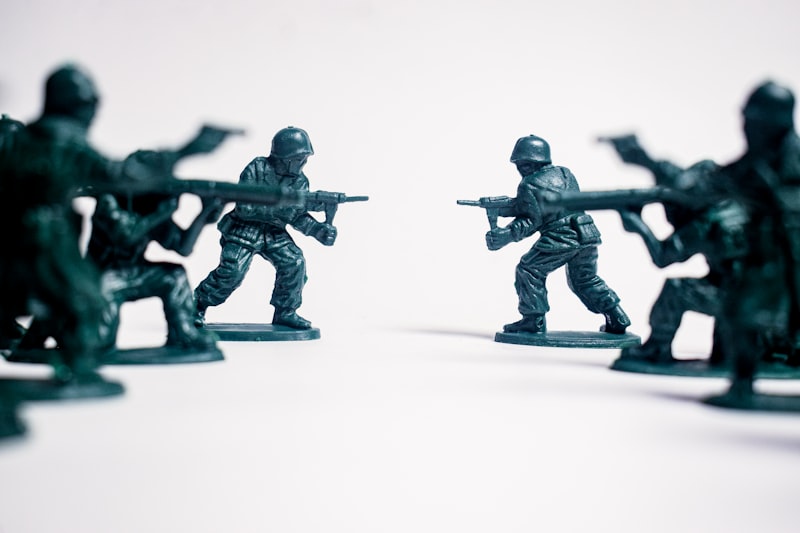
Introduction to the Robbers’ Cave Experiment
The Robbers’ Cave Experiment stands as a landmark study in social psychology, meticulously conducted by Muzafer Sherif and his colleagues in the 1950s. This series of highly influential field experiments aimed to rigorously test hypotheses regarding the origins of intergroup conflict and the subsequent methods required for its resolution. Unlike laboratory settings, this research utilized a naturalistic environment—a summer camp setting in Oklahoma—to observe the development of social groups, the emergence of hostility, and the eventual reconciliation, providing powerful empirical support for the Realistic Conflict Theory (RCT). The experiment is widely recognized for its profound insights into how situational factors, specifically goal structures, dictate group behavior and attitudes toward outsiders.
The core methodology involved placing carefully screened participants—boys from intact, middle-class families who were ensured to possess psychological normalcy—into a structured environment where the true identities of the counselors as researchers were concealed. The study was executed in three distinct, sequential stages: group formation, group conflict, and conflict resolution. This structure allowed Sherif to systematically observe the psychological and behavioral changes that occurred as the functional relationship between the groups shifted from independence to competition, and finally, to interdependence. The findings demonstrated conclusively that prejudice and discrimination are not necessarily rooted in deep-seated personality defects, but rather are rational responses to competitive goal structures.
The immediate practical application of the Robbers’ Cave findings was the identification of the superordinate goal as the essential mechanism for reducing intergroup antagonism. The experiment provided a clear, actionable blueprint for transforming relationships marked by open hostility into cooperative alliances. Its formal, systematic approach to studying group dynamics ensured that the resulting conclusions were robust, cementing the study’s place as a foundational text in the understanding of prejudice, group identity, and conflict resolution across various human endeavors, from organizational management to international diplomacy.
Theoretical Foundation and Context
Muzafer Sherif’s research trajectory was deeply rooted in understanding the formation and function of social norms, as demonstrated by his earlier work on the autokinetic effect. The Robbers’ Cave Experiment represented an ambitious expansion of this work, seeking to move beyond internal group dynamics to explore the mechanisms of friction between separate, established groups. Sherif posited that group attitudes and behaviors are largely determined by the nature of the relationship between the groups’ goals. If goals are mutually exclusive (one group winning means the other group loses), conflict will arise. If goals require mutual effort, cooperation will ensue.
This central hypothesis led to the formal development of the Realistic Conflict Theory (RCT). RCT states that whenever two or more groups are striving for the same scarce resources or incompatible goals, intergroup conflict, negative stereotypes, and overt discrimination will naturally occur. Crucially, the theory emphasizes the objective, real nature of the competition, viewing the resulting hostility not as irrational aggression, but as a functionally rational attempt by ingroup members to secure resources and elevate their own status at the expense of the outgroup. This theoretical stance offered a powerful alternative to explanations that relied solely on individual psychological factors or the displacement of aggression.
Sherif carefully designed the camp setting to eliminate alternative explanations for the observed conflict. By selecting boys who were psychologically stable and socially well-adjusted, he was able to confidently assert that the aggressive, hostile behaviors observed in Stage II were not idiosyncratic personality traits brought into the camp, but were emergent properties of the intergroup competition that the researchers had deliberately orchestrated. The formality and control exercised over the environment, despite its naturalistic appearance, were vital to isolating the independent variable—the functional relationship between the groups—and demonstrating its causal effect on prejudice.
Methodology and Participants
The experimental site, Robbers’ Cave State Park in Oklahoma, was chosen specifically for its isolation, allowing researchers to fully control the social environment and the flow of information. The operational context was presented to the participants as a typical, fun summer camp experience, successfully masking the rigorous scientific investigation taking place. The camp staff, who were in reality the researchers and trained observers, meticulously documented every interaction, conversation, and conflict, providing comprehensive qualitative and quantitative data on group development and decay.
The participants were twenty-two healthy, 11-year-old boys. Selection was rigorous; they were screened extensively to ensure they possessed similar demographic backgrounds (middle-class, Protestant) and lacked any significant behavioral or academic problems. This homogeneity was critical to ensure that any observed differences in behavior were attributable to the experimental manipulation rather than pre-existing social, economic, or psychological disparities. The boys were purposefully separated into two equal groups upon arrival, initially unaware that another group existed within the park.
The controlled deception inherent in the methodology allowed Sherif to create groups that were truly independent and cohesive before contact. The high degree of control over the environment—from the schedule of activities to the orchestration of crises—enabled the researchers to systematically introduce and remove competitive elements. This formal, systematic approach ensured that the study could definitively link specific changes in the goal structure to observable shifts in group attitudes, providing a level of experimental rigor rarely achieved in field studies of social behavior.
Stage I: Ingroup Formation
The first stage of the experiment, lasting approximately one week, was dedicated exclusively to fostering ingroup solidarity within the two separate units. The groups, who later named themselves the “Rattlers” and the “Eagles,” engaged in cooperative activities such as building shelters, preparing meals, and hiking. These tasks required collective effort and problem-solving, which rapidly generated internal structure, defined roles, and established social norms unique to each unit.
During this isolated phase, strong emotional ties and loyalty developed among the members. Informal leadership structures emerged organically, and group cohesion was reinforced through shared experiences and the creation of group symbols, such as flags and specialized language. The boys quickly developed a sense of “us,” where the ingroup was perceived as inherently good, capable, and superior. This bonding phase was essential because it established two robust, independently functioning social entities whose members were highly motivated to protect and promote the ingroup’s status, setting the stage for the subsequent conflict.
The success of Stage I demonstrated that group identity and structure do not require external conflict to form; they arise naturally through shared, cooperative effort toward common internal goals. However, the intensity of this cohesion meant that once contact was made with the outgroup, any perceived threat or competition would be met with an equally intense defensive reaction, fueled by the loyalty and pride that had been cultivated during this initial period of separation.
Stage II: Intergroup Conflict
Stage II marked the introduction of friction through carefully structured intergroup competition. Sherif organized a series of contests, including baseball, tug-of-war, and cabin inspections, where the winning group received highly desirable prizes, such as medals, pocket knives, and trophies. This created a classic zero-sum environment where the success of one group automatically meant the failure and frustration of the other. The researchers provided clear incentives for rivalry, transforming the neutral coexistence into overt antagonism.
The conflict escalated rapidly and predictably beyond the confines of the organized games. Initial rivalry involving simple taunts and chants quickly devolved into name-calling, verbal abuse, and the development of negative stereotypes about the opposing group (“cheaters,” “sissies,” “sneaks”). The boys began to exhibit extreme ingroup bias, consistently overestimating their own group’s abilities and performance while actively depreciating the outgroup, even when objective evidence suggested otherwise.
Hostility soon manifested in physical acts of aggression and territoriality. The Rattlers raided the Eagles’ cabin, stealing property and tearing down their flag; the Eagles retaliated by ransacking the Rattlers’ cabin. Food fights broke out in the mess hall, and open hostility dominated their interactions. This stage provided compelling evidence that incompatible goals—competition over coveted resources or status—are sufficient to generate intense, visceral prejudice and aggression, even among previously well-adjusted individuals who had no prior history of animosity.
Stage III: Conflict Reduction (Initial Failed Attempts)
Having successfully generated acute hostility, Sherif moved to the resolution phase, first testing common, but often ineffective, strategies for reducing conflict. The researchers initially attempted to foster positive relations simply by increasing intergroup contact under non-competitive circumstances. Activities were orchestrated where the groups were merely in proximity, such as eating together in the mess hall or watching a movie side-by-side.
These attempts failed dramatically. Instead of promoting familiarity and friendship, the enforced contact merely provided new platforms for aggression and antagonism. During the shared meals, boys used the opportunity to shout insults or initiate physical confrontations, such as the infamous food fight. When watching a movie, the groups physically separated themselves and directed derogatory comments toward the outgroup. The hostility was so deeply ingrained that neutral settings were immediately reinterpreted through the lens of conflict.
This failure was critical to Sherif’s argument. It demonstrated that prejudice rooted in functional competition cannot be solved by superficial measures like mere exposure or communication. When goals remain incompatible, groups will maintain their negative attitudes and actively resist opportunities for positive interaction. The necessary prerequisite for reconciliation, Sherif concluded, was a fundamental alteration in the structural relationship between the groups’ goals, moving away from zero-sum competition toward mutual dependency.
The Power of Superordinate Goals
The successful resolution of the conflict was achieved only through the introduction of superordinate goals—urgent, overarching objectives that were highly salient and desirable to both the Rattlers and the Eagles, but which could only be achieved through the combined efforts of both groups working interdependently. Sherif meticulously orchestrated several “emergencies” that forced cooperation.
One crucial incident involved the apparent failure of the camp’s water supply system. Researchers sabotaged the main water line, requiring both groups to coordinate their efforts to investigate the problem, locate the break, and physically repair the damage. A second incident involved a supply truck, supposedly carrying food and entertainment, getting stuck on a hill, necessitating both groups to pool their strength to pull the vehicle free using a combined rope and effort. Another contrived crisis involved pooling limited camp money to rent a film both groups desperately wanted to see.
As the groups successfully collaborated on these mutually essential tasks, the previous hostility began to dissipate rapidly. The focus shifted from internal loyalty against an enemy to collective problem-solving. Negative stereotypes faded as the boys recognized that members of the outgroup possessed valuable skills necessary for their shared success. By the conclusion of Stage III, not only had the animosity vanished, but the boys chose to travel home together on the same bus, even sharing their remaining supplies and demonstrating genuine cross-group friendships, confirming the transformative power of interdependent goals.
Key Findings and the Legacy of Realistic Conflict Theory
The Robbers’ Cave Experiment provided definitive proof that intergroup hostility and prejudice are primarily situational, driven by functional interdependence or competition, rather than innate aggression or psychological deficiencies. The study validated the Realistic Conflict Theory by demonstrating a clear, causal link between the structure of group goals and observable social behavior.
The major psychological mechanisms observed included:
-
Ingroup Solidarity: Competition dramatically increased internal group cohesion and loyalty, often at the expense of rational evaluation.
-
Negative Outgroup Stereotyping: Hostility led to biased perception, where the outgroup was derogated and viewed negatively, regardless of objective performance.
-
Leadership Shifts: Aggressive and conflict-oriented boys often gained influence during Stage II, while more cooperative leaders became prominent during Stage III.
-
Attitude Reversal: Cooperation on superordinate goals successfully dissolved negative stereotypes and transformed attitudes, leading to cross-group friendships.
The enduring legacy of the Robbers’ Cave Experiment lies in its practical application to real-world conflict resolution. The necessity of the superordinate goal has informed policies in diverse fields, including integrating school systems, managing organizational mergers, and structuring peace-keeping missions. It provides a crucial psychological insight: conflict cannot be talked away; it must be worked away through the creation of shared, compelling goals that necessitate mutual reliance and cooperation for their successful attainment.
Ethical Considerations and Modern Impact
While scientifically groundbreaking, the Robbers’ Cave Experiment raises significant ethical questions when viewed through the lens of modern research standards. The methodology involved substantial deception of minors regarding the true purpose of the camp and, more critically, the deliberate creation of psychological distress and intense hostility among the participants. The severity of the conflict, which included property damage and near-physical violence, necessitates a careful consideration of the long-term emotional impact on the boys involved.
Under current institutional review board guidelines, a study involving such high levels of deception and the intentional inducement of psychological stress in vulnerable populations would face stringent barriers, likely requiring modifications to ensure full informed consent and immediate debriefing. However, the unique insights gained regarding the naturalistic formation and dissolution of conflict are considered invaluable, often justifying the experiment’s historical significance despite its ethical challenges.
In conclusion, the Robbers’ Cave Experiment remains a cornerstone of social psychology, offering a powerful, empirically supported model for understanding how functional relations determine intergroup dynamics. Its central finding—that conflict is rooted in competition and resolved through the introduction of superordinate goals—continues to guide research and practical interventions aimed at mitigating prejudice and fostering productive cooperation in complex, multi-group environments globally. The study serves as a timeless reminder that group behavior is highly responsive to the structure of shared goals.