Tactile Perception: How Texture Shapes Your Reality
Scientifically Reviewed · Dr. Marwa Abd-Alazim · October 3, 2026
Review Criteria & Clinical Standards
This content undergoes rigorous scientific peer-review and medical editorial standards at Arab Psychology Network to ensure clinical accuracy, validity, and compliance with evidence-based guidelines from leading psychological and healthcare authorities (APA / WHO).
The Perception of Roughness: Core Definition
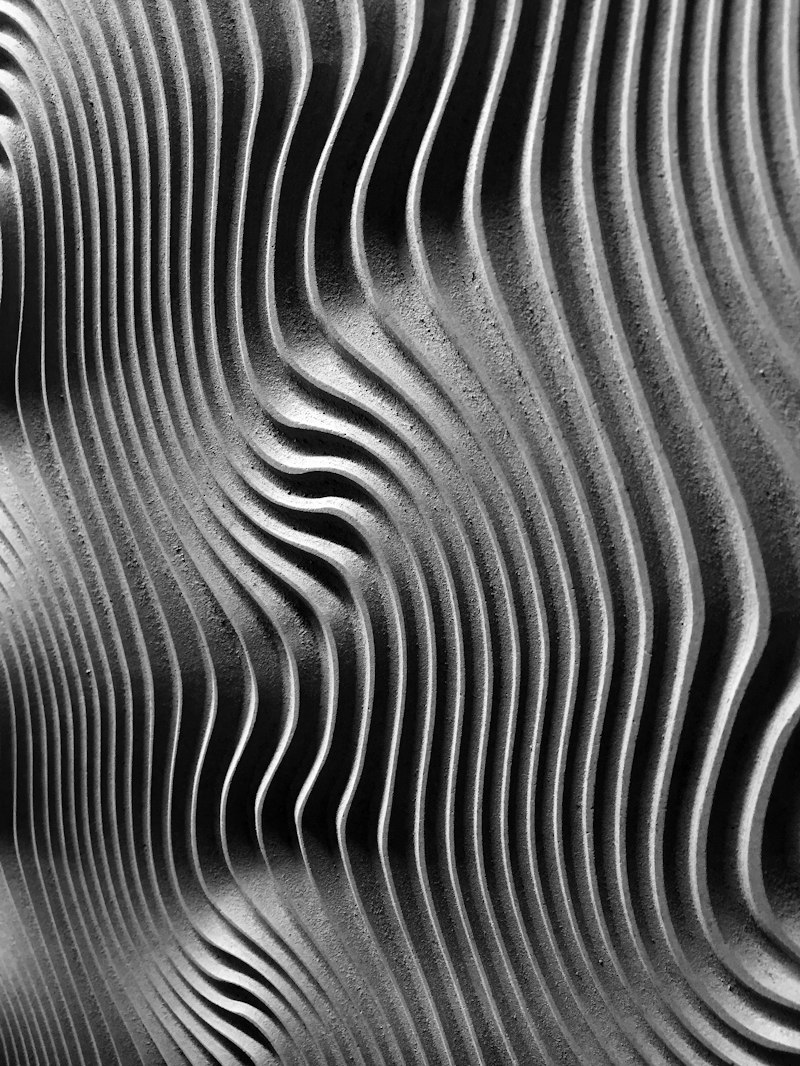
In the context of psychology, roughness primarily refers to the human tactile perception of surface texture. It describes the subjective experience derived from interacting with materials possessing irregularities, variations in height, or patterns on their surface. This perception is not merely a passive reception of sensory input but an active process where the brain interprets signals from various mechanoreceptors in the skin, integrated with information about movement and pressure. The sensation of roughness is fundamental to how individuals distinguish between objects, navigate their environment, and interact with the physical world, ranging from the intricate details of fabric texture to the coarse feel of natural stone.
The experience of roughness is inherently complex, involving multiple dimensions beyond simple peak-to-valley measurements. It encompasses factors such as the spatial periodicity of surface features, their amplitude, and the compliance of the material. For instance, a surface with widely spaced, large bumps might be perceived differently from one with tightly packed, fine grains, even if both are objectively “rough.” Furthermore, the speed and force with which one explores a surface significantly modulate the perceived roughness, highlighting the active and dynamic nature of haptic perception. This intricate interplay of physical properties and sensory processing allows for a highly nuanced discrimination of textures, which is crucial for everyday tasks and interactions.
At its core, the perception of roughness is a prime example of how the human sensory system translates physical stimuli into meaningful psychological experiences. It involves specialized nerve endings in the skin that respond to pressure, vibration, and deformation, sending these signals through the spinal cord to the brain. Once in the brain, these signals are processed in various cortical areas, including the somatosensory cortex, where they are integrated with other sensory information and cognitive processes to form a coherent perception of texture. This intricate neural pathway underscores the sophisticated biological machinery dedicated to understanding the physical properties of our surroundings through touch, contributing significantly to our overall understanding of the world.
Mechanisms of Tactile Roughness Perception
The perception of roughness is mediated by a sophisticated array of mechanoreceptors embedded within the skin. These specialized sensory neurons are responsible for converting mechanical stimuli into electrical signals that the brain can interpret. Four primary types of mechanoreceptors contribute to tactile perception: Meissner’s corpuscles, Pacinian corpuscles, Merkel’s discs, and Ruffini endings. Each type possesses distinct characteristics in terms of adaptation rate, receptive field size, and sensitivity to different aspects of mechanical stimulation, allowing for a comprehensive encoding of surface properties. For instance, Meissner’s corpuscles are highly sensitive to low-frequency vibrations and light touch, making them crucial for detecting the movement of skin across a textured surface, while Pacinian corpuscles respond to high-frequency vibrations, contributing to the perception of fine textures and transient events.
When the skin slides across a rough surface, the irregularities induce complex patterns of skin deformation and vibration. These patterns are precisely what the mechanoreceptors detect and transduce into neural impulses. The spatial layout of the irregularities, their amplitude, and their periodicity all contribute to a unique “signature” of neural activity. For example, a coarse texture might primarily activate slowly adapting receptors, signaling sustained pressure and deformation, while a fine texture might induce high-frequency vibrations that are predominantly detected by rapidly adapting receptors. The brain then integrates these diverse signals, constructing a holistic representation of the surface’s roughness. This integration is not merely additive; it involves complex computations that weigh the contributions of different receptor types and their firing patterns.
Beyond the initial sensory transduction, the brain plays a critical role in processing and interpreting these signals. Information from the mechanoreceptors travels via peripheral nerves to the spinal cord and then ascends to the thalamus, a major relay station for sensory information. From the thalamus, signals are projected to the primary somatosensory cortex (S1) in the parietal lobe, where initial cortical processing occurs. Subsequent processing involves secondary somatosensory areas (S2) and other cortical regions, including those involved in object recognition and motor planning, highlighting the highly interconnected nature of sensory processing. This distributed neural network allows for the robust and flexible perception of roughness, adapting to various exploratory behaviors and environmental contexts, ultimately forming a coherent and meaningful sensory experience.
Historical Perspectives on Haptic Perception
The systematic study of touch, and by extension, the perception of roughness, has roots in the 19th century with the emergence of psychophysics. Pioneers like Ernst Heinrich Weber and Gustav Fechner laid the groundwork for understanding the relationship between physical stimuli and psychological sensations. Weber’s Law, for example, demonstrated that the just noticeable difference (JND) between two stimuli is a constant proportion of the original stimulus, a principle that applies to tactile discrimination, including the ability to discern differences in roughness. Fechner, building on Weber’s work, developed methods to quantify subjective experience, establishing techniques that are still relevant in sensory research today. Their work provided the first scientific framework for analyzing how the intensity of a physical texture relates to the perceived intensity of its roughness.
In the 20th century, the ecological approach to perception, championed by James J. Gibson, significantly advanced the understanding of haptic perception. Gibson argued that perception is an active process of exploring the environment, rather than a passive reception of sensory input. He introduced the concept of “affordances,” where objects’ properties directly “afford” certain actions. For roughness, this means that the texture of an object is perceived not just as a static quality but in terms of how it can be grasped, manipulated, or interacted with. Gibson emphasized the importance of active touch, involving movement of the hands and fingers, in gathering information about surface properties, moving beyond the simple stimulus-response models of earlier psychophysical research and highlighting the dynamic interplay between the perceiver and the environment.
More recently, advancements in neuroscience have provided deeper insights into the neural mechanisms underlying roughness perception. Techniques such as functional magnetic resonance imaging (fMRI) and electroencephalography (EEG) have allowed researchers to map brain activity during tactile exploration, revealing the cortical areas involved in processing texture information. The discovery of specialized neural pathways and cortical columns dedicated to different aspects of touch, including texture and vibration, has further refined our understanding. Contemporary research also explores the role of multi-sensory integration, examining how visual and auditory cues can influence and even alter the perception of roughness, demonstrating the brain’s remarkable capacity to synthesize information from various sensory modalities into a coherent perceptual experience.
Psychophysical Approaches to Roughness
Psychophysics provides a powerful set of tools for quantitatively studying the human perception of roughness. Researchers employ psychophysical methods to measure thresholds for roughness detection and discrimination, allowing them to determine the smallest difference in texture that a person can reliably perceive. Common experimental paradigms involve presenting participants with various textured surfaces and asking them to make judgments about their relative roughness (e.g., “Which surface is rougher?”) or to rate their roughness on a numerical scale. These experiments carefully control physical parameters of the surfaces, such as spatial period, amplitude, and material properties, to isolate their effects on perception.
One critical aspect investigated through psychophysical studies is the mapping between physical surface properties and subjective roughness magnitudes. Researchers use scaling techniques, such as magnitude estimation, where participants assign numbers proportional to the perceived roughness of different stimuli. This allows for the construction of psychophysical functions that describe how perceived roughness changes as a function of physical surface characteristics. Such studies have revealed that the perception of roughness is not always linear with physical measures; rather, it often follows a power law relationship, where small changes in physical roughness can lead to disproportionately larger changes in perceived roughness, especially at the extremes of the texture continuum.
Furthermore, psychophysical research delves into factors influencing the precision and accuracy of roughness judgments. This includes examining the effects of active versus passive touch, the role of exploratory procedures (e.g., finger scanning speed, pressure), and individual differences in tactile sensitivity. These studies help to elucidate the optimal conditions for perceiving roughness and identify potential sources of variability in human texture perception. By meticulously manipulating stimulus properties and measuring behavioral responses, psychophysics continues to unravel the intricate rules governing how we translate the physical world of textures into our subjective sensory experiences, providing a quantitative foundation for understanding tactile perception.
Neural Correlates of Tactile Roughness
The neural processing of tactile roughness initiates at the peripheral nervous system, where various mechanoreceptors in the skin encode different aspects of the physical stimulus. These primary afferent neurons transmit signals through the dorsal root ganglia to the spinal cord, ascending primarily via the dorsal column-medial lemniscus pathway to the thalamus. This pathway is crucial for conveying discriminative touch, including information about texture, shape, and pressure, which are all integral to the perception of roughness. The thalamus acts as a critical relay station, filtering and modulating these sensory inputs before projecting them to higher cortical areas for further processing.
Upon reaching the cerebral cortex, tactile information is first processed in the primary somatosensory cortex (S1), located in the postcentral gyrus. Within S1, there is a somatotopic organization, meaning that different parts of the body are represented in specific areas of the cortex, allowing for precise localization of touch. Neurons in S1 respond to specific features of tactile stimuli, such as spatial patterns, vibration frequencies, and pressure changes, which are all components of roughness perception. Research using neuroimaging techniques like fMRI has shown increased activation in S1 when individuals explore rough textures, suggesting its fundamental role in the initial cortical encoding of texture properties.
Beyond S1, the processing of roughness involves a network of interconnected brain regions, including the secondary somatosensory cortex (S2), the insula, and posterior parietal cortex. S2 is believed to integrate information from S1 and other sensory modalities, contributing to higher-order processing of tactile objects and their properties. The insula plays a role in the subjective experience and emotional aspects of touch, while the posterior parietal cortex is involved in spatial processing and integrating tactile information with motor actions, critical for haptic perception. This distributed neural network underscores that roughness perception is not localized to a single brain region but emerges from the dynamic interplay and integration of information across multiple cortical and subcortical structures.
Practical Applications and Real-World Examples
The human perception of roughness plays a vital role in countless everyday activities, often without conscious awareness. Consider the simple act of reaching for a mug of coffee in the morning; the tactile feedback from the ceramic surface, its smoothness or subtle texture, informs your grip strength and ensures you don’t drop it. Similarly, when selecting clothing, the roughness or softness of fabrics guides choices based on comfort, aesthetic preference, and intended use. From distinguishing between ripe and unripe fruit by touch to selecting tools based on the texture of their handles for optimal grip, our ability to accurately perceive and interpret roughness is continuously at play, facilitating safe and efficient interaction with our physical environment.
In professional contexts, understanding roughness perception has significant implications. In product design, for instance, engineers and designers meticulously consider the surface texture of products, from smartphone screens to automotive interiors, to enhance user experience, perceived quality, and ergonomic comfort. A smooth, cool surface might convey luxury, while a slightly rough, grippy texture might signal durability or functionality. In the medical field, the texture of surgical instruments or prosthetic limbs is carefully engineered to provide optimal tactile feedback for clinicians and comfort for patients. Even in the culinary arts, the texture of food, including its perceived roughness or smoothness, is a critical component of its palatability and overall sensory experience, influencing how we appreciate and consume meals.
Furthermore, the study of roughness perception contributes to advancements in assistive technologies and therapies. For individuals with visual impairments, tactile information becomes paramount for navigating the world, reading Braille, and identifying objects. Developing technologies that can accurately render or simulate textures through haptic feedback systems can significantly enhance accessibility and interaction. In sensory integration therapy, understanding how individuals process tactile input, including roughness, helps therapists address sensory sensitivities or deficits, particularly in conditions like autism spectrum disorder. By providing structured exposure to various textures, these therapies aim to improve an individual’s ability to process and respond to tactile stimuli, thereby enhancing their overall quality of life and functional independence.
Significance in Human Experience and Development
The perception of roughness holds profound significance in shaping human experience and development, extending beyond mere sensory input to influence cognitive processes, emotional states, and social interactions. From infancy, tactile exploration is a primary mode through which children learn about the properties of objects and their environment. Feeling different textures helps in the development of fine motor skills, object recognition, and the formation of conceptual categories. This early sensory experience is foundational for later cognitive development, as it builds a rich internal model of the world that supports more complex learning and problem-solving. A diverse range of tactile experiences contributes to robust sensory development and adaptability.
Beyond cognitive development, tactile perception, including the experience of roughness, plays a crucial role in emotional regulation and social bonding. The texture of a comforting blanket, the feel of a loved one’s hand, or the reassuring roughness of natural materials can evoke powerful emotional responses, contributing to feelings of security, comfort, or alertness. Conversely, unpleasant or unexpected textures can trigger aversion or discomfort, influencing behavioral responses. This emotional dimension highlights how our sensory interactions with the world are deeply intertwined with our affective states, underscoring the holistic nature of human perception and its impact on well-being.
Moreover, the ability to perceive and interpret roughness is fundamental to our capacity for independent living and interacting effectively with the physical world. It allows us to perform intricate tasks, from tying shoelaces to operating complex machinery, by providing essential feedback about material properties and frictional forces. Without this nuanced tactile perception, many everyday actions would be challenging or impossible. Therefore, understanding roughness perception is not just an academic exercise; it is crucial for appreciating the intricate ways in which our sensory systems enable us to navigate, manipulate, and thrive within our complex environments, forming a cornerstone of our sensory intelligence.
Connections to Other Psychological Concepts
The perception of roughness is intricately connected to a broader array of psychological concepts, forming part of the elaborate tapestry of human sensation and perception. It is a core component of haptic perception, which encompasses all aspects of touch, including pressure, temperature, vibration, and proprioception (the sense of body position). Roughness perception often relies on the integration of these different tactile cues, as well as information about active movement. It is also closely related to somatosensation, the overall system that processes bodily sensations, which includes not only touch but also pain, temperature, and proprioception, providing a comprehensive map of the body’s interaction with the environment.
Furthermore, the study of roughness perception frequently employs methods from psychophysics, a subfield dedicated to quantifying the relationship between physical stimuli and the sensations and perceptions they evoke. Psychophysical studies of roughness help to establish thresholds, discrimination abilities, and the subjective scaling of texture intensity, providing a quantitative framework for understanding the sensory experience. It also connects to sensory integration, a neurological process that organizes sensation from one’s own body and from the environment, making it possible to use the body effectively within that environment. Dysfunctions in sensory integration can manifest as difficulties in processing tactile information, including roughness, leading to challenges in everyday tasks and interactions.
Finally, roughness perception intersects with higher-level cognitive psychology concepts such as object recognition and memory. Our ability to recognize objects by touch often relies heavily on their characteristic textures. The perceived roughness of an object can trigger memories associated with that texture, influencing our expectations and interactions. Moreover, it plays a role in multisensory integration, where tactile information about roughness is combined with visual and auditory cues to form a holistic perception of an object or event. This integration across sensory modalities demonstrates the brain’s remarkable capacity to synthesize disparate inputs into a unified and coherent understanding of the world, highlighting the interconnectedness of all sensory and cognitive processes.
Broader Fields of Study
The psychological study of roughness perception falls primarily within the broad fields of Sensation and Perception and Cognitive Psychology. Sensation and Perception is dedicated to understanding how sensory organs detect physical stimuli and how the brain processes these inputs to create conscious experiences. Within this domain, roughness perception is a key area of research, exploring the mechanisms of tactile processing from the skin receptors to cortical representation. It delves into the psychophysical relationships between physical texture properties and subjective human experience, as well as the neural underpinnings of this intricate sensory process.
Beyond these core areas, roughness perception is also a significant topic in Neuroscience, particularly sensory neuroscience. This field investigates the anatomical and physiological basis of sensory systems, including the specific neural pathways, brain regions, and cellular mechanisms involved in encoding, transmitting, and interpreting tactile information. Research in this area might involve electrophysiological recordings from individual neurons or advanced neuroimaging techniques to map brain activity during texture discrimination tasks, providing insights into how the brain constructs the perception of roughness from raw sensory data.
Furthermore, given its practical implications, the study of roughness perception intersects with applied fields such as human-computer interaction (HCI), ergonomics, and product design. In these disciplines, understanding how people perceive and interact with textured surfaces is crucial for creating intuitive, effective, and satisfying user experiences. For instance, designing haptic feedback interfaces or optimizing the tactile qualities of consumer products relies heavily on principles derived from psychological and neuroscientific research into roughness perception, bridging fundamental scientific understanding with real-world applications to enhance human interaction with technology and the environment.