Vestibular Perception: How Your Inner Ear Shapes Reality
Scientifically Reviewed · Dr. Marwa Abd-Alazim · September 8, 2026
Review Criteria & Clinical Standards
This content undergoes rigorous scientific peer-review and medical editorial standards at Arab Psychology Network to ensure clinical accuracy, validity, and compliance with evidence-based guidelines from leading psychological and healthcare authorities (APA / WHO).
Anatomical Definition and Location within the Labyrinth
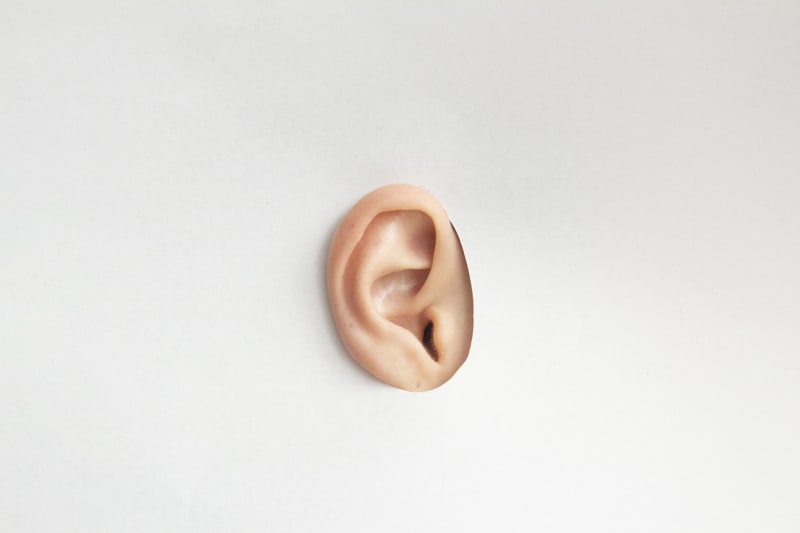
The saccule represents the smaller of the two central divisions that comprise the membranous labyrinth, which is the soft-tissue structure housed within the bony labyrinth of the inner ear. Specifically, the saccule is situated within the petrous portion of the temporal bone, nestled within the spheric recess of the vestibule. This precise anatomical location is critical, as it positions the saccule centrally to manage the influx and flow of endolymph, the unique fluid that fills the membranous labyrinth. Structurally, the saccule is essentially a specialized sensory chamber, distinct yet intricately connected to the rest of the inner ear apparatus.
The saccule maintains vital fluidic and tissue connections with its neighboring structures. Its connection to the cochlear duct, which is responsible for auditory processing, is facilitated by a remarkably short and narrow channel known as the ductus reuniens. This connection underscores the embryological and physiological relationship between the vestibular system (balance) and the cochlear system (hearing), although the primary function of the saccule remains non-auditory. Furthermore, the saccule is linked to the larger utriculus, its superior counterpart, through two specific channels: the initial segment of the endolymphatic sac, and the delicate utriculosaccularis duct that joins the two structures. These connections ensure that the endolymphatic pressure and composition are synchronized across the entire vestibular apparatus.
Understanding the saccule requires distinguishing between the bony labyrinth and the membranous labyrinth. The bony labyrinth is the protective shell, while the membranous labyrinth, containing the saccule, is where the sensory transduction occurs. The saccule itself is characterized by its internal sensory epithelium, known as the macula, which lies perpendicular to the macula of the utricle. This structural orientation dictates its specific role in detecting motion and gravity. The saccule is anchored securely within the vestibule, protected by perilymph which surrounds the membranous structure, providing cushioning and metabolic support, further highlighting the complexity of the internal environment necessary for its specialized function.
Detailed Structure of the Macula Sacculi
The primary sensory component of the saccule is the macula sacculi, a specialized patch of neuroepithelium located on the medial wall of the saccular chamber. This macula is vertically oriented when the head is in the normal upright position, a critical feature that determines its sensitivity to vertical motion and the pull of gravity. The macula is densely populated with two types of sensory cells—Type I (flask-shaped) and Type II (cylindrical)—which are collectively known as hair cells. These hair cells are mechanoreceptors, exquisitely sensitive to sheer forces generated by movement of the surrounding fluid and mass. The organization of these cells is paramount to signal specificity, with each cell bearing a bundle of stereocilia and one dominant, longer cilium known as the kinocilium.
The apical surfaces of these hair cells are embedded within a thick, gelatinous matrix called the otolithic membrane. This membrane is not uniform; it is weighted down by a dense layer of calcium carbonate crystals, known as otoconia (or ear dust). It is the high specific gravity of these otoconia that gives the saccule its functional purpose. When the head moves vertically or experiences gravitational changes, the inertia of this heavy otolithic layer causes it to lag slightly behind the movement of the rest of the head. This relative displacement creates a shearing force between the otolithic membrane and the underlying macula, bending the stereocilia and kinocilium bundles, thereby opening ion channels and initiating neural depolarization.
A distinctive feature of the macula sacculi, shared with the utricular macula, is the presence of a striola, an arbitrary curved line running through the center of the macula that serves as a morphological dividing line. The polarity of the hair cells—that is, the directional sensitivity determined by the placement of the kinocilium relative to the stereocilia—is mirrored across this striola. In the saccule, the kinocilia of the hair cells are generally oriented away from the striola. This organized polarization ensures that the macula can effectively encode the direction of linear acceleration across its surface, allowing the brain to precisely interpret the specific vector of movement or gravitational pull being experienced.
Physiological Role in Vestibular Function
The primary physiological function of the saccule is the detection of linear acceleration, specifically along the vertical axis, and the maintenance of static spatial orientation relative to gravity. Because the saccular macula is vertically positioned, it is uniquely suited to detect upward and downward movements, such as those experienced in an elevator or during jumping. This role complements the function of the utricle, whose horizontally oriented macula is responsible for detecting horizontal linear acceleration, such as forward and backward motion (car acceleration) or side-to-side movement.
The detection mechanism relies entirely upon the inertia of the otolithic mass. When an upward acceleration occurs, the heavy otoconia briefly press down on the macula as a result of inertia, causing hair bundle deflection. Conversely, when downward acceleration or deceleration occurs, the otoconia momentarily float upwards, again causing deflection. This continuous monitoring of vertical motion provides essential input for the maintenance of postural stability and the execution of the vestibulospinal reflex, which adjusts muscle tone in the limbs and trunk to counteract changes in body position and maintain balance against gravitational forces.
Beyond dynamic vertical movement, the saccule is constantly registering the static pull of gravity. Even when the head is perfectly still, the gravitational force exerts a constant shear on the otolithic membrane, providing the central nervous system with continuous information about the orientation of the head in space. If the head tilts forward, the angle of gravitational pull changes, causing a corresponding shift in the otolithic layer and a new pattern of hair cell depolarization. This static function is crucial for determining head position when the body is not moving and is foundational for generating compensatory eye movements (via the vestibulo-ocular reflex) and stabilizing the visual field during head movements that are predominantly vertical.
Neural Pathways and Signal Transduction
The sensory information transduced by the hair cells of the macula sacculi is transmitted to the brain via the vestibular division of the eighth cranial nerve, the vestibulocochlear nerve (CN VIII). The afferent nerve fibers innervating the saccule originate from the bipolar neurons housed within Scarpa’s ganglion, also known as the vestibular ganglion. Specifically, the saccular nerve fibers primarily collect in the inferior division of the vestibular nerve, distinguishing them from the utricular fibers which mainly travel in the superior division.
The process of signal transduction begins when the mechanical bending of the stereocilia towards the kinocilium causes rapid depolarization of the hair cell by opening non-selective cation channels, primarily allowing potassium ions (K+) from the endolymph to flow into the cell. This depolarization leads to the release of neurotransmitters (likely glutamate) at the basal pole of the hair cell, exciting the dendrites of the primary afferent neurons whose cell bodies reside in Scarpa’s ganglion. The resulting action potentials are then rapidly propagated along the saccular nerve bundle.
These primary afferent fibers travel centrally, exiting the inner ear and entering the brainstem at the pontomedullary junction. They project extensively to the four main vestibular nuclei (superior, inferior, medial, and lateral) located in the brainstem. From these nuclei, the information is distributed widely: projections to the spinal cord govern posture and balance (vestibulospinal tracts); connections to the cerebellum ensure motor coordination and adaptation; and pathways ascending to the thalamus and eventually the cerebral cortex contribute to the conscious perception of spatial orientation and self-motion. Thus, the saccule provides a foundational input critical for both reflexive actions and conscious spatial awareness.
The Saccule’s Relationship with the Utricle and Cochlea
While the saccule and the utricle both belong to the otolithic organs and share the fundamental mechanism of otoconial transduction, their relationship is complementary, providing a complete 3D assessment of linear acceleration. The utricle, with its horizontal macula, senses movements in the horizontal plane, while the vertically oriented saccule handles the vertical plane. Together, they form the central static balance apparatus, providing continuous input to stabilize the head and body in space. Their physical connection via the utriculosaccularis duct ensures free communication of endolymph, necessary for maintaining homeostatic fluid balance and pressure across the entire vestibular system.
The functional link between the saccule and the cochlea, though primarily auditory, is mediated by the ductus reuniens. This small tube allows the endolymph of the saccule to flow into the cochlear duct (scala media). This shared fluid space means that pathological conditions affecting endolymph production or resorption can simultaneously impact both balance (saccular function) and hearing (cochlear function). This intimate fluidic coupling is often cited as the anatomical basis for the clinical presentation of diseases like Meniere’s, where fluctuations in endolymphatic pressure lead to episodic vertigo (saccular involvement) and fluctuating hearing loss (cochlear involvement).
Furthermore, the saccule plays a unique role in integrating vestibular information with sound. While historically considered solely a balance organ, research has shown that the saccule is sensitive to very low-frequency, high-intensity sounds and vibrations, a phenomenon often measured clinically using Vestibular Evoked Myogenic Potentials (VEMPs). Specifically, cervical VEMPs (c-VEMPs) test the integrity of the saccule and the inferior vestibular nerve pathway. This sensitivity suggests that the saccule may serve as a specialized vibration sensor, potentially contributing to the detection of self-generated body vibrations or intense environmental sounds, further blurring the strict historical division between the auditory and vestibular systems.
Embryological Development of the Sacculovestibular Complex
The development of the saccule is an integral part of the formation of the entire inner ear, a process that begins early in embryonic life. The initial structure is the otic placode, a thickening of the surface ectoderm near the developing hindbrain. This placode invaginates to form the otic pit, which eventually pinches off to create the otocyst, or the otic vesicle. This vesicle is the precursor to the entire membranous labyrinth, including the cochlea, the semicircular canals, and the otolithic organs.
The otocyst undergoes complex morphological changes, dividing into two primary portions: the superior utricular portion and the inferior saccular portion. The saccular division begins to differentiate, giving rise to the main saccular chamber, the cochlear duct (which buds off the saccule), and the endolymphatic duct and sac. This early budding of the cochlea from the saccule reinforces the permanent connection maintained by the ductus reuniens in the mature anatomy. The utriculus and saccule subsequently become clearly demarcated, although they remain connected via the nascent utriculosaccularis duct.
Crucially, the sensory patches—the macula sacculi—begin to differentiate within the saccular wall. The hair cells and their supporting cells arise from the specialized neuroepithelium. Concurrently, the neural elements are developing; the acousticofacial ganglion complex separates, and the vestibular ganglion (Scarpa’s) sends out nerve fibers that begin to innervate the developing macula. This precise timing ensures that when the inner ear is fully formed, the sensory cells are correctly polarized and wired to the central nervous system, ready to transduce gravitational and kinetic forces immediately upon completion of development.
Clinical Relevance and Associated Pathologies
Dysfunction of the saccule can lead to a variety of debilitating symptoms, primarily related to spatial disorientation and instability, often grouped under the term vestibulopathy. Because the saccule detects vertical acceleration, patients with isolated saccular damage may report difficulties navigating stairs, using elevators, or maintaining balance on unstable surfaces, as their primary vertical reference frame is compromised. One key pathological condition directly affecting the saccule is endolymphatic hydrops, which involves excessive accumulation of endolymphatic fluid. When this hydrops affects the saccule, it causes distension and pressure on the macula, leading to episodic vertigo and imbalance, a hallmark feature of Meniere’s disease.
Assessment of saccular function is routinely performed in clinical settings using Vestibular Evoked Myogenic Potentials (VEMPs). Specifically, the cervical VEMP (c-VEMP) measures the inhibitory reflex generated by the saccule in response to loud clicks or vibration stimuli, providing objective evidence of saccular integrity and the function of the inferior vestibular nerve. Abnormal or absent c-VEMP responses are highly indicative of saccular damage, often seen following temporal bone trauma, labyrinthitis, or specific inner ear pathologies.
Furthermore, the physical rupture of the saccule, though rare, can be catastrophic, consistent with the example provided in the original text: “The saccule ruptured, causing pain and hearing loss.” Such a rupture, often caused by severe trauma or extreme pressure changes (barotrauma), leads to the mixing of endolymph and perilymph, which is toxic to the sensory hair cells. This mixing can result in sudden, profound sensorineural hearing loss (due to cochlear involvement via the ductus reuniens) and severe, acute vertigo and disequilibrium (due to immediate failure of the saccular and potentially utricular mechanisms), demanding urgent medical intervention to manage the resulting physiological chaos within the labyrinth.