Safety Psychology: Why Accidents Are Never Random
Scientifically Reviewed · Dr. Marwa Abd-Alazim · September 8, 2026
Review Criteria & Clinical Standards
This content undergoes rigorous scientific peer-review and medical editorial standards at Arab Psychology Network to ensure clinical accuracy, validity, and compliance with evidence-based guidelines from leading psychological and healthcare authorities (APA / WHO).
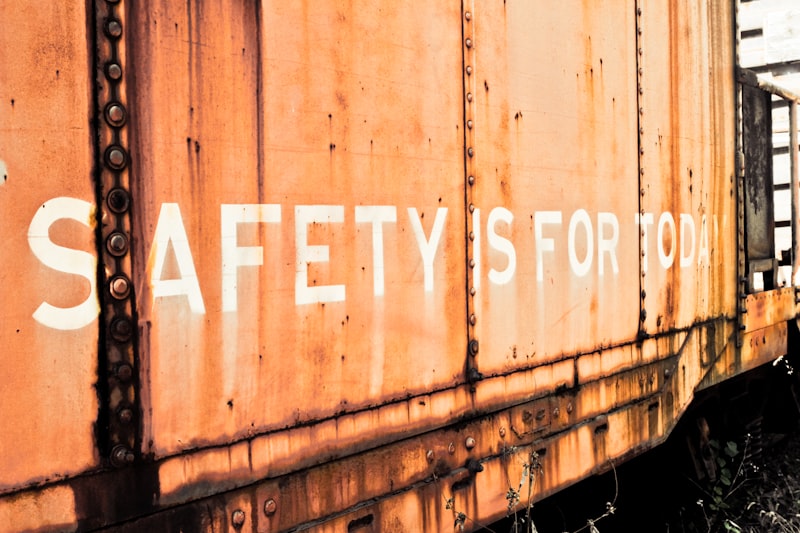
Introduction to Safety Psychology
Safety psychology constitutes a specialized field within applied psychology dedicated to the comprehensive analysis of human and environmental factors that contribute to accidental injuries, incidents, and effective risk avoidance. This discipline operates on the fundamental premise that accidents are rarely random occurrences but rather the predictable result of interactions between human behavior, cognitive processes, physiological states, and the specific characteristics of the surrounding environment. The primary objective of safety psychology is not merely to react to accidents after they occur, but to proactively develop interventions, design systems, and foster cultures that minimize hazards and promote resilience across diverse settings, ranging from industrial workplaces and transportation systems to domestic environments and public spaces. By integrating insights from cognitive psychology, social psychology, human factors engineering, and behavioral science, practitioners strive to understand the mechanisms underlying human error and non-compliance, thereby enhancing overall systemic safety performance.
The scope of safety psychology is inherently broad, necessitating a systematic approach that bifurcates the sources of risk into two major categories: human aspects and environmental aspects. The analysis of human aspects delves into the internal states and behavioral patterns of individuals, examining factors such as inherent tendencies toward risk-taking, the efficacy of information processing, the influence of personality traits, and the critical role played by psychological states like stress, anxiety, and fatigue. Understanding these internal dynamics is crucial because individual decision-making, moment-to-moment attention, and adherence to safety protocols are ultimately mediated by these psychological variables. For instance, a person experiencing significant acute stress is far more likely to demonstrate compromised attention and slower reaction times, increasing the probability of error in high-stakes situations, regardless of external safeguards.
Conversely, the examination of environmental aspects focuses on the external context in which behaviors occur, recognizing that even the most motivated individuals will struggle to maintain safety in poorly designed or inherently hazardous settings. This analysis encompasses the physical layout of workspaces, the clarity and efficacy of warning systems and signage, the ergonomic design of tools and controls, and the ambient conditions such as noise levels, lighting, and temperature. A key tenet is that the environment should be configured to minimize the opportunity for error and maximize the ease of safe practice. Successful interventions in this area include secure road design—reducing visual clutter and ensuring appropriate sight lines—the implementation of advanced safety features like car seat belts and airbags, and the thoughtful configuration of high-risk domestic areas such as kitchen areas and restrooms to prevent slips, falls, and burns. This holistic perspective ensures that safety initiatives address both the ‘person’ and the ‘place’ concurrently.
Human Factors: Cognition, Behavior, and Risk Perception
Central to safety psychology is the study of risk-free and risky ways of thinking or conduct, exploring the cognitive biases and heuristics that influence how individuals perceive and respond to potential dangers. Human beings often rely on mental shortcuts to process complex information, which, while generally efficient, can lead to systematic errors in assessing actual risk levels. For example, the availability heuristic may cause individuals to overestimate the frequency of highly publicized, yet statistically rare, events (like plane crashes) while underestimating the danger of common, mundane risks (like driving fatigue). Furthermore, phenomena such as optimism bias lead many people to believe that negative outcomes are statistically less likely to happen to them personally compared to others, resulting in complacency and a reduced motivation to comply rigorously with preventative safety measures, especially when those measures are perceived as inconvenient or time-consuming.
Beyond cognitive processes, individual character and physiological factors play a significant role in determining safety outcomes. Personality traits such as conscientiousness, impulse control, and sensation-seeking have been empirically linked to varying levels of safety behavior. Individuals characterized by low conscientiousness or high impulsivity may struggle with the routine discipline required for following strict safety protocols or operating heavy machinery responsibly. Physiological states, particularly those related to circadian rhythms and physical health, are equally critical. Fatigue, whether resulting from sleep deprivation or sustained workload, severely impairs executive functions, leading to reduced vigilance, slowed reaction times, and difficulty in complex problem-solving—all precursors to accidental injury. Safety psychologists utilize tools like fitness-for-duty assessments and fatigue management systems to mitigate these inherent human limitations, treating the physiological state as a vital component of risk management.
The impact of stress and anxiety factors represents another critical area of investigation within the human aspects of safety. High levels of chronic or acute stress can significantly narrow an individual’s attentional focus, leading to tunnel vision where peripheral cues and potential hazards are overlooked. Anxiety, especially performance anxiety in high-pressure roles, can impair motor coordination and decision speed, sometimes leading to panic or freezing behaviors rather than adaptive responses during an emergency. Safety interventions must therefore address the mental health and psychological resilience of the workforce. This often involves providing training in stress management techniques, ensuring adequate staffing levels to prevent burnout, and fostering a supportive organizational climate where employees feel comfortable reporting elevated stress levels without fear of punitive action, thereby ensuring that mental health support is integrated into the overarching safety framework.
Environmental Design and Error Proofing
The environmental aspects of safety psychology adhere closely to the principles of human factors engineering, focusing on designing systems and environments that are inherently robust against human error. This approach recognizes that attempting solely to modify human behavior is often less effective than modifying the environment to make the safe choice the easiest choice. A primary example is the focus on secure road design, which employs psychological principles to guide driver behavior unconsciously. This includes the strategic placement of rumble strips to alert distracted drivers, the use of visual narrowing (such as painting lines closer together) to encourage reduced speeds, and the implementation of clear, standardized traffic control devices and lighting schemes that minimize ambiguity and cognitive load on the driver, especially under adverse weather conditions or high traffic density.
In occupational settings, the creation of risk-free working environments requires detailed ergonomic analysis and hazard elimination. This involves proactive efforts such as redesigning machinery to incorporate safety interlocks—devices that prevent operation if guards are not in place—and optimizing the layout of control panels based on principles of proximity compatibility and logical grouping. For instance, processes like redesign of signage must ensure that warnings are highly salient, immediately understandable across diverse linguistic backgrounds (often utilizing universal pictograms), and positioned within the optimal visual field of the operator. Furthermore, environmental management includes crucial elements such as noise abatement, recognizing that excessive ambient noise significantly contributes to cognitive distraction, communication breakdowns, and increased physiological stress, thereby degrading overall safety performance and vigilance over prolonged periods of exposure.
Beyond traditional industrial settings, safety psychology applies design principles to public health and domestic safety. The prevention of overcrowding in public venues, for example, is managed through psychological modeling of crowd dynamics and panic behavior, ensuring that egress routes are clearly marked and sufficiently wide to prevent bottlenecking, which can trigger widespread anxiety and resultant injury. Domestically, simple environmental modifications, such as the better configuration of kitchen areas and restrooms, dramatically reduce the risk profile for residents, particularly the elderly or those with mobility issues. This involves installing grab bars, ensuring non-slip surfaces, optimizing lighting to eliminate shadows, and placing commonly used items within easy reach to minimize stretching or climbing hazards. These targeted environmental interventions translate psychological understanding of physical and cognitive limitations into tangible, protective engineering solutions.
Organizational Safety Culture and Leadership
A cornerstone of modern safety psychology, particularly in high-reliability organizations (HROs), is the concept of Organizational Safety Culture. This refers to the shared perceptions, values, beliefs, and attitudes that employees hold regarding risk management, safety policies, and behavior within the organization. A positive safety culture is characterized by trust, open communication, mutual respect, and a willingness to learn from failures rather than resorting to immediate blame. In organizations with weak safety cultures, employees may prioritize production goals over safety compliance, ignore minor violations, or actively conceal errors due to fear of retribution, behaviors which inevitably lead to the normalization of deviation and increased systemic risk. Safety psychologists work with leadership to shift these underlying values, transforming safety from a regulatory burden into a core operational value.
Effective leadership is indispensable in shaping a robust safety culture. Leaders must demonstrate visible commitment to safety, often referred to as ‘walking the talk,’ ensuring that resources are allocated appropriately for safety training, equipment maintenance, and system improvements. This involves establishing comprehensive reporting mechanisms, specifically implementing a just culture, where honest reporting of errors and near misses is encouraged and differentiated from reckless or malicious behavior. In a just culture, mistakes resulting from system flaws or unavoidable human fallibility are used for learning and improvement, whereas intentional disregard for safety rules is addressed firmly but fairly. This psychological contract between management and staff is crucial for fostering the trust necessary for accurate data collection and continuous improvement in safety performance.
The role of communication within the organization is also highly scrutinized by safety psychologists. Safety communication must be clear, consistent, and delivered through multiple channels to ensure effective absorption and retention. This includes optimizing the design and delivery of training programs, moving beyond didactic lectures to incorporate experiential learning, simulations, and behavioral rehearsal. Furthermore, the communication structure must facilitate upward feedback, allowing frontline workers, who possess the most intimate knowledge of operational hazards, to convey their concerns directly to management without bureaucratic hindrance. Psychological research confirms that when employees feel heard and respected regarding safety matters, their engagement in proactive safety behavior significantly increases, leading to better compliance and self-monitoring.
Interventions and Behavioral Safety Strategies
Safety psychology employs a range of scientifically validated interventions aimed at modifying behavior and enhancing safety performance. One prominent approach is Behavior-Based Safety (BBS), which focuses on identifying critical safety behaviors—observable actions that either prevent or cause accidents—and systematically reinforcing safe performance while discouraging unsafe practices. BBS programs typically involve structured observation processes where trained peers or supervisors monitor specific behaviors, provide immediate and constructive feedback, and utilize positive reinforcement (such as recognition or rewards) for adherence to safe procedures. The psychological underpinning of BBS lies in operant conditioning principles, ensuring that safe behavior is consistently rewarded and maintained over time, shifting the focus from lagging indicators (accidents) to leading indicators (safe behaviors).
Beyond direct behavioral modification, cognitive interventions are utilized to enhance skills crucial for safety. Situation Awareness Training (SAT) is designed to improve an individual’s ability to accurately perceive the elements in their environment, comprehend their meaning, and project their status in the near future. This is particularly vital in dynamic, complex environments such as air traffic control, surgical operating rooms, or heavy manufacturing. By training employees to systematically scan their environment, anticipate potential system failures, and recognize subtle cues indicating impending hazard, safety psychologists effectively increase the cognitive buffering capacity of the individual, reducing the likelihood of catastrophic surprise and ensuring timely, appropriate responses when faced with unexpected events.
Another powerful class of interventions relates to the mandated use of protective measures, such as the universal utilization of car seat belts. While the physical mechanism is engineering-based, the compliance challenge is purely psychological. Interventions include public awareness campaigns utilizing fear appeals or positive modeling, alongside legislative mandates enforced by penalties. Psychological research has shown that making the safe behavior automated or mandatory—through design or law—is often more effective than relying solely on voluntary compliance based on risk assessment. Furthermore, the concept of “nudge” theory, applied in safety contexts, involves subtle environmental cues that guide individuals toward safe choices, for example, placing hygiene reminders directly at the point of action rather than relying on generalized memos.
Measurement, Assessment, and Accident Proneness
Effective safety psychology relies heavily on rigorous measurement and assessment techniques to identify high-risk individuals, systemic failures, and the efficacy of interventions. Assessment tools include standardized psychometric instruments designed to measure personality traits (e.g., risk-taking propensity, vigilance), cognitive abilities (e.g., attention span, reaction time), and psychological states (e.g., fatigue scales, stress inventory). These data are often used in conjunction with behavioral observation data, incident reports, and near-miss analyses to create a comprehensive safety profile for an organization or an individual. The systematic collection and analysis of safety data allow practitioners to move beyond anecdotal evidence and apply evidence-based strategies for risk mitigation and continuous improvement.
Historically, an important but controversial concept within the field was accident proneness. This theory suggested that certain individuals possess stable, inherent traits that make them disproportionately likely to experience accidents throughout their lives, regardless of the environment. While early research attempted to identify a singular “accident-prone personality,” contemporary safety psychology largely views accident involvement as a complex outcome resulting from the dynamic interaction between transient psychological states (like acute stress or distraction), environmental conditions, and underlying, measurable behavioral tendencies. While some individuals may exhibit consistently riskier behavior patterns—often related to low impulse control or high sensation-seeking—the focus has shifted from labeling individuals to identifying and mitigating the systemic and situational factors that allow these risky behaviors to manifest as actual injury events.
Modern assessment focuses heavily on predictive modeling derived from organizational data. Techniques such as hierarchical task analysis and critical incident technique are used to deconstruct complex tasks into smaller, manageable steps, identifying potential failure points where human error is most likely to occur. By understanding the specific context in which errors happen, safety professionals can develop targeted training modules or redesign the task environment to eliminate the hazard entirely. Furthermore, the systematic investigation of near misses—events that had the potential to cause harm but did not—provides invaluable prospective data, often revealing latent failures in the system that are masked by luck or mitigating circumstances, enabling proactive correction before a serious accident occurs.
Future Directions and Integration
The field of safety psychology continues to evolve rapidly, particularly with the integration of advanced technology and data analytics. The rise of machine learning and artificial intelligence offers new avenues for predictive safety analytics, allowing organizations to process massive datasets derived from wearable technology, operational logs, and environmental sensors to identify high-risk conditions in real-time. For instance, psychophysiological monitoring through wearable devices can track indicators of fatigue, cognitive load, or elevated stress, providing personalized alerts to individuals or supervisors before they engage in safety-critical tasks, thereby implementing a dynamic, personalized layer of protection that moves beyond static rules and protocols.
Furthermore, there is a growing emphasis on resilience engineering, which shifts the focus from preventing failure (Safety-I) to ensuring success (Safety-II). Resilience engineering studies how systems and people adapt and adjust their behavior to cope with complexity, variability, and unexpected conditions, recognizing that human variability is often the source of success and flexibility, not just failure. Safety psychologists contribute by analyzing the adaptive capacity of teams and organizations, fostering competencies such as improvisation, resourcefulness, and collective mindfulness, ensuring that systems are not only safe by design but also capable of graceful degradation and recovery when inevitable perturbations occur.
In conclusion, safety psychology remains a vital interdisciplinary field dedicated to mitigating risk across all human activities. By meticulously analyzing the interplay between human cognition, behavior, and physiological states and the design and structure of the environment, practitioners develop evidence-based strategies that enhance compliance, improve situational awareness, and cultivate robust safety cultures. The ultimate goal—to reduce safety issues in the workplace and elsewhere—is achieved through a sustained commitment to understanding the complexities of human performance and configuring the external world to support error-free operation.