Stimulus Salience: Why Your Brain Picks What Matters
Scientifically Reviewed · Dr. Marwa Abd-Alazim · September 7, 2026
Review Criteria & Clinical Standards
This content undergoes rigorous scientific peer-review and medical editorial standards at Arab Psychology Network to ensure clinical accuracy, validity, and compliance with evidence-based guidelines from leading psychological and healthcare authorities (APA / WHO).
Introduction to Salience: Defining the Efficient Stimulus
Salience, in the context of cognitive psychology and neuroscience, refers to the inherent quality or constant of a stimulus that dictates its prominence and overall effectiveness in capturing attention and driving cognitive processing. It is the degree to which a sensory input stands out from the surrounding environment or the background noise. This concept is foundational to understanding how organisms filter the overwhelming torrent of sensory data bombarding them at any given moment, enabling the prioritization of certain inputs over others for limited processing resources. A highly salient stimulus is one that possesses a potent capacity to recruit attentional mechanisms, irrespective of the current goals or expectations of the observer. Fundamentally, salience serves as a critical gatekeeper, determining which elements of the external or internal world are deemed worthy of detailed analysis and subsequent behavioral response.
The core definition emphasizes the efficiency of the stimulus; that is, its power to provoke a response. This efficiency is not merely a measure of intensity, such as loudness or brightness, but rather a complex calculation involving contrast, novelty, biological significance, and predictive value. For instance, a small, sudden movement in the periphery may be far more salient than a large, static object, because the former signals a potential change requiring immediate assessment. Understanding salience allows psychologists to model the initial stages of perception and attention, providing insight into phenomena where crucial information is missed—a concept often summarized by the phrase, “The salience was lost on him,” indicating a failure of the stimulus to penetrate the attentional filter and reach conscious awareness or influence behavior.
While often treated as a singular construct, salience operates on multiple levels, ranging from basic sensory processing in subcortical areas to complex, goal-directed modulation within the prefrontal cortex. It is the mechanism by which sensory input is weighted according to its immediate relevance and potential impact. This weighting system ensures that resources are allocated optimally, allowing for rapid adaptation and survival. The psychological study of salience bridges perception, attention, learning, and decision-making, illustrating its pervasive influence across the entire cognitive architecture.
Historical Context and Theoretical Foundations
The psychological inquiry into salience has roots extending back to early structuralist and functionalist approaches, though the concept gained formal traction with the rise of Gestalt psychology. Gestalt theorists focused heavily on organizational principles, such as figure-ground segregation and the laws of grouping, which inherently rely on certain aspects of the visual field being more salient than others. The concept that some stimuli possess intrinsic properties that make them stand out—a quality often referred to as “prägnanz”—laid the groundwork for modern definitions of stimulus efficiency. However, these early models often focused primarily on physical properties and lacked the complexity necessary to incorporate cognitive or endogenous influences.
A significant theoretical advance came through the study of conditioning and associative learning, particularly the work of Pavlov and later, the development of sophisticated models like the Rescorla-Wagner model. In associative learning theory, salience dictates how much attention an organism pays to a potential cue, thereby determining the amount of associative strength that cue can acquire. If a cue is not salient, it is ineffective, and no learning occurs, even if it perfectly predicts an outcome. This view cemented salience not just as a perceptual phenomenon but as a crucial moderator of learning capacity. Highly salient cues, such as intense sounds or distinctive colors, overshadow or block the conditioning of less salient, yet equally predictive, cues.
Modern cognitive psychology formalized salience within the framework of attentional selection models. Early filter models, such as those proposed by Broadbent, suggested that selection was based on simple physical features, which are inherently measures of salience. Subsequent models, particularly those involving feature integration theory (FIT) by Treisman, introduced the idea of a “master map of locations” or a “salience map.” This theoretical construct posits a dedicated neural representation where the weighted features of all objects in the environment are combined, creating a topographical map that guides the deployment of selective attention. According to this framework, attention is automatically drawn to the location with the highest accumulated salience value, whether derived from intrinsic physical properties or modulated by current goals.
Neural and Cognitive Mechanisms of Salience Processing
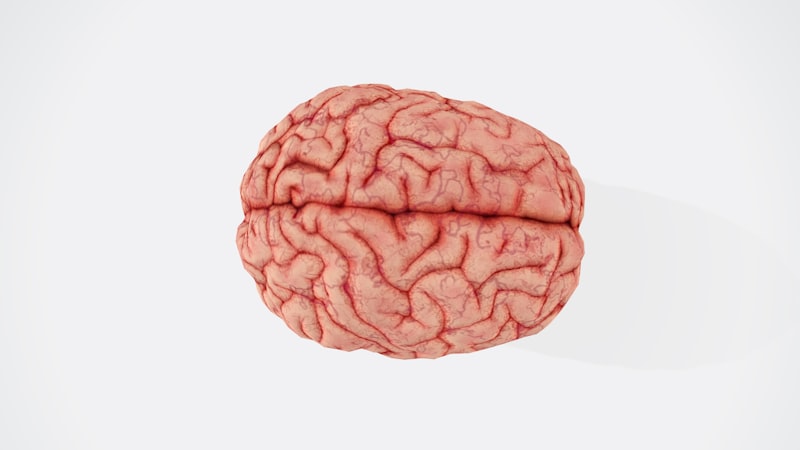
The neural processing of salience is distributed across a complex network of brain regions, collectively known as the Salience Network (SN). This network plays a critical role in detecting behaviorally relevant stimuli, integrating sensory, emotional, and cognitive information, and initiating appropriate responses. The core nodes of the Salience Network include the anterior insula (AI) and the anterior cingulate cortex (ACC). The AI, often linked to interoceptive awareness and emotional processing, acts as a pivotal hub, detecting deviations from baseline expectations or changes in the internal and external environment that require attentional redirection. The ACC is involved in conflict monitoring and error detection, ensuring that the detected salient stimulus is appropriately integrated into goal-directed behavior.
Salience processing involves rapid communication between these cortical regions and more primitive subcortical structures. The superior colliculus and the pulvinar nucleus of the thalamus are crucial for bottom-up salience detection. The superior colliculus is particularly adept at detecting sudden onsets and rapid movements, providing a fast, reflexive mechanism for orienting the eyes and head toward a potentially important stimulus. This pathway is largely independent of conscious control and ensures immediate response to threats or novel events. The integration of this primitive detection with higher-order cognitive resources is mediated by projections to the parietal and frontal cortices, regions comprising the Dorsal Attention Network (DAN) and the Ventral Attention Network (VAN).
The interplay between attention networks is key to distinguishing between exogenous (bottom-up) and endogenous (top-down) salience. The VAN is primarily involved in reorienting attention when an unexpected, highly salient stimulus appears. Conversely, the DAN is engaged when attention is voluntarily maintained on a target based on internal goals. The SN acts as the switch, coordinating activity between the DAN and VAN. When the SN detects a stimulus of high intrinsic or biological salience, it suppresses the current activity of the DAN (goal maintenance) and activates the VAN (reorienting), thereby shifting attentional focus to the newly detected, efficient stimulus. This neural architecture demonstrates that salience is not static but dynamically regulated by internal state, expectancy, and external input.
Determinants of Salience: Bottom-Up vs. Top-Down Factors
Salience is determined by a combination of factors that can be broadly categorized into two major types: bottom-up (exogenous) and top-down (endogenous) determinants. Bottom-up salience refers to the intrinsic, physical properties of the stimulus itself that make it stand out regardless of the observer’s current goals or cognitive state. These factors are processed automatically and rapidly, often recruiting attention reflexively. Examples of bottom-up determinants include:
- Contrast and Intensity: A stimulus with high luminance contrast against its background, or a sound of high volume, possesses greater inherent salience.
- Novelty: Stimuli that are unfamiliar or unexpected in their environment automatically draw attention because they violate established perceptual templates.
- Movement and Change: Sudden onset, flickering, or rapid motion is highly salient, reflecting an evolutionary imperative to prioritize dynamic stimuli.
- Perceptual Organization: Features that violate Gestalt principles, such as an element that is distinctly different in color, orientation, or size from its neighbors (the “pop-out” effect), exhibit enhanced salience.
In contrast, top-down salience is determined by the observer’s internal state, expectations, goals, and prior experience. This cognitive modulation allows the brain to prioritize stimuli that are currently relevant to the task at hand, even if they possess low intrinsic bottom-up salience. For instance, a person searching for a specific key will find the visual representation of that key highly salient, whereas others would merely perceive it as background clutter. Key top-down determinants include:
- Goal Relevance: The degree to which a stimulus is associated with a current task objective or desired outcome.
- Expectancy and Context: Stimuli that confirm or violate strong expectations often become highly salient. A familiar object placed in an unexpected location will gain salience due to contextual incongruity.
- Motivational State: Stimuli associated with primary drives (e.g., food stimuli when hungry, threat stimuli when anxious) receive enhanced processing priority.
The interaction between these two categories is dynamic and competitive. While a loud explosion (high bottom-up salience) will typically override goal-directed attention, selective attention (top-down) can significantly amplify the salience of weak stimuli that are goal-relevant, allowing them to effectively compete with inputs that are physically more intense. The ultimate attentional priority assigned to any stimulus is the integrated result of these competing bottom-up and top-down weights, mapped onto the neural salience landscape.
Salience in Attention and Perception
The primary function of salience is to guide the deployment of attention. The process begins with the rapid construction of a salience map, a spatially organized representation of the visual scene where each location is assigned a value corresponding to its overall efficiency in attracting attention. This map is the crucial interface between raw sensory input and selective cognitive processing. In visual search tasks, the salience map is used to predict where the observer’s eyes will land next, demonstrating a direct link between stimulus salience and oculomotor behavior.
Salience is particularly evident in studies of parallel processing. When a target differs from its distractors by a single, highly salient feature (e.g., finding a red circle among green circles), the search is efficient and occurs in parallel—a phenomenon known as “pop-out.” The high salience of the feature contrast allows the target to be detected immediately, irrespective of the number of distractors. However, when the target is defined by a conjunction of features (e.g., finding a red vertical line among red horizontal lines and green vertical lines), the search becomes serial and less efficient, as the high salience of individual features (color and orientation) must be bound together through focused attention, a process that requires more time and cognitive effort.
The phenomenon of inattentional blindness perfectly illustrates the failure of salience. Even if a stimulus possesses relatively high physical salience (e.g., a person in a gorilla suit walking across a scene), if the observer’s top-down goals strongly focus attention elsewhere, the stimulus’s efficiency in capturing attention is overridden. The stimulus may be registered by the sensory system, but because it is deemed irrelevant to the current task by the cognitive filtering mechanism, it fails to achieve cognitive salience and is not consciously perceived. This highlights that effective salience requires not only intrinsic stimulus properties but also successful passage through the filter of relevance.
Salience in Learning and Conditioning
In the domain of learning, particularly classical conditioning, the salience of a conditioned stimulus (CS) is paramount. Salience determines the upper limit of how much associative learning can occur between the CS and the unconditioned stimulus (US). Highly salient cues acquire associative strength more rapidly and reach higher asymptotic levels than less salient cues. This principle is mathematically formalized in contemporary learning models, where salience is often represented as an attention weighting parameter that determines the rate of learning.
The concepts of overshadowing and blocking are critical manifestations of salience in learning. Overshadowing occurs when two conditioned stimuli are presented simultaneously (a compound cue), but one is significantly more salient than the other. The more salient cue acquires a disproportionately large share of the associative strength, while the less salient cue is “overshadowed” and fails to elicit a strong conditioned response when presented alone. The high efficiency of the dominant stimulus effectively monopolizes the attentional resources necessary for learning.
Similarly, blocking demonstrates the interaction between salience and prior experience. If an organism is first conditioned to a highly salient CS (CS-A), and then CS-A is paired with a second, less salient stimulus (CS-B) and the US, the subsequent conditioning of CS-B is blocked. Because CS-A already possesses high predictive value and high salience, the introduction of CS-B is redundant and deemed irrelevant, thus preventing the allocation of attention needed for new learning about CS-B. These phenomena confirm that salience acts as an attentional regulator, determining which stimuli are processed and integrated into the organism’s predictive model of the environment.
Clinical and Applied Implications of Salience
Disruptions in the normal processing of salience are implicated in several major psychiatric disorders, most notably schizophrenia and addiction. The theory of aberrant salience suggests that in schizophrenia, the dopaminergic system, which modulates the assignment of motivational salience, becomes dysregulated. As a result, neutral or otherwise irrelevant stimuli are mistakenly assigned excessive motivational significance or efficiency. This misattribution of importance can lead to the formation of delusional beliefs, where everyday objects or events are interpreted as being profoundly meaningful or threatening, reflecting a fundamental breakdown in the SN’s ability to correctly weight incoming sensory information.
In addiction, repeated exposure to drugs or drug-related cues leads to a pathological increase in their motivational salience. Through conditioning processes, formerly neutral cues (e.g., a specific location, a syringe, or certain friends) acquire extreme efficiency in capturing attention and driving behavior, even when the individual consciously wishes to abstain. The over-salience of these cues hijacks the decision-making circuits, illustrating how powerful, learned salience can override top-down cognitive control mechanisms. This pathological emphasis on drug cues demonstrates a shift in the hierarchy of attentional priorities, where the pursuit of the substance becomes the most salient goal.
In applied fields, the principles of salience are crucial for human factors engineering, marketing, and interface design.
- Human Factors: Designers of complex systems (e.g., airplane cockpits, nuclear power plant control rooms) must ensure that critical warnings and informational displays possess maximal bottom-up salience (e.g., using flashing lights, high contrast, unique auditory tones) to guarantee rapid detection and response during emergencies.
- Marketing and Advertising: Advertisers strategically utilize high salience through novelty, visual pop-out effects, and emotional relevance to ensure their products capture consumer attention in an increasingly saturated media environment.
- Education: Effective pedagogical methods utilize salience to draw student attention to key concepts, often through changes in vocal tone, visual aids, or structural organization, ensuring that the most efficient learning cues are prioritized.
Measurement and Operationalization of Salience
To study salience scientifically, researchers employ various methods to operationalize and measure the efficiency of a stimulus in recruiting attention. These methods span behavioral, physiological, and neuroimaging techniques.
Behavioral measures primarily assess the speed and accuracy of response, providing indirect evidence of a stimulus’s salience.
- Reaction Time (RT): Shorter reaction times to a stimulus generally indicate higher salience, as the stimulus was detected and processed more quickly.
- Eye Tracking: This is a powerful measure, as the initial fixation point and the duration of gaze provide a direct readout of visual salience. Stimuli with higher calculated salience values (based on computational models) consistently predict earlier and longer fixations.
- Attentional Bias Tasks: Tasks like the dot-probe task or visual search tasks quantify how quickly attention is drawn toward or away from a stimulus, thereby establishing its attentional priority or salience relative to neutral distractors.
Neurophysiological methods offer a more direct window into the neural processing underpinning salience.
- Event-Related Potentials (ERPs): Specific components of the ERP waveform are highly sensitive to salience. The P300 component, particularly the P3b, is often interpreted as reflecting the allocation of attentional resources to a significant or salient event. Novel or unexpected stimuli often elicit a large P300, reflecting their high efficiency in commanding cognitive resources.
- Functional Magnetic Resonance Imaging (fMRI): fMRI allows researchers to identify the brain regions that exhibit increased activation during the detection of salient stimuli. Studies routinely show robust activation in the anterior insula and anterior cingulate cortex (the Salience Network) when participants are exposed to novel, emotionally significant, or otherwise efficient stimuli.
This multi-methodological approach ensures that salience, as a fundamental constant of stimulus efficiency, can be rigorously quantified across different levels of cognitive and neural analysis.