Color Psychology: How Vivid Hues Drive Your Emotions
Scientifically Reviewed · Dr. Marwa Abd-Alazim · September 8, 2026
Review Criteria & Clinical Standards
This content undergoes rigorous scientific peer-review and medical editorial standards at Arab Psychology Network to ensure clinical accuracy, validity, and compliance with evidence-based guidelines from leading psychological and healthcare authorities (APA / WHO).
Introduction and Definition of Saturation
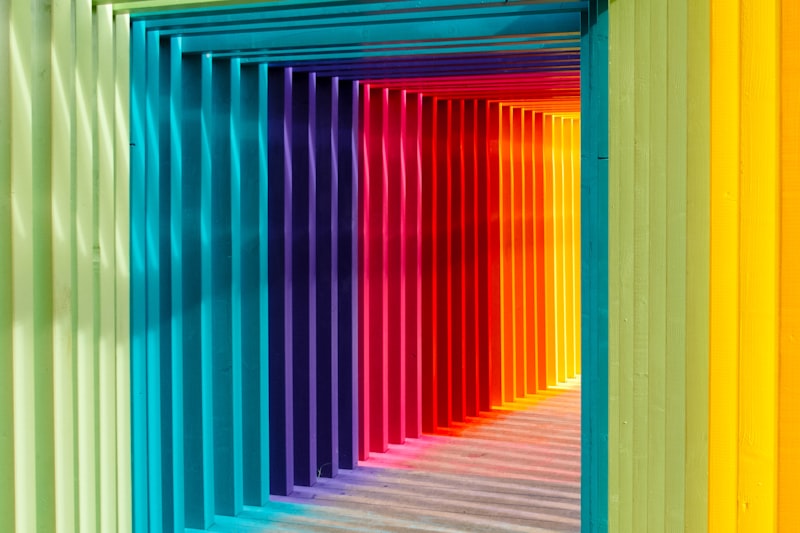
Saturation, a fundamental attribute of perceived color, refers to the vividness or purity of a hue. It quantitatively measures the degree to which a specific color sensation differs from an achromatic stimulus—that is, a gray of the exact same perceived darkness or lightness. Highly saturated colors, such as a pure spectral red, possess great intensity and are perceived as deep and rich, containing very little white, black, or gray component. Conversely, colors with low saturation appear dull, muted, or washed out, approaching the neutral axis where the color quality is entirely absent, resulting in a shade of gray. Understanding saturation is crucial in fields ranging from visual perception psychology to colorimetry and digital imaging, as it dictates the emotional impact and visual prominence of a color stimulus. This concept is distinct from both hue (the name of the color, e.g., red, blue) and lightness (the perceived brightness or value).
Psychologically, the perception of saturation is tied directly to the effectiveness of the chromatic signal relative to the total light signal received by the retina. When the visual system receives input dominated by a narrow band of wavelengths, the resulting color is highly saturated. If that spectral distribution is widened by the addition of light from across the visible spectrum (effectively adding white light), the resultant color sensation is diluted, leading to desaturation. This principle explains everyday observations, such as why a brightly colored piece of fabric appears “less saturated” after repeated washes; the loss of dye concentration relative to the substrate material reduces the purity of the reflected light, pulling the perceived color closer to the neutral gray of the background.
The core definition established within color science is that saturation quantifies the departure from neutrality. A color is maximally saturated when it exhibits the highest possible chroma for a given lightness level. This attribute serves as a critical descriptor in psychophysics, allowing researchers to map the complex, non-linear relationship between the physical properties of light (spectral purity) and the subjective human experience of color quality. It is this measure that allows us to distinguish between a pale pastel pink (low saturation) and a brilliant magenta (high saturation), even if both colors share the same fundamental hue and are viewed under identical lighting conditions.
The Three Dimensions of Color Perception
Color perception is universally described by three interdependent psychological dimensions: Hue, Lightness (or Value), and Saturation (or Chroma). These dimensions form a perceptual space, often modeled cylindrically, allowing any perceived color to be accurately plotted. Hue defines the quality we typically associate with color, corresponding largely to the dominant wavelength of the light stimulus. Lightness, often referred to as Value in artistic contexts, relates to the perceived intensity of light emission or reflection, ranging from absolute black to absolute white. Saturation, however, represents the radial component of this space, measuring the distance from the central axis, which is the neutral gray scale.
The interdependence of these dimensions is fundamental to visual perception. For instance, maximum saturation cannot be achieved at extreme levels of lightness or darkness. A color that is extremely light will appear white, and thus desaturated, regardless of its hue, because the achromatic component (whiteness) dominates the visual signal. Similarly, a color that is extremely dark approaches black, which is also achromatic, causing a reduction in saturation. Therefore, the purest, most saturated colors exist only in the middle range of lightness, illustrating the non-uniform nature of human color space and the necessary trade-offs between chroma and value.
In systems like the Munsell Color System, which is based on perceptually uniform steps, saturation is explicitly referred to as Chroma. Munsell Chroma scales outward from the gray pole (Chroma 0) to the most vivid color achievable at a particular Value level. This structured approach highlights that while hue cycles around the perimeter and value runs vertically, saturation describes the purity or intensity of the color radiating outward from the center. This framework provides an essential tool for psychologists and artists to accurately specify and manipulate color appearance based on human visual response rather than purely physical measurements.
Physical Correlates: Purity of Light
The perception of saturation is rooted in the physical properties of the light stimulus, specifically its spectral purity. Spectral purity describes how narrowly concentrated the wavelengths are within the light signal reaching the observer’s eye. A perfectly saturated color corresponds theoretically to monochromatic light, meaning light composed of a single, highly specific wavelength. While perfectly monochromatic light is rare outside of laboratory settings (like that produced by a laser), light sources that approach this purity elicit the sensation of maximally saturated colors.
When a light source or a reflected object introduces a broader band of wavelengths, the resultant color is perceived as less saturated. This broadening effect is synonymous with mixing the pure hue with white light. White light, by definition, contains energy across the entire visible spectrum. When white light is added to a pure spectral color, it effectively dilutes the dominance of the specific hue wavelength, reducing the spectral purity and thus decreasing the perceived saturation. This additive process demonstrates the physical mechanism behind desaturation: increasing the noise or uniformity across the spectrum diminishes the intensity of the specific chromatic signal.
In the context of material color, the saturation of a pigment or dye depends on its ability to selectively absorb and reflect only a very narrow range of wavelengths. Highly saturated paints contain pigments that absorb most wavelengths outside of the desired hue range with high efficiency. If the pigment is impure, or if the lighting conditions introduce substantial amounts of diffuse white light scatter (such as fog or haze), the resulting light reaching the eye will contain a broader distribution of wavelengths, leading to a noticeable reduction in perceived saturation. This strict correlation between spectral purity and perceived saturation underlies all objective measurements of color intensity.
Psychological Effects and Perception
Saturation plays a pivotal role in visual attention, emotional response, and cognitive processing. Highly saturated colors possess a greater attention-grabbing quality, causing them to stand out prominently against less saturated backgrounds. This effect is often exploited in signaling systems and design, where vibrant colors are used to denote importance, urgency, or positive reinforcement. Research suggests that high saturation can increase arousal and emotional intensity, often being associated with excitement, vitality, or, in some contexts, danger.
Conversely, low-saturation colors tend to appear more placid, subdued, and stable, lending themselves well to backgrounds or areas where cognitive focus is not required. The use of desaturated palettes in interior design, for example, is common in environments intended to promote relaxation or concentration, minimizing visual distraction. The psychological impact of saturation is so profound that changes in chroma can influence depth perception; highly saturated objects often appear to advance toward the viewer, while desaturated objects tend to recede, contributing to atmospheric perspective in both natural vision and artistic representations.
The perception of saturation is also subject to the complex process of chromatic adaptation. The human visual system constantly adjusts its sensitivity to compensate for the color cast of the ambient illumination (color constancy). While color constancy primarily works to maintain the perceived hue of an object, it also influences saturation perception. If a viewer is exposed to a highly saturated light source for a prolonged period, the sensitivity of the cones dedicated to that hue range decreases, leading to a temporary reduction in the perceived saturation of objects reflecting that color. This adaptive mechanism ensures that our perception of the world remains relatively stable despite wide variations in lighting conditions, although extreme adaptation can temporarily distort perceived color purity.
Measurement and Color Spaces
To standardize the assessment of saturation across different devices and viewing conditions, objective metrics within established color spaces are utilized. The most scientifically rigorous standard is the CIELAB (L*a*b*) space, developed by the International Commission on Illumination (CIE). In CIELAB, color is plotted based on three coordinates: L* (Lightness), a* (red/green axis), and b* (yellow/blue axis). Saturation in this system is termed Chroma (C*), and it is calculated as the radial distance from the origin (0, 0) in the a*b* plane, using the Euclidean distance formula: C* = √(a*² + b*²).
The CIELAB system is designed to be perceptually uniform, meaning that a given numerical change in C* should correspond roughly to the same perceived change in saturation, regardless of the hue or lightness level. This objective measure is critical for industries relying on precise color matching, such as manufacturing, printing, and digital display calibration. A value of C* = 0 indicates a completely achromatic color (gray), while increasing C* values indicate increasing saturation, regardless of whether the color is red, green, or blue.
Another commonly used framework, particularly in digital media, is the HSL (Hue, Saturation, Lightness) or HSV (Hue, Saturation, Value) model. While intuitive for artists and designers, the “Saturation” component in HSL/HSV is calculated relative to the maximum possible chroma achievable within the mathematical boundaries of the display technology (e.g., the RGB gamut). Consequently, HSL saturation is often device-dependent and does not always align perfectly with the human perceptual uniformity achieved by the CIELAB Chroma scale. For example, a “maximally saturated” blue in the HSL model may not appear as perceptually pure as a “maximally saturated” yellow, due to the inherent non-uniformity of the underlying RGB color space.
Factors Influencing Perceived Saturation
The perception of a color’s saturation is not solely determined by the purity of the light source; it is profoundly influenced by context and surrounding stimuli. One major factor is simultaneous contrast. The apparent saturation of a color patch can be dramatically enhanced or diminished by the color of its immediate background. When a color is placed against a neutral gray background, its perceived saturation is maximized. However, when the same color is placed next to a highly saturated complementary color, the contrast effect can make both colors appear even more saturated than they are in isolation, due to lateral inhibition within the visual cortex.
The level of illumination also significantly affects perceived saturation, following the Hunt effect, which states that saturation tends to increase with increasing luminance (brightness). As illumination levels rise, colors appear richer and more vibrant. Conversely, under very dim lighting conditions, colors lose their perceived saturation rapidly, a phenomenon related to the Purkinje effect where rod photoreceptors (which are achromatic) become dominant in low light, leading to the world appearing increasingly gray or desaturated. This explains why colors look muted at dusk compared to midday sunlight.
Furthermore, the size of the stimulus and the viewing distance play a role. Due to light scattering in the atmosphere, distant objects appear less saturated and lighter, a principle known as atmospheric perspective. At the retinal level, small color patches presented to the periphery of the visual field are often perceived as less saturated than large patches viewed centrally. This is because the density of color-sensitive cone photoreceptors decreases toward the periphery, requiring larger stimuli to elicit a strong chromatic signal, thus reducing the perceived purity of small, peripheral colors.
Applications in Art, Design, and Media
The manipulation of saturation is a fundamental tool for artists, photographers, and graphic designers used to control focus, depth, and emotional tone. In painting and photography, reducing the saturation of backgrounds or peripheral elements draws the viewer’s eye directly to the highly saturated focal point, creating a sense of hierarchy and emphasis. Desaturation is also frequently used to convey mood, often associated with nostalgia, seriousness, or melancholy, while vibrant, high-saturation imagery conveys energy, joy, or aggression.
In digital media and user interface (UI) design, saturation is strategically utilized for functional purposes. Highly saturated colors are often reserved for critical, actionable elements such as warnings, primary buttons, or notifications, ensuring they capture immediate attention. Conversely, the majority of the interface elements—backgrounds, text, and passive components—employ low to moderate saturation to maintain visual comfort and reduce cognitive strain, preventing the interface from appearing chaotic or overwhelming.
The constraints imposed by technological limitations, such as the color gamut of display devices (monitors, printers), necessitate careful management of saturation. Different devices can reproduce varying levels of purity; for example, an OLED screen typically achieves higher saturation levels than a standard LCD panel. The process of gamut mapping involves adjusting highly saturated colors that fall outside a device’s reproducible range to the closest achievable color within that device’s gamut, ensuring that the intended visual fidelity is maintained as closely as possible across different viewing platforms.
Clinical Relevance and Anomalies
The accurate perception of saturation is essential for normal vision, and alterations in perceived color purity can serve as an important clinical indicator of visual system pathology. The ability to distinguish between varying levels of saturation (chromatic discrimination) is frequently tested in ophthalmology and neurology. A reduction in perceived saturation for certain colors, known as desaturation loss, is often one of the earliest signs of optic nerve damage or disease, such as optic neuritis or glaucoma. Patients may report that colors appear “faded” or “washed out” in the affected eye, even before significant loss of visual acuity occurs.
Changes in the physical structure of the eye due to aging or disease also affect saturation perception. For example, the yellowing of the crystalline lens that occurs naturally with age (cataracts) preferentially filters out shorter wavelengths (blues and violets), leading to a perceived reduction in the saturation of blue colors. Furthermore, various forms of color vision deficiency, commonly known as color blindness, primarily affect the perception of hue, but severe deficiencies (dichromacy) can also drastically limit the maximum perceived saturation across the affected color axis, as the ability to distinguish pure spectral colors is compromised.
In rare cases, conditions affecting the cerebral cortex, such as cerebral achromatopsia (central color blindness resulting from damage to visual processing areas), result in a complete inability to perceive saturation, hue, or chroma, transforming the entire visual world into shades of gray, despite the sensory receptors (cones) in the retina remaining fully functional. Thus, saturation serves not only as a descriptor of color experience but also as a critical diagnostic tool, highlighting the integrity of the entire visual pathway from the retina to the higher cortical processing centers.