Schizoid Personality: Decoding the Detached Mind
Scientifically Reviewed · Dr. Marwa Abd-Alazim · September 14, 2026
Review Criteria & Clinical Standards
This content undergoes rigorous scientific peer-review and medical editorial standards at Arab Psychology Network to ensure clinical accuracy, validity, and compliance with evidence-based guidelines from leading psychological and healthcare authorities (APA / WHO).
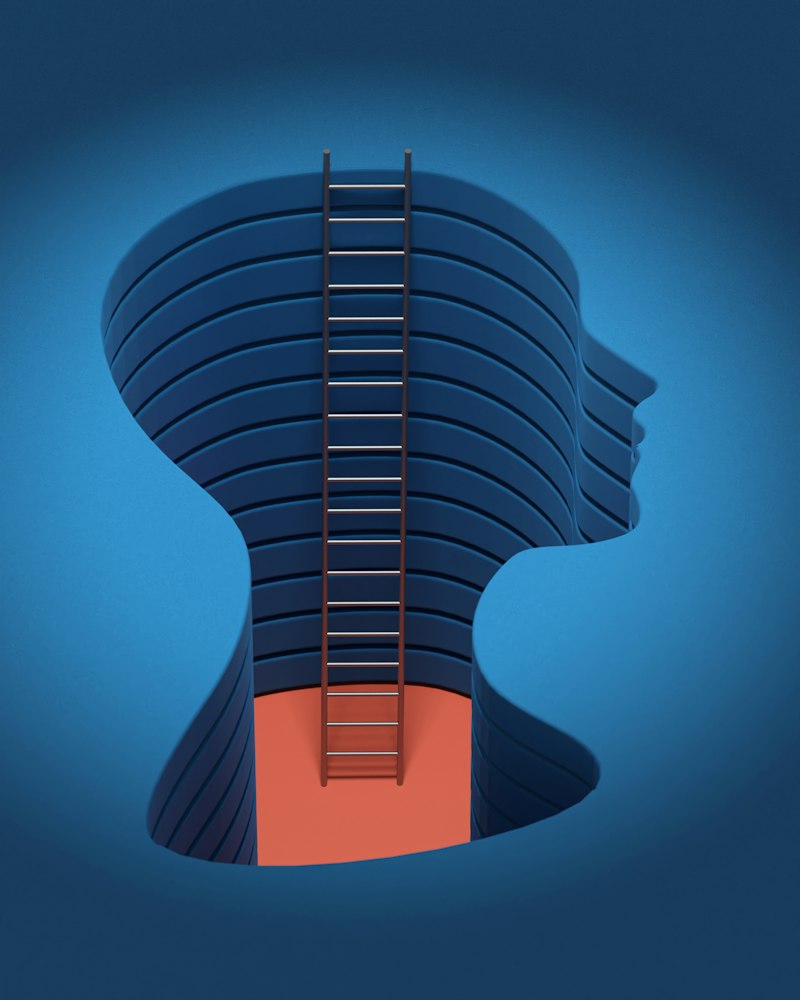
SCHIZOID PERSONALITY: Overview and Core Characteristics
The term Schizoid Personality refers to a distinct, enduring pattern of inner experience and behavior that deviates markedly from the expectations of the individual’s culture. This pattern is characterized fundamentally by a pervasive and profound detachment from social relationships, coupled with a severely restricted range of emotional expression in interpersonal settings. Individuals exhibiting this personality style are often described as “loners,” who actively choose solitary activities and exhibit minimal interest in forming close, intimate bonds, including those of a familial nature. The core characteristic lies not merely in shyness or social anxiety, but in a genuine indifference to social interaction and the affective rewards that typically accompany relationships. This intrinsic preference for isolation distinguishes the schizoid personality from other conditions where social avoidance is driven by fear or inadequacy, emphasizing instead an inherent lack of desire for connection or reciprocal emotional exchange.
A crucial element defining the schizoid personality is the marked indifference to the judgments, both positive and negative, of others. Unlike individuals who thrive on admiration or recoil from disapproval, the schizoid individual remains largely unaffected by either praise or condemnation. This emotional flatness is often interpreted by observers as aloofness or emotional coldness, reflecting the profound difficulty these individuals have in expressing typical human emotions, whether joy, anger, or sadness, in a manner accessible to others. This restricted emotional repertoire contributes significantly to their difficulty in navigating complex social landscapes, often leading them to pursue occupations or hobbies that require minimal interaction with the public. They may appear passive in the face of unfavorable situations and rarely respond with appropriate affective intensity, further reinforcing their image as detached observers of life rather than active, emotionally invested participants.
The schizoid pattern is generally stable over time, typically begins in early adulthood, and manifests across a variety of personal and professional contexts. It is essential to recognize that personality, in general, is defined as an individual’s characteristic manner of thinking, feeling, and behaving, which is consistent across situations. For the person with a schizoid personality, this consistency manifests as a life dedicated to minimal emotional investment and maximal personal space. While they may possess sophisticated intellectual capacities, their inner world remains largely private, inaccessible to others, and frequently focused on abstract concepts, mechanical systems, or non-human interests, which serve as acceptable and controllable substitutes for the complexities and unpredictability of human interaction. Understanding these core characteristics provides the necessary foundation for exploring the formal diagnostic criteria and historical development of this complex and often misunderstood presentation.
Formal Definition and Diagnostic Criteria (DSM-5)
According to the authoritative framework established by the Diagnostic and Statistical Manual of Mental Disorders (DSM-5), the schizoid personality is classified under the Cluster A (Odd or Eccentric) personality disorders. The DSM-5 defines it precisely as a “pervasive pattern of social detachment, indifference to the opinion of others, and emotional coldness,” beginning by early adulthood and present in a variety of contexts. For a formal diagnosis to be assigned, the individual must exhibit four or more specific diagnostic criteria from a defined list, all of which must be present and persistent, and not occurring exclusively during the course of another major mental disorder or attributable to substance use. These criteria highlight the multifaceted nature of the disorder, focusing equally on behavioral manifestation and internal affective restriction.
The core behavioral markers outlined in the DSM-5 criteria provide measurable indicators of the inherent social isolation experienced by these individuals. Key among these markers is the criterion that the individual neither desires nor enjoys close relationships, including being part of a family, distinguishing this presentation from individuals who are merely socially awkward. Furthermore, they almost always choose solitary activities, demonstrating a consistent, intrinsic preference for independence from others’ company. They report having little, if any, interest in having sexual experiences with another person, reflecting the general lack of interest in emotional or physical intimacy. Lastly, they take pleasure in few activities, often exhibiting a type of generalized anhedonia related to typical life rewards such as recreational or sensory experiences. These behavioral patterns collectively illustrate a profound lack of motivation for social connection and hedonic experience typically sought by the majority of the population, leading to a lifestyle characterized by extreme self-sufficiency.
In addition to these behavioral markers, the DSM-5 criteria emphasize the affective and communicative deficits inherent in the schizoid personality. Specifically, the individual lacks close friends or confidants other than first-degree relatives, indicating the pervasive difficulty in initiating and maintaining reciprocal, meaningful relationships. They show profound indifference to the praise and criticism of others, reinforcing the concept of emotional insulation from external validation and social comparison. Finally, a hallmark criterion is the demonstration of emotional coldness, detachment, or flat affect, which means their emotional expression is restricted and muted in social interactions, often failing to exhibit warmth, tenderness, or anger in appropriate measure. It is vital for clinicians to ensure that these pervasive patterns are not better explained by symptoms that occur exclusively during the course of Schizophrenia, Bipolar Disorder, Major Depressive Disorder, or are attributable to the physiological effects of another medical condition.
Historical Context and Early Conceptualizations
The conceptual genesis of the schizoid personality traces back to early 20th-century psychiatry, preceding the formal recognition of personality disorders in modern diagnostic manuals. The foundational work is often attributed to the influential German psychiatrist Ernest Kretschmer, who, in 1921, systematically described the concept of a “schizoid disposition” in his seminal work, Klinische Psychopathologie. Kretschmer observed that certain individuals exhibited a constitutional temperament characterized by emotional hypersensitivity combined with a withdrawn, reserved exterior. He categorized these traits into three primary clusters: unsociability, shyness, and quietness; shyness, timidity, and sensitivity; and docility, good nature, and emotional dullness. Kretschmer’s contribution was crucial because it posited that these traits were stable and existed on a continuum leading toward more severe psychotic states, laying the groundwork for the modern understanding of the schizoid spectrum as a temperamental predisposition.
Following Kretschmer’s initial observations, the concept was significantly refined and integrated into psychoanalytic theory by figures such as the American psychoanalyst Harry Stack Sullivan in the mid-20th century. Sullivan, known for his Interpersonal Theory of Psychiatry (1953), developed a comprehensive psychoanalytic theory regarding the schizoid personality, shifting the focus from constitutional temperament to environmental interaction. He focused heavily on the interpersonal dynamics and developmental deficits underlying the pattern. Sullivan proposed that schizoid individuals develop profound difficulties in forming relationships with others because of an underlying, often unconscious, fear of intimacy and vulnerability. This fear leads to a defensive withdrawal, where emotional investment is minimized as a protective mechanism against potential rejection, engulfment, or humiliation. For Sullivan, the schizoid pattern was a sophisticated, albeit maladaptive, response to early interpersonal environments perceived as consistently threatening or emotionally unstable, compelling the person to rely solely on themselves.
The subsequent history saw the distinction between the schizoid personality and the then-emerging concept of Schizotypal Personality Disorder (STPD) solidify. While both disorders fall under the Cluster A grouping and share elements of social isolation, Schizoid Personality Disorder (ScPD) primarily emphasizes the lack of desire for relationships and flat affect, whereas STPD includes cognitive and perceptual distortions, eccentric behavior, and odd thinking that are absent in ScPD. This crucial differentiation solidified with the publication of the third edition of the DSM (DSM-III, 1980), where ScPD was formally recognized as a distinct diagnostic entity separate from Schizophrenia and other related personality patterns. This refinement allowed for a clearer clinical focus on the primary deficit in ScPD: a pervasive failure in the capacity for emotional connection and social engagement, independent of frank psychotic features or thought disorder.
Theoretical Perspectives on Etiology
While the precise etiology of the schizoid personality remains complex and likely multifactorial, various theoretical models offer insights into its development, ranging from deep-seated psychodynamic conflicts to underlying neurobiological predispositions. The psychodynamic perspective, especially Object Relations Theory advanced by figures like Melanie Klein and Ronald Fairbairn, views the schizoid state as arising from a failure in the infant’s environment to provide adequate emotional mirroring and security, leading the individual to internalize the self as damaged or unworthy of connection. Fairbairn, in particular, described the schizoid person as having retreated into an internal, private world, preferring fantasy over real interaction. This strategic retreat is implemented to protect the vulnerable core self from external threats and relational demands that are perceived as intolerable, leading to a pattern of internal isolation and emotional self-containment which becomes the fixed adult personality structure.
Biological and genetic research suggests a potential hereditary component, linking schizoid personality traits to the broader schizotypal and schizophrenic spectrums, although the genetic loading appears less pronounced than in Schizotypal Personality Disorder. Studies indicate that the temperamental precursors—such as extreme introversion, low sociability, reduced affect, and emotional rigidity—may have a significant genetic basis inherited through family lines. Neuroimaging studies, though still in exploratory phases, sometimes indicate subtle structural or functional differences in brain regions associated with emotional processing, reward pathways (such as the ventral striatum), and social motivation. These neurological variations could potentially explain the observed anhedonia, the lack of intrinsic motivation for social reward, and the overall emotional flatness characteristic of the disorder. Furthermore, neurodevelopmental models hypothesize that early disruptions in the formation of neural circuits responsible for social cognition and “theory of mind” could contribute to the profound difficulty schizoid individuals have in accurately interpreting and responding to the emotional states of others.
Attachment theory also provides a valuable framework for understanding the development of the schizoid pattern. Individuals with this personality disorder frequently display patterns consistent with a dismissive-avoidant attachment style that becomes rigidly fixed in adulthood. This style is often thought to arise when caregivers are consistently unresponsive, emotionally unavailable, or actively neglectful, leading the child to conclude that seeking comfort, connection, or intimacy is fruitless, dangerous, or requires intolerable vulnerability. Consequently, the child develops a highly self-reliant coping mechanism, suppressing attachment needs and minimizing emotional expression as a survival strategy. This learned strategy of emotional detachment becomes the entrenched personality pattern, manifesting in adulthood as the schizoid preference for isolation and the fundamental difficulty in perceiving the value or safety of intimate interpersonal relationships. The resulting personality is highly defended, viewing the world as a place where emotional vulnerability is a profound risk to be avoided at all costs.
Clinical Presentation and Manifestations
The clinical presentation of the schizoid personality is marked by a conspicuous lack of overt emotional intensity, making them often less likely to seek clinical help unless compelled by external pressures, such as job loss, or the emergence of comorbid conditions like debilitating depression. Behaviorally, they are typically quiet, reserved, and unassertive, often blending into the background of social situations. Their vocational choices frequently reflect their need for minimal social contact; they commonly gravitate toward jobs involving technical data, machinery, computers, night watchman duties, or solitary intellectual pursuits, where interaction with colleagues or clients is limited and predictable. When they do interact, their speech may be slow, monotonous, and conspicuously lacking in spontaneous gestures or animated facial expressions. They rarely engage in superficial small talk and may seem unduly preoccupied with highly abstract, esoteric, or impersonal topics, further distancing them from the immediate social environment.
Internally, the experience of the schizoid individual is often characterized by a rich, albeit strictly private, fantasy life. While they appear emotionally impoverished and cold to the outside world, many schizoid individuals report complex internal worlds filled with intense fantasies, sometimes involving idealized relationships, powerful internal narratives, or imaginary friends that compensate for the lack of real-world intimacy. This reliance on fantasy serves as a safe, controlled outlet for emotional needs that cannot be tolerated or managed in reality. However, this internal richness is almost never shared, and they typically maintain rigid boundaries between their private world and external reality. This compartmentalization is a powerful defense mechanism that helps them manage the perceived chaos, unpredictability, and emotional demands of social life, allowing them to remain emotionally stable despite the presence of profound internal loneliness or affective hunger.
Furthermore, the schizoid manifestation includes specific deficits in practical social skills. While they are often intellectually aware of social conventions, they struggle to employ them naturally or effectively because they lack the underlying motivation or emotional investment to connect. They frequently appear awkward, distant, or inappropriately formal in social situations, not due to anxiety (as is characteristic of Avoidant Personality Disorder), but due to a fundamental lack of practice and interest in the nuances of social reciprocity and emotional signaling. They may fail to pick up on subtle social cues, leading to interpersonal misunderstandings, yet they remain largely unconcerned by these social failures because they do not value the resulting alienation. This pervasive pattern of minimal emotional investment extends even to major life events; they may react to significant loss, profound personal success, or severe trauma with a noticeable lack of emotional intensity, further puzzling and frustrating those who seek a deeper, more empathetic connection with them.
Differential Diagnosis and Comorbidity
Accurate diagnosis of the schizoid personality requires careful differentiation from several other psychiatric conditions, particularly those within the Cluster A spectrum and those involving social withdrawal. The most critical distinction is between Schizoid Personality Disorder (ScPD) and Schizotypal Personality Disorder (STPD). While both involve social isolation and flat affect, STPD is clearly marked by eccentricities of thought, behavior, and appearance; magical thinking; unusual perceptual experiences (e.g., bodily illusions); and sometimes paranoid ideation. The individual with ScPD, conversely, presents as emotionally flat and withdrawn but fundamentally lacks the cognitive distortions, odd beliefs, and peculiar behaviors characteristic of STPD. If an individual meets criteria for both disorders, STPD typically takes precedence, reflecting the broader and often more severe nature of the schizotypal condition, which shares genetic links with schizophrenia.
Differentiation from Avoidant Personality Disorder (AvPD) is equally crucial, as both disorders involve profound social isolation, but the underlying motivational mechanism is fundamentally divergent. Individuals with AvPD intensely desire intimacy, close friendships, and social acceptance but are paralyzed by an extreme, painful fear of criticism, rejection, and humiliation, leading to active avoidance despite the internal desire for connection. The schizoid individual, in stark contrast, is genuinely indifferent to social contact, actively prefers solitude, and is not distressed by their isolation; their avoidance is driven by a lack of interest and intrinsic motivation, not by fear or anxiety about negative evaluation. If placed in an unavoidable social setting, the AvPD individual would likely experience high subjective distress and anxiety, whereas the ScPD individual would likely feel bored, indifferent, or mildly annoyed by the intrusion but not socially anxious in the same way.
Furthermore, the schizoid presentation must be distinguished from high-functioning Autism Spectrum Disorder (ASD). Both groups may exhibit profound social deficits, restricted affect, and intense, specialized interests. However, in ASD, the social difficulty is rooted in a fundamental impairment in social cognition, including difficulties with Theory of Mind, reading non-verbal communication, and reciprocal social interaction, often coupled with repetitive behaviors. While the schizoid individual also struggles with social cues, their presentation is defined more by a deliberate emotional detachment and lack of desire for connection, rather than the pervasive communication and sensory processing deficits characteristic of ASD. Comorbidity is common, particularly with Major Depressive Disorder, which may be precipitated when external stressors (like job loss or mandated social interaction) disrupt their carefully constructed solitary existence, forcing them to confront their isolation or emotional deficits.
References and Further Reading
For those seeking a deeper understanding of the conceptualization, diagnosis, and theoretical underpinnings of schizoid personality, the following foundational texts and articles are recommended:
- American Psychiatric Association. (2013). Diagnostic and Statistical Manual of Mental Disorders (5th ed.). Washington, DC: American Psychiatric Association.
- Kretschmer, E. (1921). Klinische Psychopathologie. Berlin: Springer.
- Parikh, P. (2013). Schizoid personality disorder: Clinical features and diagnosis. Indian Journal of Psychological Medicine, 35(3), 238–242.
- Sullivan, H.S. (1953). The Interpersonal Theory of Psychiatry. New York, NY: Norton.
- Trull, T.J., Widiger, T.A., & Burr, R. (2013). The classification of personality disorder. In T. Widiger, A. T. Simonsen, M. S. Krueger, & E. F. First (Eds.), The Oxford Handbook of Personality Disorders. Oxford, UK: Oxford University Press.