Taylorism: Engineering the Human Mind for Peak Output
Scientifically Reviewed · Dr. Marwa Abd-Alazim · September 22, 2026
Review Criteria & Clinical Standards
This content undergoes rigorous scientific peer-review and medical editorial standards at Arab Psychology Network to ensure clinical accuracy, validity, and compliance with evidence-based guidelines from leading psychological and healthcare authorities (APA / WHO).
Conceptual Foundations of Scientific Management
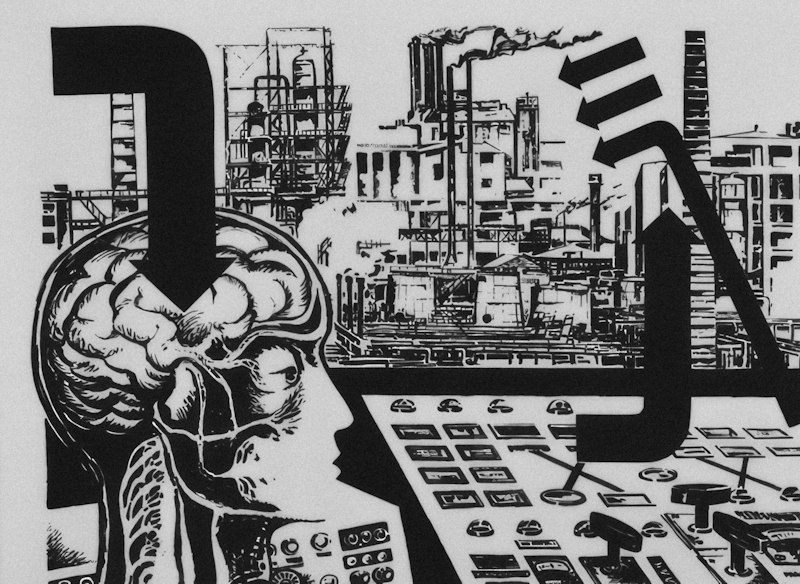
Scientific management, frequently referred to in academic and industrial circles as Taylorism, represents a seminal management theory that fundamentally altered the landscape of organizational behavior and industrial production. At its core, this paradigm seeks to optimize organizational efficiency by applying rigorous scientific methods to the analysis, design, and management of work processes. Developed during the zenith of the Industrial Revolution, scientific management transitioned the nature of labor from a craft-based, intuitive approach to a highly structured, data-driven discipline. The primary objective of this movement was to identify the most efficient means of performing a task, thereby maximizing productivity for the employer and potential earnings for the employee.
The philosophical underpinnings of scientific management are rooted in the belief that industrial output could be significantly enhanced through the systematic study of labor. Prior to the formalization of these theories, work was often performed based on “rule of thumb” methods, where individual workers dictated their own pace and techniques, often leading to inconsistencies and widespread inefficiency. Frederick Winslow Taylor, the primary architect of this movement, argued that management should take over the responsibility for planning and organizing work, leaving the execution to the laborers. This separation of mental labor from manual labor became a cornerstone of modern industrial engineering and management science.
Throughout the early 20th century, the adoption of scientific management principles facilitated a massive increase in production capabilities, particularly within the manufacturing sector. By focusing on the rationalization of labor, Taylor and his contemporaries provided a framework that allowed organizations to handle the increasing complexity of large-scale industrial operations. While the theory has evolved significantly over the past century, its influence remains pervasive in modern concepts such as Lean manufacturing, Six Sigma, and various contemporary performance management systems. This comprehensive overview explores the historical trajectory, core principles, and enduring criticisms of this influential management philosophy.
Historical Origins and the Evolution of Taylorism
The historical genesis of scientific management can be traced to the late 19th and early 20th centuries, a period characterized by rapid industrialization and the rise of the modern corporation in the United States. During this era, the traditional methods of production were failing to keep pace with the demands of a growing global economy. The movement emerged as a response to these inefficiencies, spearheaded by a group of engineers and consultants who sought to apply the logic of the laboratory to the factory floor. While Frederick Winslow Taylor is universally acknowledged as the father of scientific management, the movement was a collective effort involving several key figures who expanded upon his initial concepts.
Taylor’s seminal work, The Principles of Scientific Management, published in 1911, served as the definitive manifesto for the movement. In this text, Taylor detailed his experiences at the Midvale Steel Company and Bethlehem Steel, where he conducted extensive experiments on labor productivity. He observed a phenomenon he termed “soldiering,” where workers deliberately operated at a pace slower than their full capacity to protect their interests and avoid rate cuts. To combat this, Taylor proposed a system where every element of a worker’s task was timed and standardized, ensuring that maximum prosperity for both the employer and the employee could be achieved through heightened output.
In addition to Taylor, the movement was significantly shaped by the contributions of Frank and Lillian Gilbreth, who focused on motion study and the psychology of management. The Gilbreths utilized motion-picture cameras to analyze the smallest movements of workers, seeking to eliminate unnecessary physical exertion. Henry Gantt, another contemporary, introduced the Gantt chart, a visual tool for project management that remains a standard in the industry today. Furthermore, Harrington Emerson contributed to the movement by emphasizing the importance of efficiency as a distinct discipline, advocating for organizational structures that supported specialized expertise and standardized operations.
The Five Fundamental Principles of Scientific Management
The operational framework of scientific management is built upon a set of systematic principles designed to replace intuition with empirical evidence. These principles were intended to create a harmonious and highly productive environment where the interests of management and labor aligned through the pursuit of efficiency. The following points outline the essential tenets of the Taylorist approach:
- Elimination of Guesswork: Management must replace “rule of thumb” work methods with scientific study. This involves the empirical analysis of every task to determine the most efficient way to perform it, thereby removing the variability associated with individual worker preference.
- Work Specialization: This principle involves the division of labor, where complex tasks are broken down into small, simple, and repetitive actions. By specializing in a single component of production, workers can achieve a high level of proficiency and speed.
- Standardization of Work Processes: To ensure consistent quality and output, all work processes must be standardized. This includes the standardization of tools, equipment, and environmental conditions, ensuring that the “one best way” to perform a task is followed by every employee.
- Scientific Selection and Training: Rather than allowing workers to choose their own tasks, management should use scientific criteria to select the right person for the right job. Once selected, workers must be rigorously trained in the standardized methods developed by management.
- Cooperation Between Workers and Managers: A key goal of scientific management is to foster a spirit of cooperation. Management takes over the planning and intellectual work, while workers focus on execution. This partnership is maintained through incentive wage systems, where workers are rewarded for meeting or exceeding standardized targets.
These principles collectively aimed to transform the factory into a well-oiled machine. By applying scientific selection, management ensured that individuals possessed the physical and mental attributes necessary for specific roles. The standardization of tasks meant that productivity was no longer dependent on the unique skills of a few craftsmen but could be maintained across a large, less-skilled workforce. This shift was revolutionary, as it allowed for the mass production of goods at a lower cost, though it fundamentally changed the psychological contract between the worker and the organization.
Methodologies: Time and Motion Studies
The practical application of scientific management relied heavily on specific methodologies, most notably time and motion studies. These techniques were used to deconstruct manual labor into its most basic elements. In a time study, a manager or observer used a stopwatch to record the time taken by a “first-class worker” to complete a specific task. By averaging these times and adding allowances for fatigue and unavoidable delays, a standard time was established. This standard then became the benchmark for all workers, and those who failed to meet it were often retrained or reassigned, while those who exceeded it received bonuses.
Motion study, largely perfected by the Gilbreths, complemented time studies by focusing on the physical actions involved in work. They identified “therbligs”—basic units of motion such as “grasp,” “hold,” or “position”—to analyze how workers used their bodies. By eliminating wasted motions, such as unnecessary reaching or bending, the Gilbreths were able to increase productivity while simultaneously reducing physical fatigue. For example, in their famous study of bricklaying, they reduced the number of motions required to lay a brick from eighteen to five, resulting in a dramatic increase in the number of bricks laid per hour.
These methodologies represented the first major attempt to apply quantitative analysis to human labor. By treating the human body as a component of the industrial machine, Taylorists sought to optimize its performance through mechanical efficiency. While these studies provided invaluable data for industrial engineering, they also laid the groundwork for future criticisms regarding the dehumanization of labor. The rigorous monitoring and pacing inherent in these studies often led to a high-pressure environment where the worker felt like a mere extension of the machinery they operated.
The Psychological Impact on the Workforce
From a psychological perspective, scientific management is often associated with the “economic man” model of motivation. This theory posits that individuals are primarily motivated by monetary rewards and will work harder if they are provided with financial incentives. Taylor believed that by linking pay directly to output—through piece-rate systems—management could align the worker’s desire for high wages with the company’s desire for high productivity. This approach largely ignored higher-order psychological needs, such as autonomy, social belonging, or self-actualization, focusing instead on the extrinsic motivation of the paycheck.
The extreme division of labor and the repetitive nature of standardized tasks also had significant psychological consequences. Workers often experienced high levels of monotony and boredom, as their jobs required little cognitive engagement or creativity. This led to a sense of alienation, where the worker felt disconnected from the final product and the purpose of their labor. The loss of craft identity, where a worker took pride in creating a whole object from start to finish, was replaced by the repetitive execution of a single motion, contributing to a decline in job satisfaction for many industrial laborers.
Furthermore, the high-pressure environment created by standardized pacing and constant surveillance led to increased stress and mental fatigue. While Taylor argued that his methods would reduce physical strain through efficiency, the psychological strain of being timed and monitored often offset these benefits. The rigid hierarchy, where decision-making was strictly reserved for management, further diminished the worker’s sense of agency. This psychological dynamic eventually spurred the development of the Human Relations Movement, which sought to address the social and emotional needs that Taylorism had largely overlooked.
Criticisms and the Dehumanization of Work
Despite its undeniable impact on productivity, scientific management has faced intense criticism from labor unions, psychologists, and sociologists alike. The most frequent criticism is its mechanistic view of human labor. Critics argue that Taylorism treats workers as “cogs in a machine,” prioritizing efficiency at the expense of human dignity and well-being. By stripping workers of their autonomy and reducing their roles to simple, repetitive tasks, the system is seen as inherently dehumanizing. This lack of consideration for the individual worker led to significant labor unrest and resistance during the early 20th century.
Another major criticism concerns the exploitation of labor. While Taylor promised that increased productivity would lead to higher wages, many workers and union leaders felt that the lion’s share of the profits went to the owners, while the workers were pushed to their physical and mental limits. The standardized benchmarks were often set so high that only the most exceptional workers could achieve them, leading to burnout and high turnover rates. Additionally, the system’s reliance on outdated methods that did not account for the complexities of human behavior and social dynamics within the workplace made it a target for academic critique.
Furthermore, scientific management has been criticized for its rigid approach and its failure to adapt to changing organizational environments. The strict top-down hierarchy and the separation of planning from execution often stifled innovation at the lower levels of the organization. Workers, who were closest to the production process, were discouraged from suggesting improvements, as their only role was to follow the “one best way” prescribed by management. This lack of flexibility and the tendency to ignore the human aspect of work eventually limited the long-term effectiveness of the Taylorist model in more complex and dynamic industries.
The Enduring Legacy of Taylorism in Modern Industry
While the original form of scientific management is no longer practiced in its entirety, its legacy continues to shape modern management practices. The concept of process optimization and the use of data to drive decision-making are direct descendants of Taylor’s work. In the modern era, digital Taylorism has emerged, where software and algorithms are used to monitor and time the performance of office workers, delivery drivers, and call center employees. The fundamental drive for efficiency and the standardization of service delivery—seen in industries ranging from fast food to logistics—reflect the enduring influence of Taylorist principles.
Modern methodologies such as Lean manufacturing and Just-in-Time (JIT) production also owe a debt to the foundational ideas of scientific management. These systems seek to eliminate waste and maximize value, much like Taylor’s original time and motion studies. However, contemporary approaches often attempt to integrate the human element by encouraging worker participation in process improvement, a concept known as continuous improvement or Kaizen. This represents an evolution of Taylorism, where the goal is still efficiency, but the means of achieving it involves the cognitive contribution of the workforce rather than just their physical labor.
In conclusion, scientific management remains a cornerstone of industrial history and organizational psychology. It provided the first systematic framework for managing large-scale organizations and drastically increased the standard of living through mass production. However, its focus on efficiency at the expense of humanity serves as a cautionary tale for modern managers. As organizations continue to seek ways to optimize performance, the challenge remains to balance the scientific analysis of work with a profound respect for the psychological and social needs of the people who perform it.
References
- Al-Baghdadi, A. (2015). The principles of scientific management: An analysis of Frederick Winslow Taylor’s theories. International Journal of Business and Management, 10(3), 11-17.
- Fayol, H. (1949). General and industrial management. London: Pitman.
- Hertz, E. (1911). The Taylor system of management. The Annals of the American Academy of Political and Social Science, 28(1), 229-238.
- Kirby, M. (2014). Introduction to scientific management. The Management Innovation Exchange.
- Lemak, D.J. (2010). Scientific management: The past and future of organizational behavior. Journal of Business and Management, 16(2), 87-92.
- Taylor, F.W. (1911). The principles of scientific management. New York: Harper & Brothers.