Scotopic Vision: How Your Eyes See in the Dark
Scientifically Reviewed · Dr. Marwa Abd-Alazim · September 30, 2026
Review Criteria & Clinical Standards
This content undergoes rigorous scientific peer-review and medical editorial standards at Arab Psychology Network to ensure clinical accuracy, validity, and compliance with evidence-based guidelines from leading psychological and healthcare authorities (APA / WHO).
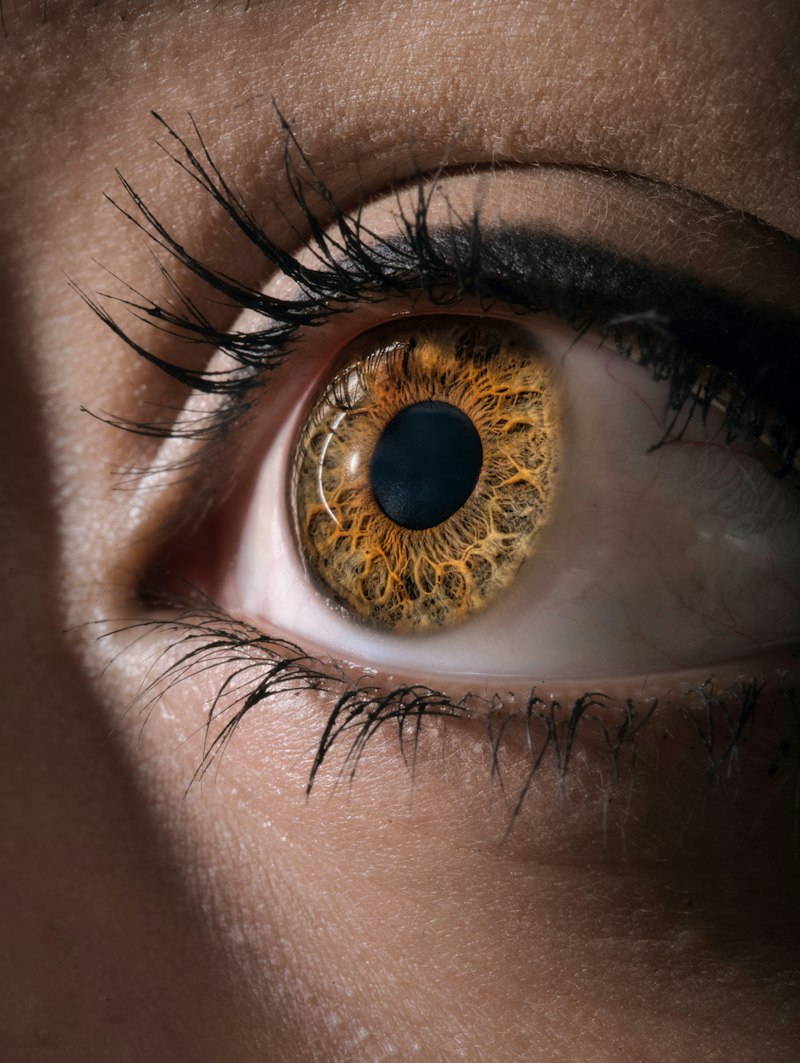
Introduction to Scoterythrous Vision
Scoterythrous vision, more commonly referred to in biological and psychological literature as scotopic vision, represents the specialized visual processing mechanism that allows humans and various animal species to perceive their environment under conditions of low luminance. This physiological state is fundamentally distinct from the vision used during the day, as it relies on a different set of photoreceptors that are optimized for high sensitivity rather than high resolution or color accuracy. By operating in near-total darkness, scoterythrous vision serves as a primary survival tool for navigating environments such as the night sky, deep caverns, or the lightless regions of the world’s oceans. The ability to detect movement and shapes when light is scarce provides a significant evolutionary advantage, enabling organisms to remain active during the nocturnal hours.
The fundamental utility of scoterythrous vision lies in its capacity to detect objects and spatial configurations that would otherwise remain invisible to the naked eye under standard lighting conditions. In high-pressure environments, such as the depths of a cave or the dense canopy of a forest at night, the visual system must adapt to capture every available photon. This form of vision is not merely a secondary system but a primary mode of interaction for many species that have evolved to occupy ecological niches where light is a rare commodity. For these organisms, the transition to scotopic perception is an essential shift that dictates their hunting patterns, reproductive behaviors, and overall survival strategies within their respective habitats.
Furthermore, the study of scoterythrous vision extends beyond simple biology into the realms of psychology and medicine, where it is used to understand how the brain interprets degraded visual signals. This visual mode is characterized by a lack of color perception, as the mechanisms involved are primarily sensitive to the intensity of light rather than its wavelength in the way that daytime vision is. Consequently, the world viewed through scotopic eyes appears in shades of gray, focusing on contrast and motion detection. Understanding the nuances of this system allows researchers to map the limits of human perception and develop diagnostic tools for various ophthalmic conditions that affect the retina’s ability to process low-level light signals.
In a broader ecological context, scoterythrous vision is the cornerstone of nocturnal life, bridging the gap between total blindness and functional awareness. It is used extensively by animals that inhabit the dark depths of the ocean, where the sun’s rays cannot penetrate. Species such as sharks, squid, and cuttlefish rely on this visual adaptation to navigate the vast, pressurized darkness of the marine environment. Without the ability to utilize scotopic pathways, these apex predators and their prey would be unable to interact with their environment, illustrating the critical role that light-sensitive biological adaptations play in the diversity of life on Earth.
Anatomical Foundations: The Role of Rod Cells
The biological basis for scoterythrous vision is found within the complex structure of the retina, specifically in the rod cells. These photoreceptor cells are uniquely designed to be far more sensitive to light than their counterparts, the cone cells, which are responsible for high-acuity color vision in bright light. While cone cells require a significant threshold of photons to trigger a neural response, rod cells can be activated by a single photon of light. This extreme sensitivity is what allows the visual system to function in environments where light intensity is several orders of magnitude lower than typical daylight, making rod cells the primary drivers of vision during the night.
Within the human eye, rod cells are distributed primarily in the peripheral regions of the retina, while cone cells are concentrated in the central macula. This distribution explains why, in very low light, objects are often easier to see if one looks slightly to the side of them rather than directly at them. This phenomenon, known as “averted vision,” leverages the high density of rods in the periphery to capture faint light signals. As the environment grows darker, the cone cells lose their ability to function, and the visual system undergoes a transition where the rod cells become the dominant source of visual information. This transition is a key component of dark adaptation, a process that can take several minutes to reach full efficacy.
The functional mechanics of rod cells involve a specialized protein called rhodopsin, which undergoes a chemical change when struck by light. This phototransduction process converts light energy into electrical signals that the brain can interpret. Because rod cells are optimized for sensitivity, they do not provide the sharp, detailed images associated with daytime vision. Instead, they excel at detecting movement and discerning broad shapes, which are critical for detecting a predator or a prey item in the shadows. The trade-off for this high sensitivity is the loss of chromatic information, which is why scotopic vision is effectively monochromatic.
As light intensity continues to decrease, the reliance on rod cells becomes absolute. When the environment reaches a state of very low luminance, the cone cells become completely dormant, resulting in a state of pure scotopic vision. During this time, the visual system is at its most sensitive, but also its most limited in terms of detail. This biological balancing act ensures that the organism can still perceive its surroundings even in the most challenging lighting conditions. The development and maintenance of these rod-based pathways are essential for any creature that operates outside the safety of the sunlit world, providing a constant, if dim, window into the nocturnal landscape.
Spectral Sensitivity and Light Detection
One of the most intriguing aspects of scoterythrous vision is its specific spectral sensitivity, which differs significantly from the peak sensitivities of photopic vision. Research indicates that this form of vision is based on the ability to detect light in the near-infrared and blue light spectrum. While these wavelengths are often invisible or less prominent to the naked eye under bright conditions, they are captured efficiently by the rod cells in low-light scenarios. This shift in sensitivity toward the shorter wavelengths of the blue spectrum is known as the Purkinje shift, explaining why blue objects often appear brighter than red objects as twilight approaches and scotopic vision takes over.
The ability to detect near-infrared light, as noted in certain studies of scoterythrous vision, suggests a highly specialized adaptation that may be more prevalent in certain animal species than in humans. This capability allows for the perception of thermal signatures or light sources that are beyond the traditional visible spectrum, providing an additional layer of information in the dark. For animals living in the depths of the ocean or in subterranean environments, the ability to harvest light from these non-traditional parts of the spectrum is a vital survival mechanism. It allows them to see in conditions that would be perceived as absolute blackness by less adapted visual systems.
The dominance of blue light detection in scotopic conditions is also a result of the atmospheric scattering of light during the transition from day to night. As the sun sets, the remaining light is often heavily weighted toward the blue end of the spectrum. Rod cells have evolved to be most sensitive to these wavelengths, maximizing the efficiency of the visual system during the critical hours of dusk and dawn. This spectral tuning ensures that even the smallest amount of ambient blue light can be utilized to form a coherent, if colorless, image of the environment, facilitating navigation and hazard detection.
Understanding the spectral limits of scoterythrous vision is also important for technological developments, such as night-vision goggles and specialized medical imaging. By mimicking the sensitivity of rod cells to specific wavelengths, engineers can create devices that enhance the natural capabilities of the human eye. Furthermore, the study of how the retina processes near-infrared signals continues to be a subject of intense research, as it may reveal new insights into the evolutionary history of vertebrate vision and the ways in which different species have solved the problem of seeing in the dark.
Evolutionary Adaptations in the Animal Kingdom
The development of scoterythrous vision in the animal kingdom is a remarkable example of evolutionary adaptation to specific ecological pressures. Many predators have developed highly advanced scotopic systems to facilitate hunting in the dark. For instance, cats and owls possess a high density of rod cells and specialized structures like the tapetum lucidum, which reflects light back through the retina to increase the chances of photon capture. These adaptations allow these animals to detect the slightest movement of prey in near-total darkness, making them formidable nocturnal hunters that can operate with surgical precision when their competitors are blind.
In the depths of the ocean, where sunlight never reaches, the reliance on scoterythrous vision is even more pronounced. Marine organisms such as sharks, squid, and cuttlefish must navigate a three-dimensional environment where the only light may come from bioluminescence or faint atmospheric remnants. These creatures have evolved eyes that are often disproportionately large to capture as much light as possible, paired with a neural architecture that is fine-tuned for scotopic processing. Their ability to hunt, mate, and avoid larger predators in the abyss is entirely dependent on the efficiency of their rod-based visual systems.
The survival benefits of scotopic vision extend beyond predation to include general navigation and social interaction. For many nocturnal species, the ability to detect changes in light levels allows them to find their way through complex environments, such as dense forests or coral reefs, without colliding with obstacles. This spatial awareness is critical for maintaining territories and finding food sources that are only available at night. The evolutionary pressure to succeed in these environments has led to a diverse array of visual strategies, all centered around the core principle of maximizing sensitivity through the scoterythrous pathway.
Furthermore, the development of scoterythrous vision has allowed animals to avoid predators that rely on daytime vision. By shifting their activity patterns to the night, these species can forage and reproduce with a lower risk of being detected by sight-oriented hunters. This temporal partitioning of the environment is only possible because of the robust nature of scotopic vision, which provides enough visual information to sustain life in the absence of the sun. The continuous refinement of these visual systems over millions of years highlights the fundamental importance of low-light perception in the history of life on Earth.
Human Navigation and Low-Light Perception
In the context of human experience, scoterythrous vision plays a vital role in our ability to navigate the world after sunset. While humans are primarily diurnal creatures with highly developed color vision, our scotopic system provides a necessary backup for low-light conditions. Whether it is walking through a dark room, navigating a moonlit path, or observing the night sky, our rod cells are the primary collectors of visual information. This form of vision allows us to detect the outlines of furniture, the presence of obstacles, and the subtle movements of other people or animals in the shadows, ensuring our safety and mobility in the absence of artificial light.
The process of dark adaptation is a crucial aspect of human scotopic vision. When moving from a brightly lit environment to a dark one, the eyes undergo a series of physiological changes to increase sensitivity. Initially, the cone cells attempt to function, but as they fail, the rod cells begin to take over. This process involves the regeneration of rhodopsin, which was bleached by the previous exposure to bright light. It can take up to thirty minutes for the human eye to reach its maximum scotopic sensitivity, at which point the individual can see objects that were previously invisible, illustrating the dynamic nature of our visual system.
Humans also utilize scoterythrous vision for specialized tasks, such as astronomy and maritime navigation. Amateur and professional astronomers often rely on their peripheral vision—where rod density is highest—to observe faint stars and nebulae that are too dim for direct focal vision. Similarly, sailors and pilots are trained to use scotopic techniques to maintain situational awareness during nighttime operations. These practical applications demonstrate that, despite our reliance on technology, the natural biological capacity for low-light vision remains a fundamental part of the human sensory toolkit.
However, the limitations of human scotopic vision are also significant. Because we lack the specialized reflective structures found in many nocturnal animals, our ability to see in the dark is relatively poor by comparison. We struggle with depth perception and fine detail in low light, which increases the risk of accidents during nighttime activities. Understanding these limitations is essential for designing safer environments, such as improved street lighting and better-designed vehicle headlights, which aim to bridge the gap between our natural scotopic abilities and the requirements of modern life.
Clinical Significance and Medical Applications
In the medical field, scoterythrous vision serves as a critical diagnostic indicator for several ophthalmic and neurological conditions. One of the most prominent applications is in the diagnosis and monitoring of macular degeneration. This condition involves the deterioration of the macula, the central part of the retina responsible for sharp, detailed vision. Because macular degeneration primarily affects the cone-rich central vision, testing a patient’s scotopic vision can help clinicians understand the extent of the damage and the degree to which the peripheral rod cells are compensating for the loss of central function.
The use of scotopic testing allows doctors to detect early changes in retinal health that might not be apparent during standard daytime visual acuity tests. By measuring how quickly a patient’s eyes adapt to the dark or how sensitive their rods are to faint light signals, medical professionals can identify the onset of conditions like retinitis pigmentosa or vitamin A deficiency, both of which severely impact rod cell function. These diagnostic insights are invaluable for determining the best course of treatment and for managing the progression of chronic eye diseases that could eventually lead to total blindness.
Furthermore, scoterythrous vision is used to assess the overall health of the retinal vasculature and the efficiency of the phototransduction process. Issues with the supply of blood to the retina or metabolic imbalances can manifest as a decrease in scotopic sensitivity. In clinical trials for new ocular therapies, measuring improvements in low-light vision is often used as a benchmark for success. This highlights the importance of the scotopic system not just as a survival mechanism, but as a window into the complex physiological health of the human eye.
Advanced imaging techniques and electroretinography (ERG) are often employed to quantify scotopic vision in a clinical setting. These tools measure the electrical response of the rod cells to light stimuli, providing an objective map of retinal function. By comparing these results to standard norms, specialists can pinpoint the location and severity of retinal pathology. The continued integration of scotopic assessments into routine eye care is essential for the early detection of degenerative diseases, potentially saving the sight of millions of individuals through timely intervention and specialized care.
The Impact of Scotopic Vision on Survival and Adaptation
The overarching significance of scoterythrous vision lies in its contribution to the survival and adaptation of both humans and animals. Without this specialized visual mode, the transition from day to night would represent a period of total vulnerability for most organisms. The ability to detect movement, identify shapes, and navigate through complex terrains in the dark has allowed life to flourish in every corner of the planet, from the highest mountains to the deepest trenches of the ocean. It is a testament to the versatility of biological systems that they can provide such high levels of sensitivity using the same basic cellular architecture across diverse species.
For humans, scotopic vision has historically been essential for survival in the wild, allowing our ancestors to guard against nocturnal predators and move safely during the night. In the modern era, while we have largely replaced the need for natural night vision with artificial lighting, the underlying biological machinery remains a vital part of our sensory experience. It informs our psychological response to the dark and influences how we design our living spaces and urban environments. The lingering importance of scotopic function is evident in our continued fascination with the night sky and our reliance on low-light perception in various professional and recreational contexts.
In the animal kingdom, the development of scoterythrous vision has led to a diverse range of specialized behaviors and physical traits. The evolution of large eyes, reflective membranes, and ultra-sensitive rod cells are all responses to the constant pressure to see where others cannot. This visual arms race between predator and prey has driven the complexity of the vertebrate eye to incredible heights. As we continue to explore the dark reaches of our world, from the deep sea to the furthest caves, we find that scotopic vision is the universal key that unlocks these hidden environments, revealing a world that is just as active and complex as the one we see in the light.
Ultimately, scoterythrous vision represents a bridge between the known and the unknown. It is an important part of our biological heritage that has evolved over millions of years to help us and our fellow creatures adapt to the challenges of low light. Whether it is used to hunt in the deep ocean, navigate a dark forest, or diagnose a sight-threatening medical condition, the power of the rod-based visual system is undeniable. As research continues to uncover the secrets of how we see in the dark, our appreciation for this remarkable physiological adaptation will only continue to grow, highlighting the intricate beauty of the visual system.
References
- Bhutto, I. A., & Siva, K. (2016). Scotopic Vision. In Encyclopedia of Biology (pp. 1-4). Springer Berlin Heidelberg.
- Ebenstein, D. B. (2012). A Vision of Darkness: The Significance of Scotopic Vision. In The Biology of Vision (pp. 39-44). Springer New York.
- Koozekanani, S., & Malekzadeh, N. (2019). Scotopic Vision. In Encyclopedia of Ophthalmology (pp. 1-3). Springer Berlin Heidelberg.
- Porciatti, V., & Mancuso, M. (2014). Vision in the Dark: Anatomy, Physiology, and Pathology of Scotopic Vision. Springer New York.