Focal Dystonia: Unlocking the Mind Behind the Cramp
Scientifically Reviewed · Dr. Marwa Abd-Alazim · August 29, 2026
Review Criteria & Clinical Standards
This content undergoes rigorous scientific peer-review and medical editorial standards at Arab Psychology Network to ensure clinical accuracy, validity, and compliance with evidence-based guidelines from leading psychological and healthcare authorities (APA / WHO).
Historical Context and Definition
Scrivener’s Palsy is an antiquated, though historically evocative, term used to describe what is clinically known today as writer’s cramp, or more precisely, a form of focal task-specific dystonia. The nomenclature dates back to an era heavily reliant on manual documentation, where “scriveners”—professional scribes, clerks, and copyists—formed a substantial segment of the workforce. This condition was first recognized as a distinct occupational ailment in the nineteenth century, afflicting individuals whose livelihoods depended entirely upon sustained, repetitive, fine motor movements of the hand and forearm required for penmanship. The label “palsy,” suggesting paralysis or weakness, is inaccurate in the modern clinical sense, as the condition is characterized primarily by involuntary muscle contractions and loss of coordination rather than true muscular deficit.
The recognition of Scrivener’s Palsy marked a crucial early understanding that specific, highly repetitive occupational tasks could lead to localized neurological dysfunction. Historically, the ailment was often attributed to overuse, strain, or even psychological weakness, obscuring its underlying neurological roots. Early descriptions detailed a progressive difficulty in maintaining a comfortable or functional grip on the writing instrument, leading to illegible script, pain, and eventually, the inability to write altogether, forcing afflicted individuals to abandon their professions. While technological advancements have largely replaced the need for scriveners, the underlying mechanism—the breakdown of precise motor control during a highly practiced task—remains relevant, affecting any individual whose work demands prolonged, intricate hand movements.
Despite its obsolescence in professional medical literature, the term Scrivener’s Palsy retains cultural significance, highlighting the occupational and historical burden of this specific ailment. The core clinical reality is that of a focal dystonia, which is a movement disorder characterized by sustained or intermittent muscle contractions causing abnormal, often repetitive, movements or postures. Importantly, though the term is antiquated, Scrivener’s Palsy still affects writers who prefer pen and paper to a keyboard, as the repetitive strain and specific demands of handwriting remain potent triggers for susceptible individuals. The modern understanding emphasizes that this is not merely a muscular injury but a complex failure of central nervous system processing related to motor learning and execution.
Clinical Manifestations of Writer’s Cramp
The primary and most defining symptom of writer’s cramp is the highly specific failure of motor control that manifests exclusively during the act of writing. Initial symptoms often begin subtly, presenting as an undue sense of fatigue or stiffness in the hand and forearm after only short periods of writing. Patients typically report an increasing tendency to grip the pen or pencil far too tightly, a compensatory mechanism that ironically exacerbates the issue by increasing muscle tension. As the condition progresses, this hyper-gripping leads to involuntary sustained contractions of the finger flexor and forearm muscles, resulting in pain, cramping, and a rapid deterioration of handwriting quality, known as micrographic script.
A hallmark of Scrivener’s Palsy is the development of abnormal postures involving the hand, wrist, and sometimes the elbow, which are involuntary and task-specific. For example, the fingers might curl into an unnatural position, the wrist may deviate sharply into flexion or extension, or the entire forearm might rotate inward. These postures are the physical manifestation of the uncontrolled co-contraction of agonist and antagonist muscle groups. Crucially, the symptoms are almost always absent or significantly diminished when the individual performs other fine motor tasks that do not involve the specific writing action, such as using cutlery, typing on a keyboard, or applying makeup. This task-specificity is vital for clinical diagnosis, differentiating it from generalized conditions like essential tremor or arthritis.
The emotional and functional impact of these clinical manifestations is profound. The inability to produce legible script can lead to significant occupational disability and deep frustration, particularly in professions requiring written documentation. Furthermore, the effort required to counteract the involuntary movements often results in secondary symptoms, including generalized pain extending up the arm, shoulder, and neck due to overall muscle bracing and tension. Some individuals may develop a subtle, task-specific tremor that only appears when the hand is positioned to write, further complicating the motor control required and accelerating the fatigue experienced during writing sessions.
Pathophysiology: Understanding Focal Dystonia
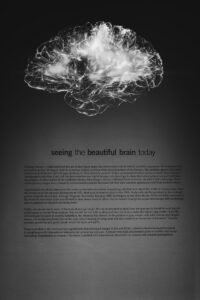
Scrivener’s Palsy is neurologically rooted in focal task-specific dystonia, meaning the motor control disturbance is limited to a small region of the body and is only elicited during the performance of a highly specific motor program. The underlying pathology is believed to reside in the central nervous system, specifically involving aberrant sensorimotor processing and maladaptive cortical plasticity. The brain, through repetitive practice, maps specific motor actions onto the somatosensory and motor cortices. In dystonia, this map becomes disorganized or blurred, leading to a failure in the inhibitory circuits that normally regulate muscle contractions.
The critical issue involves a breakdown in inhibitory mechanisms within the basal ganglia and the primary motor cortex. Normally, when the brain commands a set of muscles (agonists) to contract for an action like writing, the opposing muscles (antagonists) are simultaneously inhibited, ensuring smooth, precise movement. In writer’s cramp, this reciprocal inhibition fails. Both agonist and antagonist muscles fire simultaneously—a phenomenon known as co-contraction. This uncontrolled, simultaneous firing generates the excessive force, stiffness, cramping, and the distorted postures characteristic of the condition, rendering the fine, nuanced control required for handwriting impossible.
Furthermore, research strongly points toward a mechanism of maladaptive plasticity, whereby the brain’s ability to reorganize itself in response to experience goes awry. Extreme repetition of the writing task, particularly under conditions of high effort or incorrect technique, may lead to an excessive overlap of the neuronal representations of the fingers in the somatosensory cortex. This “smearing” of the cortical map results in a loss of the precise distinction between the separate motor commands for each finger, leading to the involuntary coupling and co-contraction of muscles that should operate independently. This neurological miswiring explains why the symptoms are so uniquely tied to the specific motor task that initially triggered the maladaptation.
Classification and Subtypes
Writer’s cramp is typically classified into two main subtypes based on the clinical presentation and the extent of involuntary movement. The distinction is crucial because it often dictates the most appropriate therapeutic approach. The first subtype is simple writer’s cramp. In this form, the dystonic symptoms are purely task-specific, manifesting as cramping, pain, and excessive grip force, but without significant involuntary postural changes in the hand or arm when writing. The hand posture may appear normal until the moment the patient attempts to execute the writing stroke, at which point the muscles seize up.
The second, often more challenging subtype is dystonic writer’s cramp. This classification involves involuntary changes in the posture of the hand, wrist, or arm that are evident immediately upon attempting to write. The wrist might forcefully flex or extend, the fingers might splay outward, or the entire hand might lift uncontrollably off the paper. In some severe cases, the dystonia may spread slightly beyond the initial focal area, affecting the shoulder or neck muscles as the individual attempts to compensate for the primary hand dysfunction. This subtype is generally associated with more significant functional impairment and may be less responsive to rehabilitation techniques focused purely on technique modification.
Beyond these primary classifications, the condition can also be categorized based on the specific muscles involved and whether an associated tremor is present. Dystonia can predominantly affect the flexor muscles (causing gripping and curling) or the extensor muscles (causing finger splaying). While writer’s cramp is distinct from essential tremor, a small percentage of patients exhibit a task-specific tremor that is only noticeable during the writing action itself. This overlap underscores the complexity of focal dystonia and the necessity of a thorough neurological assessment to determine the dominant symptoms and customize the treatment strategy effectively.
Differential Diagnosis
Accurate diagnosis of Scrivener’s Palsy requires careful differentiation from other neurological and musculoskeletal disorders that can present with hand dysfunction or tremor. Because the symptom profile—pain, stiffness, and difficulty with fine motor control—can mimic several other conditions, a detailed history of symptom onset and task specificity is paramount. Conditions that must be carefully excluded include essential tremor, Parkinsonian tremor, peripheral neuropathies, and chronic musculoskeletal conditions.
Essential tremor (ET), for instance, is often mistaken for dystonia, but ET typically involves an action tremor present during any voluntary movement of the hands and frequently involves the head or voice, whereas writer’s cramp is strictly limited to the writing task. Similarly, the tremor associated with Parkinson’s disease is usually a resting tremor, absent during action, and is accompanied by other classic symptoms like bradykinesia and rigidity, which are not features of focal dystonia. The key differentiating factor for Scrivener’s Palsy remains its profound task-specificity: the hand functions normally for almost every non-writing activity.
Musculoskeletal or peripheral nervous system disorders also need exclusion. Carpal tunnel syndrome or other peripheral nerve entrapment conditions cause numbness, tingling, and pain, often worse at night, and are not specific to the writing task. Tendinitis or arthritis typically cause pain that is generalized across activities and often involves visible swelling or structural changes, which are absent in pure focal dystonia. A neurologist must evaluate the pattern of muscle activation during the writing task, often through electromyography (EMG), to confirm the involuntary co-contraction characteristic of dystonia and rule out conditions where the weakness or pain stems from inflammation or nerve compression rather than central motor programming failure.
Etiological Factors and Risk Profiles
The etiology of Scrivener’s Palsy is considered multi-factorial, arising from a complex interplay between genetic predisposition and environmental factors, primarily involving the history of highly skilled, repetitive motor training. While writer’s cramp is rarely inherited in a simple Mendelian pattern, individuals with a family history of generalized dystonia may have a heightened genetic susceptibility to developing a focal form. Genetic markers are thought to lower the threshold at which the nervous system develops the maladaptive plasticity necessary to trigger the condition.
The most significant and well-documented etiological factors are environmental and occupational. The development of writer’s cramp is strongly correlated with a history of intensive, sustained fine motor practice over many years. Specific risk factors include writing with excessive pressure, maintaining an incorrect or highly strained grip on the pen, and engaging in high-volume writing tasks for prolonged durations without adequate rest. These factors contribute to the sensory overload that can initiate the breakdown of cortical organization. The sheer volume and intensity of practice, rather than simple effort, appear to be the critical triggers for susceptible individuals.
Psychological factors, though not primary causes, can significantly influence the onset and severity of symptoms. High levels of stress, anxiety, or perfectionism can increase muscle tension and vigilance during performance, which exacerbates the underlying dystonic tendency. Individuals often enter a negative feedback loop: increased anxiety about performance leads to greater muscle bracing and effort, which intensifies the cramping, further increasing anxiety and frustration. This interplay necessitates that effective management strategies address both the physical neurological symptoms and the associated psychological tension and performance anxiety.
Contemporary Management and Therapeutic Approaches
The management of Scrivener’s Palsy focuses on a multi-modal approach combining pharmacological intervention, physical rehabilitation, and behavioral or occupational modification. Given the chronic nature of the neurological changes, the goal of treatment is typically functional improvement and symptom reduction rather than complete cure. The cornerstone of effective contemporary management for many cases of focal dystonia is the use of Botulinum Toxin (Botox) injections.
Botulinum Toxin, administered directly into the specific muscles identified as overactive (usually the flexor muscles of the forearm and hand), temporarily weakens these muscles, thereby reducing the involuntary contractions and co-contraction patterns. This treatment provides significant relief for many patients by relaxing the grip and reducing the cramping. However, successful treatment requires precise mapping of the overactive muscles, often guided by electromyography, to ensure that the toxin is delivered accurately without causing generalized hand weakness that would hinder other necessary motor functions. The effects are temporary, necessitating repeat injections typically every three to six months.
Pharmacological agents taken orally, such as anticholinergics (e.g., trihexyphenidyl) or certain muscle relaxants (e.g., benzodiazepines), have been explored, but their efficacy in focal task-specific dystonia is generally limited compared to generalized dystonias. Furthermore, systemic medications often carry significant side effects, including cognitive impairment or sedation, making them less suitable for long-term occupational use. Therefore, they are usually reserved for cases where Botulinum Toxin is ineffective or contraindicated.
Behavioral and rehabilitative approaches are also vital, particularly for cases of simple writer’s cramp. These strategies include sensory re-education, which involves retraining the brain to process sensory input correctly, and modifying the writing technique. This may involve using specialized ergonomic writing tools, changing the grip on the pen (to a less strained or forceful position), or even learning to write with a larger, more relaxed movement pattern. In some instances, patients may discover a sensory trick (or geste antagoniste)—a light touch or specific positioning of the hand—that temporarily suppresses the dystonia, providing a window of functionality. Occupational therapy is key in helping the individual adapt to the condition and maximize residual function.
Prognosis and Quality of Life Implications
Scrivener’s Palsy is generally considered a chronic condition, although the severity and progression vary significantly among individuals. While it is rarely debilitating in the sense of causing systemic health issues, its impact on occupational performance and psychological well-being can be substantial, particularly in professions requiring significant fine motor skills. Without intervention, the condition tends to stabilize or gradually worsen over time, making early and accurate diagnosis crucial for preserving function.
The modern prognosis is far better than it was historically, primarily due to the availability of Botulinum Toxin and specialized neurorehabilitation techniques. Functional recovery, defined as the ability to write legibly and without significant pain for reasonable periods, is achievable for many patients who adhere strictly to a personalized treatment plan. However, continuous management and adherence to adaptive strategies, such as integrating keyboard use or voice recognition software, are often necessary to maintain occupational capacity.
Ultimately, the quality of life implications extend beyond the mere act of writing. The frustration, loss of professional identity, and social embarrassment associated with the inability to sign one’s name or fill out forms can lead to anxiety, depression, and social withdrawal. Therefore, comprehensive management must incorporate psychological support alongside physical treatments. For those afflicted, adopting compensatory strategies—including learning to use the non-dominant hand for writing or leveraging technology—often becomes the final, necessary step toward long-term functional adaptation, ensuring that the legacy of the scrivener’s ailment does not fully curtail modern productivity.