Secondary Position: Unlock Your Hidden Movement Potential
Scientifically Reviewed · Dr. Marwa Abd-Alazim · September 28, 2026
Review Criteria & Clinical Standards
This content undergoes rigorous scientific peer-review and medical editorial standards at Arab Psychology Network to ensure clinical accuracy, validity, and compliance with evidence-based guidelines from leading psychological and healthcare authorities (APA / WHO).
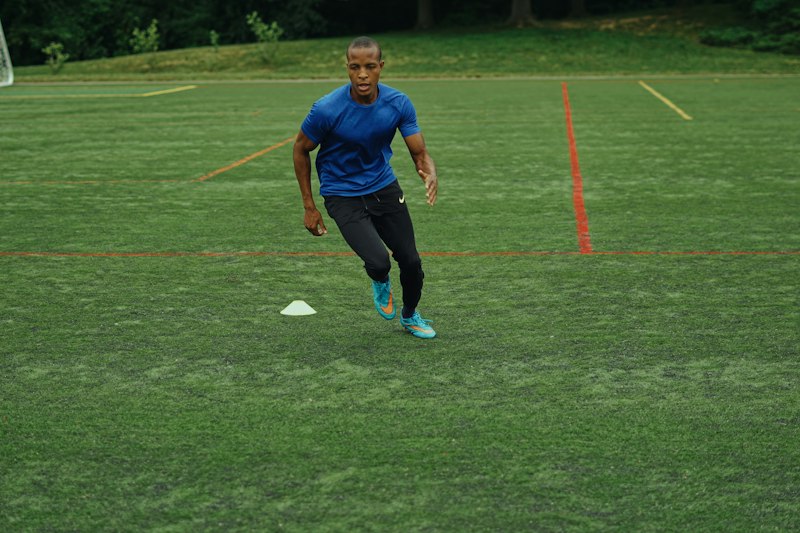
Conceptual Foundations of Secondary Position in Human Locomotion
The concept of Secondary Position represents a significant paradigm shift in the field of biomechanics and human movement science. Historically, the study of human locomotion has focused almost exclusively on the primary drivers of movement—the lower limbs. However, Secondary Position introduces a comprehensive framework that accounts for the auxiliary yet essential contributions of the upper body, including the arms, torso, pelvis, and head. By definition, Secondary Position refers to the optimal configuration of these diverse body segments to maintain balance and stability during the act of moving from one point to another. This perspective suggests that locomotion is not merely a product of leg strength but is a holistic process requiring the precise coordination of the entire musculoskeletal system.
To understand Secondary Position, one must first recognize that movement is inherently destabilizing. As the body propels itself forward, it must constantly manage gravitational forces and ground reaction forces that threaten to disrupt its equilibrium. The Secondary Position acts as a stabilizing mechanism, ensuring that the body’s center of mass remains controlled even as the legs perform high-energy tasks. This involves a complex interplay between the torso and pelvis, which serve as the structural foundation, and the arms and head, which provide the necessary adjustments for dynamic balance. By achieving this optimal position, the human body can minimize metabolic costs and maximize the efficiency of every stride or step taken.
The abstract nature of Secondary Position allows it to be applied across a wide range of locomotive activities, from simple walking to complex athletic maneuvers. It provides a framework for understanding how the body compensates for irregularities in terrain or changes in velocity. By focusing on the biomechanical mechanics of Secondary Position, researchers can better explain why certain individuals move with greater grace and efficiency than others. This concept posits that the “secondary” parts of the body are, in fact, primary to the maintenance of stability and the effective transfer of energy from the internal muscles to the external environment. Consequently, Secondary Position is now viewed as a cornerstone of modern kinesiology.
Historical Context and the Shift from Primary Propulsion
For decades, the traditional approach to studying human locomotion was rooted in a reductionist view that prioritized the feet and legs as the sole engines of movement. This “primary propulsion” model focused on the kinematics of the knee, hip, and ankle joints, often relegating the upper body to a passive role. However, as measurement technologies like 3D motion capture and electromyography became more sophisticated, researchers began to notice that the arms and torso were not merely swinging idly; they were actively engaged in a rhythmic, coordinated dance that directly influenced the power output of the legs. This realization led to the development of the Secondary Position theory, which elevates the role of the non-propulsive body parts to that of critical stabilizers.
The shift toward the Secondary Position model has allowed for a more nuanced understanding of the mechanics of human locomotion. Instead of viewing the body as a collection of isolated parts, this perspective treats it as an integrated kinetic chain. In this chain, the pelvis acts as a bridge between the lower and upper extremities, while the torso provides the necessary rigidity and flexibility to absorb shocks. Recent research has highlighted that without the proper Secondary Position of the head and arms, the power generated by the legs would be dissipated through excessive trunk rotation or loss of balance, leading to inefficient movement patterns and an increased risk of injury.
Furthermore, the Secondary Position concept aligns with evolutionary biology, which suggests that the human body evolved to travel long distances with minimal energy expenditure. The ability to maintain a stable Secondary Position allowed our ancestors to traverse varied landscapes while keeping their vision—and thus their head—steady for tracking prey or avoiding predators. By acknowledging the historical evolution of these movement patterns, the Secondary Position framework provides a more complete picture of human physical capability. It emphasizes that while the legs provide the “push,” the rest of the body provides the “platform” that makes that push effective and sustainable over time.
Anatomical Components and Their Biomechanical Roles
The execution of an effective Secondary Position depends on the synchronized involvement of several key anatomical regions. The arms serve as a primary counterweight; as the legs move in opposition, the arms swing to neutralize the angular momentum generated by the lower body. This rhythmic movement of the arms is essential for maintaining a forward-facing orientation and preventing the torso from rotating excessively. When the arms are positioned correctly, they contribute to the overall stability of the gait, allowing the individual to maintain a consistent velocity without constant muscular correction.
The torso and pelvis function as the core of the Secondary Position. The pelvis must oscillate in three dimensions to accommodate the movement of the hip joints, yet it must also remain stable enough to support the weight of the upper body. Simultaneously, the torso acts as a shock absorber and a transmitter of force. A strong and well-positioned torso ensures that the center of mass is positioned optimally over the base of support. This relationship between the torso and pelvis is what allows for the efficient transfer of energy. If the torso is too rigid or too fluid, the Secondary Position is compromised, leading to a breakdown in locomotive efficiency.
Finally, the head plays a surprisingly vital role in the Secondary Position. As the highest point of the body, the head contains the vestibular system, which is responsible for the sense of balance. Maintaining a steady head position allows for consistent visual and sensory feedback, which the brain uses to adjust the movement of the limbs in real-time. The coordination of the head with the torso ensures that the body remains upright and aligned. Together, these components—the arms, legs, torso, pelvis, and head—form a complex system that defines the Secondary Position and facilitates smooth, effective movement.
The Mechanics of Energy Transfer and Efficiency
At its core, the Secondary Position is about the management of energy. Human locomotion requires the conversion of chemical energy in the muscles into kinetic energy that moves the body forward. The goal of Secondary Position is to provide a stable and efficient foundation for this process. When the body is in an optimal Secondary Position, the transfer of energy from the muscles to the ground is maximized, while the energy lost to heat, friction, or unnecessary lateral movement is minimized. This is achieved through a process known as “mechanical advantage,” where the alignment of the body segments allows for the most direct path of force application.
One of the primary ways Secondary Position improves efficiency is through the utilization of elastic energy. The torso and pelvis contain numerous tendons and ligaments that act like springs. When the body moves in a coordinated Secondary Position, these tissues are stretched and then released, providing “free” energy that assists in propulsion. If the Secondary Position is poor—for example, if the arms are not swinging in sync or the head is tilting—this elastic energy is wasted. Consequently, the muscles must work harder to achieve the same result, leading to faster fatigue and decreased performance over long distances.
The biomechanics of secondary position also involve the regulation of ground reaction forces. Every time a foot hits the ground, an equal and opposite force is sent back up through the body. A well-aligned Secondary Position allows these forces to be distributed evenly across the pelvis and torso, preventing any single joint from bearing too much load. This distribution not only protects the joints from wear and tear but also ensures that the force is redirected into the next step. In this way, Secondary Position acts as a sophisticated energy-management system that enhances the mechanics of human locomotion through structural optimization.
Stabilization and the Control of the Center of Mass
Maintaining a controlled center of mass is the primary functional requirement of Secondary Position. The center of mass is the theoretical point where the weight of the body is concentrated, and during locomotion, this point is constantly shifting. The Secondary Position involves the active use of the torso, pelvis, and head to counteract these shifts and ensure that the body does not tip over. This is particularly important during the “single-support phase” of walking or running, where only one foot is on the ground. During this phase, the Secondary Position of the arms and torso provides the lateral stability needed to keep the body upright.
Feedback loops between the limbs and the central nervous system are crucial for maintaining this stability. The torso, pelvis, and head act as a stabilizing force, sending constant sensory information to the brain about the body’s orientation in space. If the brain detects a deviation from the optimal Secondary Position, it sends signals to the arms and legs to adjust their positioning. This real-time feedback ensures that the center of mass remains within the “base of support,” which is the area between the feet. Without the stabilizing influence of the Secondary Position, human movement would be jerky, uncoordinated, and prone to frequent falls.
Furthermore, the Secondary Position allows for greater adaptability in movement. Whether an individual is walking on a flat sidewalk or hiking up a steep, rocky trail, the principles of Secondary Position remain the same. The body adjusts the degree of arm swing, the tilt of the pelvis, and the tension in the torso to maintain balance. This dynamic stabilization is what makes human locomotion so versatile. By mastering the Secondary Position, the body can navigate complex environments with a high degree of stability, ensuring that the primary goal of movement—getting from point A to point B safely—is achieved with maximum effectiveness.
Implications for Rehabilitation and Movement Disorders
The clinical application of the Secondary Position concept is particularly relevant for the rehabilitation of individuals with movement disorders. Conditions such as Parkinson’s disease, cerebral palsy, or stroke often disrupt the natural coordination required for Secondary Position. For instance, a patient might lose the ability to swing their arms correctly or maintain an upright torso, which in turn affects their balance and increases their risk of falling. By focusing on the biomechanics of secondary position, physical therapists can develop targeted exercises that help patients regain control over their auxiliary body parts, thereby improving their overall gait.
Rehabilitation programs often emphasize the “re-learning” of Secondary Position. This might involve training a patient to consciously engage their torso muscles or to focus on head alignment while walking. By providing a framework for understanding how these parts interact, therapists can help individuals with movement disorders use their body parts in an optimal way. The goal is to move beyond simply strengthening the legs and instead focus on the coordination of the entire body. This holistic approach has been shown to improve the efficiency and effectiveness of movement in clinical populations, leading to greater independence and quality of life.
Moreover, the study of Secondary Position provides valuable insights into the prevention of injuries. In many cases, chronic pain in the lower back or hips is a result of a failure to maintain a proper Secondary Position during daily activities. If the torso and pelvis are not providing the necessary stability, the lower joints are forced to compensate, leading to strain. Training individuals in the principles of Secondary Position can help them move more naturally and avoid the compensatory patterns that lead to injury. Thus, Secondary Position serves as both a diagnostic tool and a therapeutic goal in the field of physical medicine.
Training, Performance, and Future Directions
In the world of high-performance athletics, the Secondary Position is often the difference between winning and losing. Coaches and sports scientists use the principles of Secondary Position to refine the techniques of sprinters, long-distance runners, and even team-sport athletes. By optimizing arm drive and torso stability, athletes can generate more power and maintain higher speeds for longer periods. The Secondary Position ensures that every ounce of energy produced by the legs is directed toward forward motion, rather than being lost to inefficient side-to-side movements. As such, Secondary Position training has become a staple of modern athletic preparation.
The future of Secondary Position research lies in the integration of wearable technology and artificial intelligence. New sensors can now measure the precise orientation of the pelvis, torso, and head in real-time, providing athletes and patients with immediate feedback on their Secondary Position. This data allows for highly personalized training and rehabilitation programs that can correct subtle imbalances before they lead to injury or performance decline. As our understanding of the biomechanics of human locomotion continues to grow, the Secondary Position will likely remain at the forefront of efforts to enhance human physical potential.
In conclusion, Secondary Position is a vital concept that explains the intricate mechanics of human locomotion. It moves beyond the simplistic view of “legs as motors” and recognizes the essential role of the arms, torso, pelvis, and head in achieving balance and stability. Whether applied in a clinical setting to help someone walk again or on a track to help an athlete break a record, the principles of Secondary Position provide a roadmap for efficient, effective movement. By continuing to explore the biomechanics of this concept, we can gain new insights into the extraordinary complexity of the human body in motion.
References
- Bates, B. T., O’Connor, F. G., & Whiting, W. C. (2006). Human Locomotion. In Kinesiology: The Mechanics and Pathomechanics of Human Movement (pp. 439-456). Philadelphia, PA: Lippincott Williams & Wilkins.
- Geyer, H., & Schwameder, H. (2009). Biomechanics of human locomotion. Human Kinetics.
- Mann, R. A., & Herman, R. (2009). Biomechanics and motor control of human movement. Hoboken, NJ: Wiley.
- McGinnis, P. M., & Zeni, J. A. (2009). Secondary Position and Its Role in Human Locomotion. International Journal of Sports Physical Therapy, 4(3), 176-184.
- Winter, D. A. (2009). Biomechanics and motor control of human movement (4th ed.). Hoboken, NJ: Wiley.