Self-Extension: Why We Claim the World as Our Own
Scientifically Reviewed · Dr. Marwa Abd-Alazim · September 6, 2026
Review Criteria & Clinical Standards
This content undergoes rigorous scientific peer-review and medical editorial standards at Arab Psychology Network to ensure clinical accuracy, validity, and compliance with evidence-based guidelines from leading psychological and healthcare authorities (APA / WHO).

Definition and Core Concepts of Self-Extension
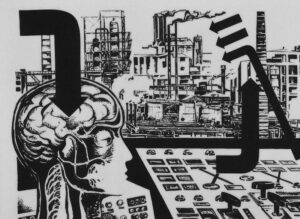
Self-extension refers to a fundamental psychological process, particularly championed by psychologist Gordon Allport, wherein the boundaries of the self are expanded beyond the physical body and immediate consciousness to include external objects, people, and abstract concepts. This phenomenon constitutes an essential element of personality development, specifically identified by Allport as one of the seven aspects of the Proprium—the core, unifying structure of personality. Essentially, self-extension describes the cognitive and emotional investment made by an individual in external entities, leading to the incorporation of these entities into the psychological self-concept. When successful, the individual perceives the external entity as intrinsically related to their identity, meaning that the success, failure, maintenance, or threat to the extended object or person is experienced as a personal success, failure, or threat to the self.
The core mechanism involves an investment in ego; the individual projects their identity outward, causing the external item to become a psychological proxy for the self. This differentiates true self-extension from mere liking or attachment. For example, a person does not just own a house; they feel that the house reflects their character, values, and status, and any damage to the property is felt as a personal insult or injury. Allport specifically noted that self-extension is visible developmentally when a child begins to incorporate specific people and objects into their self-concept, moving from an ego centered purely on bodily sensations to one that actively colonizes the external environment. This proprietary function allows the individual to establish a sense of agency and control over their world by psychologically merging with aspects of it.
Crucially, self-extension is deeply intertwined with feelings of pride and ownership. The feeling of “mine” is the primary affective marker of successful self-extension. This proprietary feeling is not limited to legal ownership but encompasses psychological ownership, derived from investment (time, effort, emotion) or association. When self-extension is active, the external entity serves as a tangible anchor for identity, providing stability and meaning. If the extended self experiences accolades, the individual feels vicarious pride; conversely, if the extended self suffers loss or dishonor, the individual experiences shame or intense distress, demonstrating the psychological merger that has occurred between the internal self and the external reality.
Historical Context and Theoretical Foundations
While Allport systematized the concept of self-extension within his personality theory, the recognition that the self transcends the physical body has deep roots in psychological thought. The most salient historical precedent lies in the work of William James, who, in his late 19th-century discussions of the self, introduced the comprehensive idea of the Material Self. James posited that the self is composed of everything a person can call his or hers, including not only the body but also one’s clothes, family, home, and property. Allport’s contribution was to take this descriptive framework and integrate it into a developmental and functional model of personality, explaining *how* and *why* these external elements are incorporated, rather than simply stating that they are.
The theoretical necessity of self-extension stems from the need for humans to establish a sense of permanence and efficacy in a complex world. Early psychoanalytic approaches, particularly those focused on ego development, touched upon similar concepts related to object relations, viewing the internalization and externalization of objects as critical steps in forming stable identity structures. However, self-extension differs from simple object attachment, which might describe a dependency or emotional bond. Self-extension implies a psychological merger where the external object is processed cognitively as being *part* of the individual’s identity schema, a process that is highly active and intentional during specific developmental stages.
Furthermore, self-extension aligns conceptually with modern cognitive psychological understandings of the Self-Reference Effect (SRE). The SRE posits that information processed in relation to the self is remembered better and processed more efficiently. When an object or concept is successfully incorporated via self-extension, it benefits from this cognitive bias, receiving preferential attention and encoding. Therefore, self-extension provides a powerful mechanism for organizing external information and maintaining cognitive coherence, grounding the individual’s autobiography and current life projects within a stable, extended psychological domain.
Manifestations in Material Possessions
The most easily observable form of self-extension involves material possessions. From primitive tools to complex modern technologies, humans imbue objects with symbolic meaning that extends far beyond their utility. A person’s choice of vehicle, clothing, home décor, or specialized collections (e.g., art or books) serves as a potent projection of their inner self, communicating identity, status, values, and aspirations to the external world. The investment of resources—financial, temporal, and emotional—in these possessions converts them into psychological extensions of the self, making the maintenance of these objects synonymous with the maintenance of one’s own integrity.
A key concept explaining this phenomenon is the Endowment Effect, a behavioral economic finding that aligns perfectly with self-extension theory. The Endowment Effect demonstrates that people value objects they own significantly higher than identical objects they do not own. This inflated valuation is not purely rational but is driven by the fact that ownership triggers self-extension; the object becomes integrated into the self-schema, and parting with it is perceived as a psychological loss rather than a simple financial transaction. This psychological ownership, often generated through the simple act of touching or interacting with an item, solidifies the bond between the self and the possession.
The house, perhaps more than any other possession, serves as a primary locus of material self-extension. It is not merely shelter; it is a physical boundary that defines the private extended self. The decoration, layout, and contents reflect the inhabitant’s personal history and taste. Consequently, trespassing or violation of this space is often experienced with the same intensity as a violation of the physical body. Furthermore, collections—whether stamps, vinyl records, or antique furniture—function as concentrated forms of self-extension, representing invested time, specialized knowledge, and deep personal interest, providing the collector with a profound sense of identity and mastery.
Social and Interpersonal Self-Extension
Self-extension is not confined to inert objects but profoundly shapes social relationships and group affiliations. Individuals frequently incorporate significant others into their self-concept, treating the achievements and failures of these proximate others (such as children, spouses, or close friends) as if they were their own. This form of extension is powerful because it allows the self to experience expansion through connection, but it also introduces vulnerability, as the self becomes dependent on the actions and well-being of the extended person. Parental pride, for instance, is a classic example of social self-extension, where the parent’s sense of self-worth is intrinsically tied to the child’s success.
Beyond individual relationships, self-extension operates powerfully at the collective level, forming the psychological bedrock of Social Identity Theory. When an individual identifies strongly with a social group (a university, a nation, a political party, or a sports team), the group identity becomes an integral part of the personal identity. Membership provides a structured means for self-expansion, allowing the individual to benefit psychologically from the group’s prestige and power. When the group wins, the individual experiences enhanced self-esteem (“We won”); when the group is criticized, the individual feels personally wounded or defensive, illustrating that the social self has been successfully extended into the collective.
Moreover, abstract ideas and deeply held beliefs—intellectual or spiritual—can also become targets of self-extension. Individuals who dedicate their lives to a cause, a scientific theory, or a political ideology often treat challenges to that abstract entity as direct personal attacks. This incorporation of ideals provides a transcending meaning to life, allowing the self to extend into the timeless domain of values and principles. In this sense, self-extension is a critical mechanism for the development of purpose and a sense of legacy, moving the self toward higher-order goals that outlast the physical individual.
Developmental Stages of Self-Extension
According to Allport’s framework, self-extension emerges during the third stage of proprietary development, typically occurring around the ages of four to six years, following the development of the sense of bodily self and self-identity. This period marks a pivotal transition where the child moves beyond recognizing the self as a purely somatic entity and begins to interact with the world by claiming ownership and exerting control. The famous declaration of “Mine!” is the developmental hallmark of this stage, signifying the cognitive establishment of boundaries between the self and the non-self, and the subsequent aggressive incorporation of desired external objects into the former category.
During these critical early years, the successful development of self-extension is essential for building a robust sense of agency and competence. By claiming and manipulating objects, the child learns about cause and effect and establishes a sphere of influence, which is crucial for fostering self-efficacy. Objects become tools for learning how to control and manage the environment, and the positive feedback derived from successful control reinforces the proprietary feeling. A child’s favorite toy, for instance, is not merely played with; it is an extension of the child’s will and imagination, and its loss or damage can cause significant emotional distress, disproportionate to its material value.
As the individual matures into adolescence and adulthood, the targets of self-extension undergo a qualitative shift. While material possessions remain important, the focus shifts increasingly toward abstract and future-oriented extensions. This includes investments in career paths, reputation, intellectual capital, and the well-being of future generations. Mature self-extension involves identifying with long-term goals and societal contributions—the desire to leave a lasting legacy. Allport considered this mature form of extension, characterized by a commitment to projects that transcend immediate self-interest, to be the hallmark of a healthy, fully functioning adult personality.
The Cognitive Mechanisms of Incorporation
From a cognitive neuroscience perspective, self-extension involves complex processing that bridges self-referential cognition and external object representation. Research utilizing fMRI techniques suggests that when individuals view or interact with objects they psychologically own (i.e., those incorporated through self-extension), there is often increased activation in brain regions associated with self-processing and personal identity, suggesting a functional overlap between the neural representations of the self and the extended entity. This neurological integration underpins the emotional reality of self-extension, explaining why threats to owned objects register similarly to threats to the physical self.
The process of incorporation relies heavily on the construct of perceived control. An individual is more likely to extend their self into an object or relationship if they feel they have exerted significant influence, effort, or choice regarding that entity. This perception of control acts as a psychological justification for the merger. For example, customizing a car or designing a home layout enhances the feeling of psychological ownership far beyond mere purchase, because the personal investment of time and creative effort validates the inclusion of the item into the self-schema. This active involvement transforms a neutral external entity into a personalized extension.
Furthermore, self-extension serves a vital role in self-regulation and affective management. By surrounding oneself with objects and people that reinforce a desired identity, the individual creates a curated external environment that consistently validates their internal self-perceptions. If an individual identifies as sophisticated, owning fine art or specialized literature serves as a continuous external affirmation of that identity. This mechanism helps manage self-esteem by providing external sources of positive reflection, buffering the individual against internal doubts and providing stable external evidence of who they are and what they value.
Pathologies and Maladaptive Self-Extension
While self-extension is a necessary process for establishing a coherent, functioning adult identity, an over-reliance or distortion of the process can lead to significant psychological maladjustment. A primary pathology arises when the core self remains underdeveloped, forcing the individual to rely exclusively on external props for identity definition. In such cases, the loss of an extended entity—such as wealth, a professional title, or a significant relationship—can trigger a severe identity crisis, potentially leading to anxiety, depression, or profound disorientation, because the individual lacks sufficient internal structure to sustain the self.
Maladaptive self-extension is also evident in certain behavioral disorders, most notably hoarding disorder. Hoarding often stems from an inability to differentiate between the essential self and the extended self. The hoarder assigns intense personal meaning to virtually every possession, extending the self indiscriminately into accumulated objects. The thought of discarding an item is perceived as discarding a part of the self, resulting in overwhelming distress and a failure to maintain functional living space. Here, the boundary between the internal and external self becomes pathologically blurred and overly inclusive.
Another critical area of pathology involves narcissistic self-extension. In narcissistic personality patterns, individuals often use others—children, partners, employees—purely as extensions of their own ego, treating them as objects whose sole purpose is to reflect positively on the narcissist. This instrumental use of others violates the dignity of the extended person and prevents genuine reciprocal relationship formation. The pathological element lies in the lack of empathy and the inability to recognize the external entity as an autonomous being, viewing them instead as mere accessories necessary for maintaining the narcissist’s grandiose self-image.
Cultural Variations in Self-Extension
Although the fundamental human need to expand the self (the proprietary function) appears universal, the specific targets and acceptable forms of self-extension are profoundly shaped by cultural values and norms. In highly individualistic cultures, prevalent in Western societies (e.g., North America and Western Europe), self-extension often emphasizes unique personal achievements and material possessions. Identity is strongly tied to personal property, professional specialization, and unique tastes, serving to differentiate the individual from the collective. Objects are used to signal independence, autonomy, and personal success, reinforcing the distinct boundaries of the individual self.
Conversely, in collectivistic cultures, common in East Asia, Latin America, and parts of Africa, self-extension is often oriented toward social relationships and institutional affiliations. While material wealth is valued, the self is primarily extended into the family unit, the workplace, the community, or the nation. Success is often measured by the reputation and honor brought to the collective, rather than personal accumulation. For example, an individual’s career success in a collectivistic setting is interpreted largely as an achievement of the family or the company, and the individual’s self-esteem is derived from the positive perception of the group.
The difference lies not in the *existence* of self-extension but in its *focus*. In collectivistic contexts, the self-concept is often defined in relational terms, meaning that social harmony and reciprocal relationships are the primary vehicles for self-expansion. Losing face or bringing shame upon the family constitutes a severe psychological threat because the family is the chief extension of the self. Therefore, cultural context dictates whether the external self is primarily anchored in autonomous objects (individualism) or interwoven social matrices (collectivism), demonstrating the profound influence of societal structures on core psychological processes.